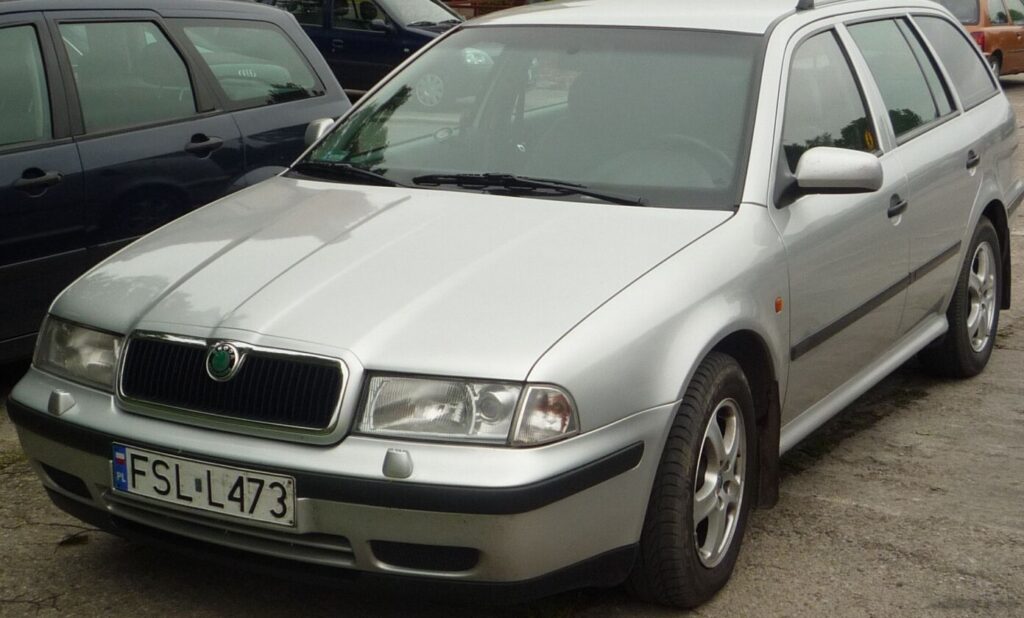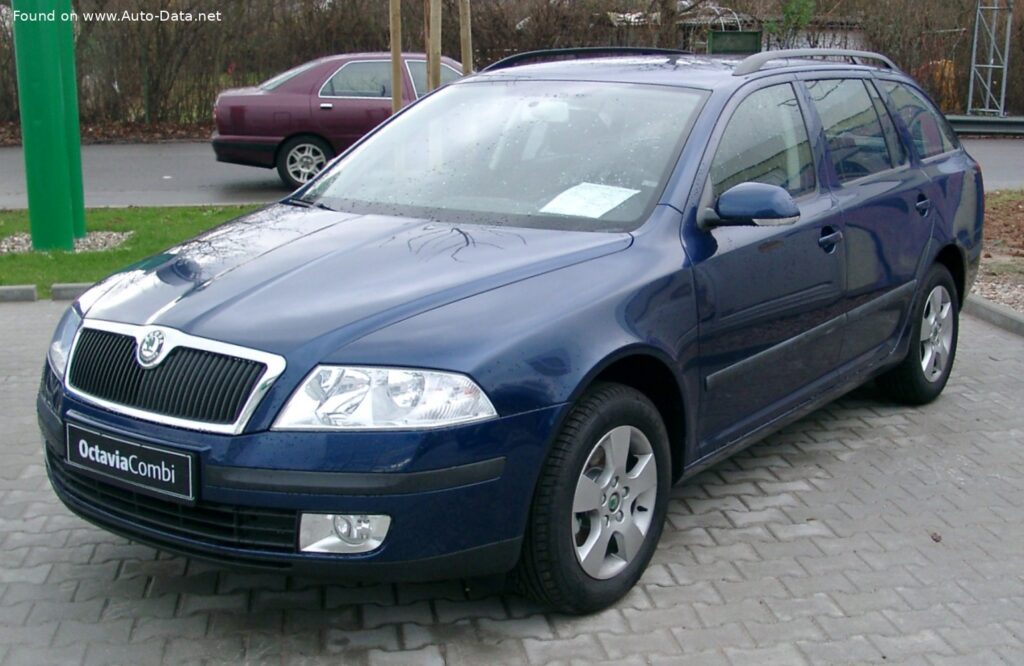
The Skoda Octavia II Combi RS 2.0 TDI (170 hp) was a performance-oriented station wagon produced between April 2006 and May 2008. It represented the top-tier trim level within the Octavia II Combi range, offering a blend of practicality, sporty handling, and diesel fuel efficiency. Built on the Volkswagen Group’s A5 (1HX0) platform – shared with the Volkswagen Golf Mk5 and Audi A3 – the RS model aimed to appeal to drivers seeking a versatile vehicle capable of both everyday duties and spirited driving. This variant distinguished itself from the standard Octavia Combi models through its more powerful engine, sport-tuned suspension, and distinctive aesthetic enhancements.
Skoda Octavia II Combi RS 2.0 TDI: A Performance Variant
The Octavia II Combi RS 2.0 TDI occupied a unique position in the Octavia lineup. While the standard Octavia Combi catered to families and practicality-focused buyers, the RS (Rally Sport) version targeted enthusiasts desiring a more engaging driving experience. It bridged the gap between mainstream family wagons and more expensive, dedicated performance cars. Compared to other Octavia II Combi engines, such as the 1.9 TDI and 2.0 petrol variants, the 2.0 TDI RS offered significantly more power and torque, resulting in noticeably quicker acceleration and a more dynamic driving character. It was positioned as a direct competitor to performance-oriented wagons from other European manufacturers.
Powertrain & Engine Architecture
At the heart of the Octavia II Combi RS 2.0 TDI lay the BMN engine code, a 1968 cc (120.09 cu. in.) inline-four cylinder diesel engine. This engine was a member of the Volkswagen Group’s common rail direct injection (CRDI) diesel family. The BMN engine featured a turbocharger with an intercooler, boosting power output to 170 hp (125 kW) at 4200 rpm and torque to 350 Nm (258.15 lb-ft) at 1750 rpm. The engine utilized a 16-valve DOHC (Dual Overhead Camshaft) valvetrain and a sophisticated Bosch common rail fuel injection system operating at a maximum pressure of 1600 bar. This high-pressure injection contributed to improved combustion efficiency and reduced emissions. The engine’s block was constructed from cast iron, while the cylinder head was made of aluminum. The engine was transversely mounted in the front of the vehicle.
The RS model was exclusively offered with a 6-speed manual transmission. This gearbox was chosen to complement the engine’s power and torque characteristics, providing precise gear changes and enhancing the driving experience. The transmission featured a robust design capable of handling the increased output of the 2.0 TDI engine. The final drive ratio was optimized for a balance between acceleration and fuel economy.
Driving Characteristics
The Octavia II Combi RS 2.0 TDI delivered a noticeably more engaging driving experience than its lower-powered siblings. The 350 Nm of torque, available from a low 1750 rpm, provided strong acceleration in everyday driving situations. The 0-100 km/h (0-62 mph) sprint took approximately 8.5 seconds, while 0-60 mph was achieved in around 8.1 seconds. Top speed was electronically limited to 224 km/h (139.19 mph). The 6-speed manual transmission allowed drivers to fully exploit the engine’s powerband, offering precise control and responsive gear changes. Compared to the standard Octavia Combi models, the RS version featured a sport-tuned suspension with stiffer springs and dampers, reducing body roll and improving handling. The steering was also weighted more heavily, providing a more direct and connected feel. While not a dedicated sports car, the Octavia II Combi RS 2.0 TDI offered a compelling blend of performance and practicality.
Equipment & Trim Levels
The Octavia II Combi RS 2.0 TDI came generously equipped as standard. Key features included sport seats upholstered in a unique RS-specific fabric, a leather-wrapped multi-function steering wheel, automatic climate control, alloy wheels (typically 17- or 18-inch), and front fog lights. The interior also featured RS-branded door sills and instrumentation. Optional extras included a panoramic sunroof, parking sensors, a premium audio system, and xenon headlights. The RS trim level also included a number of aesthetic enhancements, such as a distinctive front grille, a rear spoiler, and side skirts, setting it apart visually from the standard Octavia Combi models. The interior trim was typically dark-themed, with black upholstery and accents.
Chassis & Braking
The Octavia II Combi RS 2.0 TDI utilized a MacPherson strut front suspension and a multi-link rear suspension. The suspension components were specifically tuned for the RS model, offering a firmer ride and improved handling characteristics. The front suspension featured a stabilizer bar to reduce body roll. The braking system consisted of ventilated discs at the front and drum brakes at the rear. Anti-lock Braking System (ABS) was standard. The RS model’s increased weight (1520 kg / 3351.03 lbs kerb weight) necessitated the use of a more robust braking system compared to the standard Octavia Combi models. The steering system was a hydraulic power steering rack and pinion, providing precise and responsive steering feel.
Market Reception & Comparison
The Octavia II Combi RS 2.0 TDI was generally well-received by automotive critics. It was praised for its strong performance, practical interior, and competitive price. Reviewers noted the engine’s impressive torque and fuel efficiency. The RS model was often compared to other performance-oriented wagons, such as the Ford Focus ST Wagon and the Volkswagen Golf GT. In terms of fuel economy, the Octavia II Combi RS 2.0 TDI offered a combined fuel consumption of 5.9 l/100 km (39.9 US mpg / 47.9 UK mpg), making it a relatively economical performance car. Reliability was generally good, although some owners reported issues with the diesel particulate filter (DPF) and turbocharger. However, these issues were not widespread and were often related to driving habits and maintenance.
Technical Specifications
| Brand | Skoda |
| Model | Octavia |
| Generation | Octavia II Combi |
| Type (Engine) | RS 2.0 TDI (170 Hp) |
| Start of production | April, 2006 |
| End of production | May, 2008 |
| Fuel consumption (urban) | 7.9 l/100 km (29.8 US mpg) |
| Fuel consumption (extra urban) | 4.8 l/100 km (49 US mpg) |
| Fuel consumption (combined) | 5.9 l/100 km (39.9 US mpg) |
| Fuel Type | Diesel |
| Acceleration 0 – 100 km/h | 8.5 sec |
| Acceleration 0 – 62 mph | 8.5 sec |
| Acceleration 0 – 60 mph | 8.1 sec |
| Maximum speed | 224 km/h (139.19 mph) |
| Emission standard | Euro 4 |
| Weight-to-power ratio | 8.9 kg/Hp |
| Power | 170 Hp @ 4200 rpm |
| Torque | 350 Nm @ 1750 rpm (258.15 lb.-ft. @ 1750 rpm) |
| Engine layout | Front, Transverse |
| Engine Model/Code | BMN |
| Engine displacement | 1968 cm3 (120.09 cu. in.) |
| Number of cylinders | 4 |
| Cylinder Bore | 81 mm (3.19 in.) |
| Piston Stroke | 95.5 mm (3.76 in.) |
| Kerb Weight | 1520 kg (3351.03 lbs.) |
| Max. weight | 1985 kg (4376.18 lbs.) |
| Trunk (boot) space – minimum | 580 l (20.48 cu. ft.) |
| Trunk (boot) space – maximum | 1630 l (57.56 cu. ft.) |
| Fuel tank capacity | 55 l (14.53 US gal) |
| Length | 4572 mm (180 in.) |
| Width | 1769 mm (69.65 in.) |
| Height | 1468 mm (57.8 in.) |
| Wheelbase | 2578 mm (101.5 in.) |
| Number of gears | 6 |
| Type of gearbox | Manual transmission |
Legacy
The Octavia II Combi RS 2.0 TDI remains a popular choice in the used car market. Its combination of practicality, performance, and fuel efficiency continues to appeal to buyers. The BMN engine, while generally reliable, requires regular maintenance, particularly regarding the DPF and turbocharger. Properly maintained examples can provide many years of reliable service. The Octavia II Combi RS 2.0 TDI represents a significant step forward in Skoda’s development, demonstrating the brand’s ability to produce a genuinely engaging and versatile performance car. It laid the foundation for future RS models and helped establish Skoda as a respected player in the European automotive market.