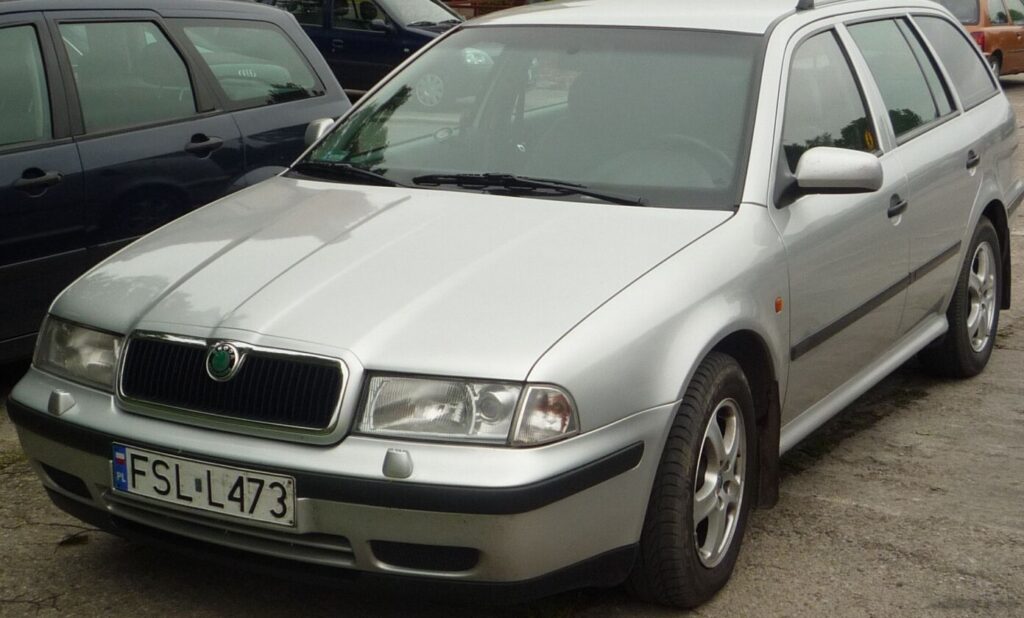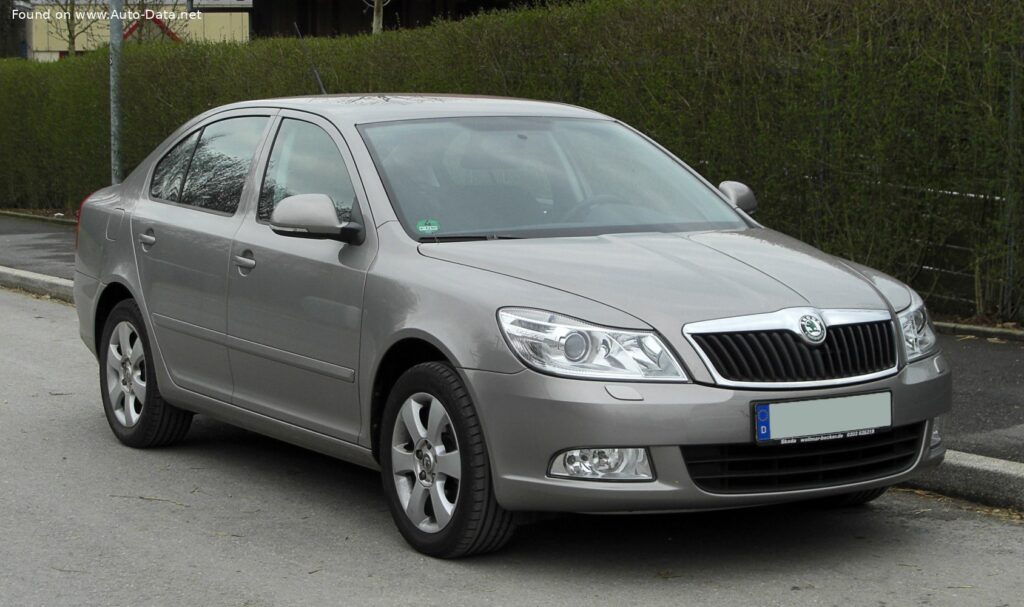
The Skoda Octavia II, specifically the facelifted version introduced in 2009, represented a significant evolution of Skoda’s popular compact car. The 1.2 TSI (105 hp) variant, launched in March 2010 and continuing through 2013, was positioned as the entry-level engine option within the Octavia II range. It catered to buyers seeking a fuel-efficient and affordable hatchback, offering a balance between practicality and running costs. This model was built on the Volkswagen Group’s A5 (1HX0) platform, shared with the Volkswagen Golf Mk5 and Mk6, Audi A3, and SEAT Leon.
The 1.2 TSI Engine and its Role in the Octavia II Lineup
The 1.2 TSI engine was a key component of Skoda’s strategy to offer a wider range of powertrain options to appeal to diverse customer needs. Compared to the more powerful 1.4 TSI and 1.8 TSI engines available in the Octavia II, the 1.2 TSI offered a more economical alternative. It also differed significantly from the diesel options, such as the 1.9 TDI and 2.0 TDI, which prioritized fuel economy and torque over outright power. The 1.2 TSI was aimed at drivers who primarily used their vehicles for commuting and everyday transportation, where fuel efficiency and lower purchase price were paramount.
Powertrain & Engine Architecture
The heart of this Octavia variant is the CBZB engine code, a 1.2-liter inline-four cylinder gasoline engine. This engine utilizes direct fuel injection (FSI – Fuel Stratified Injection) and is turbocharged with an intercooler. Direct injection allows for more precise fuel delivery, improving efficiency and reducing emissions. The turbocharger, a key element of the TSI (Turbocharged Stratified Injection) technology, provides a significant boost in power output compared to a naturally aspirated engine of similar displacement. The engine produces 105 horsepower at 5000 rpm and 175 Nm (129.07 lb-ft) of torque between 1550 and 4100 rpm. This broad torque curve contributes to good drivability in everyday situations.
The 1.2 TSI engine features a four-valve-per-cylinder configuration and a single overhead camshaft (SOHC). The engine’s block is constructed from cast iron, while the cylinder head is made of aluminum. The engine’s oil capacity is 3.9 liters (4.12 US quarts / 3.43 UK quarts), and it requires oil meeting specific Volkswagen Group specifications. The engine is transversely mounted in the front of the vehicle, driving the front wheels.
Transmission
The 1.2 TSI Octavia II was primarily equipped with a six-speed manual transmission. This transmission was chosen to maximize fuel efficiency and provide a more engaging driving experience. The gear ratios were optimized to take advantage of the engine’s torque curve, providing adequate acceleration in most driving situations. While an automatic transmission (typically a seven-speed DSG dual-clutch transmission) was available as an option, it was less common with the 1.2 TSI engine due to cost considerations and the desire to maintain fuel economy.
Driving Characteristics
The 1.2 TSI Octavia II offered a respectable, if not exhilarating, driving experience. Acceleration from 0 to 100 km/h (0 to 62 mph) took approximately 10.8 seconds, while 0 to 60 mph was achieved in around 10.3 seconds. The top speed was rated at 192 km/h (119.3 mph). The engine felt responsive at lower speeds, thanks to the turbocharger, but power did begin to taper off at higher engine speeds. Compared to the 1.4 TSI or 1.8 TSI models, the 1.2 TSI felt noticeably less powerful, particularly when fully loaded or tackling steep inclines. However, the six-speed manual transmission allowed drivers to keep the engine in its optimal power band, maximizing performance. The gear ratios were well-chosen for everyday driving, providing smooth and predictable shifts.
Equipment & Trim Levels
The 1.2 TSI Octavia II typically came with a reasonable level of standard equipment. This included power windows, central locking, air conditioning, an audio system with CD player, and ABS brakes. Interior upholstery was typically cloth, with a functional and durable design. Dashboard configuration was consistent across the Octavia II range, featuring a clear and easy-to-read instrument cluster. Optional extras included alloy wheels, a sunroof, parking sensors, and a more advanced audio system with navigation. Trim levels varied depending on the market, but generally followed a progression from basic “Classic” or “Active” trims to more well-equipped “Ambiente” or “Elegance” trims. Higher trims often included features such as automatic climate control, cruise control, and upgraded interior materials.
Chassis & Braking
The Octavia II’s chassis was designed to provide a comfortable and stable ride. The front suspension utilized an independent McPherson strut setup with coil springs and an anti-roll bar. The rear suspension employed an independent multi-link spring suspension, also with a stabilizer bar. This configuration provided a good balance between ride comfort and handling. Brakes consisted of ventilated discs on all four wheels, providing adequate stopping power for the vehicle’s weight and performance. ABS (Anti-lock Braking System) was standard, enhancing safety during emergency braking situations. The steering system was a rack and pinion type with electric power steering, offering light and precise steering feel.
Market Reception & Comparison
The 1.2 TSI Octavia II was generally well-received by automotive critics as a practical and economical choice. Its fuel economy figures – 7.1 l/100 km (33.1 US mpg) urban, 4.9 l/100 km (48 US mpg) extra-urban, and 5.7 l/100 km (41.3 US mpg) combined – were particularly praised. Compared to the higher-output engines, the 1.2 TSI offered significantly better fuel efficiency. However, some critics noted that the engine could feel underpowered in certain situations. Reliability was generally good, although some early 1.2 TSI engines were known to experience issues with the timing chain tensioner. Compared to the 1.4 TSI, the 1.2 TSI offered a lower purchase price but less performance. The diesel models, while more expensive, provided even better fuel economy and higher torque.
Technical Specifications
| Brand | Skoda |
| Model | Octavia II (facelift 2009) |
| Type (Engine) | 1.2 TSI (105 Hp) |
| Start of production | March, 2010 |
| End of production | 2013 |
| Fuel consumption (urban) | 7.1 l/100 km (33.1 US mpg) |
| Fuel consumption (extra urban) | 4.9 l/100 km (48 US mpg) |
| Fuel consumption (combined) | 5.7 l/100 km (41.3 US mpg) |
| Fuel Type | Petrol (Gasoline) |
| Acceleration 0 – 100 km/h | 10.8 sec |
| Acceleration 0 – 62 mph | 10.8 sec |
| Acceleration 0 – 60 mph | 10.3 sec |
| Maximum speed | 192 km/h (119.3 mph) |
| Emission standard | Euro 5 |
| Power | 105 Hp @ 5000 rpm |
| Torque | 175 Nm @ 1550-4100 rpm (129.07 lb.-ft.) |
| Engine layout | Front, Transverse |
| Engine Model/Code | CBZB |
| Engine displacement | 1197 cm3 (73.05 cu. in.) |
| Number of cylinders | 4 |
| Fuel injection system | Direct injection |
| Engine oil capacity | 3.9 l (4.12 US qt | 3.43 UK qt) |
| Kerb Weight | 1265 kg (2788.85 lbs.) |
| Max. weight | 1865 kg (4111.62 lbs.) |
| Trunk (boot) space – minimum | 585 l (20.66 cu. ft.) |
| Trunk (boot) space – maximum | 1455 l (51.38 cu. ft.) |
| Fuel tank capacity | 55 l (14.53 US gal | 12.1 UK gal) |
| Length | 4569 mm (179.88 in.) |
| Width | 1769 mm (69.65 in.) |
| Height | 1462 mm (57.56 in.) |
| Wheelbase | 2578 mm (101.5 in.) |
| Number of gears | 6, manual transmission |
Legacy
The 1.2 TSI engine, while eventually superseded by newer and more efficient powertrains, proved to be a reliable and economical option for many Skoda Octavia II owners. In the used car market, these models continue to offer good value for money, particularly for buyers seeking a practical and fuel-efficient hatchback. While the timing chain tensioner issue is a known concern, regular maintenance and preventative checks can mitigate this risk. The 1.2 TSI Octavia II remains a popular choice for those seeking a well-built and affordable compact car.