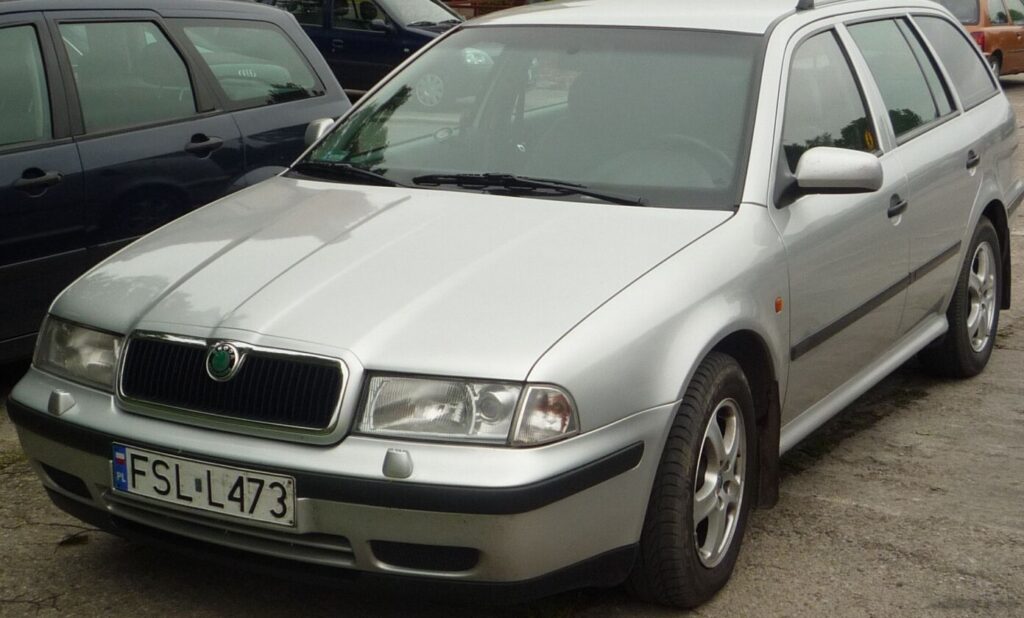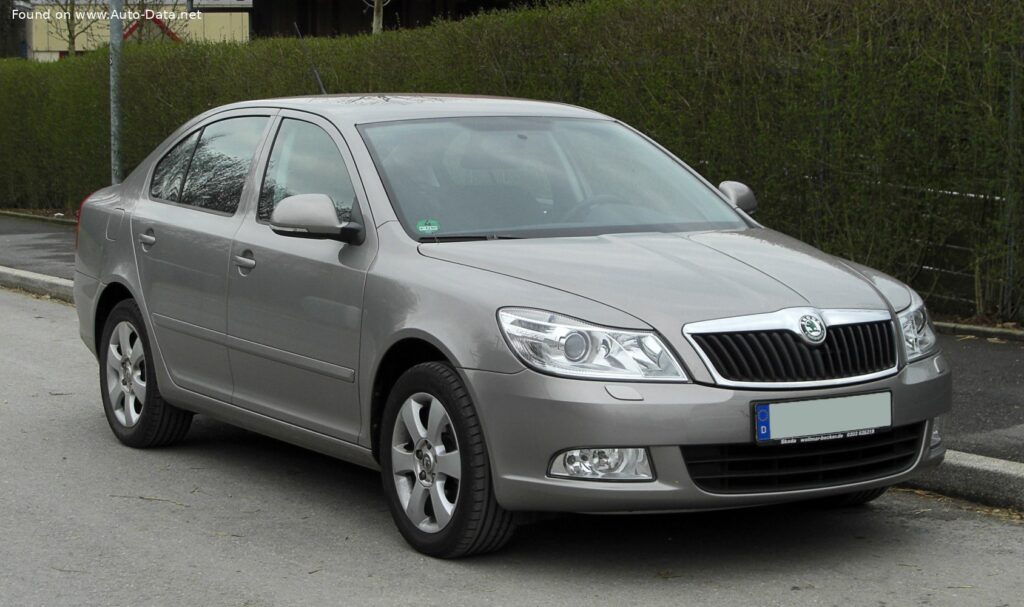
The Skoda Octavia II, specifically the facelifted version introduced in 2009, represented a significant evolution of Skoda’s popular compact car. Among the various engine and transmission options available, the 1.4 MPI (80 horsepower) variant with a five-speed manual transmission occupied a crucial entry-level position in the lineup from its introduction in 2009 through its discontinuation in June 2013. This model was designed to offer affordability and practicality, appealing to buyers prioritizing fuel efficiency and low running costs over outright performance. It was built on the Volkswagen Group’s A5 (1Z) platform, also known internally as the 1HX0 platform, shared with models like the Volkswagen Golf Mk5 and Mk6, and the SEAT Leon Mk2.
The 1.4 MPI (80 hp) Octavia II: Positioning and Overview
The 1.4 MPI 80 hp Octavia II facelift served as the gateway to the Octavia range. It was positioned below the more powerful 1.6 MPI, 1.8 TSI, and diesel variants (1.9 TDI and 2.0 TDI). Skoda deliberately offered this lower-powered engine to attract budget-conscious buyers, particularly in markets where taxation was linked to engine displacement or horsepower. The facelift brought cosmetic updates to the Octavia II, including revised headlights, a new front grille, and interior refinements, but the core mechanicals of the 1.4 MPI engine remained largely unchanged from the pre-facelift model.
Powertrain & Engine Architecture
The heart of this Octavia variant is the CGGA engine code, a 1.4-liter inline four-cylinder gasoline engine. This engine utilizes a naturally aspirated configuration, meaning it doesn’t employ a turbocharger or supercharger. It features a multi-port fuel injection (MPI) system, delivering fuel directly into the intake ports rather than directly into the combustion chamber. The engine boasts a displacement of 1390 cm³ (84.82 cubic inches) with a bore of 76.5 mm (3.01 inches) and a stroke of 75.6 mm (2.98 inches). The compression ratio is set at 10.5:1. The valvetrain is a double overhead camshaft (DOHC) design with four valves per cylinder, contributing to improved breathing and efficiency. The engine produces 80 hp at 5000 rpm and 132 Nm (97.36 lb-ft) of torque at 3800 rpm.
The engine is paired with a five-speed manual transmission. This transmission was a standard unit across several Volkswagen Group models and is known for its relatively simple and robust design. The gear ratios are optimized for fuel economy and everyday drivability rather than sporty acceleration. First gear is relatively short for easy starting, while fifth gear is tall to reduce engine speed at highway cruising speeds.
Engine Code Specifics: CGGA
The CGGA engine is a member of the EA111 engine family, known for its widespread use in Volkswagen Group vehicles. While generally reliable, the EA111 engines, including the CGGA, are known to be susceptible to carbon buildup on the intake valves over time, particularly with infrequent oil changes or extended periods of short-distance driving. This buildup can reduce engine performance and fuel economy. Regular use of fuel system cleaners and ensuring timely oil changes can help mitigate this issue.
Driving Characteristics
The 1.4 MPI 80 hp Octavia II offers modest performance. Acceleration from 0 to 100 km/h (0-62 mph) takes approximately 14.2 seconds, and 0 to 60 mph is achieved in around 13.5 seconds. The top speed is rated at 173 km/h (107.5 mph). The engine feels somewhat strained when accelerating hard, particularly when fully loaded or climbing hills. The five-speed manual transmission requires frequent shifting to maintain momentum. Compared to the 1.6 MPI or 1.8 TSI variants, the 1.4 MPI feels significantly less powerful. The 1.6 MPI offered a noticeable improvement in acceleration and overall responsiveness, while the 1.8 TSI provided a substantial performance boost with its turbocharged engine. However, the 1.4 MPI excels in fuel economy, making it a practical choice for urban commuting and long-distance journeys where outright speed is not a priority.
Equipment & Trim Levels
The 1.4 MPI Octavia II typically came with a basic level of equipment. Standard features generally included power steering, electric front windows, central locking, an immobilizer, and ABS (Anti-lock Braking System). Interior upholstery was typically cloth, and the dashboard featured a functional but relatively simple design. Optional extras included air conditioning, alloy wheels, a radio with CD player, and rear electric windows. Higher trim levels, available with the more powerful engines, offered features like climate control, upgraded audio systems, and more luxurious interior trim.
Chassis & Braking
The Octavia II’s chassis features an independent McPherson strut suspension at the front, providing a comfortable ride and decent handling. The rear suspension utilizes a torsion beam setup, which is a cost-effective solution that offers adequate stability. The front brakes are ventilated discs, while the rear brakes are solid discs. The steering is electric power-assisted, providing light and easy steering feel. The standard tire size is 195/65 R15, mounted on 6J x 15 inch steel or alloy wheels. The suspension setup is tuned for comfort rather than sporty handling, prioritizing ride quality over sharp cornering.
Market Reception & Comparison
The 1.4 MPI Octavia II was generally well-received as an affordable and practical family car. Critics praised its fuel efficiency and spacious interior, but noted its lack of performance. Compared to the 1.6 MPI, the 1.4 MPI offered lower running costs but at the expense of drivability. The diesel variants (1.9 TDI and 2.0 TDI) were favored by those prioritizing fuel economy and torque, while the 1.8 TSI appealed to drivers seeking a more engaging driving experience. Fuel consumption figures are rated at 9.6 l/100 km (24.5 US mpg) in urban conditions, 5.6 l/100 km (42 US mpg) on the extra-urban cycle, and 7.0 l/100 km (33.6 US mpg) combined. The 1.4 MPI generally proved to be a reliable engine, although, as mentioned earlier, it is susceptible to carbon buildup if not properly maintained.
Technical Specifications
| Brand | Skoda |
| Model | Octavia II (facelift 2009) |
| Type (Engine) | 1.4 MPI (80 Hp) |
| Start of production | 2009 |
| End of production | June, 2013 |
| Fuel Type | Petrol (Gasoline) |
| Engine Displacement | 1390 cm3 (84.82 cu. in.) |
| Number of Cylinders | 4 |
| Engine Configuration | Inline |
| Power | 80 Hp @ 5000 rpm |
| Torque | 132 Nm @ 3800 rpm (97.36 lb.-ft. @ 3800 rpm) |
| Compression Ratio | 10.5:1 |
| Fuel Injection System | Multi-port manifold injection |
| Engine Code | CGGA |
| Acceleration 0-100 km/h | 14.2 sec |
| Acceleration 0-62 mph | 14.2 sec |
| Maximum Speed | 173 km/h (107.5 mph) |
| Kerb Weight | 1285 kg (2832.94 lbs.) |
| Fuel Tank Capacity | 55 l (14.53 US gal | 12.1 UK gal) |
| Trunk (boot) space – minimum | 585 l (20.66 cu. ft.) |
| Trunk (boot) space – maximum | 1455 l (51.38 cu. ft.) |
| Transmission | 5-speed manual |
Legacy
The 1.4 MPI Octavia II remains a relatively common sight on used car markets. Its affordability and reputation for reliability (when properly maintained) make it an attractive option for budget-conscious buyers. While the engine lacks the performance of its larger counterparts, it is known for its fuel efficiency and relatively low maintenance costs. The CGGA engine, while prone to carbon buildup, is generally durable and can provide many years of service with regular maintenance. Today, these Octavias represent a practical and economical choice for those seeking a spacious and reliable family car.