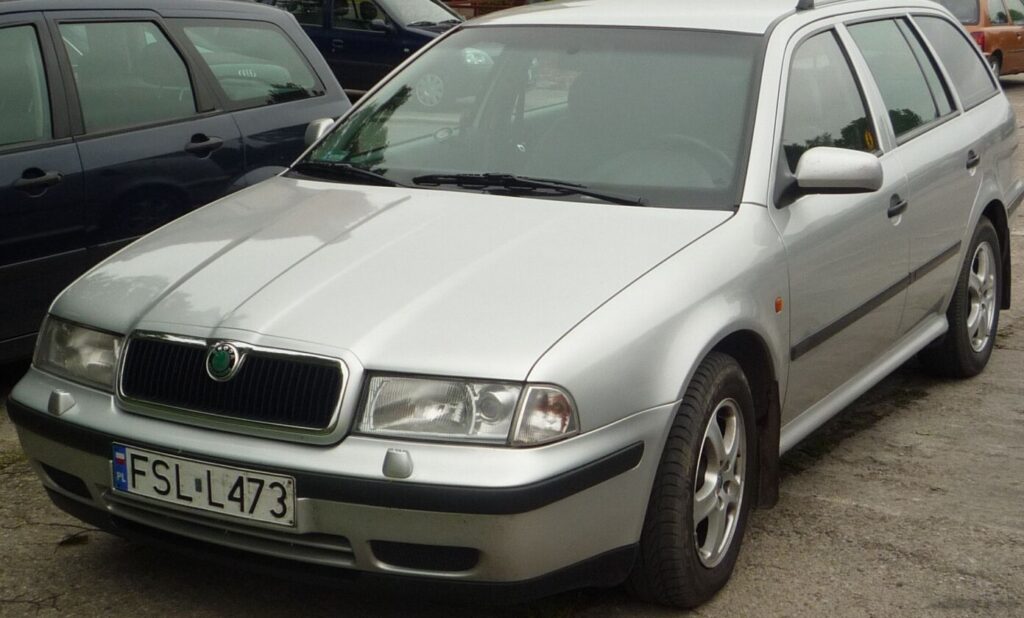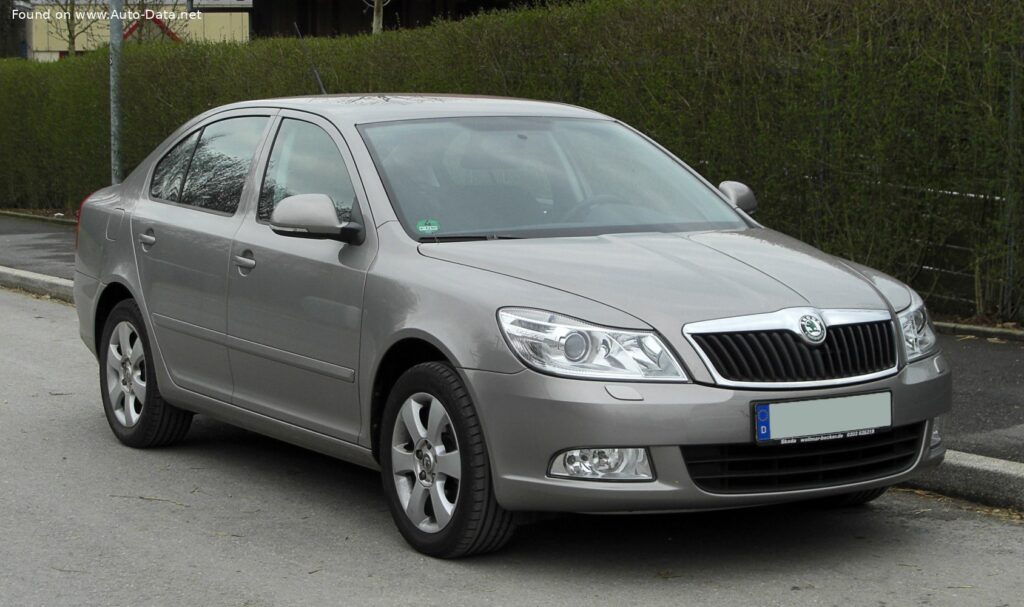
The Skoda Octavia II, specifically the facelifted version introduced in 2009, represented a significant evolution of Skoda’s popular compact car. Among the various engine and transmission options available, the 1.4 TSI (122 hp) variant with a six-speed manual transmission occupied a crucial middle ground in the lineup. Produced from 2009 through June 2013, this version aimed to balance fuel efficiency, performance, and affordability, appealing to a broad range of buyers seeking a practical and modern hatchback. It was built on the Volkswagen Group’s A5 (1Z) platform, also known internally as the 1HX0 platform, shared with models like the Volkswagen Golf Mk5 and Mk6, and the SEAT Leon Mk2.
The 1.4 TSI (122 hp) Octavia II: Positioning and Overview
The 1.4 TSI 122 hp Octavia II facelift was positioned as a mainstream offering within the Octavia range. It sat above the lower-powered 1.2 TSI engines and below the more potent 1.8 TSI and 2.0 TDI diesel options. This placement made it attractive to buyers who desired more than basic transportation but weren’t necessarily seeking the highest levels of performance. The facelift brought cosmetic updates, including revised headlights, a new front grille, and interior refinements, enhancing the Octavia’s overall appeal. The 1.4 TSI engine was a key component of Skoda’s strategy to offer a modern, fuel-efficient engine lineup.
Powertrain & Engine Architecture
At the heart of this Octavia variant lies the EA111 1.4-liter turbocharged direct-injection (TSI) engine, specifically the CAXA engine code. This engine is a four-cylinder, inline configuration with a displacement of 1390 cm³ (84.82 cubic inches). It features a sophisticated direct fuel injection system, delivering fuel directly into the combustion chamber for improved efficiency and power. The engine utilizes a single turbocharger with an intercooler to boost performance. The valvetrain is a dual overhead camshaft (DOHC) design with four valves per cylinder, optimizing airflow for increased power output.
The 1.4 TSI engine produces 122 hp (87.8 hp/liter) at 5000 rpm and 200 Nm (147.51 lb-ft) of torque between 1500 and 4000 rpm. This broad torque curve provides good responsiveness in everyday driving situations. The engine is transversely mounted in the front of the vehicle. The six-speed manual transmission was the standard gearbox for this variant, offering precise gear changes and contributing to the car’s overall efficiency. The transmission’s gear ratios were tuned to maximize both acceleration and fuel economy.
Driving Characteristics
The 1.4 TSI 122 hp Octavia II offered a balanced driving experience. Acceleration from 0 to 100 km/h (0-62 mph) took approximately 9.7 seconds, while 0-60 mph was achieved in around 9.2 seconds. While not a sports car, the turbocharger provided a noticeable boost in power, making overtaking maneuvers relatively effortless. The six-speed manual transmission allowed drivers to keep the engine in its optimal power band, enhancing responsiveness. Compared to the lower-powered 1.2 TSI, the 1.4 TSI offered a significant improvement in performance, particularly at higher speeds and when carrying a full load. However, it lacked the outright punch of the 1.8 TSI or the strong low-end torque of the diesel engines.
The engine’s turbo lag was minimal, providing a relatively linear power delivery. The steering was light and precise, making the Octavia easy to maneuver in urban environments. The suspension provided a comfortable ride, absorbing bumps and imperfections in the road surface effectively. Overall, the driving experience was refined and practical, making the 1.4 TSI Octavia a pleasant daily driver.
Equipment & Trim Levels
The 1.4 TSI Octavia II facelift was typically offered in several trim levels, including Active, Ambition, and Elegance. The Active trim served as the entry-level option, featuring standard equipment such as air conditioning, electric front windows, a basic audio system, and ABS brakes. The Ambition trim added features like alloy wheels, front fog lights, a multi-function steering wheel, and cruise control. The top-of-the-line Elegance trim included luxuries such as automatic climate control, rain sensors, parking sensors, and upgraded upholstery.
Interior upholstery was typically cloth in the Active and Ambition trims, with leather options available on the Elegance trim. The dashboard layout was functional and well-designed, with clear instrumentation and intuitive controls. Optional extras included a sunroof, a navigation system, and a premium sound system. The Octavia II was known for its spacious interior and generous boot capacity, offering ample room for passengers and luggage.
Chassis & Braking
The Octavia II’s chassis featured an independent McPherson strut suspension at the front, providing good handling and ride comfort. The rear suspension utilized a torsion beam setup, which was cost-effective and provided adequate stability. A transverse stabilizer bar was fitted to both the front and rear axles to reduce body roll during cornering. The braking system consisted of ventilated discs at the front and solid discs at the rear. ABS (Anti-lock Braking System) was standard on all models, enhancing safety and control during emergency braking situations. The electric power steering provided a light and responsive feel, making the Octavia easy to maneuver.
Market Reception & Comparison
The Skoda Octavia II 1.4 TSI (122 hp) received generally positive reviews from automotive critics. It was praised for its fuel efficiency, comfortable ride, spacious interior, and competitive price. Critics noted that the engine provided adequate performance for most driving situations, although it wasn’t as exciting as the more powerful options. Fuel economy figures were respectable, with combined fuel consumption averaging around 6.6 l/100 km (35.6 US mpg).
Compared to the 1.8 TSI, the 1.4 TSI offered better fuel economy but less power. The 2.0 TDI diesel engines provided even better fuel economy and stronger low-end torque, but they came with a higher purchase price and potential maintenance costs associated with diesel particulate filters. The 1.4 TSI Octavia II represented a good compromise between performance, efficiency, and affordability, making it a popular choice among buyers seeking a practical and well-rounded compact car.
Technical Specifications
| Engine Model/Code | CAXA |
| Engine Displacement | 1390 cm³ (84.82 cu. in.) |
| Number of Cylinders | 4, Inline |
| Cylinder Bore | 76.5 mm (3.01 in.) |
| Piston Stroke | 75.6 mm (2.98 in.) |
| Compression Ratio | 10.5:1 |
| Number of Valves per Cylinder | 4 |
| Fuel Injection System | Direct Injection |
| Engine Aspiration | Turbocharger, Intercooler |
| Valvetrain | DOHC |
| Maximum Power | 122 hp @ 5000 rpm |
| Maximum Torque | 200 Nm (147.51 lb.-ft.) @ 1500-4000 rpm |
| Fuel Consumption (Urban) | 8.8 l/100 km (26.7 US mpg) |
| Fuel Consumption (Extra Urban) | 5.3 l/100 km (44.4 US mpg) |
| Fuel Consumption (Combined) | 6.6 l/100 km (35.6 US mpg) |
| Acceleration 0-100 km/h | 9.7 sec |
| Maximum Speed | 203 km/h (126.14 mph) |
| Kerb Weight | 1340 kg (2954.19 lbs.) |
| Fuel Tank Capacity | 55 l (14.53 US gal) |
| Transmission | 6-speed Manual |
Legacy
The 1.4 TSI engine, including the CAXA variant found in the Octavia II, proved to be a relatively reliable powertrain when properly maintained. Common issues included occasional turbocharger failures and problems with the direct injection system. However, these were not widespread and could often be prevented with regular servicing and the use of high-quality fuel and oil. Today, used Octavia II 1.4 TSI models represent a good value proposition for buyers seeking an affordable and practical compact car. Their fuel efficiency, spacious interior, and relatively low maintenance costs make them an attractive option in the used car market. The 1.4 TSI engine’s reputation for reliability, combined with the Octavia’s overall build quality, ensures that these vehicles continue to provide years of dependable service.