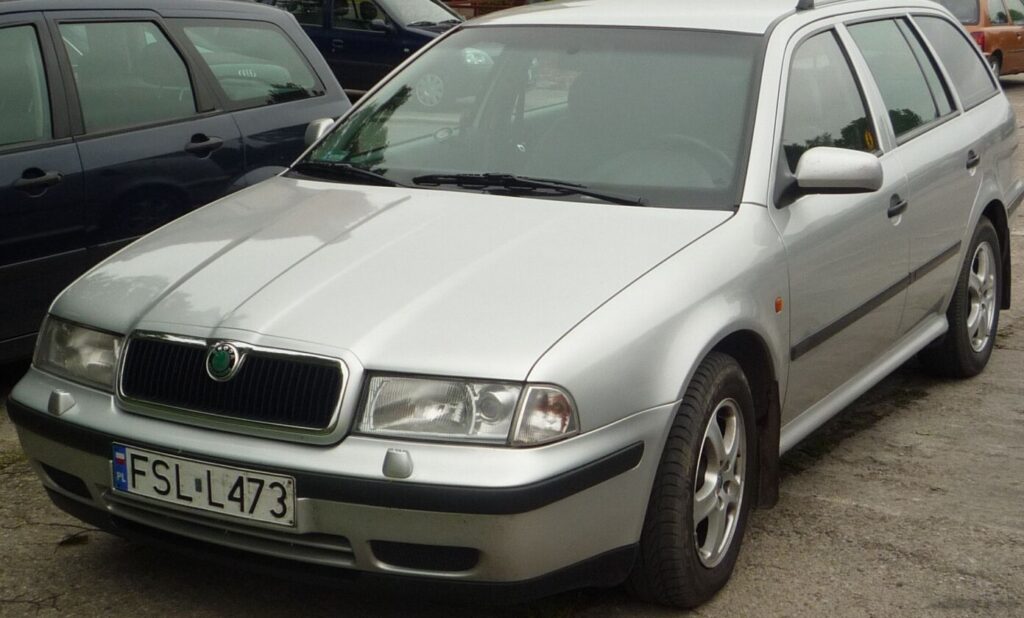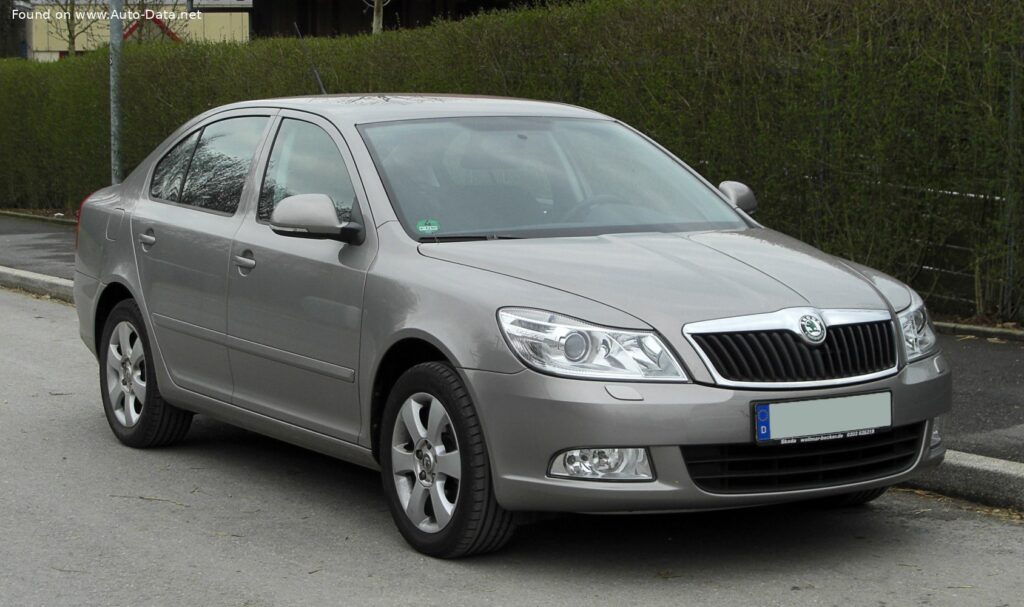
The Skoda Octavia II, specifically the facelifted version introduced in 2009, represented a significant evolution of Skoda’s popular compact car. The 2.0 TDI CR (140 hp) variant, produced from 2010 to 2013, was a mainstay of the Octavia II lineup, positioned as a mid-range offering that balanced fuel efficiency, performance, and practicality. Built on the Volkswagen Group’s A5 (1HX0) platform – shared with the Volkswagen Golf Mk5 and Mk6, Audi A3, and SEAT Leon – the Octavia II aimed to provide a spacious and well-equipped vehicle at a competitive price point. This particular engine and transmission combination proved popular in European markets, offering a compelling alternative to gasoline engines and lower-powered diesel options.
The 2.0 TDI CR (140 hp) Engine and Powertrain
The heart of this Octavia variant is the 2.0-liter four-cylinder diesel engine, designated CFHC or CLCB depending on the specific production year and market. This engine belongs to the Common Rail (CR) family of Volkswagen Group diesel engines, utilizing a high-pressure common rail fuel injection system for improved efficiency and reduced emissions. The CR system allowed for multiple injections per combustion cycle, optimizing fuel atomization and combustion control. The engine boasts a displacement of 1968 cc (120.09 cubic inches) and features an inline configuration with four valves per cylinder. Bore and stroke dimensions are 81 mm (3.19 inches) and 95.5 mm (3.76 inches) respectively, resulting in a compression ratio of 18.5:1. A turbocharger with an intercooler is employed to boost power output and improve torque delivery.
The 140 hp variant produced a maximum power output of 140 horsepower at 4000 rpm and a substantial 320 Nm (236.02 lb-ft) of torque at 1750 rpm. This torque figure, available from relatively low engine speeds, provided strong pulling power and made the Octavia 2.0 TDI CR a capable performer for everyday driving and longer journeys. The engine’s power per liter is 71.1 hp/l. The engine is transversely mounted in the front of the vehicle. The engine oil capacity is 4.3 liters (4.54 US quarts / 3.78 UK quarts) and requires a specification adhering to Volkswagen Group standards. The cooling system holds 8.7 liters (9.19 US quarts / 7.65 UK quarts) of coolant.
Transmission
While a six-speed manual transmission was the most common pairing for the 2.0 TDI CR engine, a six-speed Direct-Shift Gearbox (DSG) automatic transmission was also available as an option. The DSG transmission, also known as a dual-clutch transmission, offered quicker and smoother gear changes compared to a traditional torque converter automatic. It operated by utilizing two separate clutches for odd and even gears, allowing for pre-selection of the next gear and seamless shifts. The availability of the DSG transmission added to the Octavia’s appeal for drivers seeking a more refined and convenient driving experience.
Driving Characteristics
The Skoda Octavia 2.0 TDI CR (140 hp) offered a compelling blend of performance and fuel economy. Acceleration from 0 to 100 km/h (0-62 mph) took approximately 9.6 seconds, while 0-60 mph was achieved in around 9.1 seconds. The maximum speed was electronically limited to 208 km/h (129.25 mph). The engine’s strong low-end torque made it particularly well-suited for overtaking maneuvers and driving on hilly terrain. Compared to the lower-powered 1.6 TDI variants, the 2.0 TDI CR provided noticeably more responsive acceleration and a more relaxed driving experience, especially when fully loaded. While not as sporty as the higher-output 2.0 TDI variants (typically around 170 hp), the 140 hp version offered a good balance between performance and fuel efficiency. The weight-to-power ratio of 10.1 kg/hp and weight-to-torque ratio of 4.4 kg/Nm contributed to its respectable performance.
Equipment & Trim Levels
The 2.0 TDI CR variant of the Octavia II was typically offered in mid-range trim levels, such as Ambiente or Elegance, depending on the specific market. Standard equipment generally included air conditioning, power windows, central locking, an audio system with CD player, and alloy wheels. Higher trim levels added features like automatic climate control, a multi-function steering wheel, parking sensors, and upgraded upholstery. Optional extras included a sunroof, navigation system, and leather seats. Interior upholstery was typically cloth, with leather options available. The dashboard layout was functional and well-designed, offering good ergonomics and clear instrumentation.
Chassis & Braking
The Octavia II featured an independent McPherson strut suspension at the front and a torsion beam suspension at the rear. This setup provided a comfortable ride quality while maintaining reasonable handling characteristics. A transverse stabilizer bar was included to reduce body roll during cornering. The braking system consisted of ventilated discs at the front and discs at the rear. Anti-lock Braking System (ABS) was standard, enhancing braking performance and stability. Steering was provided by a power-assisted rack and pinion system. Tire sizes varied depending on the trim level, ranging from 195/65 R15 to 225/45 R17, with wheel rim sizes of 6J x 15, 6.5J x 16, and 7J x 17.
Market Reception & Comparison
The Skoda Octavia II 2.0 TDI CR (140 hp) was generally well-received by automotive critics. It was praised for its spacious interior, comfortable ride, and fuel-efficient engine. Fuel consumption figures were typically around 5.7 l/100 km (41.3 US mpg / 49.6 UK mpg) on the combined cycle, making it an economical choice for long-distance driving. Compared to the 1.6 TDI variants, the 2.0 TDI CR offered significantly better performance, while remaining competitive in terms of fuel economy. Reliability was generally good, although some owners reported issues with the diesel particulate filter (DPF) and the DSG transmission (if equipped). The Octavia II offered a compelling value proposition compared to rivals like the Volkswagen Golf, Ford Focus, and Opel Astra.
Technical Specifications
| Brand | Skoda |
| Model | Octavia |
| Generation | Octavia II (facelift 2009) |
| Type (Engine) | 2.0 TDI CR (140 Hp) |
| Start of production | 2010 year |
| End of production | 2013 year |
| Fuel consumption (urban) | 7.2 l/100 km (32.7 US mpg) |
| Fuel consumption (extra urban) | 4.8 l/100 km (49 US mpg) |
| Fuel consumption (combined) | 5.7 l/100 km (41.3 US mpg) |
| Fuel Type | Diesel |
| Acceleration 0 – 100 km/h | 9.6 sec |
| Acceleration 0 – 60 mph | 9.1 sec |
| Maximum speed | 208 km/h (129.25 mph) |
| Power | 140 Hp @ 4000 rpm |
| Torque | 320 Nm @ 1750 rpm (236.02 lb.-ft. @ 1750 rpm) |
| Engine displacement | 1968 cm3 (120.09 cu. in.) |
| Kerb Weight | 1410 kg (3108.52 lbs.) |
| Max. weight | 1995 kg (4398.22 lbs.) |
| Trunk (boot) space – minimum | 585 l (20.66 cu. ft.) |
| Trunk (boot) space – maximum | 1455 l (51.38 cu. ft.) |
| Fuel tank capacity | 55 l (14.53 US gal) |
| Length | 4569 mm (179.88 in.) |
| Width | 1769 mm (69.65 in.) |
| Height | 1462 mm (57.56 in.) |
Legacy
The Skoda Octavia II 2.0 TDI CR (140 hp) has proven to be a relatively reliable and durable vehicle. The 2.0 TDI engine, while not without its potential issues (such as DPF clogging and turbocharger wear), is generally considered robust when properly maintained. In the used car market, these Octavias remain popular due to their practicality, fuel efficiency, and affordability. They represent a good value proposition for buyers seeking a spacious and well-equipped compact car. However, potential buyers should be aware of the potential maintenance costs associated with diesel engines, particularly the DPF and fuel injection system. The availability of spare parts is generally good, and the Octavia II benefits from a large and active owner community.