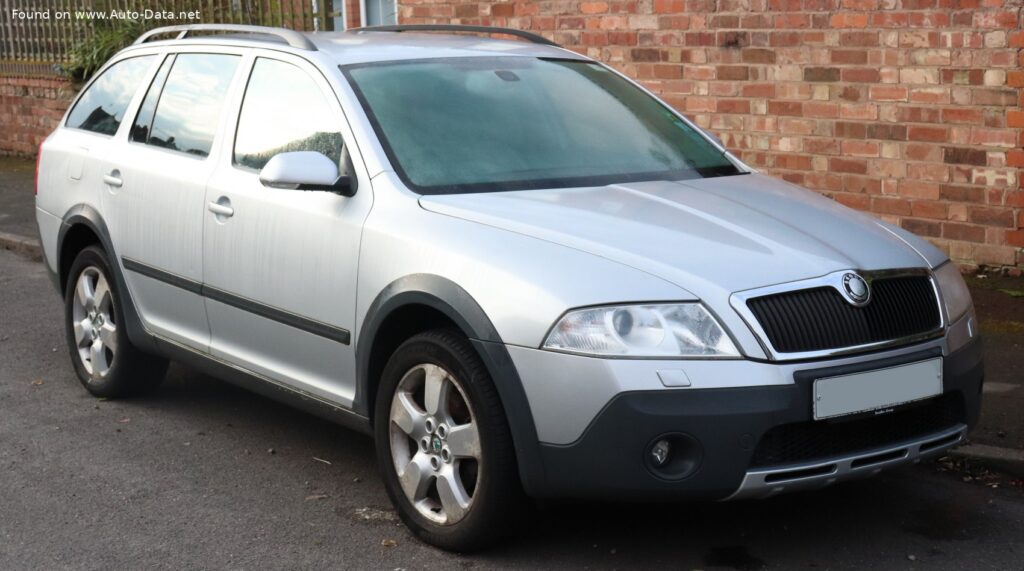
The Skoda Octavia II Scout 2.0 TDI 4×4, produced between 2006 and 2008, was a versatile all-wheel-drive variant of the popular Octavia II series. Positioned as a crossover-estate, the Scout aimed to bridge the gap between a traditional station wagon and a soft-road vehicle, offering increased ground clearance and rugged styling. It represented a mid-range offering within the Octavia II lineup, slotting above the standard Octavia models but below the more performance-focused vRS variants. The Octavia II Scout was built on the Volkswagen Group’s A5 (1Z) platform, also known as the 1HX0 platform for Skoda, and shared many components with the Volkswagen Golf Mk5 and other vehicles within the group.
Powertrain & Engine Architecture
The heart of the Octavia II Scout 2.0 TDI 4×4 is the EA188 series 2.0-liter inline four-cylinder diesel engine, specifically the BKD engine code. This engine is a turbocharged common rail diesel, representing a significant upgrade over earlier pump-nozzle designs. It featured a single overhead camshaft (SOHC) operating four valves per cylinder. The engine’s turbocharger, coupled with an intercooler, provided increased air density for improved combustion and power output. Fuel injection was handled by common rail direct injection, allowing for precise fuel metering and reduced emissions.
The 2.0 TDI engine produced 140 horsepower (hp) at 4,000 rpm and 236 lb-ft of torque at 1,750 rpm. This torque output, available from relatively low engine speeds, was a key characteristic of the engine, providing strong pulling power for everyday driving and towing. The engine’s displacement is 1,968 cubic centimeters (120.09 cubic inches) with a bore of 81mm and a stroke of 95.5mm. The compression ratio was set at 18.5:1. The engine required 3.8 liters (4.02 US quarts) of oil meeting specific Volkswagen standards and 8.2 liters (8.66 US quarts) of coolant.
The engine was mated to a six-speed manual transmission, delivering power to all four wheels via Skoda’s 4×4 all-wheel-drive system. This system utilized a viscous coupling to distribute torque between the front and rear axles as needed, providing enhanced traction in slippery conditions. The transmission’s gear ratios were optimized for a balance of fuel efficiency and performance, with a final drive ratio contributing to the vehicle’s overall acceleration and top speed.
Fuel Injection and Turbocharging
The common rail direct injection system used in the BKD engine allowed for multiple injection events per combustion cycle, optimizing fuel burn and reducing noise. The turbocharger, a variable geometry turbo (VGT), adjusted its vanes to optimize airflow across a wider range of engine speeds, minimizing turbo lag and maximizing boost pressure. The intercooler cooled the compressed air from the turbocharger, further increasing air density and improving engine efficiency.
Driving Characteristics
The Octavia II Scout 2.0 TDI 4×4 offered a comfortable and capable driving experience. The 140 hp engine, while not exceptionally powerful, provided sufficient power for most driving situations. Acceleration from 0 to 62 mph (0-100 km/h) took approximately 10.2 seconds, and the vehicle had a top speed of 122.41 mph (197 km/h). The readily available 236 lb-ft of torque made overtaking and hill climbing relatively effortless.
The all-wheel-drive system provided excellent traction, particularly on loose surfaces such as gravel or snow. The raised ride height, a defining feature of the Scout model, improved ground clearance and allowed for tackling moderately challenging terrain. Compared to the standard Octavia or the higher-output TDI variants, the 140 hp version offered a more balanced driving experience, prioritizing fuel economy and usability over outright performance. The six-speed manual transmission allowed for precise gear selection and contributed to a more engaging driving experience than an automatic transmission would have.
Equipment & Trim Levels
The Octavia II Scout 2.0 TDI 4×4 typically came well-equipped, reflecting its position as a mid-range model. Standard features included air conditioning, power windows, central locking, and an audio system. Safety features such as ABS (Anti-lock Braking System) and front airbags were also standard. The interior typically featured cloth upholstery, although leather options were available. The dashboard layout was functional and straightforward, with clear instrumentation.
Optional extras included alloy wheels, a sunroof, parking sensors, and a more advanced audio system. Some models were also equipped with features such as automatic climate control and heated seats. The Scout trim level also included unique exterior styling elements, such as plastic cladding around the wheel arches and sills, giving it a more rugged appearance.
Chassis & Braking
The Octavia II Scout featured a MacPherson strut front suspension and a multi-link rear suspension. The suspension was tuned to provide a comfortable ride while maintaining good handling characteristics. The Scout model benefited from a slightly stiffer suspension setup compared to the standard Octavia, to cope with the increased weight and potential for off-road use. The vehicle’s curb weight was 1,530 kg (3,373.07 lbs), with a maximum permissible weight of 2,190 kg (4,828.12 lbs).
The braking system consisted of ventilated discs on the front wheels and discs on the rear wheels. ABS was standard, providing enhanced braking control in emergency situations. The tires were typically 225/50 R17, providing a good balance of grip and ride comfort.
Market Reception & Comparison
The Skoda Octavia II Scout 2.0 TDI 4×4 was generally well-received by automotive critics. It was praised for its practicality, versatility, and fuel efficiency. The 2.0 TDI engine was considered a good compromise between performance and economy, and the all-wheel-drive system provided added security and capability. Fuel consumption was rated at 6.4 l/100 km (36.8 US mpg, 44.1 UK mpg), making it a relatively economical vehicle for its class.
Compared to other trims in the Octavia II lineup, the Scout offered a unique combination of features and capabilities. The higher-output TDI variants provided more performance, but at the expense of fuel economy. The petrol-powered Octavia models offered a different driving experience, but lacked the torque and fuel efficiency of the diesel engine. The Scout’s all-wheel-drive system set it apart from the standard Octavia models, making it a more appealing option for drivers who needed added traction or versatility.
Technical Specifications
| Brand | Skoda |
| Model | Octavia |
| Generation | Octavia II Scout |
| Type (Engine) | 2.0 TDI (140 Hp) 4×4 |
| Start of production | 2006 |
| End of production | 2008 |
| Fuel consumption (combined) | 6.4 l/100 km (36.8 US mpg, 44.1 UK mpg) |
| Fuel Type | Diesel |
| Acceleration 0 – 100 km/h | 10.2 sec |
| Acceleration 0 – 62 mph | 10.2 sec |
| Acceleration 0 – 60 mph | 9.7 sec |
| Maximum speed | 197 km/h (122.41 mph) |
| Emission standard | Euro 4 |
| Power | 140 Hp @ 4000 rpm |
| Torque | 320 Nm @ 1750 rpm (236.02 lb.-ft. @ 1750 rpm) |
| Engine layout | Front, Transverse |
| Engine Model/Code | EA188 / BKD |
| Engine displacement | 1968 cm3 (120.09 cu. in.) |
| Number of cylinders | 4 |
| Cylinder Bore | 81 mm (3.19 in.) |
| Piston Stroke | 95.5 mm (3.76 in.) |
| Compression ratio | 18.5:1 |
| Kerb Weight | 1530 kg (3373.07 lbs.) |
| Max. weight | 2190 kg (4828.12 lbs.) |
| Trunk (boot) space – minimum | 580 l (20.48 cu. ft.) |
| Trunk (boot) space – maximum | 1620 l (57.21 cu. ft.) |
| Fuel tank capacity | 60 l (15.85 US gal, 13.2 UK gal) |
| Length | 4572 mm (180 in.) |
| Width | 1779 mm (70.04 in.) |
| Height | 1484 mm (58.43 in.) |
| Wheelbase | 2578 mm (101.5 in.) |
| Drive wheel | All wheel drive (4×4) |
| Number of gears | 6 gears, manual transmission |
Legacy
The Skoda Octavia II Scout 2.0 TDI 4×4 has proven to be a reliable and durable vehicle. The EA188 engine, while not without its issues (such as potential DPF clogging), is generally considered a robust and long-lasting unit. The all-wheel-drive system has also proven to be reliable, with few reported problems. On the used car market, the Octavia II Scout 2.0 TDI 4×4 remains a popular choice for buyers seeking a practical, versatile, and economical vehicle. Its combination of space, capability, and fuel efficiency continues to make it a compelling option, even years after its production ended.