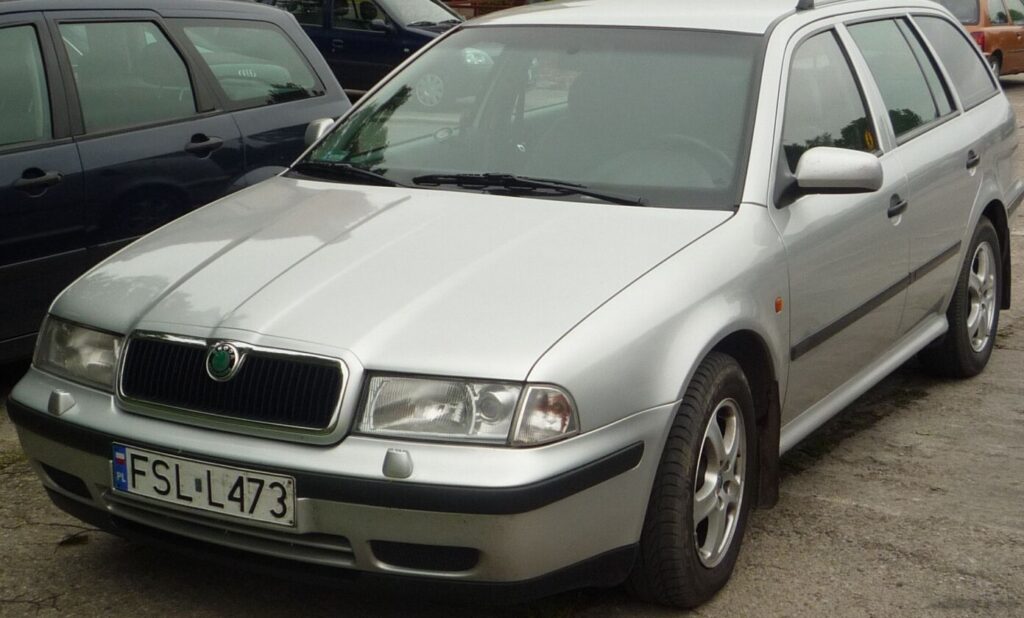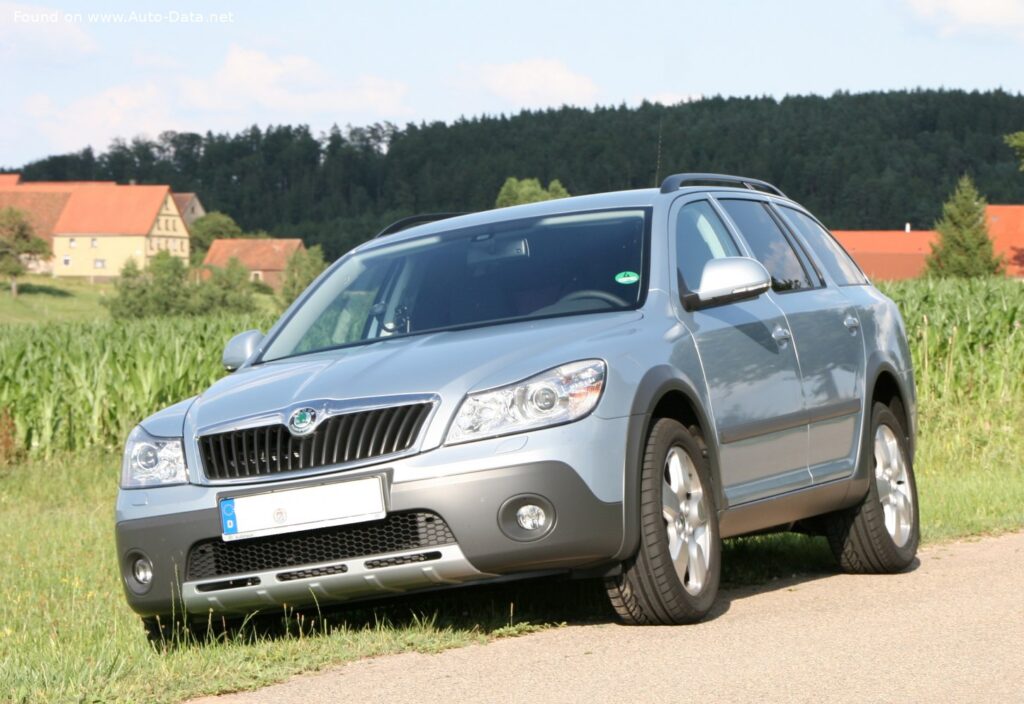
The Skoda Octavia II Scout (facelift, produced 2009-2012) 2.0 TDI CR (140 hp) 4×4 represents a specific configuration within the second generation Octavia range, built on the Volkswagen Group’s A5 (1HX0) platform. This variant combined a turbocharged common rail diesel engine with a six-speed manual transmission and a permanent all-wheel-drive system, offering a blend of practicality, fuel efficiency, and all-weather capability. The Scout trim level, in particular, positioned itself as a crossover-style estate car, aimed at buyers seeking a vehicle capable of both on-road comfort and occasional off-pavement excursions.
Powertrain & Engine Architecture
At the heart of the Octavia II Scout 2.0 TDI CR (140 hp) 4×4 lies the CFHC engine code, a 1968 cc inline four-cylinder diesel engine. This engine is part of the Volkswagen Group’s common rail diesel family, utilizing piezo injectors for precise fuel delivery. The “CR” designation signifies the Common Rail direct injection system, which operates at significantly higher pressures than older diesel injection technologies, resulting in improved combustion efficiency and reduced emissions. The engine produces 140 horsepower at 4200 rpm and 320 Nm (236 lb-ft) of torque between 1750 and 2500 rpm. A turbocharger with an intercooler is employed to boost power output. The engine features a double overhead camshaft (DOHC) valvetrain with four valves per cylinder, optimizing gas flow for enhanced performance. The compression ratio is relatively high at 18:1, typical for diesel engines.
The six-speed manual transmission paired with this engine was a standard VW Group unit, known for its robust construction and relatively precise shift feel. The all-wheel-drive system is a permanent, viscous-coupling-based 4×4 system. This system proactively distributes torque between the front and rear axles, providing enhanced traction in slippery conditions without requiring driver intervention. Unlike more sophisticated systems with electronic torque vectoring, the Scout’s 4×4 system is largely mechanical, prioritizing simplicity and reliability.
Fuel Injection and Emissions
The CFHC engine utilizes a diesel particulate filter (DPF) to reduce soot emissions, complying with Euro 5 emission standards. This filter periodically undergoes a regeneration process, burning off accumulated soot at high temperatures. The common rail system allows for multiple injection events per combustion cycle, optimizing combustion for reduced noise, vibration, and harshness (NVH) and lower emissions.
Driving Characteristics
The Octavia II Scout 2.0 TDI CR (140 hp) 4×4 offered a balanced driving experience. While not a performance-oriented vehicle, the 320 Nm of torque available from 1750 rpm provided ample pulling power for everyday driving and overtaking maneuvers. Acceleration from 0 to 100 km/h (0-62 mph) took approximately 10.1 seconds, and 0-60 mph was achieved in around 9.6 seconds. The six-speed manual transmission allowed drivers to keep the engine within its optimal torque band, maximizing efficiency and responsiveness. The all-wheel-drive system instilled confidence in adverse weather conditions, providing enhanced grip and stability. Compared to the higher-output 2.0 TDI variants (typically 170 hp), the 140 hp version felt less urgent in acceleration, but offered improved fuel economy. Compared to petrol (gasoline) versions of the Octavia, the diesel engine provided significantly better fuel efficiency and torque, albeit with a slightly more audible engine note.
The Scout’s raised suspension and all-wheel-drive system also allowed for light off-road driving on well-maintained gravel roads or snow-covered surfaces. However, it was not designed for serious off-roading and lacked features like a low-range gearbox or locking differentials.
Equipment & Trim Levels
The Scout trim level was positioned as a mid-to-high range offering within the Octavia II lineup. Standard equipment typically included alloy wheels, roof rails, front fog lights, air conditioning, a multi-function steering wheel, and an upgraded audio system. Interior upholstery was typically cloth, with optional leather available. The dashboard layout was consistent with other Octavia II models, featuring a functional and straightforward design. Optional extras included a sunroof, parking sensors, heated seats, and a navigation system. The Scout also featured unique exterior styling cues, such as plastic cladding around the wheel arches and sills, giving it a more rugged appearance.
Chassis & Braking
The Octavia II Scout utilized an independent McPherson strut front suspension with a transverse stabilizer bar. The rear suspension was an independent multi-link setup, also with a transverse stabilizer bar. This suspension configuration provided a good balance between ride comfort and handling. The Scout’s ride height was slightly increased compared to the standard Octavia, providing greater ground clearance. The braking system consisted of ventilated discs on the front wheels and solid discs on the rear wheels. Anti-lock braking system (ABS) was standard. The steering was a rack and pinion system with electric power steering, offering light and precise steering feel.
Market Reception & Comparison
The Skoda Octavia II Scout 2.0 TDI CR (140 hp) 4×4 was generally well-received by automotive critics. It was praised for its practicality, fuel efficiency, and all-weather capability. The 140 hp engine was considered adequate for most drivers, offering a good balance between performance and economy. Fuel consumption figures were typically around 5.9 l/100 km (39.9 US mpg) combined, making it an economical choice for long-distance driving. Compared to the higher-output 170 hp TDI version, the 140 hp model offered slightly better fuel economy but less outright performance. Reliability was generally good, with the CFHC engine proving to be a durable unit. However, like all diesel engines, it was susceptible to issues with the DPF if not properly maintained.
Technical Specifications
| Brand | Skoda |
| Model | Octavia |
| Generation | Octavia II Scout (facelift 2009) |
| Type | 2.0 TDI CR (140 Hp) 4×4 |
| Start of production | 2010 |
| End of production | 2012 |
| Engine Displacement | 1968 cm3 (120.09 cu. in.) |
| Engine Code | CFHC |
| Number of Cylinders | 4, Inline |
| Power | 140 Hp @ 4200 rpm |
| Torque | 320 Nm @ 1750-2500 rpm (236.02 lb.-ft.) |
| Fuel Consumption (Urban) | 7.4 l/100 km (31.8 US mpg) |
| Fuel Consumption (Extra Urban) | 5.1 l/100 km (46.1 US mpg) |
| Fuel Consumption (Combined) | 5.9 l/100 km (39.9 US mpg) |
| CO2 Emissions | 155 g/km |
| Acceleration 0-100 km/h | 10.1 sec |
| Maximum Speed | 199 km/h (123.65 mph) |
| Kerb Weight | 1480 kg (3262.84 lbs) |
| Fuel Tank Capacity | 60 l (15.85 US gal) |
| Transmission | 6-speed Manual |
| Drive Type | All-Wheel Drive (4×4) |
Legacy
The Skoda Octavia II Scout 2.0 TDI CR (140 hp) 4×4 remains a popular choice on the used car market. The CFHC engine, while requiring regular maintenance (particularly regarding the DPF), is generally considered reliable. The all-wheel-drive system provides added peace of mind in inclement weather, and the spacious interior and large boot (trunk) make it a practical family vehicle. Values for well-maintained examples remain relatively stable, reflecting the model’s reputation for durability and practicality. The combination of fuel efficiency, all-weather capability, and affordability has ensured its continued appeal to buyers seeking a versatile and dependable estate car.