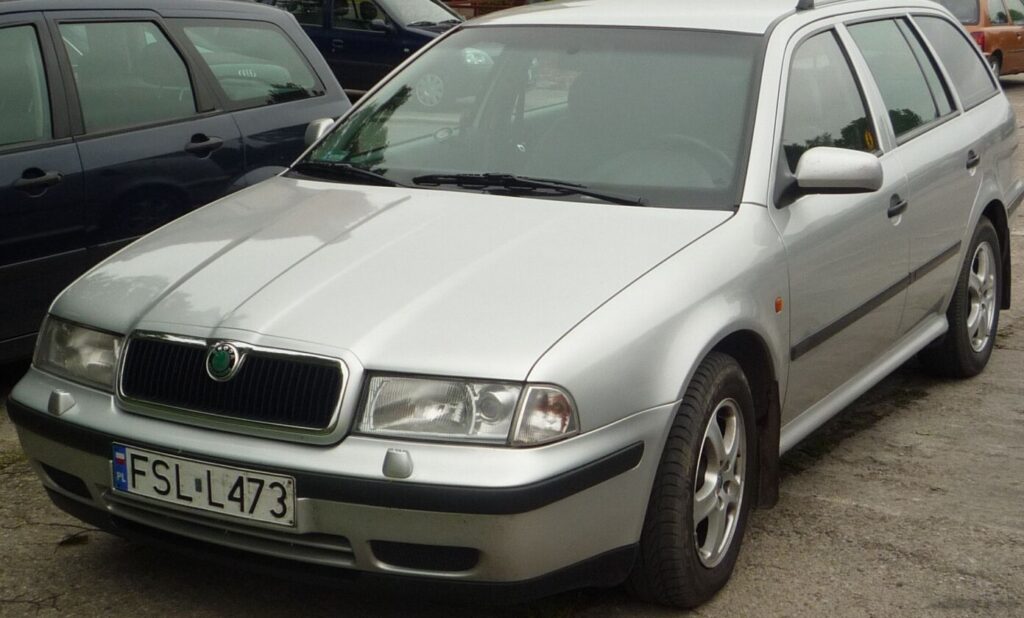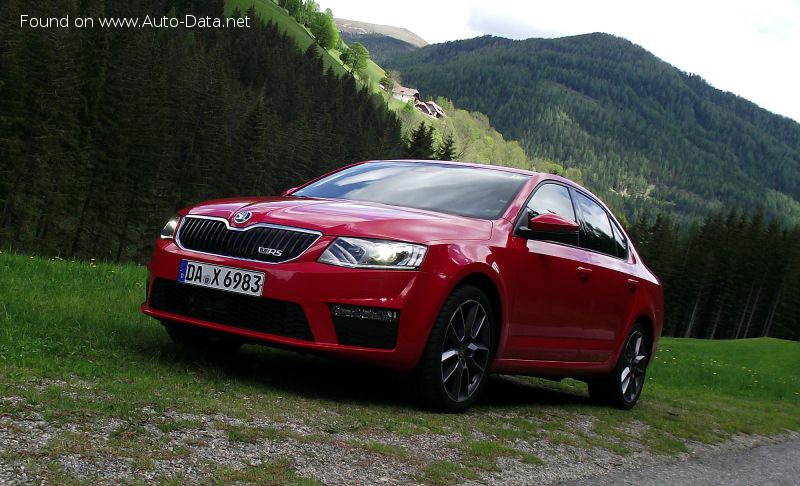
The Skoda Octavia III 1.4 G-TEC (110 hp) CNG, produced between November 2013 and 2017, represents a unique offering within the third-generation Octavia (A7) lineup. This variant was specifically designed to appeal to environmentally conscious buyers seeking lower running costs, leveraging the benefits of Compressed Natural Gas (CNG) as an alternative fuel. Positioned as a mid-range option, it bridged the gap between the base petrol engines and the more powerful TSI variants, offering a balance of efficiency and practicality within the Octavia’s broad model range. The Octavia III itself is built on the Volkswagen Group’s A7 platform, also known as the PQ35, shared with models like the Volkswagen Golf VII and Audi A3.
Powertrain & Engine Architecture
At the heart of the Octavia 1.4 G-TEC lies the EA211 engine family, specifically the CPWA engine code. This 1.4-liter, inline-four cylinder engine is a turbocharged, direct-injection powerplant. The engine utilizes a Miller cycle combustion process, optimized for CNG operation, which improves thermal efficiency. The direct injection system delivers fuel directly into the combustion chamber, enhancing combustion control and reducing emissions. The engine produces 110 horsepower at 4800-6000 rpm and 200 Nm (147.51 lb-ft) of torque between 1500-3500 rpm. The turbocharger, coupled with an intercooler, helps to boost power output and improve responsiveness. The valvetrain employs a Dual Overhead Camshaft (DOHC) configuration with four valves per cylinder, contributing to efficient gas exchange.
Crucially, the 1.4 G-TEC is a bi-fuel system, meaning it can run on both CNG and gasoline. When CNG supply is depleted, the engine automatically switches to gasoline, ensuring uninterrupted operation. The gasoline tank capacity is 50 liters (13.21 US gallons), providing a reserve range when CNG filling stations are unavailable. The CNG system utilizes a 15 kg capacity cylinder, typically located in the spare wheel well, reducing trunk space. The engine is paired with a 6-speed manual transmission, as an automatic transmission was not offered with this specific engine/fuel configuration.
Fuel System Details
The CNG fuel system is a complex arrangement of high-pressure tanks, regulators, and injectors. The CNG is stored at approximately 200 bar (2900 psi) in the dedicated tank. A pressure regulator reduces the CNG pressure to a level suitable for injection into the engine. The engine control unit (ECU) seamlessly manages the fuel switching process, optimizing combustion for either CNG or gasoline operation. The direct injection system is adapted to handle both fuel types, ensuring consistent performance regardless of the fuel source.
Driving Characteristics
The Octavia 1.4 G-TEC, with its 110 hp output and 6-speed manual transmission, delivers a driving experience focused on efficiency rather than outright performance. Acceleration from 0-100 km/h (0-62 mph) takes approximately 10.9 seconds, and 0-60 mph is achieved in around 10.4 seconds. While not particularly quick, the engine provides adequate power for everyday driving situations. The turbocharger helps to mitigate turbo lag, offering a reasonably responsive throttle feel. The 6-speed manual transmission allows for precise gear selection and helps to keep the engine within its optimal operating range.
Compared to the 1.8 TSI variants, the 1.4 G-TEC offers significantly less power and acceleration. However, it provides superior fuel economy when running on CNG. The manual transmission, while engaging for some drivers, lacks the convenience of the DSG dual-clutch automatic transmission available on higher-spec Octavia models. The weight distribution is generally well-balanced, contributing to predictable handling characteristics. The suspension setup is tuned for comfort, providing a relatively smooth ride quality.
Equipment & Trim Levels
The 1.4 G-TEC trim level typically included a good level of standard equipment, reflecting its position as a mid-range offering. Standard features generally included air conditioning, electric front windows, a basic audio system with USB connectivity, and steel wheels with wheel covers. Safety features such as ABS, ESP (Electronic Stability Program), and multiple airbags were also standard. Interior upholstery was typically cloth, with a functional and durable design.
Optional extras available for the 1.4 G-TEC included alloy wheels, a more advanced infotainment system with touchscreen display, rear parking sensors, cruise control, and automatic climate control. Higher trim levels, such as Elegance or Style, added further enhancements, including upgraded interior materials, additional chrome trim, and more sophisticated lighting systems. The specific equipment levels varied depending on the market and the year of production.
Chassis & Braking
The Octavia 1.4 G-TEC utilizes an independent suspension setup on both the front and rear axles. The front suspension employs a McPherson strut design with coil springs and an anti-roll bar, while the rear suspension features a multi-link setup, also with a stabilizer bar. This configuration provides a good balance of ride comfort and handling stability. The braking system consists of ventilated discs on the front wheels and solid discs on the rear wheels. ABS (Anti-lock Braking System) is standard, enhancing braking performance and safety. The electric power steering provides a light and responsive steering feel.
Market Reception & Comparison
The Skoda Octavia 1.4 G-TEC was generally well-received by critics and consumers seeking an economical and environmentally friendly vehicle. Its ability to run on CNG significantly reduced fuel costs, particularly in countries with favorable CNG pricing. However, the limited availability of CNG filling stations in some regions was a drawback. Compared to the petrol-powered Octavia variants, the 1.4 G-TEC offered comparable fuel economy when running on gasoline, but significantly lower running costs when utilizing CNG. Compared to diesel variants, the G-TEC offered lower particulate emissions, but potentially higher CO2 emissions when running on gasoline.
Reliability reports suggest that the EA211 engine family is generally robust and reliable, although the CNG fuel system requires periodic inspection and maintenance to ensure proper operation. The manual transmission is known for its durability. Overall, the Octavia 1.4 G-TEC represented a practical and economical choice for drivers prioritizing fuel efficiency and environmental responsibility.
Technical Specifications
| Brand | Skoda |
| Model | Octavia |
| Generation | Octavia III |
| Type (Engine) | 1.4 G-TEC (110 Hp) CNG |
| Start of production | November, 2013 |
| End of production | 2017 |
| Powertrain Architecture | Internal Combustion engine |
| Body type | Hatchback |
| Seats | 5 |
| Doors | 5 |
| Fuel consumption (economy) – urban (NEDC) | 6.9 l/100 km (34.1 US mpg, 40.9 UK mpg, 14.5 km/l) |
| Fuel consumption (economy) – urban (CNG) (NEDC) | 4.5 kg/100 km |
| Fuel consumption (economy) – extra urban (NEDC) | 4.4 l/100 km (53.5 US mpg, 64.2 UK mpg, 22.7 km/l) |
| Fuel consumption (economy) – extra urban (CNG) (NEDC) | 2.9 kg/100 km |
| Fuel consumption (economy) – combined (NEDC) | 5.3 l/100 km (44.4 US mpg, 53.3 UK mpg, 18.9 km/l) |
| Fuel consumption (economy) – combined (CNG) (NEDC) | 3.5 kg/100 km |
| CO2 emissions (NEDC) | 124 g/km |
| CO2 emissions (CNG) (NEDC) | 94 g/km |
| Fuel Type | Petrol / CNG |
| Acceleration 0 – 100 km/h | 10.9 sec |
| Acceleration 0 – 62 mph | 10.9 sec |
| Acceleration 0 – 60 mph | 10.4 sec |
| Maximum speed | 195 km/h (121.17 mph) |
| Emission standard | Euro 6 |
| Weight-to-power ratio | 12 kg/Hp, 83.4 Hp/tonne |
| Weight-to-torque ratio | 6.6 kg/Nm, 151.6 Nm/tonne |
| Power | 110 Hp @ 4800-6000 rpm |
| Torque | 200 Nm @ 1500-3500 rpm (147.51 lb.-ft. @ 1500-3500 rpm) |
| Engine layout | Front, Transverse |
| Engine Model/Code | EA211 / CPWA |
| Engine displacement | 1395 cm3 (85.13 cu. in.) |
| Number of cylinders | 4 |
| Engine configuration | Inline |
| Cylinder Bore | 74.5 mm (2.93 in.) |
| Piston Stroke | 80 mm (3.15 in.) |
| Compression ratio | 10.5:1 |
| Number of valves per cylinder | 4 |
| Fuel injection system | Direct injection |
| Engine aspiration | Turbocharger, Intercooler |
| Valvetrain | DOHC |
| Engine oil capacity | 4 l (4.23 US qt | 3.52 UK qt) |
| Coolant | 10.2 l (10.78 US qt | 8.97 UK qt) |
| Kerb Weight | 1319 kg (2907.9 lbs.) |
| Max. weight | 1878 kg (4140.28 lbs.) |
| Trunk (boot) space – minimum | 460 l (16.24 cu. ft.) |
| Trunk (boot) space – maximum | 1450 l (51.21 cu. ft.) |
| Fuel tank capacity | 50 l (13.21 US gal | 11 UK gal) |
| CNG cylinder capacity | 15 kg |
| Length | 4659 mm (183.43 in.) |
| Width | 1814 mm (71.42 in.) |
| Height | 1461 mm (57.52 in.) |
| Wheelbase | 2680 mm (105.51 in.) |
Legacy
The Skoda Octavia 1.4 G-TEC represents a significant step in Skoda’s efforts to offer alternative fuel vehicles. While CNG infrastructure remains a limiting factor in many markets, the Octavia G-TEC provided a viable and economical option for drivers seeking to reduce their carbon footprint and fuel costs. On the used car market, these models are generally well-regarded for their reliability and fuel efficiency, although potential buyers should be aware of the need for periodic inspection and maintenance of the CNG fuel system. The EA211 engine has proven to be a durable and long-lasting unit, contributing to the Octavia 1.4 G-TEC’s continued appeal as a practical and economical used car option.