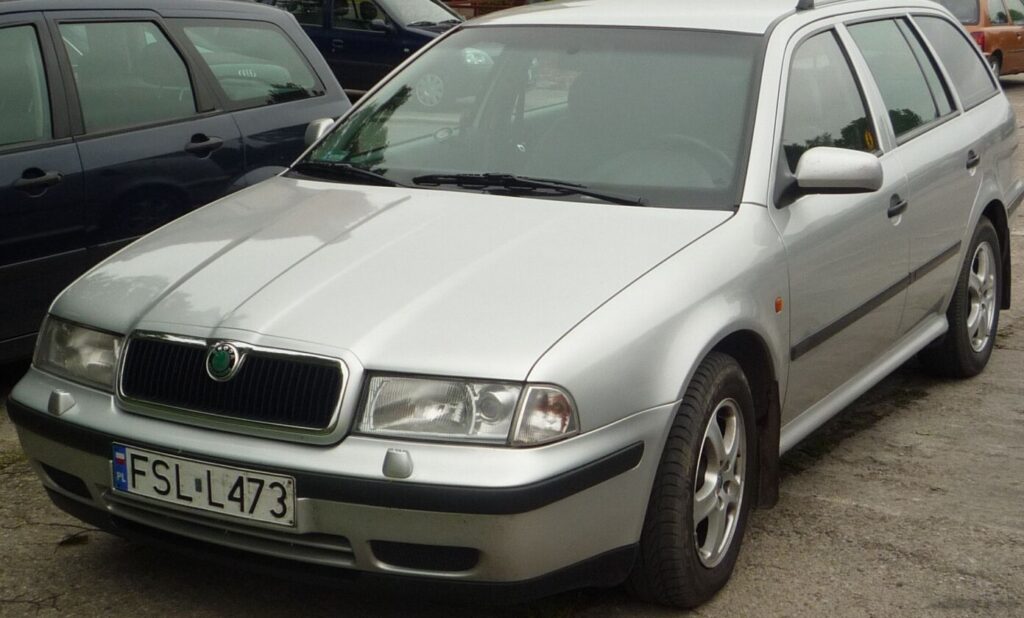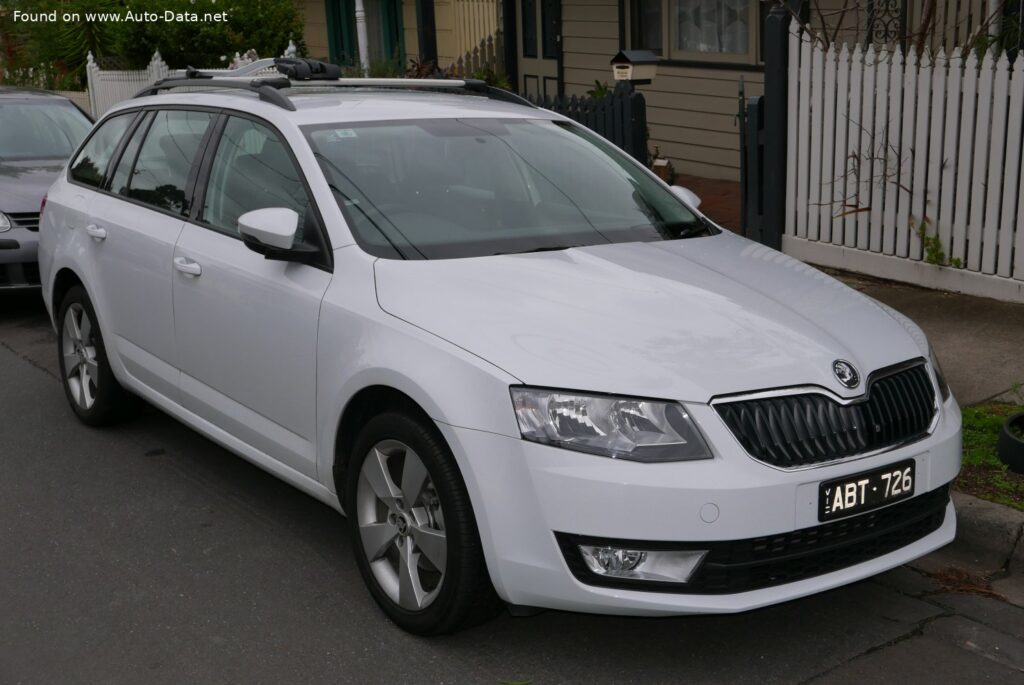
The Skoda Octavia III Combi 1.4 G-TEC (110 Hp) CNG represents a significant offering from the Czech automaker Skoda, a prominent member of the Volkswagen Group. Launched in November 2013 and produced until 2017, this particular variant of the third-generation Octavia Combi (Skoda’s term for station wagon) carved out a niche in the highly competitive European C-segment. It distinguished itself not only through Skoda’s hallmark practicality and value but also by its innovative bi-fuel powertrain, designed to run on both gasoline and compressed natural gas (CNG). This dual-fuel capability positioned the Octavia G-TEC as an environmentally conscious and economically viable option for families and fleet operators across the continent, offering reduced running costs and lower emissions compared to conventional gasoline or diesel engines.
During its production run, the Octavia III Combi built upon the success of its predecessors, evolving into a more refined, technologically advanced, and spacious vehicle. The G-TEC variant, in particular, highlighted Skoda’s commitment to sustainable mobility solutions without compromising on the utility and comfort that the Octavia line is renowned for. While models like this were primarily targeted at European markets where CNG infrastructure and incentives were more prevalent, its engineering principles and efficiency metrics are relevant to a global understanding of automotive development.
Powertrain & Engine Architecture
At the heart of the Skoda Octavia III Combi 1.4 G-TEC (110 Hp) CNG lies a sophisticated 1.4-liter (1395 cm³ or 85.13 cu. in.) turbocharged inline-four engine, designated as the EA211 / CPWA. This powerplant is a testament to modern engine design, featuring direct injection and a DOHC (Double Overhead Camshaft) valvetrain with four valves per cylinder, all contributing to its impressive balance of power and efficiency. The engine is also equipped with an intercooler to optimize air density, further enhancing performance.
The G-TEC engine delivers a respectable 110 horsepower (Hp) at a broad range of 4800-6000 rpm, providing ample power for daily driving and highway cruising. Torque output is particularly strong for a 1.4-liter unit, peaking at 147.51 lb.-ft. (200 Nm) between 1500 and 3500 rpm. This wide torque band ensures responsive acceleration and flexible in-gear performance, making the Octavia G-TEC feel more powerful than its horsepower figure might suggest. Power is sent to the front wheels via a smooth and precise 6-speed manual transmission, a common and well-regarded setup for its segment.
The EA211 engine family utilizes a sophisticated direct injection system, injecting fuel directly into the combustion chamber for improved efficiency and reduced emissions. The turbocharger, a key component of the engine’s performance, utilizes a wastegate to regulate boost pressure, ensuring optimal power delivery across the rev range. The engine management system is finely tuned to seamlessly switch between gasoline and CNG operation, optimizing fuel consumption and emissions based on the selected fuel source. The CNG system itself includes a pressure regulator and fuel injectors specifically designed for the unique characteristics of compressed natural gas.
Driving Characteristics
The Skoda Octavia III Combi 1.4 G-TEC (110 Hp) Automatic setup, while not the sportiest variant in the Octavia lineup, offered a comfortable and practical driving experience. Compared to the higher-output 1.8 TSI gasoline engine or the 2.0 TDI diesel, the G-TEC prioritized fuel efficiency and lower running costs over outright performance. Acceleration from a standstill was adequate, but not particularly brisk, with a 0-60 mph time of around 10.5 seconds. However, the broad torque band of the engine meant that in-gear acceleration was surprisingly strong, making overtaking maneuvers relatively effortless.
The 6-speed manual transmission was well-matched to the engine’s characteristics, providing smooth and precise gear changes. The gear ratios were optimized for fuel efficiency, with taller gearing in higher gears to reduce engine speed at highway speeds. When running on CNG, the engine’s power output was slightly reduced compared to gasoline operation, but the difference was generally imperceptible during normal driving. The overall driving experience was characterized by a smooth ride, predictable handling, and a quiet cabin, making it an ideal vehicle for long-distance journeys.
Compared to the automatic transmission options available on other Octavia variants, the manual gearbox offered a more engaging driving experience and contributed to the G-TEC’s superior fuel economy. The automatic transmissions, while convenient, tended to sap some of the engine’s power and resulted in higher fuel consumption.
Equipment & Trim Levels
The Skoda Octavia III Combi 1.4 G-TEC (110 Hp) CNG typically occupied a mid-range position within the Octavia lineup. Standard equipment included air conditioning, power windows, a comprehensive audio system with USB connectivity, and a multi-function steering wheel. Safety features such as ABS (Anti-lock Braking System), ESP (Electronic Stability Program), and multiple airbags were also standard. The interior upholstery was typically cloth, with options for higher-grade materials available as upgrades.
Optional extras included features such as a touchscreen infotainment system with navigation, parking sensors, automatic climate control, and alloy wheels. The G-TEC variant also benefited from specific features related to its bi-fuel system, such as a CNG fuel level indicator and a switch to select between gasoline and CNG operation. Trim levels varied slightly depending on the market, but generally followed a progression from ‘Active’ to ‘Ambiente’ and ‘Elegance’, with each successive trim level adding more features and refinements.
The dashboard configuration was typical of the Octavia III, with a clear and intuitive layout. The instrument cluster featured analog gauges for speed, engine rpm, and fuel level, along with digital displays for trip information and warning messages.
Chassis & Braking
The Skoda Octavia III Combi 1.4 G-TEC (110 Hp) CNG utilized a robust chassis and braking system designed to provide a safe and comfortable driving experience. The front suspension featured an independent McPherson strut setup with coil springs and an anti-roll bar, while the rear suspension employed an independent multi-link spring suspension with a stabilizer. This configuration provided a good balance between ride comfort and handling precision.
Braking duties were handled by ventilated disc brakes at the front and solid disc brakes at the rear. ABS (Anti-lock Braking System) and ESP (Electronic Stability Program) were standard features, providing enhanced braking performance and stability in challenging conditions. The steering system was an electric power steering system, offering precise and responsive steering feel with reduced energy consumption.
The vehicle rode on 205/55 R16 tires fitted to 6.5J x 16-inch wheel rims, a common and cost-effective size. The suspension was tuned to accommodate the additional weight of the CNG tank without compromising ride quality or handling.
Market Reception & Comparison
Critics generally viewed the Skoda Octavia III Combi 1.4 G-TEC (110 Hp) CNG favorably, praising its practicality, fuel efficiency, and low emissions. It was recognized as a compelling alternative to conventional gasoline and diesel vehicles, particularly for drivers who prioritized economy and environmental responsibility. However, some reviewers noted that the engine’s performance was not as spirited as that of the higher-output variants.
Compared to the 1.8 TSI gasoline engine, the G-TEC offered significantly better fuel economy, especially when running on CNG. However, the 1.8 TSI provided more power and a more engaging driving experience. Compared to the 2.0 TDI diesel engine, the G-TEC offered lower emissions and a quieter engine, but the TDI provided superior torque and fuel economy on long journeys. The G-TEC’s reliability was generally considered good, benefiting from the robust engineering of the EA211 engine family.
Technical Specifications
| Category | Specification |
| General Information | |
| Brand | Skoda |
| Model | Octavia |
| Generation | Octavia III Combi |
| Type (Engine) | 1.4 G-TEC (110 Hp) CNG |
| Production Start | November, 2013 |
| Production End | 2017 |
| Powertrain Architecture | Internal Combustion Engine |
| Body Type | Station Wagon (Estate) |
| Seats | 5 |
| Doors | 5 |
| Performance Specifications | |
| Fuel Consumption (Urban, Petrol NEDC) | 7 l/100 km (33.6 US mpg) |
| Fuel Consumption (Urban, CNG NEDC) | 4.5 kg/100 km |
| Fuel Consumption (Extra Urban, Petrol NEDC) | 4.5 l/100 km (52.3 US mpg) |
| Fuel Consumption (Extra Urban, CNG NEDC) | 2.9 kg/100 km |
| Fuel Consumption (Combined, Petrol NEDC) | 5.4 l/100 km (43.6 US mpg) |
| Fuel Consumption (Combined, CNG NEDC) | 3.5 kg/100 km |
| CO2 Emissions (Petrol NEDC) | 126 g/km |
| CO2 Emissions (CNG NEDC) | 96 g/km |
| Fuel Type | Petrol / CNG |
| Acceleration 0 – 60 mph | 10.5 seconds |
| Acceleration 0 – 62 mph (0-100 km/h) | 11 seconds |
| Maximum Speed | 119.92 mph (193 km/h) |
| Emission Standard | Euro 6 |
| Weight-to-Power Ratio | 12.2 kg/Hp (82 Hp/tonne) |
| Weight-to-Torque Ratio | 6.7 kg/Nm (149.1 Nm/tonne) |
| Engine Specifications | |
| Power | 110 Hp @ 4800-6000 rpm |
| Power per Liter | 78.9 Hp/l |
| Torque | 147.51 lb.-ft. (200 Nm) @ 1500-3500 rpm |
| Engine Layout | Front, Transverse |
| Engine Model/Code | EA211 / CPWA |
| Engine Displacement | 1395 cm³ (85.13 cu. in.) |
| Number of Cylinders | 4 |
| Engine Configuration | Inline |
| Cylinder Bore | 2.93 in. (74.5 mm) |
| Piston Stroke | 3.15 in. (80 mm) |
| Compression Ratio | 10.5:1 |
| Number of Valves per Cylinder | 4 |
| Fuel Injection System | Direct injection |
| Engine Aspiration | Turbocharger, Intercooler |
| Valvetrain | DOHC |
Legacy
The Skoda Octavia III Combi 1.4 G-TEC (110 Hp) CNG powertrain has proven to be relatively reliable, benefiting from the robust design of the EA211 engine family. While CNG vehicles are not as common as gasoline or diesel vehicles, the G-TEC has maintained a good reputation among owners for its fuel efficiency and low running costs. In the used car market, these models tend to hold their value reasonably well, particularly in countries where CNG infrastructure remains prevalent. The long-term durability of the CNG components, such as the pressure regulator and fuel injectors, is generally good, provided that the vehicle has been properly maintained. The G-TEC variant represents a significant step in Skoda’s commitment to alternative fuel technologies and continues to be a viable option for environmentally conscious drivers seeking a practical and economical station wagon.