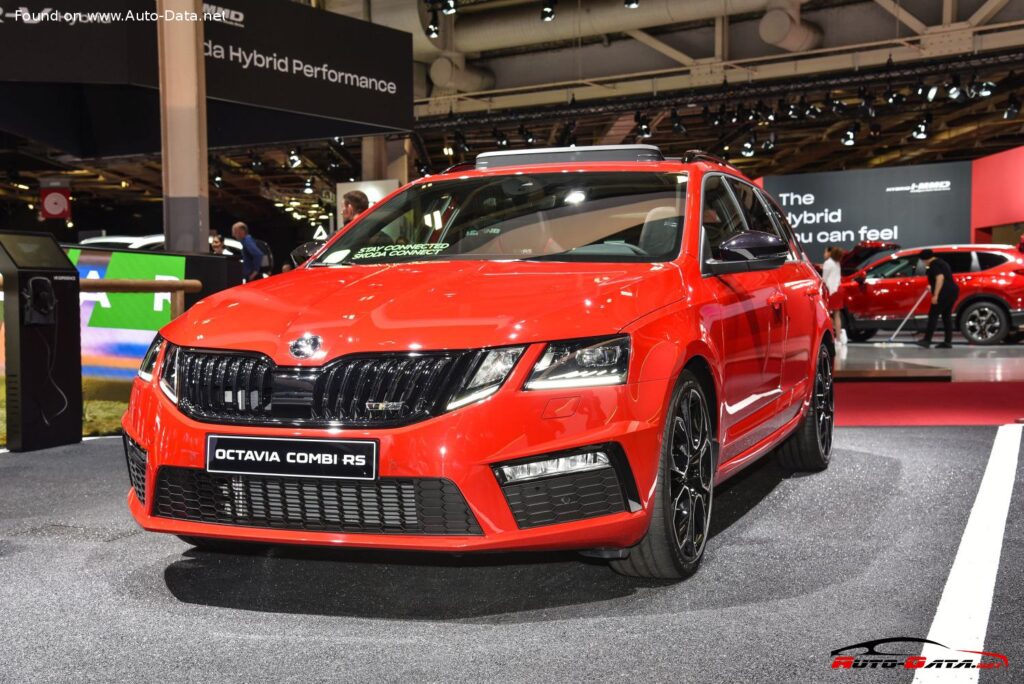
The Skoda Octavia, a cornerstone model for the Czech automaker under Volkswagen Group ownership, has long been celebrated for its exceptional blend of practicality, value, and robust engineering. The third-generation Octavia, internally designated 5E, received a significant facelift in 2017, further refining its appeal. Among the various powertrain options offered in its primary European markets, the Skoda Octavia III Combi (facelift 2017) 1.2 TSI (86 Hp) represented a highly pragmatic and economical choice, particularly for fleet operators and families prioritizing low running costs and a spacious interior. This specific variant, produced from 2017 to 2018, embodied Skoda’s philosophy of delivering “more car for your money” within the competitive compact segment.
While Skoda models are not officially sold in the United States, the Octavia’s global significance cannot be overstated. It competes fiercely in Europe’s C-segment, offering dimensions and interior volume that often rival vehicles from the class above. The Combi, or station wagon, variant is particularly popular, providing immense cargo flexibility. The 2017 facelift brought refreshed styling cues, enhanced technology, and subtle interior improvements, ensuring the Octavia remained a compelling proposition against rivals from both mainstream and premium brands. This article delves into the specifics of the 1.2 TSI (86 Hp) model, examining its technical prowess, design philosophy, and market impact from an international automotive expert’s perspective, using American English terminology.
Powertrain & Engine Architecture
At the core of this particular Skoda Octavia III Combi (facelift 2017) 1.2 TSI (86 Hp) lies a compact yet sophisticated 1.2-liter (1197 cm³ or 73.05 cu. in.) turbocharged gasoline engine. Designated with the code CJZB, this inline four-cylinder unit is a testament to the Volkswagen Group’s expertise in developing efficient, small-displacement powerplants. Utilizing direct fuel injection, a turbocharger, and an intercooler, the engine is engineered to deliver a surprising amount of torque across a broad RPM range, mitigating the perception of a small engine’s limitations.
The engine produces 86 horsepower, which translates to a power output of 71.8 horsepower per liter. More critically for everyday driving, it generates 118.01 lb.-ft. of torque, available from a remarkably low 1400 rpm all the way up to 3500 rpm. This wide torque band is crucial for urban maneuverability and relaxed highway cruising, allowing the driver to access usable power without constantly downshifting. Power is sent to the front wheels via a smooth-shifting 5-speed manual transmission, a common and reliable setup for this class of vehicle in Europe.
The CJZB engine employs a Bosch MED17.5.24 engine control unit (ECU) managing fuel delivery and ignition timing. The direct injection system utilizes solenoid injectors operating at high pressure (typically around 150 bar) to precisely meter fuel into the combustion chambers. The valvetrain features dual overhead camshafts (DOHC) with four valves per cylinder, optimizing gas flow for improved efficiency and power. The turbocharger is a wastegate turbo, providing boost on demand while maintaining precise control of exhaust gas flow. The 5-speed manual transmission is a standard configuration, known for its durability and relatively simple maintenance requirements.
Driving Characteristics
In real-world conditions, the 1.2 TSI Combi offers a driving experience geared towards efficiency and ease of use rather than outright performance. Acceleration from 0 to 60 mph takes a respectable 11.6 seconds, with a top speed of 110.6 mph. While not designed for spirited driving, the engine’s broad torque band makes it feel more responsive than its horsepower figure might suggest. The 5-speed manual transmission is well-matched to the engine’s characteristics, with gear ratios optimized for fuel economy and everyday drivability.
Compared to higher-output versions of the Octavia, such as those equipped with the 1.8 TSI or 2.0 TDI engines, the 1.2 TSI feels noticeably less powerful, particularly when fully loaded or tackling steep inclines. However, it excels in urban environments, where its low-end torque and light clutch action make it easy to maneuver. The manual transmission provides a more engaging driving experience than the optional DSG dual-clutch automatic, but requires more driver involvement. The suspension is tuned for comfort, providing a compliant ride over most road surfaces, although it may exhibit some body roll during cornering.
Equipment & Trim Levels
The Skoda Octavia III Combi (facelift 2017) 1.2 TSI (86 Hp) typically served as an entry-level trim, offering a solid base level of equipment. Standard features generally included air conditioning, power windows, power door locks, a basic audio system with USB connectivity, and steel wheels with wheel covers. Safety features such as ABS, electronic stability control (ESC), and multiple airbags were also standard.
Interior upholstery was typically cloth, with a durable and practical design. The dashboard layout was functional and straightforward, with a focus on ergonomics. Optional extras available for this trim included alloy wheels, a more advanced infotainment system with touchscreen display, rear parking sensors, cruise control, and heated front seats. Higher trim levels, such as the Style and Laurin & Klement, offered more luxurious appointments, including leather upholstery, automatic climate control, and advanced driver-assistance systems.
Chassis & Braking
The Octavia Combi’s chassis is based on the Volkswagen Group’s MQB platform, known for its modularity and engineering efficiency. The front suspension utilizes MacPherson struts, while the rear suspension employs a multi-link setup, providing a good balance of ride comfort and handling stability. The 1.2 TSI variant typically featured a smaller diameter stabilizer bar compared to higher-performance models, contributing to a softer ride.
The braking system consisted of ventilated disc brakes at the front and solid disc brakes at the rear, providing adequate stopping power for everyday driving. ABS (Anti-lock Braking System) was standard, enhancing safety during emergency braking situations. The steering system was a rack and pinion type with electric power steering, offering light effort at low speeds for parking and a more weighted feel at higher speeds for stability. Tire size was typically 205/55 R16, providing a good compromise between comfort and grip.
Market Reception & Comparison
Critics generally viewed the Skoda Octavia III Combi (facelift 2017) 1.2 TSI (86 Hp) as a sensible and practical choice, particularly for buyers prioritizing fuel economy and value. While not the most exciting variant in the lineup, it offered a compelling combination of space, efficiency, and reliability. Fuel economy was a key strength, with a combined rating of 48 US mpg (4.9 liters per 100 km), making it one of the most economical station wagons in its class.
Compared to other trims in the Octavia lineup, the 1.2 TSI was significantly more affordable to purchase and insure. However, it lacked the performance and refinement of the higher-output engines. The 1.8 TSI offered a noticeable boost in power and acceleration, while the 2.0 TDI provided excellent fuel economy and torque. In terms of reliability, the 1.2 TSI engine proved to be generally dependable, although some owners reported issues with the turbocharger and direct injection system. Overall, the 1.2 TSI represented a pragmatic choice for buyers seeking a spacious, economical, and reliable family car.
Technical Specifications
| Category | Specification |
| General Information | |
| Brand | Skoda |
| Model | Octavia |
| Generation | Octavia III Combi (facelift 2017) |
| Type (Engine) | 1.2 TSI (86 Hp) |
| Start of Production | 2017 year |
| End of Production | 2018 year |
| Powertrain Architecture | Internal Combustion engine |
| Body Type | Station wagon (estate) |
| Seats | 5 |
| Doors | 5 |
| Performance Specifications | |
| Fuel Consumption (Urban) | 6.1 l/100 km |
| Fuel Consumption (Extra Urban) | 4.2 l/100 km |
| Fuel Consumption (Combined) | 4.9 l/100 km |
| CO2 Emissions | 114 g/km |
| Fuel Type | Petrol (Gasoline) |
| Acceleration 0 – 60 mph | 11.6 sec |
| Maximum Speed | 178 km/h (110.6 mph) |
| Emission Standard | Euro 6 |
| Engine Specifications | |
| Power | 86 Hp |
| Power per Liter | 71.8 Hp/l |
| Torque | 160 Nm @ 1400-3500 rpm (118.01 lb.-ft. @ 1400-3500 rpm) |
| Engine Layout | Front, Transverse |
| Engine Model/Code | CJZB |
| Engine Displacement | 1197 cm³ (1.2 Liters / 73.05 cu. in.) |
| Number of Cylinders | 4 |
| Engine Configuration | Inline |
| Cylinder Bore | 71 mm (2.8 in.) |
| Piston Stroke | 75.6 mm (2.98 in.) |
| Compression Ratio | 10.5:1 |
| Number of Valves per Cylinder | 4 |
| Fuel Injection System | Direct injection |
| Engine Aspiration | Turbocharger, Intercooler |
| Drivetrain, Brakes and Suspension Specifications | |
| Drivetrain Architecture | Internal combustion engine (ICE) drives the front wheels. |
| Drive Wheel | Front wheel drive |
| Number of Gears and Type of Gearbox | 5 gears, manual transmission |
Legacy
The Skoda Octavia has consistently been a pillar of Skoda’s success since its modern reintroduction under Volkswagen’s stewardship. The third generation, and especially its 2017 facelift, further cemented its reputation as a smart, no-nonsense choice in the European compact segment. The Skoda Octavia III Combi (facelift 2017) 1.2 TSI (86 Hp), in particular, represented the epitome of accessible efficiency and utility. It was designed to cater to a vast demographic, from young families needing space for strollers and luggage to business fleets demanding low operating costs and reliable performance.
On the used car market, these Octavia models are generally well-regarded for their reliability and affordability. The 1.2 TSI engine, while not without its potential issues, has proven to be reasonably durable with proper maintenance. Common maintenance items include regular oil changes, timing belt replacement (depending on mileage), and inspection of the turbocharger and direct injection system. The Octavia’s spacious interior and practical design continue to make it a popular choice for families and individuals seeking a versatile and economical vehicle. Its enduring appeal is a testament to Skoda’s commitment to delivering “more car for your money,” a philosophy that has resonated with buyers for decades.