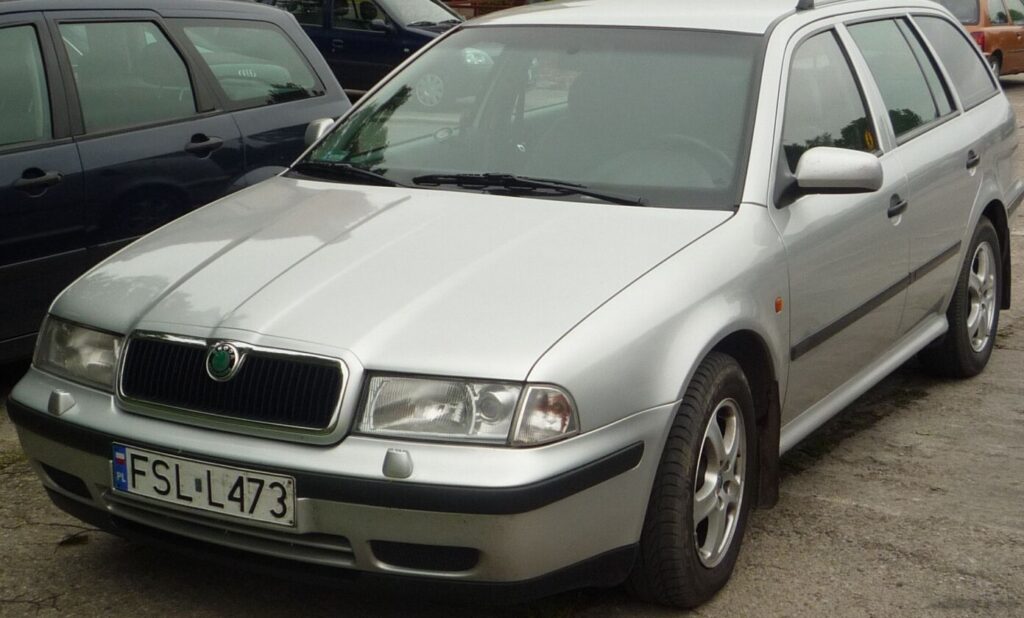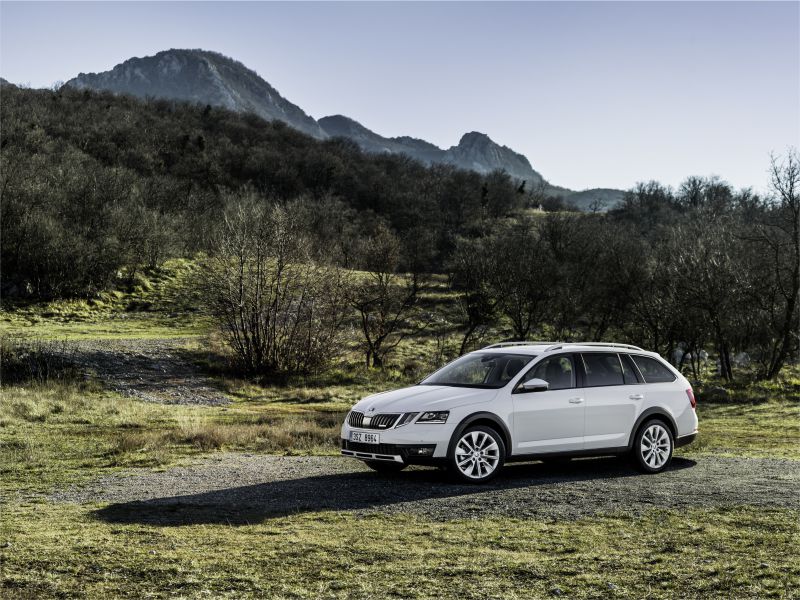
The Skoda Octavia III Scout, specifically the facelifted model introduced in 2017, represents a compelling blend of practicality, efficiency, and all-weather capability within the highly competitive European C-segment. As a key offering from the Czech automaker Skoda, a brand renowned for its “Simply Clever” solutions and robust engineering under the Volkswagen Group umbrella, the Octavia has long been a cornerstone of its product lineup. The Scout variant elevates the standard Octavia station wagon (known as an “estate” in Europe) by incorporating rugged styling cues, increased ground clearance, and an advanced all-wheel-drive system, transforming it into a versatile crossover-wagon designed for families and individuals seeking adventure beyond paved roads without compromising on everyday usability.
The Skoda Octavia III Scout: A European Crossover-Wagon
Positioned as an aspirational yet attainable vehicle, the Skoda Octavia III Scout 2.0 TDI (150 Hp) 4×4, produced from 2017 to 2019, caters to a specific niche in the European market. It offers a practical alternative to conventional SUVs, providing car-like driving dynamics and superior fuel economy, combined with the added assurance of all-wheel drive and enhanced rough-road capability. This particular configuration, powered by a 2.0-liter Turbocharged Direct Injection (TDI) diesel engine, epitomizes the Octavia Scout’s ethos of delivering robust performance and impressive efficiency for its target audience.
Engine & Performance
At the heart of the Skoda Octavia III Scout 2.0 TDI (150 Hp) 4×4 lies a sophisticated 2.0-liter inline four-cylinder TDI diesel engine, identified by the EA288 / CRMB, DFFA code. This powerplant delivers a respectable 150 horsepower, achieved between 3500 and 4000 revolutions per minute (rpm). More significantly, it generates a substantial 250.77 lb.-ft. of torque across a broad and accessible rev range, from 1750 to 3000 rpm. This ample torque is crucial for effortless acceleration, confident overtaking, and robust towing capabilities. The engine’s architecture features a DOHC (Dual Overhead Camshaft) valvetrain with four valves per cylinder, a common rail direct fuel injection system, and is boosted by a turbocharger and intercooler. With a compression ratio of 16.2:1 and a displacement of 120.09 cubic inches (1968 cm³), the engine is finely tuned for both performance and efficiency. It adheres to the stringent Euro 6 emissions standard, benefiting from modern technologies such as a Start & Stop system and a particulate filter to minimize its environmental footprint.
Power is channeled through a precise 6-speed manual transmission to an advanced all-wheel-drive (4×4) system. This drivetrain typically employs a Haldex-type clutch, which primarily drives the front wheels for efficiency but can seamlessly and rapidly engage the rear wheels when slippage is detected. This intelligent system ensures optimal traction and stability in challenging conditions, while maintaining fuel efficiency during normal driving. Performance figures are competitive for its segment, with the Octavia III Scout accelerating from 0 to 60 mph in a brisk 8.6 seconds and reaching a maximum speed of 128.62 mph. Fuel economy is a standout feature, with a combined fuel consumption of 47 US miles per gallon (5 liters per 100 km), with urban figures at 40.6 US mpg and extra-urban at 52.3 US mpg. This exceptional efficiency, coupled with a 14.53 US gallon fuel tank, provides a substantial driving range.
Design & Features
The 2017 facelift brought subtle yet effective design enhancements to the Skoda Octavia III Scout, further refining its rugged aesthetic. The exterior features distinctive plastic body cladding around the wheel arches and lower body panels, unique bumpers with silver-colored underbody protection elements, and roof rails, all contributing to its adventurous persona. The front fascia received a notable update with split headlights, a wider grille, and redesigned fog lights, lending a more contemporary and assertive look. With a length of 184.53 inches and a width of 71.42 inches (79.41 inches including mirrors), the Scout maintains a manageable footprint for urban environments while offering ample interior space.
One of the Scout’s most significant advantages is its enhanced ground clearance, measuring 6.73 inches (171 mm). This increased ride height, combined with approach and departure angles of 16.6° and 14.5° respectively, allows it to confidently navigate uneven terrain. The 17-inch alloy wheels, fitted with 225/50 R17 tires, strike an excellent balance between on-road comfort and off-road capability. Inside, the Octavia III Scout offers a spacious and thoughtfully designed cabin for five occupants. Skoda’s practicality shines through, particularly in its cargo capacity. The trunk space is exceptional, ranging from 21.54 cubic feet with all seats in place, expanding to 61.45 cubic feet when the rear seats are folded down. The maximum load capacity stands at 1421.98 lbs., further underscoring its utility.
The chassis and suspension are engineered for both comfort and control. The front features an independent McPherson strut setup with coil springs and an anti-roll bar, while the rear utilizes an independent multi-link spring suspension with a stabilizer. This combination provides a compliant ride quality on various surfaces and agile handling. Braking performance is ensured by ventilated discs at the front and solid discs at the rear, complemented by an Anti-lock Braking System (ABS) for enhanced safety. The electric power steering system provides precise feedback and ease of maneuverability, with a minimum turning circle of 34.78 feet.
Technical Specifications
| Category | Specification |
| General Information | |
| Brand | Skoda |
| Model | Octavia |
| Generation | Octavia III Scout (facelift 2017) |
| Type (Engine) | 2.0 TDI (150 Hp) 4×4 |
| Production Start | 2017 year |
| Production End | 2019 year |
| Powertrain Architecture | Internal Combustion engine |
| Body type | Station wagon (estate), Crossover |
| Seats | 5 |
| Doors | 5 |
| Performance Specifications | |
| Fuel Consumption (Urban) | 40.6 US mpg (5.8 l/100 km) |
| Fuel Consumption (Extra Urban) | 52.3 US mpg (4.5 l/100 km) |
| Fuel Consumption (Combined) | 47 US mpg (5 l/100 km) |
| CO2 emissions | 130 g/km |
| Fuel Type | Diesel |
| Acceleration 0-60 mph | 8.6 sec |
| Acceleration 0-100 km/h | 9.1 sec |
| Maximum Speed | 128.62 mph (207 km/h) |
| Emission Standard | Euro 6 |
| Weight-to-power ratio | 9.7 kg/Hp, 103.4 Hp/tonne |
| Weight-to-torque ratio | 4.3 kg/Nm, 234.3 Nm/tonne |
| Engine Specifications | |
| Power | 150 Hp @ 3500-4000 rpm |
| Power per liter | 76.2 Hp/l |
| Torque | 250.77 lb.-ft. (340 Nm) @ 1750-3000 rpm |
| Engine layout | Front, Transverse |
| Engine Model/Code | EA288 / CRMB, DFFA |
| Engine Displacement | 120.09 cu. in. (1968 cm³) |
| Number of cylinders | 4 |
| Engine configuration | Inline |
| Cylinder Bore | 3.19 in. (81 mm) |
| Piston Stroke | 3.76 in. (95.5 mm) |
| Compression ratio | 16.2:1 |
| Number of valves per cylinder | 4 |
| Fuel injection system | Diesel Commonrail |
| Engine aspiration | Turbocharger, Intercooler |
| Valvetrain | DOHC |
| Engine oil capacity | 4.97 US qt (4.7 l) |
| Coolant capacity | 11.83 US qt (11.2 l) |
| Engine systems | Start & Stop System, Particulate filter |
| Space, Volume and Weights | |
| Kerb Weight | 3198.91 lbs. (1451 kg) |
| Max. weight (GVWR) | 4620.89 lbs. (2096 kg) |
| Max load | 1421.98 lbs. (645 kg) |
| Trunk (boot) space – minimum | 21.54 cu. ft. (610 l) |
| Trunk (boot) space – maximum | 61.45 cu. ft. (1740 l) |
| Fuel tank capacity | 14.53 US gal (55 l) |
| Max. roof load | 176.37 lbs. (80 kg) |
| Permitted trailer load with brakes (12%) | 4409.25 lbs. (2000 kg) |
| Permitted trailer load without brakes | 1653.47 lbs. (750 kg) |
| Permitted towbar download | 176.37 lbs. (80 kg) |
| Dimensions | |
| Length | 184.53 in. (4687 mm) |
| Width | 71.42 in. (1814 mm) |
| Width including mirrors | 79.41 in. (2017 mm) |
| Height | 60.28 in. (1531 mm) |
| Wheelbase | 105.51 in. (2680 mm) |
| Front track | 60.55 in. (1538 mm) |
| Rear (Back) track | 60.59 in. (1539 mm) |
| Front overhang | 35.47 in. (901 mm) |
| Rear overhang | 43.54 in. (1106 mm) |
| Ride height (ground clearance) | 6.73 in. (171 mm) |
| Drag coefficient (Cd) | 0.353 |
| Minimum turning circle (turning diameter) | 34.78 ft. (10.6 m) |
| Approach angle | 16.6° |
| Departure angle | 14.5° |
| Drivetrain, Brakes and Suspension | |
| Drivetrain Architecture | ICE drives front wheels permanently; rear wheels driven via clutch if necessary. |
| Drive wheel | All wheel drive (4×4) |
| Number of gears and type of gearbox | 6 gears, manual transmission |
| Front suspension | Independent, type McPherson with coil spring and anti-roll bar |
| Rear suspension | Independent multi-link spring suspension with stabilizer |
| Front brakes | Ventilated discs |
| Rear brakes | Disc |
| Assisting systems | ABS (Anti-lock braking system) |
| Steering type | Steering rack and pinion |
| Power steering | Electric Steering |
| Tires size | 225/50 R17 |
| Wheel rims size | 7J x 17 |
Market Position and Lasting Impact
The Skoda Octavia III Scout 2.0 TDI (150 Hp) 4×4 carved out a significant niche in the European automotive landscape. Skoda, as a brand, is highly regarded for its exceptional value proposition, robust build quality, and “Simply Clever” features – practical touches that enhance daily usability. The Octavia, in particular, is celebrated for its cavernous interior space, especially the station wagon variant, which rivals vehicles from a segment above.
The Scout version amplified these core strengths by adding an extra layer of versatility and rugged appeal. It directly competed with other all-wheel-drive wagons and crossover-light vehicles prevalent in Europe, such as the Volkswagen Golf Alltrack, the Subaru Outback, and potentially higher-spec versions of models like the Ford Focus Active or Opel Insignia Country Tourer. Its advantage lay in offering a compelling blend of car-like driving dynamics, excellent fuel economy from its TDI engine, class-leading cargo capacity, and the assurance of all-wheel drive, all wrapped in a more understated and practical package than a full-blown SUV.
In markets where diesel powertrains and station wagons are highly favored, particularly in Central and Western Europe, the Octavia Scout enjoyed considerable success. It appealed to families who needed space and safety, outdoor enthusiasts who appreciated the added ground clearance and traction for accessing remote locations, and fleet buyers who valued its low running costs and reliability. Its ability to tow up to 4409.25 lbs. (2000 kg) with brakes further cemented its reputation as a practical workhorse.
The legacy of the Skoda Octavia III Scout lies in its demonstration that a vehicle can be simultaneously practical, efficient, capable, and stylish without resorting to the bulk and higher running costs often associated with traditional SUVs. It solidified Skoda’s reputation for smart engineering and understanding the practical needs of its customers, offering a compelling alternative that truly delivered on its promise of versatility and reliability. Even after its production concluded in 2019, the Octavia Scout continues to be a sought-after used vehicle in Europe, testament to its enduring appeal and well-rounded capabilities.