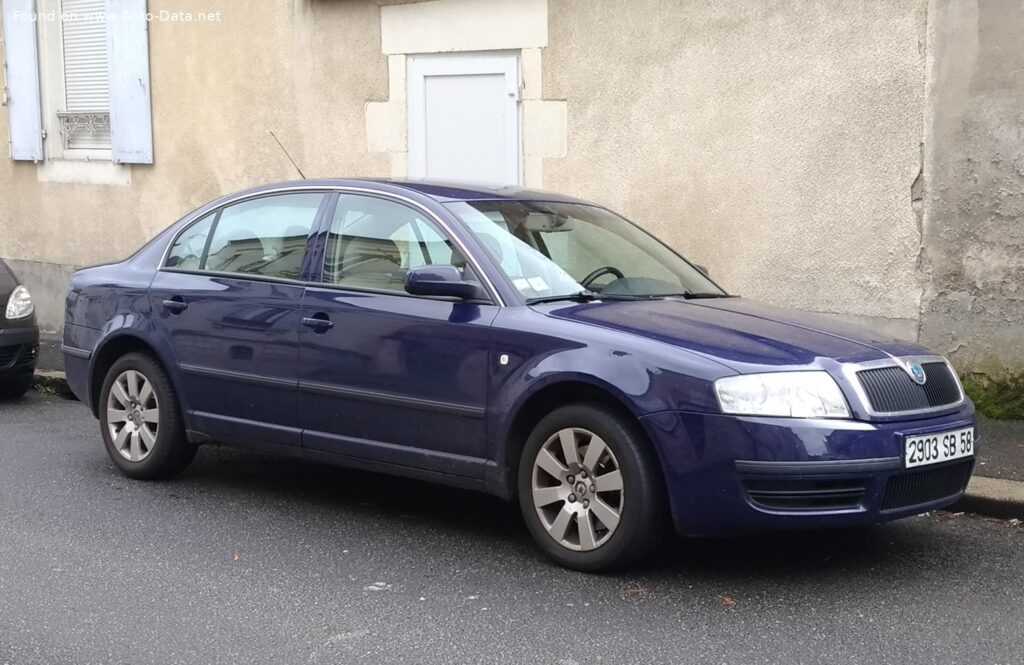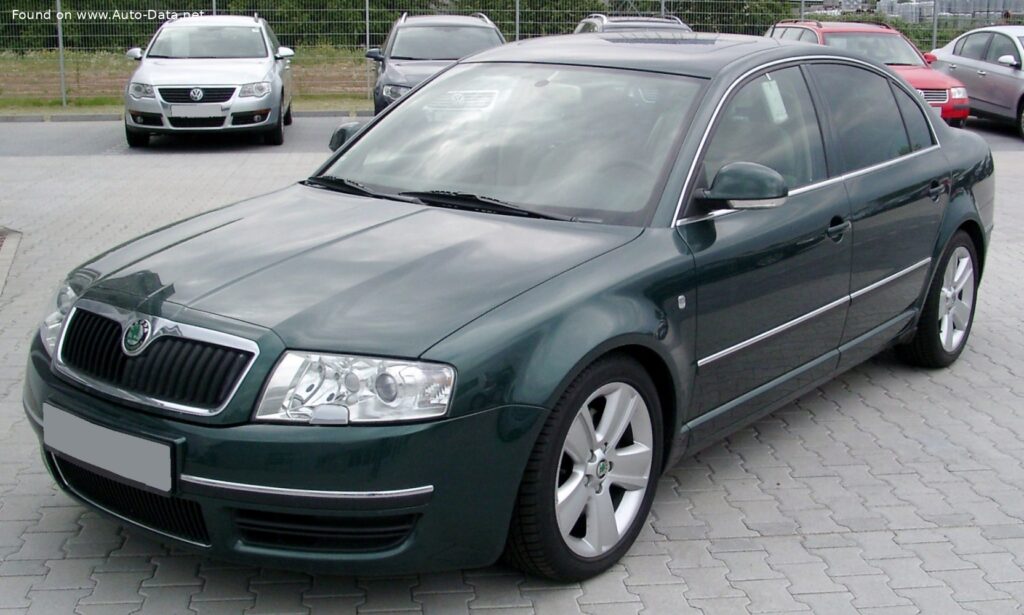
The Skoda Superb I (facelift 2006) 1.8 T represents a significant iteration of Skoda’s flagship sedan, positioned as a spacious and value-oriented alternative to more established European executive cars. Introduced as a facelift to the original Superb I, launched in 2001, this version offered updated styling, improved equipment levels, and refined engine options. While not officially sold in the United States, the Superb held a prominent position in the European market, particularly in countries like the Czech Republic, Germany, and the United Kingdom, appealing to buyers seeking a large, comfortable, and practical vehicle at a competitive price point. The 1.8 T variant, producing 150 horsepower, was a popular choice, balancing performance with fuel efficiency.
Skoda Superb I (Facelift 2006) 1.8 T: An Overview
The Superb I, and specifically the 2006 facelift, aimed to provide a compelling package of space, comfort, and affordability. Built on a stretched version of the Volkswagen Passat platform, the Superb offered a significantly larger interior and trunk capacity than its donor vehicle. The facelift brought subtle but noticeable changes to the exterior, including revised headlights, a new grille, and updated bumpers. The 1.8 T engine, a turbocharged four-cylinder unit, was a key component of the Superb’s appeal, offering a good compromise between performance and economy. This model competed with vehicles like the Ford Mondeo, Opel/Vauxhall Vectra, and Volkswagen Passat, offering a unique blend of features and value.
Engine & Performance
The heart of the Skoda Superb I (facelift 2006) 1.8 T is the EA113 1.8-liter turbocharged inline-four cylinder engine, designated as the AWT engine code. This engine delivers 150 horsepower at 5700 rpm and 210 Nm (154.89 lb.-ft.) of torque at 1750 rpm. The turbocharger and intercooler contribute to improved power output and responsiveness. Power per liter is rated at 84.2 hp/l. The engine is longitudinally mounted at the front of the vehicle and is paired with a five-speed manual transmission, driving the front wheels. Performance figures include a 0-100 km/h (0-62 mph) acceleration time of 9.5 seconds and a maximum speed of 216 km/h (134.22 mph). The weight-to-power ratio is 9.1 kg/Hp, and the weight-to-torque ratio is 6.5 kg/Nm. Fuel consumption, measured using the NEDC standard, is rated at 11.5 l/100 km (20.5 US mpg) in urban conditions, 6.5 l/100 km (36.2 US mpg) in extra-urban conditions, and 8.3 l/100 km (28.3 US mpg) combined. CO2 emissions are rated at 199 g/km, meeting Euro 4 emission standards.
Design & Features
The Skoda Superb I (facelift 2006) is a four-door sedan with a classic three-box design. The facelifted model features a more refined front end with a distinctive grille and updated headlights. The interior is characterized by its spaciousness, offering ample legroom and headroom for both front and rear passengers. The trunk capacity is a generous 462 liters (16.32 cu. ft.), making it one of the largest in its class. Standard features typically included air conditioning, power windows, central locking, and an audio system. Safety features, while not as comprehensive as modern vehicles, included ABS (Anti-lock Braking System) and ventilated front disc brakes. The vehicle’s kerb weight is 1363 kg (3004.9 lbs), with a maximum permissible weight of 2015 kg (4442.31 lbs). The Superb’s design prioritized practicality and comfort, making it a suitable choice for families and long-distance drivers.
Technical Specifications
| Brand | Skoda |
| Model | Superb |
| Generation | Superb I (facelift 2006) |
| Type (Engine) | 1.8 T (150 Hp) |
| Start of production | 2006 |
| End of production | 2008 |
| Powertrain Architecture | Internal Combustion engine |
| Body type | Sedan |
| Seats | 5 |
| Doors | 4 |
| Fuel consumption (urban) | 11.5 l/100 km (20.5 US mpg) |
| Fuel consumption (extra urban) | 6.5 l/100 km (36.2 US mpg) |
| Fuel consumption (combined) | 8.3 l/100 km (28.3 US mpg) |
| CO2 emissions | 199 g/km |
| Fuel Type | Petrol (Gasoline) |
| Acceleration 0-100 km/h | 9.5 sec |
| Acceleration 0-60 mph | 9 sec |
| Maximum speed | 216 km/h (134.22 mph) |
| Emission standard | Euro 4 |
| Weight-to-power ratio | 9.1 kg/Hp |
| Weight-to-torque ratio | 6.5 kg/Nm |
| Power | 150 Hp @ 5700 rpm |
| Torque | 210 Nm @ 1750 rpm (154.89 lb.-ft.) |
| Engine layout | Front, Longitudinal |
| Engine Model/Code | EA113 / AWT |
| Engine displacement | 1781 cm3 (108.68 cu. in.) |
| Number of cylinders | 4 |
| Engine configuration | Inline |
| Cylinder Bore | 81 mm (3.19 in.) |
| Piston Stroke | 86.4 mm (3.4 in.) |
| Number of valves per cylinder | 5 |
| Fuel injection system | Multi-port manifold injection |
| Engine aspiration | Turbocharger, Intercooler |
| Valvetrain | DOHC |
| Engine oil capacity | 3.9 l (4.12 US qt | 3.43 UK qt) |
| Coolant capacity | 6.5 l (6.87 US qt | 5.72 UK qt) |
| Kerb Weight | 1363 kg (3004.9 lbs.) |
| Max. weight | 2015 kg (4442.31 lbs.) |
| Max load | 652 kg (1437.41 lbs.) |
| Trunk (boot) space (minimum) | 462 l (16.32 cu. ft.) |
| Fuel tank capacity | 62 l (16.38 US gal | 13.64 UK gal) |
| Max. roof load | 100 kg (220.46 lbs.) |
| Permitted trailer load (brakes 8%) | 1500 kg (3306.93 lbs.) |
| Permitted trailer load (brakes 12%) | 1300 kg (2866.01 lbs.) |
| Permitted trailer load (no brakes) | 650 kg (1433 lbs.) |
| Permitted towbar download | 75 kg (165.35 lbs.) |
| Length | 4803 mm (189.09 in.) |
| Width | 1765 mm (69.49 in.) |
| Width including mirrors | 1895 mm (74.61 in.) |
| Height | 1469 mm (57.83 in.) |
| Wheelbase | 2803 mm (110.35 in.) |
| Front track | 1521 mm (59.88 in.) |
| Rear track | 1514 mm (59.61 in.) |
| Minimum turning circle | 11.8 m (38.71 ft.) |
| Drivetrain | Front wheel drive |
| Number of gears | 5 |
| Gearbox type | Manual transmission |
| Front suspension | Independent multi-link suspension |
| Rear suspension | Torsion |
| Front brakes | Ventilated discs |
| Rear brakes | Disc |
| Assisting systems | ABS (Anti-lock braking system) |
| Steering type | Steering rack and pinion |
| Power steering | Hydraulic Steering |
| Tires size | 205/55 R16 |
| Wheel rims size | 6.5J x 16; 7J x 16 |
The Skoda Superb I (facelift 2006) 1.8 T remains a noteworthy vehicle, demonstrating Skoda’s ability to deliver a compelling combination of space, comfort, and value in the European executive car segment. While not available in the US market, it represents a significant chapter in Skoda’s history and a testament to its engineering capabilities.