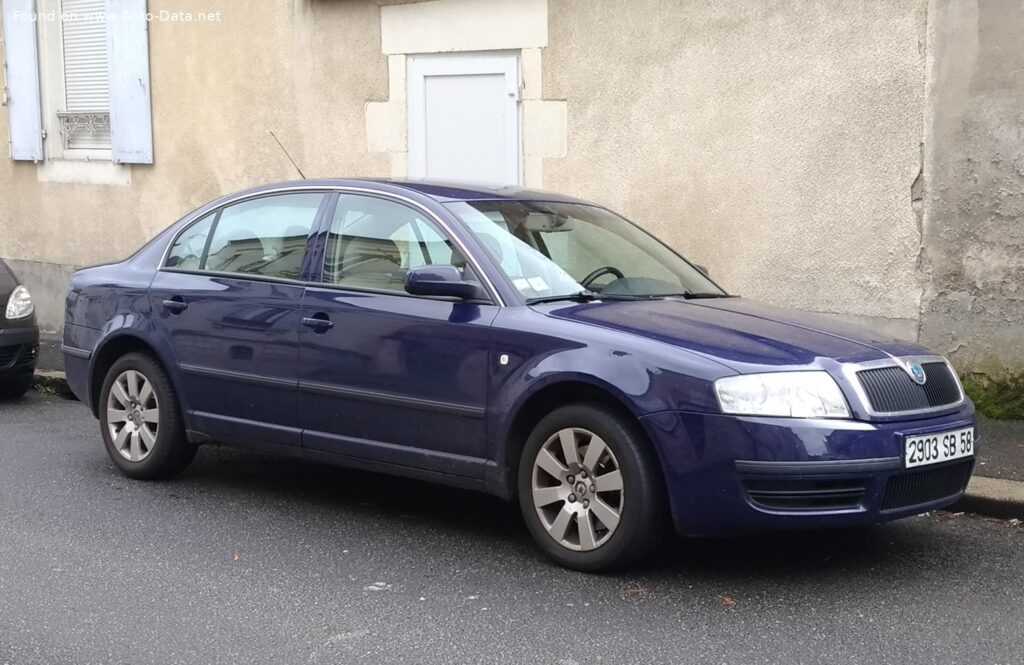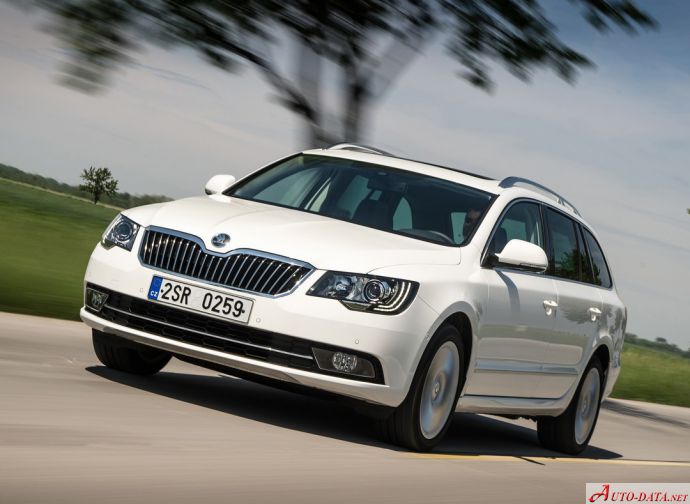
The Skoda Superb II Combi (facelift 2013) 1.8 TSI (160 Hp) represents a significant offering from the Czech automaker within the highly competitive European mid-size executive segment. As part of the Volkswagen Group, Skoda has carved out a niche for itself by providing exceptional value, practicality, and robust engineering, often leveraging shared platforms and powertrains with its German counterparts. The Superb, particularly in its second generation (B6/3T) and subsequent facelift from 2013, cemented Skoda’s reputation for producing vehicles that punch above their weight class in terms of space, comfort, and refinement. The “Combi” designation signifies its station wagon body style, a highly popular choice in Europe for families and business users who prioritize cargo capacity and versatility without compromising on passenger comfort or driving dynamics. This particular variant, equipped with the 1.8-liter TSI engine, struck an appealing balance between spirited performance and commendable fuel efficiency, making it a compelling option for a wide range of buyers from its production start in April 2013 until its discontinuation in May 2015.
Engineering and Performance of the Skoda Superb II Combi (facelift 2013)
At the heart of the Skoda Superb II Combi (facelift 2013) 1.8 TSI (160 Hp) lies a sophisticated powertrain, a hallmark of Volkswagen Group engineering. The 1.8-liter TSI (Turbocharged Stratified Injection) engine, identified by the EA888 / CDAA code, is a 1798 cm³ (109.72 cu. in.) inline four-cylinder unit. This engine configuration, front and transversely mounted, is a staple across many VW Group products, renowned for its blend of performance and efficiency. The application of direct fuel injection combined with turbocharging and an intercooler allows the engine to deliver a robust 160 horsepower. This power output, translating to an impressive 89 horsepower per liter, ensures responsive acceleration and confident overtaking maneuvers.
Crucially, the engine’s torque delivery is equally impressive. It generates 250 Nm (184.39 lb.-ft.) of torque across a broad rev range, from a low 1500 rpm up to 4500 rpm. This wide powerband contributes significantly to the vehicle’s drivability, providing strong pulling power from low speeds and reducing the need for frequent gear changes. Mated to a precise 6-speed manual transmission, the front-wheel-drive Superb Combi can accelerate from 0 to 60 mph in a brisk 7.9 seconds, a respectable figure for a family-oriented station wagon of its size. The maximum speed is rated at 137.32 mph (221 km/h), demonstrating its capability for sustained high-speed cruising on European autobahns.
Beyond raw performance, the 1.8 TSI engine was also engineered with efficiency in mind. The combined fuel economy is rated at 34.1 US mpg (6.9 l/100 km), with extra-urban consumption reaching an impressive 44.4 US mpg (5.3 l/100 km). Urban driving sees consumption at 24.8 US mpg (9.5 l/100 km). These figures highlight the engine’s ability to balance performance with economic operation, a key consideration for European buyers. CO2 emissions stand at 160 g/km, adhering to the Euro 5 J emission standard, reflecting its relatively clean operation for its era. The vehicle’s weight-to-power ratio of 9.5 kg/Hp (105.4 Hp/tonne) and weight-to-torque ratio of 6.1 kg/Nm (164.7 Nm/tonne) underscore the effective power delivery relative to its kerb weight of 3346.62 lbs (1518 kg).
Design, Features, and Practicality
The design philosophy behind the Skoda Superb II Combi (facelift 2013) is one of understated elegance combined with immense practicality. As a station wagon (estate), its five-door, five-seat configuration is optimized for passenger comfort and cargo versatility. With a length of 190.28 inches (4833 mm), a width of 71.54 inches (1817 mm), and a height of 59.49 inches (1511 mm), the Superb Combi is a substantial vehicle, providing generous interior space that rivals cars from higher segments. The long wheelbase of 108.7 inches (2761 mm) is a major contributor to its expansive rear legroom, a feature often lauded by reviewers and owners alike.
The 2013 facelift brought subtle yet effective revisions to the Superb’s exterior and interior, refreshing its aesthetic appeal. Typically, facelifts involve updated front and rear fascias, including revised headlights, grilles, bumpers, and taillights, aiming to keep the model contemporary with evolving design trends. Inside, these refreshes often include new trim materials, updated infotainment systems, and minor ergonomic improvements, enhancing the perceived quality and user experience. While specific facelift details are not provided, these changes generally contribute to a more modern and refined appearance.
Practicality is arguably the Superb Combi’s strongest suit. The trunk (boot) space is cavernous, offering a minimum of 22.35 cu. ft. (633 liters) with all five seats in place. Folding down the rear seats expands this capacity to an enormous 65.86 cu. ft. (1865 liters), making it exceptionally capable of hauling large items, luggage for extended trips, or sports equipment. This class-leading cargo volume, combined with a maximum load capacity of 1241.2 lbs (563 kg), makes the Superb Combi an ideal choice for families requiring maximum utility. The fuel tank capacity of 15.85 US gallons (60 liters) ensures a substantial cruising range, further enhancing its suitability for long-distance travel.
In terms of safety and driver assistance, the Superb II Combi featured standard systems appropriate for its time. Anti-lock braking system (ABS) is listed, and it would have been complemented by electronic stability control (ESC), multiple airbags, and other passive safety features as standard equipment, contributing to its strong safety ratings in European crash tests. The steering system, a rack and pinion type, provides precise control and a comfortable turning circle of 38.35 feet (11.69 m) for a vehicle of its size, aiding maneuverability in urban environments.
The Skoda Superb II Combi (facelift 2013) 1.8 TSI (160 Hp) stands as a testament to Skoda’s commitment to delivering well-rounded, practical, and dependable vehicles. It offered European consumers a compelling package of spaciousness, efficient performance, and solid build quality, all wrapped in an unassuming yet elegant design. Its continued popularity in the used car market reflects its enduring appeal as a smart choice for those seeking maximum utility without sacrificing driving pleasure or comfort.
Technical Specifications: Skoda Superb II Combi (facelift 2013) 1.8 TSI (160 Hp)
| Brand | Skoda |
| Model | Superb |
| Generation | Superb II Combi (facelift 2013) |
| Type (Engine) | 1.8 TSI (160 Hp) |
| Start of Production | April, 2013 |
| End of Production | May, 2015 |
| Powertrain Architecture | Internal Combustion engine |
| Body Type | Station wagon (estate) |
| Seats | 5 |
| Doors | 5 |
| Fuel Consumption (Urban) | 9.5 l/100 km (24.8 US mpg) |
| Fuel Consumption (Extra Urban) | 5.3 l/100 km (44.4 US mpg) |
| Fuel Consumption (Combined) | 6.9 l/100 km (34.1 US mpg) |
| CO2 Emissions | 160 g/km |
| Fuel Type | Petrol (Gasoline) |
| Acceleration 0 – 60 mph | 7.9 sec |
| Maximum Speed | 221 km/h (137.32 mph) |
| Emission Standard | Euro 5 J |
| Weight-to-Power Ratio | 9.5 kg/Hp (105.4 Hp/tonne) |
| Weight-to-Torque Ratio | 6.1 kg/Nm (164.7 Nm/tonne) |
| Power | 160 Hp |
| Power per Liter | 89 Hp/l |
| Torque | 250 Nm (184.39 lb.-ft.) @ 1500-4500 rpm |
| Engine Layout | Front, Transverse |
| Engine Model/Code | EA888 / CDAA |
| Engine Displacement | 1798 cm³ (109.72 cu. in.) |
| Number of Cylinders | 4 |
| Engine Configuration | Inline |
| Compression Ratio | 9.8:1 |
| Fuel Injection System | Direct injection |
| Engine Aspiration | Turbocharger, Intercooler |
| Engine Oil Capacity | 4.6 l (4.86 US qt) |
| Coolant Capacity | 8.6 l (9.09 US qt) |
| Kerb Weight | 1518 kg (3346.62 lbs) |
| Max. Weight | 2081 kg (4587.82 lbs) |
| Max Load | 563 kg (1241.2 lbs) |
| Trunk (Boot) Space – Minimum | 633 l (22.35 cu. ft.) |
| Trunk (Boot) Space – Maximum | 1865 l (65.86 cu. ft.) |
| Fuel Tank Capacity | 60 l (15.85 US gal) |
| Length | 4833 mm (190.28 in) |
| Width | 1817 mm (71.54 in) |
| Height | 1511 mm (59.49 in) |
| Wheelbase | 2761 mm (108.7 in) |
| Front Track | 1545 mm (60.83 in) |
| Rear (Back) Track | 1517 mm (59.72 in) |
| Minimum Turning Circle | 11.69 m (38.35 ft) |
| Drivetrain Architecture | The Internal combustion engine (ICE) drives the front wheels of the vehicle. |
| Drive Wheel | Front wheel drive |
| Number of Gears and Type of Gearbox | 6 gears, manual transmission |
| Assisting Systems | ABS (Anti-lock braking system) |
| Steering Type | Steering rack and pinion |