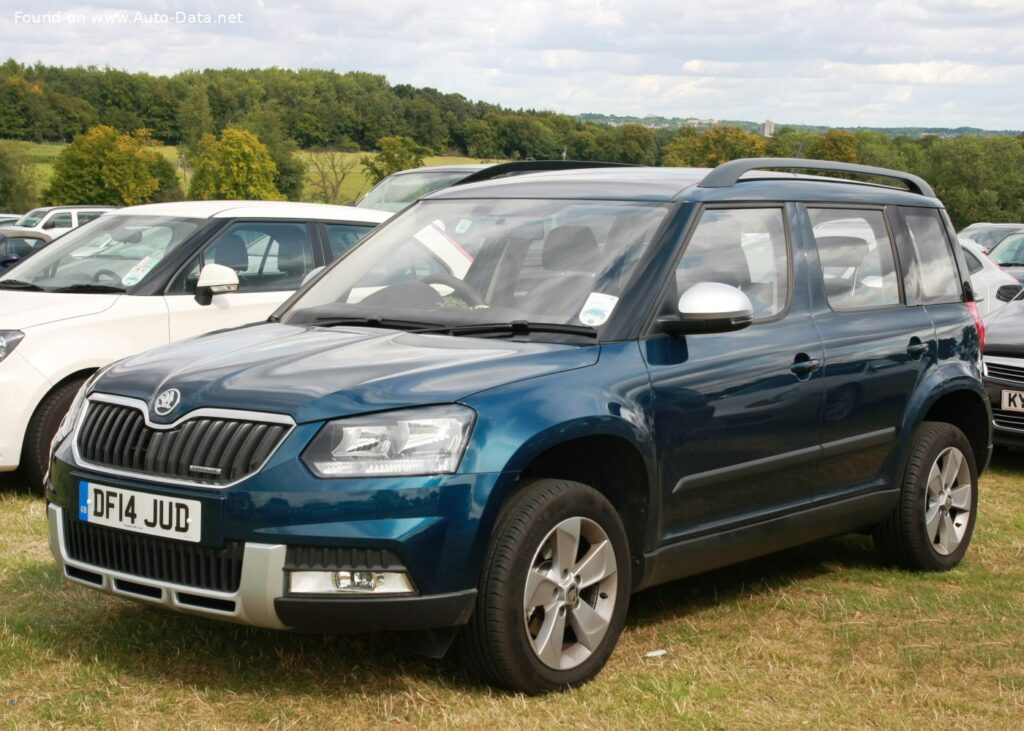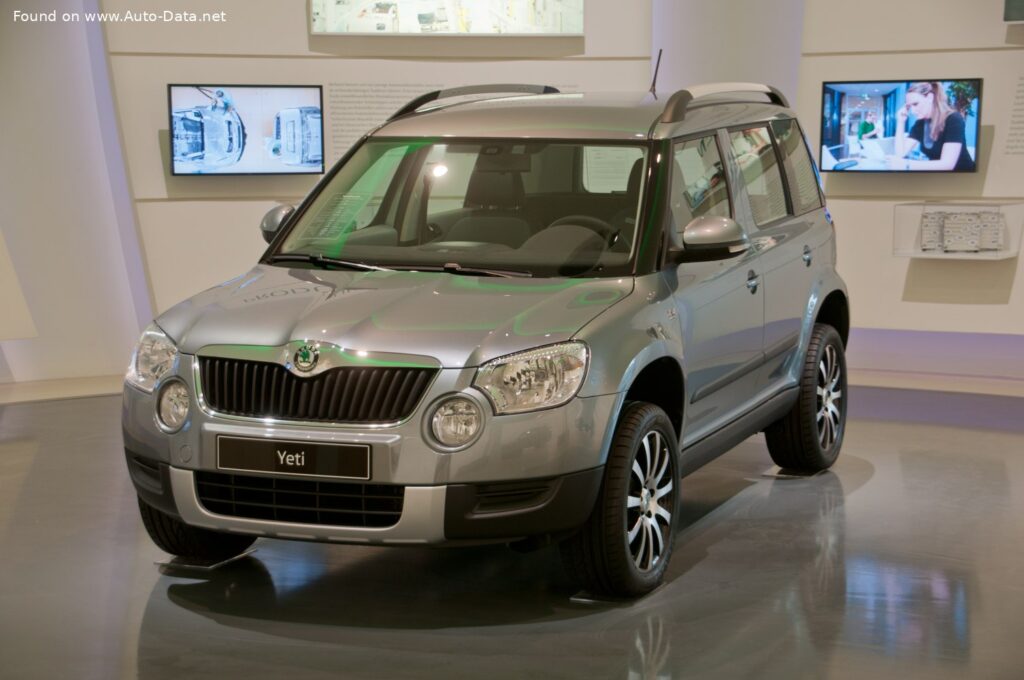
The Skoda Yeti 1.4 TSI (122 Hp) is a compact crossover SUV produced by the Czech automaker Skoda between 2010 and 2013. Positioned as a practical and versatile vehicle, the Yeti aimed to blend the functionality of an SUV with the driving dynamics of a hatchback. While not officially sold in the United States, the Yeti was a popular model in Europe, offering a compelling alternative to established competitors like the Nissan Qashqai and Volkswagen Tiguan. It distinguished itself with its boxy, upright design and spacious interior, appealing to families and those seeking a vehicle capable of handling both urban commutes and occasional off-road excursions.
Skoda Yeti 1.4 TSI: Overview and Market Position
The Yeti represented Skoda’s entry into the rapidly growing compact SUV segment. Skoda, a subsidiary of Volkswagen Group, leveraged the group’s modular platform technology to create a vehicle that was both cost-effective to produce and feature-rich. The 1.4 TSI variant, powered by a turbocharged gasoline engine, was a key offering in the Yeti lineup, balancing performance with fuel efficiency. The Yeti’s design, while unconventional for the time, proved popular, and the vehicle gained a reputation for its robust build quality and practicality. It was primarily marketed towards European consumers seeking a versatile and affordable family vehicle.
Engine & Performance
The Skoda Yeti 1.4 TSI is equipped with a 1.4-liter, inline-four cylinder turbocharged gasoline engine, designated the EA111 / CAXA. This engine produces 122 horsepower at 5000 rpm and 200 Nm (147.51 lb.-ft.) of torque between 1500 and 4000 rpm. The turbocharger and intercooler enhance performance by forcing more air into the engine, resulting in improved power output and responsiveness. Power is delivered to the front wheels via a six-speed manual transmission. The Yeti 1.4 TSI achieves a 0-100 km/h (0-62 mph) acceleration time of 10.5 seconds and a top speed of 185 km/h (114.95 mph). Fuel economy is rated at 6.8 liters per 100 kilometers (34.6 US mpg) combined, with urban and extra-urban figures of 8.9 l/100 km (26.4 US mpg) and 5.9 l/100 km (39.9 US mpg) respectively. CO2 emissions are rated at 159 g/km, meeting Euro 5 emission standards.
Design & Features
The Skoda Yeti features a distinctive, boxy design that maximizes interior space. Its upright stance and large windows contribute to excellent visibility. The vehicle is a five-door SUV with seating for five passengers. The interior is characterized by its practicality and functionality, with a focus on durability and ease of use. Key features include a spacious trunk with a minimum capacity of 405 liters (14.3 cu. ft.) that expands to 1760 liters (62.15 cu. ft.) with the rear seats folded down. Standard safety features include ABS (Anti-lock Braking System). The Yeti’s suspension consists of an independent McPherson strut setup at the front and an independent multi-link setup at the rear, providing a comfortable ride and stable handling. The vehicle’s dimensions are 4223 mm (166.26 in) in length, 1793 mm (70.59 in) in width, and 1691 mm (66.57 in) in height. Ground clearance is 180 mm (7.09 in).
Technical Specifications
| Brand | Skoda |
| Model | Yeti |
| Generation | Yeti |
| Type (Engine) | 1.4 TSI (122 Hp) |
| Start of production | June, 2010 |
| End of production | 2013 |
| Powertrain Architecture | Internal Combustion engine |
| Body type | SUV |
| Seats | 5 |
| Doors | 5 |
| Fuel consumption (urban) | 8.9 l/100 km (26.4 US mpg) |
| Fuel consumption (extra urban) | 5.9 l/100 km (39.9 US mpg) |
| Fuel consumption (combined) | 6.8 l/100 km (34.6 US mpg) |
| CO2 emissions | 159 g/km |
| Fuel Type | Petrol (Gasoline) |
| Acceleration 0 – 100 km/h | 10.5 sec |
| Acceleration 0 – 62 mph | 10.5 sec |
| Acceleration 0 – 60 mph | 10 sec |
| Maximum speed | 185 km/h (114.95 mph) |
| Emission standard | Euro 5 |
| Weight-to-power ratio | 10.7 kg/Hp |
| Weight-to-torque ratio | 6.5 kg/Nm |
| Power | 122 Hp @ 5000 rpm |
| Torque | 200 Nm @ 1500-4000 rpm (147.51 lb.-ft.) |
| Engine layout | Front, Transverse |
| Engine Model/Code | EA111 / CAXA |
| Engine displacement | 1390 cm3 (84.82 cu. in.) |
| Number of cylinders | 4 |
| Engine configuration | Inline |
| Cylinder Bore | 76.5 mm (3.01 in.) |
| Piston Stroke | 75.6 mm (2.98 in.) |
| Compression ratio | 10:1 |
| Number of valves per cylinder | 4 |
| Fuel injection system | Direct injection |
| Engine aspiration | Turbocharger, Intercooler |
| Engine oil capacity | 3.6 l (3.8 US qt | 3.17 UK qt) |
| Coolant | 7.7 l (8.14 US qt | 6.78 UK qt) |
| Kerb Weight | 1300 kg (2866.01 lbs.) |
| Max. weight | 1920 kg (4232.88 lbs.) |
| Max load | 620 kg (1366.87 lbs.) |
| Trunk (boot) space – minimum | 405 l (14.3 cu. ft.) |
| Trunk (boot) space – maximum | 1760 l (62.15 cu. ft.) |
| Fuel tank capacity | 55 l (14.53 US gal | 12.1 UK gal) |
| Permitted trailer load with brakes (12%) | 1300 kg (2866.01 lbs.) |
| Permitted trailer load without brakes | 680 kg (1499.14 lbs.) |
| Length | 4223 mm (166.26 in.) |
| Width | 1793 mm (70.59 in.) |
| Height | 1691 mm (66.57 in.) |
| Wheelbase | 2578 mm (101.5 in.) |
| Front track | 1541 mm (60.67 in.) |
| Rear (Back) track | 1537 mm (60.51 in.) |
| Ride height (ground clearance) | 180 mm (7.09 in.) |
| Drag coefficient (Cd) | 0.37 |
| Minimum turning circle (turning diameter) | 10.3 m (33.79 ft.) |
| Drivetrain Architecture | Front wheel drive |
| Number of gears and type of gearbox | 6 gears, manual transmission |
| Front suspension | Independent, type McPherson with coil spring and anti-roll bar |
| Rear suspension | Independent multi-link spring suspension with stabilizer |
| Front brakes | Ventilated discs |
| Rear brakes | Disc |
| Assisting systems | ABS (Anti-lock braking system) |
| Steering type | Steering rack and pinion |
| Power steering | Electric Steering |
| Tires size | 215/60 R16; 225/50 R17 |
| Wheel rims size | 7J x 16; 7J x 17 |