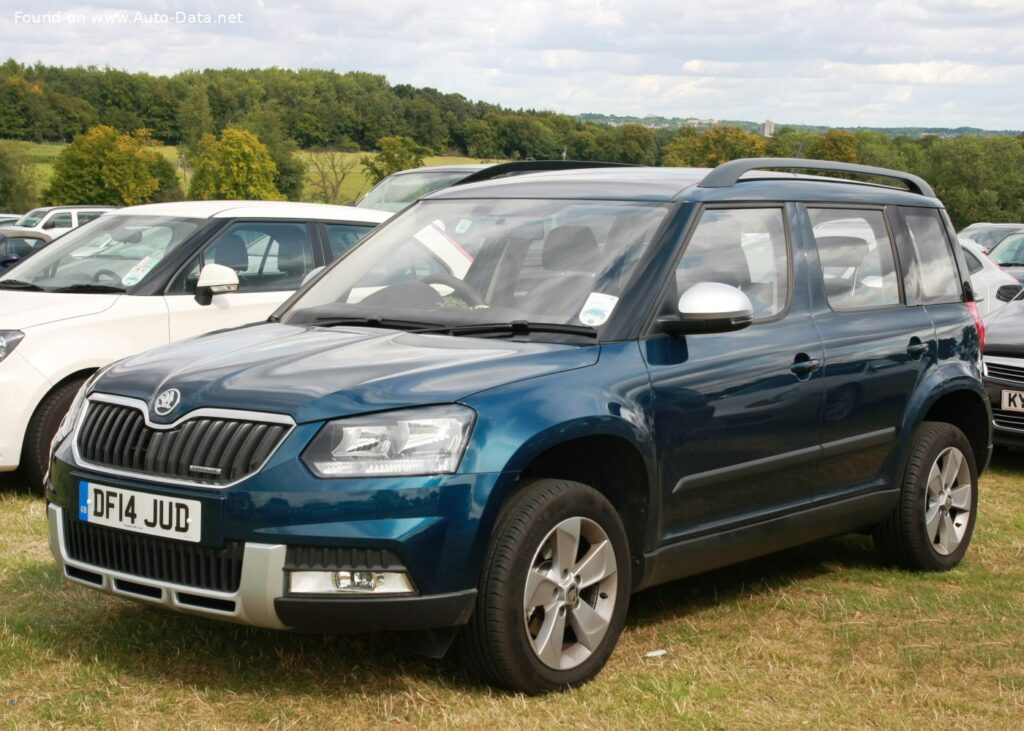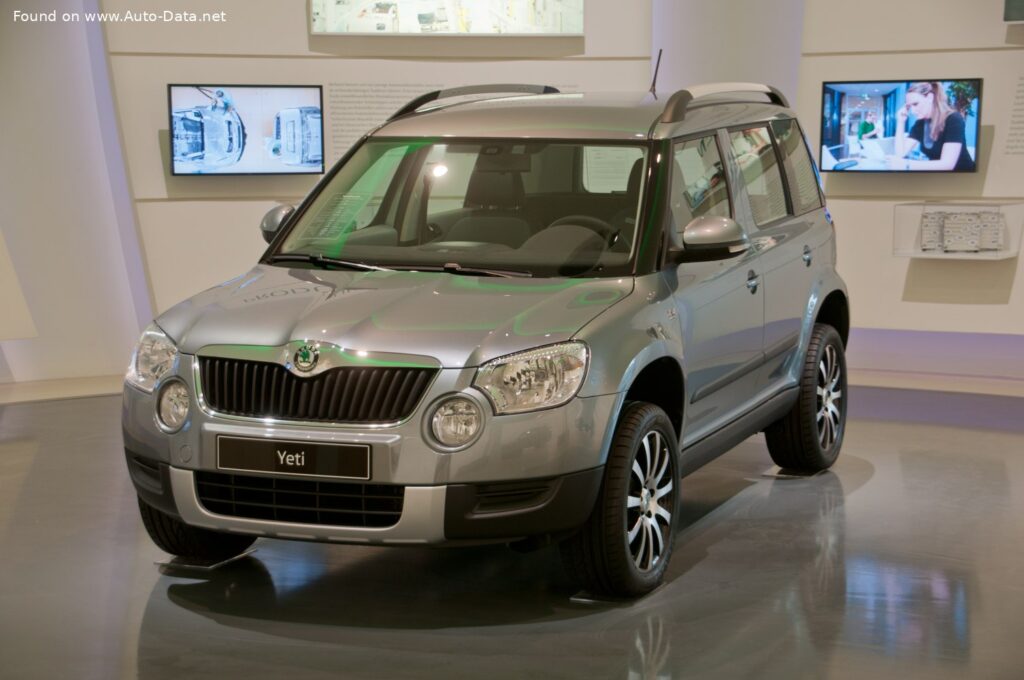
The Skoda Yeti is a compact crossover SUV that was produced by the Czech automaker Skoda from 2009 to 2017. Positioned as a practical and versatile vehicle, the Yeti gained popularity in Europe for its spacious interior, robust build quality, and available all-wheel-drive system. While not officially sold in the United States, the Yeti represents Skoda’s entry into the increasingly popular compact SUV segment, competing with vehicles like the Nissan Qashqai and Kia Sportage in the European market. This article focuses on the 2.0 TDI (140 Hp) DPF variant produced between 2009 and 2013.
Skoda Yeti 2.0 TDI (140 Hp) DPF: Overview
The Yeti, named after the mythical Himalayan creature, was designed to be a rugged and capable vehicle, reflecting its adventurous namesake. The 2.0 TDI model, equipped with a diesel particulate filter (DPF), was a significant offering in European markets focused on fuel efficiency and reduced emissions. It provided a balance between performance and economy, making it a popular choice for families and individuals seeking a versatile vehicle for both urban and rural driving. The Yeti’s boxy design maximized interior space, a key selling point for buyers prioritizing practicality.
Engine & Performance
The Skoda Yeti 2.0 TDI (140 Hp) DPF is powered by a 1968 cc (120.09 cu. in.) inline-four cylinder diesel engine. This engine, part of the Volkswagen Group’s EA189 engine family (code CBDB), produces 140 horsepower at 4200 rpm and 320 Nm (236.02 lb.-ft.) of torque between 1750 and 2500 rpm. The engine features a turbocharger with an intercooler, enhancing performance and efficiency. Power is delivered to the front wheels via a six-speed manual transmission. Acceleration from 0 to 100 km/h (0-62 mph) takes 9.7 seconds, while 0-60 mph is achieved in approximately 9.2 seconds. The vehicle boasts a maximum speed of 193 km/h (119.92 mph). The engine’s fuel economy is rated at 5.1 l/100 km (46.1 US mpg, 55.4 UK mpg) on a combined cycle, with urban consumption at 6.1 l/100 km (38.6 US mpg, 46.3 UK mpg) and extra-urban consumption at 4.5 l/100 km (52.3 US mpg, 62.8 UK mpg). CO2 emissions are rated at 134 g/km, meeting Euro 5 emission standards.
Design & Features
The Skoda Yeti is a five-door SUV with a distinctive, upright design. Its boxy shape contributes to a remarkably spacious interior for its class. The vehicle offers seating for five passengers and provides a versatile cargo area. The trunk space ranges from a minimum of 405 liters (14.3 cu. ft.) with the rear seats up to a maximum of 1760 liters (62.15 cu. ft.) with the rear seats folded down. Key features of the Yeti include its adjustable rear seats, which can be completely removed for increased cargo capacity, and a range of storage compartments throughout the cabin. Safety features, typical for vehicles of this era, include ABS (Anti-lock Braking System) and ventilated front disc brakes, with disc brakes on the rear. The Yeti’s suspension consists of an independent McPherson strut setup at the front and an independent multi-link setup at the rear, providing a comfortable ride and stable handling. The vehicle’s electric power steering offers precise control and ease of maneuverability.
Technical Specifications
| Brand | Skoda |
| Model | Yeti |
| Type (Engine) | 2.0 TDI (140 Hp) DPF |
| Start of production | May, 2009 |
| End of production | 2013 |
| Powertrain Architecture | Internal Combustion engine |
| Body type | SUV |
| Seats | 5 |
| Doors | 5 |
| Fuel consumption (urban) | 6.1 l/100 km (38.6 US mpg, 46.3 UK mpg) |
| Fuel consumption (extra urban) | 4.5 l/100 km (52.3 US mpg, 62.8 UK mpg) |
| Fuel consumption (combined) | 5.1 l/100 km (46.1 US mpg, 55.4 UK mpg) |
| CO2 emissions | 134 g/km |
| Fuel Type | Diesel |
| Acceleration 0 – 100 km/h | 9.7 sec |
| Acceleration 0 – 62 mph | 9.7 sec |
| Acceleration 0 – 60 mph | 9.2 sec |
| Maximum speed | 193 km/h (119.92 mph) |
| Emission standard | Euro 5 |
| Weight-to-power ratio | 10 kg/Hp |
| Weight-to-torque ratio | 4.4 kg/Nm |
| Power | 140 Hp @ 4200 rpm |
| Torque | 320 Nm @ 1750-2500 rpm (236.02 lb.-ft.) |
| Engine layout | Front, Transverse |
| Engine Model/Code | EA189 / CBDB |
| Engine displacement | 1968 cm3 (120.09 cu. in.) |
| Number of cylinders | 4 |
| Engine configuration | Inline |
| Cylinder Bore | 81 mm (3.19 in.) |
| Piston Stroke | 95.5 mm (3.76 in.) |
| Compression ratio | 18.5:1 |
| Number of valves per cylinder | 4 |
| Fuel injection system | Diesel Commonrail |
| Engine aspiration | Turbocharger, Intercooler |
| Engine oil capacity | 4.3 l (4.54 US qt | 3.78 UK qt) |
| Coolant | 8.7 l (9.19 US qt | 7.65 UK qt) |
| Kerb Weight | 1395 kg (3075.45 lbs.) |
| Max. weight | 2015 kg (4442.31 lbs.) |
| Max load | 620 kg (1366.87 lbs.) |
| Trunk (boot) space – minimum | 405 l (14.3 cu. ft.) |
| Trunk (boot) space – maximum | 1760 l (62.15 cu. ft.) |
| Fuel tank capacity | 55 l (14.53 US gal | 12.1 UK gal) |
| Permitted trailer load with brakes (12%) | 1800 kg (3968.32 lbs.) |
| Permitted trailer load without brakes | 730 kg (1609.37 lbs.) |
| Length | 4223 mm (166.26 in.) |
| Width | 1793 mm (70.59 in.) |
| Height | 1691 mm (66.57 in.) |
| Wheelbase | 2578 mm (101.5 in.) |
| Front track | 1541 mm (60.67 in.) |
| Rear track | 1537 mm (60.51 in.) |
| Ride height (ground clearance) | 180 mm (7.09 in.) |
| Drag coefficient (Cd) | 0.37 |
| Minimum turning circle | 10.32 m (33.86 ft.) |
| Drivetrain | Front wheel drive |
| Number of gears | 6 |
| Gearbox type | Manual transmission |
| Front suspension | Independent, McPherson with coil spring and anti-roll bar |
| Rear suspension | Independent multi-link spring suspension with stabilizer |
| Front brakes | Ventilated discs |
| Rear brakes | Disc |
| Steering type | Steering rack and pinion |
| Power steering | Electric |
| Tires size | 215/60 R16; 225/50 R17 |
| Wheel rims size | 7J x 16; 7J x 17 |
The Skoda Yeti 2.0 TDI (140 Hp) DPF offered a compelling package for European buyers seeking a practical, efficient, and versatile compact SUV. Its spacious interior, robust build quality, and fuel-efficient diesel engine made it a popular choice in a competitive segment.