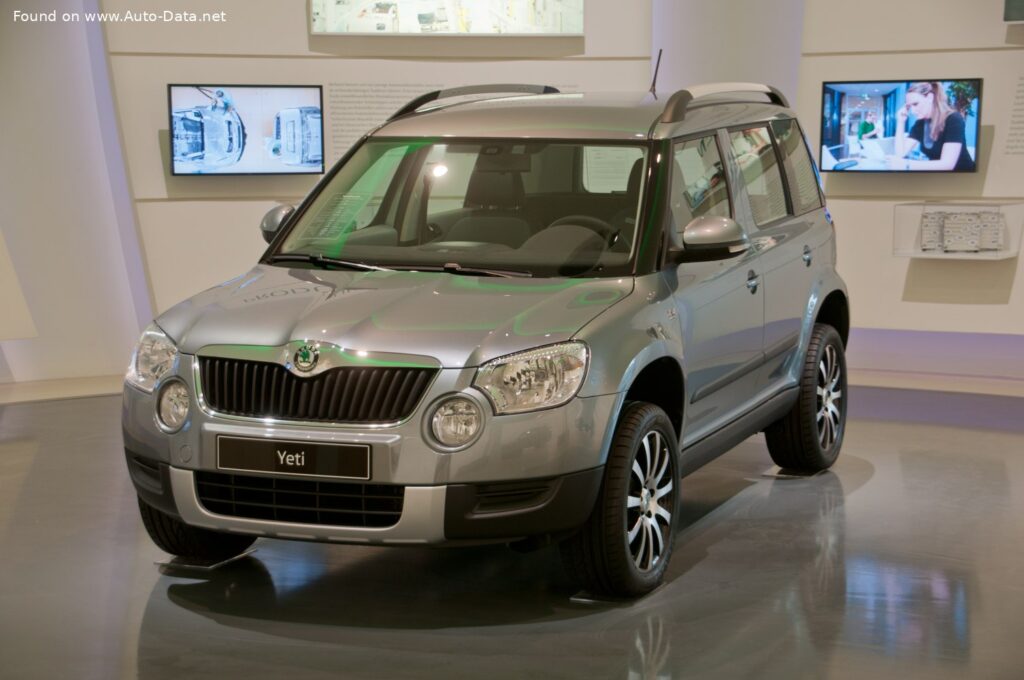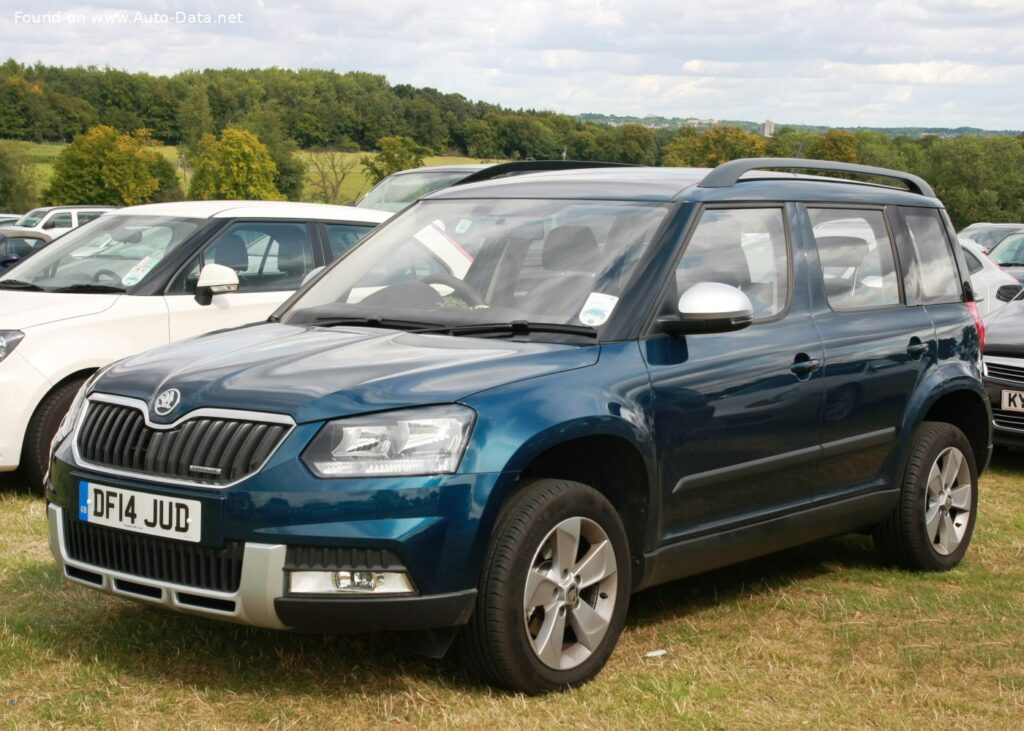
The Skoda Yeti, particularly the facelifted version introduced in 2013, represents a significant offering in the compact SUV segment, though its direct presence in the United States market was limited. Primarily sold in Europe, the Yeti distinguished itself with a blend of practicality, robust build quality, and available all-wheel-drive systems. This article focuses on the 2.0 TDI (110 Hp) 4×4 SCR variant produced between 2015 and 2017, detailing its specifications, performance, and key features. The Yeti aimed to provide a versatile vehicle suitable for both urban driving and light off-road adventures, appealing to families and individuals seeking a capable and economical SUV.
Skoda Yeti (Facelift 2013) 2.0 TDI 4×4 SCR: An Overview
The Yeti, named after the mythical Himalayan creature, was Skoda’s entry into the rapidly growing compact SUV market. The 2013 facelift brought styling updates, improved interior materials, and enhanced technology. The 2.0 TDI 4×4 SCR model, equipped with a diesel engine and all-wheel drive, was positioned as a premium offering within the Yeti range. The “SCR” designation indicates the inclusion of Selective Catalytic Reduction technology, a system designed to reduce nitrogen oxide (NOx) emissions, aligning with increasingly stringent European emission standards. While not officially sold in the US, understanding the Yeti provides insight into Skoda’s engineering capabilities and its approach to the SUV market.
Engine & Performance
The heart of the Yeti 2.0 TDI 4×4 SCR is a 1.968-liter inline-four cylinder diesel engine. This engine produces 110 horsepower at 3500 rpm and 250 Nm (184.39 lb.-ft.) of torque between 1500 and 3000 rpm. The engine utilizes a turbocharger with an intercooler to enhance performance and efficiency. Power is delivered to all four wheels via a six-speed manual transmission and a sophisticated all-wheel-drive system. Acceleration from 0 to 100 km/h (0-62 mph) takes 11.9 seconds, while 0 to 60 mph is achieved in approximately 11.3 seconds. The Yeti’s top speed is rated at 176 km/h (109.36 mph). Fuel economy is a strong point, with combined cycle consumption rated at 5.3 l/100 km (44.4 US mpg, 53.3 UK mpg), and CO2 emissions of 137 g/km, meeting Euro 6 emission standards.
Design & Features
The Skoda Yeti boasts a distinctive, boxy design that maximizes interior space. Its five-door body style and five-seat configuration provide ample room for passengers and cargo. The 2013 facelift brought revised front and rear fascias, updated headlights, and new interior trim options. Key features include an independent McPherson strut front suspension and an independent multi-link rear suspension, providing a comfortable ride and good handling characteristics. Safety features, standard for the era, include ABS (Anti-lock Braking System) and a robust chassis designed for stability. The interior is characterized by its practicality and functionality, with a focus on durability and ease of use. Trunk space is generous, ranging from 415 liters (14.66 cu. ft.) with the rear seats up to 1665 liters (58.8 cu. ft.) with the seats folded down. The Yeti also offers a respectable towing capacity, with a maximum braked trailer load of 1800 kg (3968.32 lbs).
Technical Specifications
| Brand | Skoda |
| Model | Yeti |
| Generation | Yeti (facelift 2013) |
| Type (Engine) | 2.0 TDI (110 Hp) 4×4 SCR |
| Start of production | 2015 |
| End of production | 2017 |
| Powertrain Architecture | Internal Combustion engine |
| Body type | SUV |
| Seats | 5 |
| Doors | 5 |
| Fuel consumption (urban) | 6.3 l/100 km (37.3 US mpg, 44.8 UK mpg, 15.9 km/l) |
| Fuel consumption (extra urban) | 4.6 l/100 km (51.1 US mpg, 61.4 UK mpg, 21.7 km/l) |
| Fuel consumption (combined) | 5.3 l/100 km (44.4 US mpg, 53.3 UK mpg, 18.9 km/l) |
| CO2 emissions | 137 g/km |
| Fuel Type | Diesel |
| Acceleration 0 – 100 km/h | 11.9 sec |
| Acceleration 0 – 62 mph | 11.9 sec |
| Acceleration 0 – 60 mph | 11.3 sec |
| Maximum speed | 176 km/h (109.36 mph) |
| Emission standard | Euro 6 |
| Weight-to-power ratio | 13.4 kg/Hp, 74.6 Hp/tonne |
| Weight-to-torque ratio | 5.9 kg/Nm, 169.5 Nm/tonne |
| Power | 110 Hp @ 3500 rpm |
| Torque | 250 Nm @ 1500-3000 rpm (184.39 lb.-ft. @ 1500-3000 rpm) |
| Engine layout | Front, Transverse |
| Engine Model/Code | EA288 / DFSA |
| Engine displacement | 1968 cm3 (120.09 cu. in.) |
| Number of cylinders | 4 |
| Engine configuration | Inline |
| Cylinder Bore | 81 mm (3.19 in.) |
| Piston Stroke | 95.5 mm (3.76 in.) |
| Compression ratio | 16.2:1 |
| Number of valves per cylinder | 4 |
| Fuel injection system | Diesel Commonrail |
| Engine aspiration | Turbocharger, Intercooler |
| Valvetrain | DOHC |
| Engine oil capacity | 4.3 l (4.54 US qt | 3.78 UK qt) |
| Coolant | 8.4 l (8.88 US qt | 7.39 UK qt) |
| Kerb Weight | 1475 kg (3251.82 lbs.) |
| Max. weight | 2095 kg (4618.68 lbs.) |
| Max load | 620 kg (1366.87 lbs.) |
| Trunk (boot) space – minimum | 415 l (14.66 cu. ft.) |
| Trunk (boot) space – maximum | 1665 l (58.8 cu. ft.) |
| Fuel tank capacity | 60 l (15.85 US gal | 13.2 UK gal) |
| Max. roof load | 100 kg (220.46 lbs.) |
| Permitted trailer load with brakes (12%) | 1800 kg (3968.32 lbs.) |
| Permitted trailer load without brakes | 750 kg (1653.47 lbs.) |
| Permitted towbar download | 80 kg (176.37 lbs.) |
| Length | 4222 mm (166.22 in.) |
| Width | 1793 mm (70.59 in.) |
| Width including mirrors | 1956 mm (77.01 in.) |
| Height | 1691 mm (66.57 in.) |
| Wheelbase | 2578 mm (101.5 in.) |
| Front track | 1541 mm (60.67 in.) |
| Rear (Back) track | 1537 mm (60.51 in.) |
| Front overhang | 877 mm (34.53 in.) |
| Rear overhang | 767 mm (30.2 in.) |
| Ride height (ground clearance) | 180 mm (7.09 in.) |
| Drag coefficient (Cd) | 0.365 |
| Minimum turning circle (turning diameter) | 10.32 m (33.86 ft.) |
| Approach angle | 19° |
| Departure angle | 26.7° |
| Ramp-over (brakeover) angle | 19.6° |
| Climb angle | 35° |
| Drive wheel | All wheel drive (4×4) |
| Number of gears and type of gearbox | 6 gears, manual transmission |
| Front suspension | Independent, type McPherson with coil spring and anti-roll bar |
| Rear suspension | Independent multi-link spring suspension with stabilizer |
| Front brakes | Ventilated discs |
| Rear brakes | Disc |