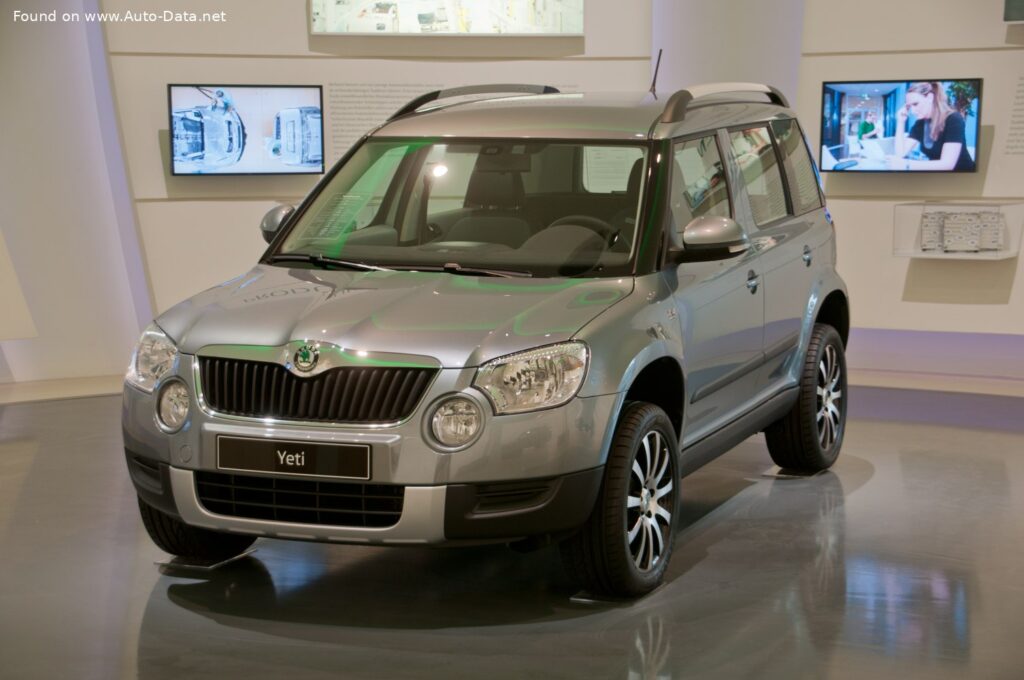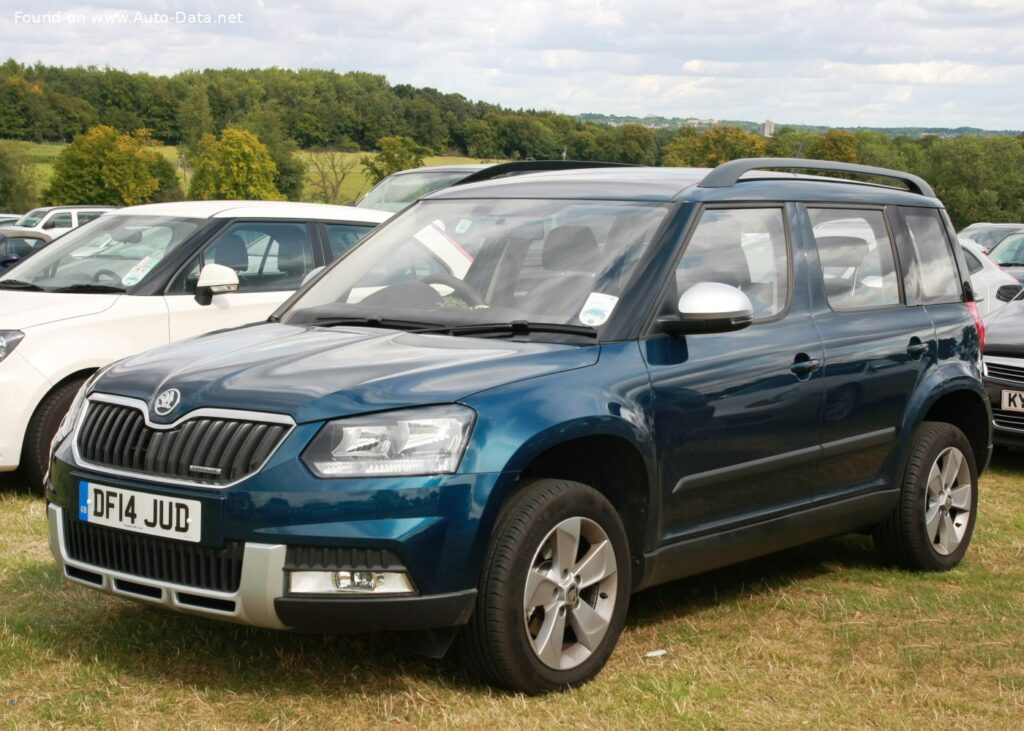
The Skoda Yeti, particularly the facelifted version introduced in 2013, represents a significant offering in the compact SUV segment, though its direct presence in the United States market was limited. Primarily sold in Europe, the Yeti distinguished itself with a blend of practicality, robust build quality, and a surprisingly engaging driving experience. The 2.0 TDI 4×4 variant, producing 170 horsepower, was a popular choice for those needing all-weather capability and reasonable fuel efficiency. This model year marked a refinement of the original Yeti, with styling updates and improvements to interior features.
Skoda Yeti (Facelift 2013) 2.0 TDI 4×4: An Overview
The Yeti, named after the mythical Himalayan creature, was designed to be a rugged and versatile vehicle. Skoda, a Czech automaker now part of the Volkswagen Group, aimed to create an SUV that wasn’t overly large or cumbersome, appealing to buyers who wanted space and functionality without the bulk of larger SUVs. The 2013 facelift brought revised front and rear styling, updated interior materials, and enhanced technology, solidifying its position as a competitive option in the European market. While not officially sold in the US, understanding the Yeti provides insight into Volkswagen Group’s broader strategy for compact SUVs globally.
Engine & Performance
The heart of the 2013 Skoda Yeti 2.0 TDI 4×4 is a 1968 cc (120.09 cu. in.) inline-four cylinder diesel engine. This engine, identified by the EA189 / CFJA code, delivers 170 horsepower at 4200 rpm and a substantial 350 Nm (258.15 lb.-ft.) of torque between 1750 and 2500 rpm. The turbocharger and intercooler contribute to both power output and efficiency. Power per liter is rated at 86.4 hp/l. This powertrain is coupled with a six-speed manual transmission and an all-wheel-drive system, providing confident traction in various conditions. Acceleration from 0 to 100 km/h (0-62 mph) takes 8.4 seconds, while 0-60 mph is achieved in approximately 8 seconds. The vehicle boasts a maximum speed of 201 km/h (124.9 mph). The weight-to-power ratio is 9.1 kg/Hp, and the weight-to-torque ratio is 4.4 kg/Nm, indicating a good balance between power and weight.
Design & Features
The 2013 Skoda Yeti maintains the distinctive, boxy design of the original model, but with a more refined appearance thanks to the facelift. It’s a five-door SUV with seating for five passengers. Key design elements include a prominent front grille, redesigned headlights, and updated bumpers. The interior is characterized by its practicality and spaciousness. The rear seats are adjustable and can be folded down to increase cargo capacity. The trunk offers 415 liters (14.66 cu. ft.) of space with the rear seats up, expanding to a generous 1665 liters (58.8 cu. ft.) when folded. Safety features, typical for a vehicle of this era, include ABS (Anti-lock Braking System). The Yeti’s ride height (ground clearance) is 180 mm (7.09 in), providing adequate capability for light off-road driving. Approach, departure, and ramp-over angles are 19°, 26.7°, and 19.6° respectively, further enhancing its off-road credentials.
Technical Specifications
| Brand | Skoda |
| Model | Yeti |
| Generation | Yeti (facelift 2013) |
| Type (Engine) | 2.0 TDI (170 Hp) 4×4 |
| Start of production | 2013 |
| End of production | 2015 |
| Powertrain Architecture | Internal Combustion engine |
| Body type | SUV |
| Seats | 5 |
| Doors | 5 |
| Fuel consumption (urban) | 7.1 l/100 km (33.1 US mpg, 39.8 UK mpg, 14.1 km/l) |
| Fuel consumption (extra urban) | 4.9 l/100 km (48 US mpg, 57.6 UK mpg, 20.4 km/l) |
| Fuel consumption (combined) | 5.7 l/100 km (41.3 US mpg, 49.6 UK mpg, 17.5 km/l) |
| CO2 emissions | 149 g/km |
| Fuel Type | Diesel |
| Acceleration 0 – 100 km/h | 8.4 sec |
| Acceleration 0 – 62 mph | 8.4 sec |
| Acceleration 0 – 60 mph | 8 sec |
| Maximum speed | 201 km/h (124.9 mph) |
| Emission standard | Euro 5 J |
| Weight-to-power ratio | 9.1 kg/Hp |
| Weight-to-torque ratio | 4.4 kg/Nm |
| Power | 170 Hp @ 4200 rpm |
| Torque | 350 Nm @ 1750-2500 rpm (258.15 lb.-ft. @ 1750-2500 rpm) |
| Engine layout | Front, Transverse |
| Engine Model/Code | EA189 / CFJA |
| Engine displacement | 1968 cm3 (120.09 cu. in.) |
| Number of cylinders | 4 |
| Engine configuration | Inline |
| Cylinder Bore | 81 mm (3.19 in.) |
| Piston Stroke | 95.5 mm (3.76 in.) |
| Compression ratio | 16:1 |
| Number of valves per cylinder | 4 |
| Fuel injection system | Diesel Commonrail |
| Engine aspiration | Turbocharger, Intercooler |
| Valvetrain | DOHC |
| Engine oil capacity | 4.3 l (4.54 US qt | 3.78 UK qt) |
| Coolant | 8.4 l (8.88 US qt | 7.39 UK qt) |
| Kerb Weight | 1540 kg (3395.12 lbs.) |
| Max. weight | 2110 kg (4651.75 lbs.) |
| Max load | 570 kg (1256.63 lbs.) |
| Trunk (boot) space – minimum | 415 l (14.66 cu. ft.) |
| Trunk (boot) space – maximum | 1665 l (58.8 cu. ft.) |
| Fuel tank capacity | 60 l (15.85 US gal | 13.2 UK gal) |
| Length | 4222 mm (166.22 in.) |
| Width | 1793 mm (70.59 in.) |
| Width including mirrors | 1956 mm (77.01 in.) |
| Height | 1691 mm (66.57 in.) |
| Wheelbase | 2578 mm (101.5 in.) |
| Front track | 1541 mm (60.67 in.) |
| Rear (Back) track | 1537 mm (60.51 in.) |
| Front overhang | 877 mm (34.53 in.) |
| Rear overhang | 767 mm (30.2 in.) |
| Ride height (ground clearance) | 180 mm (7.09 in.) |
| Minimum turning circle | 10.32 m (33.86 ft.) |
| Drive wheel | All wheel drive (4×4) |
| Number of gears | 6 gears, manual transmission |
| Front suspension | Independent, type McPherson with coil spring and anti-roll bar |
| Rear suspension | Independent multi-link spring suspension with stabilizer |
| Front brakes | Ventilated discs |
| Rear brakes | Disc |
| Tires size | 215/60 R16; 225/50 R17 |
| Wheel rims size | 7J x 16; 7J x 17 |
The Skoda Yeti 2.0 TDI 4×4 (2013 facelift) remains a compelling example of a practical and capable compact SUV, particularly for those seeking a vehicle with all-wheel drive and diesel efficiency. While not available in the US market, its success in Europe highlights Skoda’s ability to deliver well-engineered and versatile vehicles.