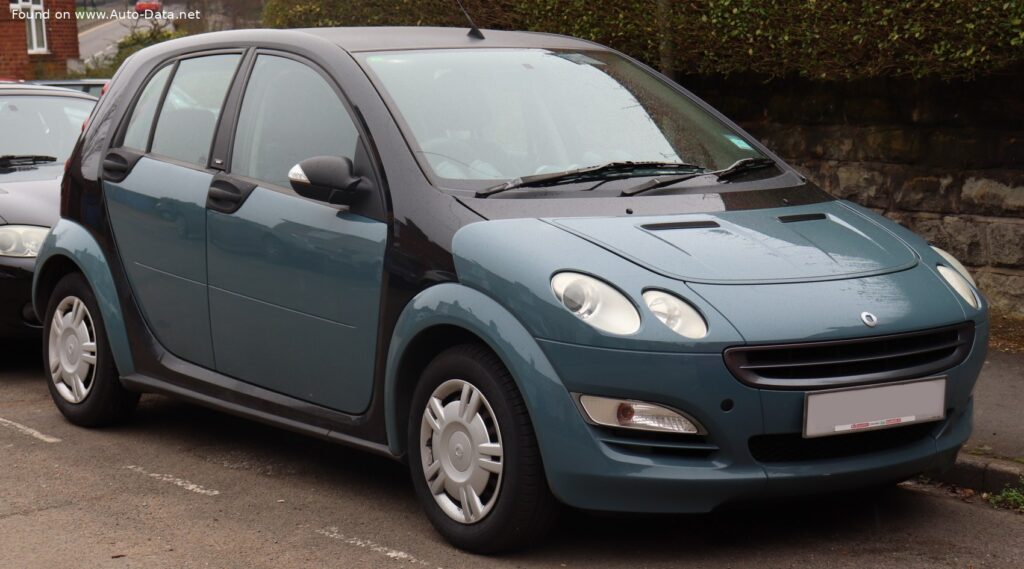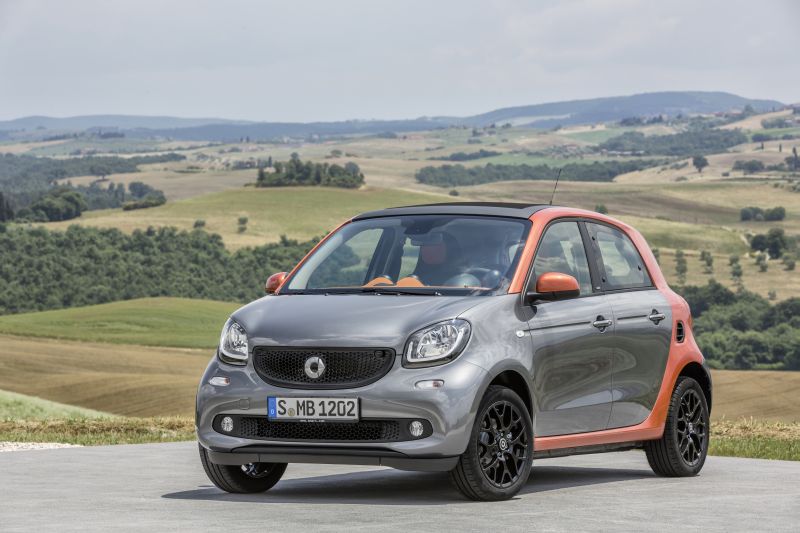
The Smart Forfour II (W453) EQ, introduced in 2017, represents Smart’s second attempt at a four-passenger city car. Unlike its predecessor, the W453 Forfour was developed in collaboration with Renault, sharing its platform and powertrain components with the Renault Twingo. This generation marked a significant shift for the Forfour, moving away from a purely niche product to a more mainstream offering, particularly within European urban centers. The EQ variant, powered by a 17.6 kWh electric motor producing 82 horsepower, was a key component of Smart’s early foray into electric mobility. While production of the W453 Forfour EQ was relatively short-lived, ending in February 2018, it laid the groundwork for Smart’s future as an all-electric brand.
Smart Forfour II (W453) EQ: An Overview
The Forfour II, designated W453, was positioned as a compact hatchback designed for navigating congested city streets. Its diminutive size, coupled with the efficiency of its electric powertrain in the EQ model, made it an appealing option for urban commuters. The Forfour was primarily sold in Europe, where its small footprint and maneuverability were highly valued. The EQ version specifically targeted environmentally conscious consumers seeking a zero-emission vehicle for short-distance travel. The car’s rear-wheel drive configuration, inherited from the Renault Twingo, also contributed to its nimble handling characteristics.
Engine & Performance
The Smart Forfour II EQ is powered by a single electric motor located on the rear axle. This motor delivers 82 horsepower (Hp) and 160 Newton-meters (118.01 lb.-ft.) of torque. The powertrain is a Battery Electric Vehicle (BEV), meaning it relies entirely on electricity for propulsion. The 17.6 kWh gross battery capacity (16.7 kWh net/usable) provides an all-electric range of up to 155 kilometers (96.31 miles) under the New European Driving Cycle (NEDC) testing standard. Acceleration from 0 to 100 km/h (0-62 mph) takes 12.7 seconds, while 0 to 60 mph is achieved in approximately 12.1 seconds. The vehicle has a maximum speed of 130 km/h (80.78 mph). The weight-to-power ratio is 13.4 kg/Hp, and the weight-to-torque ratio is 6.9 kg/Nm, indicating a reasonable power-to-weight balance for its intended urban use.
Design & Features
The Smart Forfour II is a five-door hatchback with seating for four passengers. Its compact dimensions – a length of 3495 mm (137.6 in.), a width of 1666 mm (65.59 in.), and a height of 1554 mm (61.18 in.) – make it exceptionally easy to park and maneuver in tight spaces. The battery pack is located under the floor between the front and rear seats, optimizing interior space. The trunk offers a minimum capacity of 184 liters (6.5 cu. ft.), expanding to 974 liters (34.4 cu. ft.) with the rear seats folded down. Safety features included ABS (Anti-lock Braking System) as standard. The interior design, while functional, prioritized space efficiency over luxury. The Forfour EQ’s design was largely dictated by the need to accommodate the electric powertrain and battery pack without compromising passenger space or practicality.
Technical Specifications
| General Information | |
| Brand | Smart |
| Model | Forfour |
| Generation | Forfour II (W453) |
| Type (Engine) | EQ 17.6 kWh (82 Hp) electric drive |
| Start of production | 2017 |
| End of production | February, 2018 |
| Powertrain Architecture | BEV (Electric Vehicle) |
| Body type | Hatchback |
| Seats | 4 |
| Doors | 5 |
| Performance Specs | |
| Fuel Type | Electricity |
| Acceleration 0 – 100 km/h | 12.7 sec |
| Acceleration 0 – 62 mph | 12.7 sec |
| Acceleration 0 – 60 mph | 12.1 sec |
| Maximum speed | 130 km/h (80.78 mph) |
| Weight-to-power ratio | 13.4 kg/Hp |
| Weight-to-torque ratio | 6.9 kg/Nm |
| Electric Car Specs | |
| Gross battery capacity | 17.6 kWh |
| Net (usable) battery capacity | 16.7 kWh |
| Battery technology | Lithium-ion (Li-Ion) |
| Battery location | Below the floor, between front and rear seats |
| All-electric range (NEDC) | 155 km (96.31 mi) |
| Average Energy consumption (NEDC) | 13.1 kWh/100 km (21.08 kWh/100 mi) |
| Powertrain | |
| Electric motor | 1 |
| Electric motor power | 82 Hp |
| Electric motor Torque | 160 Nm (118.01 lb.-ft.) |
| Electric motor location | Rear axle, Transverse |
| System power | 82 Hp |
| System torque | 160 Nm (118.01 lb.-ft.) |
| Dimensions & Weights | |
| Kerb Weight | 1100 kg (2425.08 lbs.) |
| Trunk (boot) space – minimum | 184 l (6.5 cu. ft.) |
| Trunk (boot) space – maximum | 974 l (34.4 cu. ft.) |
| Length | 3495 mm (137.6 in.) |
| Width | 1666 mm (65.59 in.) |
| Height | 1554 mm (61.18 in.) |
| Wheelbase | 2494 mm (98.19 in.) |
| Drivetrain & Suspension | |
| Drivetrain Architecture | One electric motor drives the rear wheels. |
| Drive wheel | Rear wheel drive |
| Number of gears and type of gearbox | 1 gears, automatic transmission |
| Front suspension | Independent type McPherson |
| Rear suspension | Suspension De-Dion |
| Front brakes | Ventilated discs, 258×22 mm |
| Rear brakes | Drum, 228 mm |
| Steering type | Steering rack and pinion |
| Power steering | Electric Steering |
| Tires size | Front wheel tires: 165/65 R15 Rear wheel tires: 185/60 R15 |
The Smart Forfour II EQ, while a short-lived model, represented a crucial step in Smart’s transition to electric mobility. Its compact size, rear-wheel drive configuration, and zero-emission powertrain made it a compelling option for urban drivers seeking a practical and environmentally friendly vehicle. Although not widely available in the United States, the Forfour EQ played a significant role in shaping Smart’s future as a dedicated electric vehicle brand in Europe and other key markets.