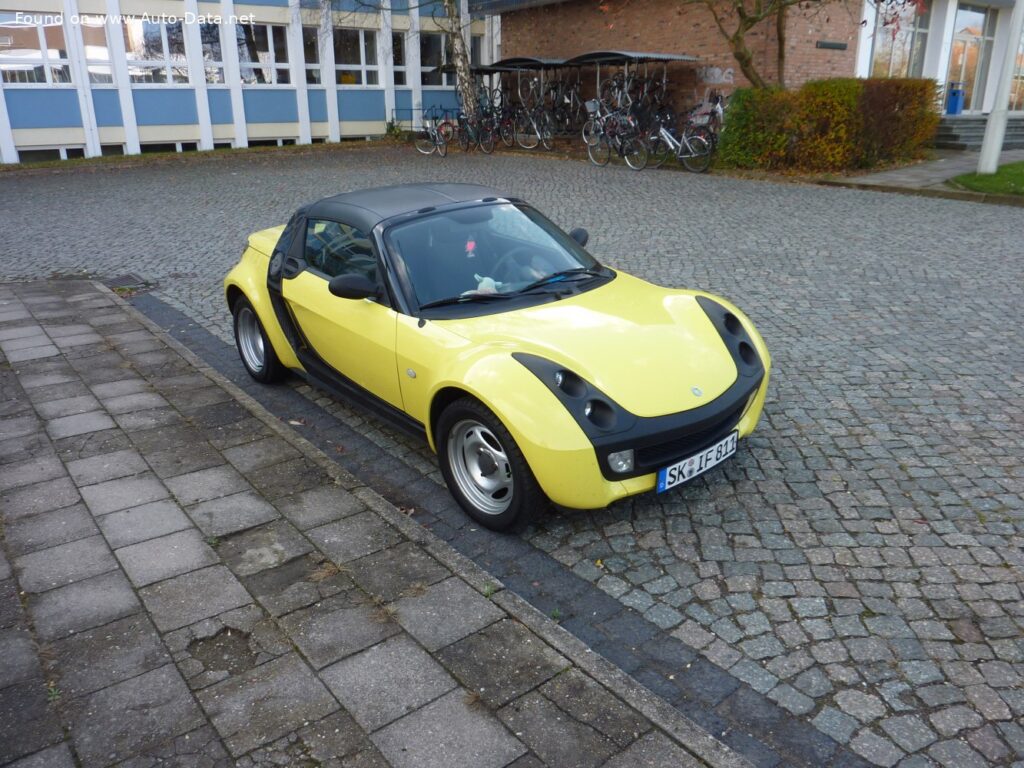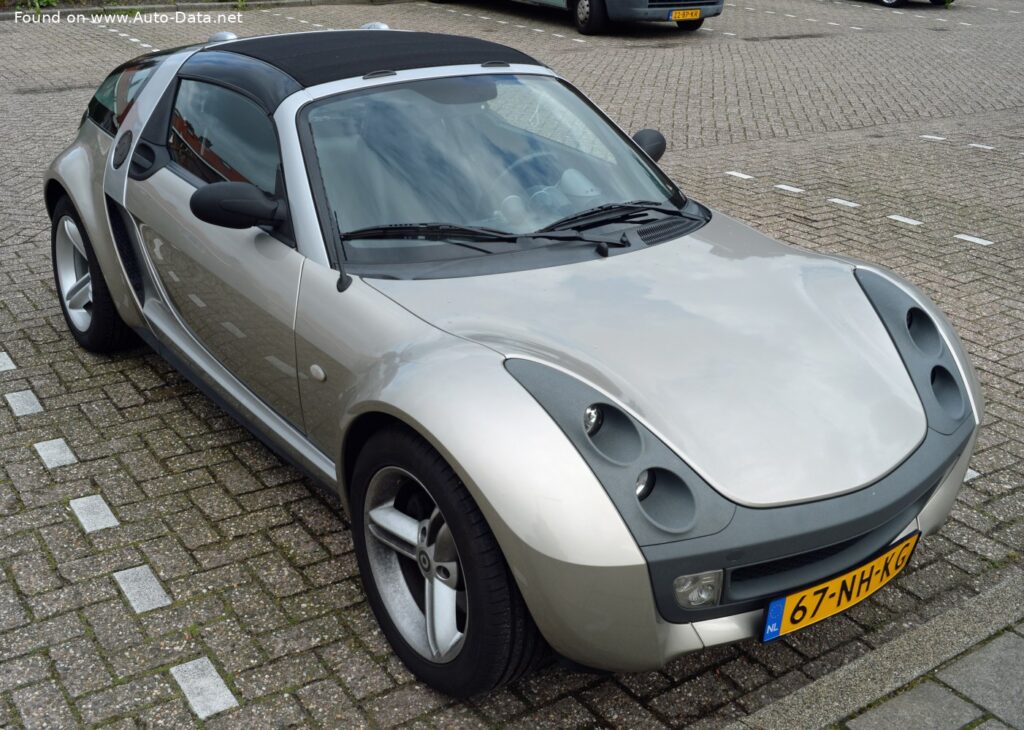
The Smart Roadster coupe 0.7 i, producing 82 horsepower, was a unique offering in the early 2000s, manufactured between 2002 and 2005. This variant represented the entry point into the Smart Roadster lineup, a rear-wheel-drive, two-seat sports car built around the innovative 452 platform. The Roadster aimed to deliver a fun and engaging driving experience in a compact package, and the 0.7 i model was positioned as the most accessible version, prioritizing fuel efficiency and affordability over outright performance. It was part of the first generation of Smart vehicles to move beyond city-focused microcars, attempting to carve out a niche in the small sports car segment.
The 0.7 i Roadster: Positioning and Overview
The 0.7 i Roadster coupe occupied the base trim level within the Smart Roadster range. Above it sat the more powerful 0.8 i model, and later, the Brabus variants which offered significantly increased performance. The 0.7 i was specifically targeted towards drivers seeking a stylish, economical, and enjoyable sports car for everyday use. Its smaller engine and relatively simple specification made it the most affordable option, appealing to a broader customer base than the higher-performance models. While the Brabus versions catered to enthusiasts, the 0.7 i aimed for a wider appeal, emphasizing practicality and running costs.
Powertrain & Engine Architecture
The heart of the Smart Roadster 0.7 i is the M 160.922 engine, a 698 cc (42.59 cubic inches) inline-three cylinder powerplant. This engine, despite its diminutive size, was surprisingly sophisticated for its time. It featured multi-port fuel injection and, crucially, a turbocharger with an intercooler. The turbocharger was essential to boosting power output to 82 hp at 5250 rpm and 81.13 lb-ft of torque at 2250 rpm. The engine’s compression ratio was 9:1, and it utilized an overhead camshaft (OHC) valvetrain with two valves per cylinder. The engine oil capacity is 3 liters (3.17 US quarts / 2.64 UK quarts) and requires a specification detailed in the owner’s manual.
The 0.7 i was exclusively offered with a 6-speed manual transmission. This transmission was chosen to complement the engine’s characteristics, providing close gear ratios to keep the engine within its optimal power band. The rear-wheel-drive configuration, combined with the manual gearbox, contributed to the Roadster’s engaging driving dynamics. The engine’s compact size and rear-mid engine layout allowed for a favorable weight distribution, enhancing handling characteristics.
Driving Characteristics
The Smart Roadster 0.7 i offered a unique driving experience. While not exceptionally quick, the combination of the turbocharged engine and the 6-speed manual transmission provided adequate performance for spirited driving. Acceleration from 0 to 60 mph took approximately 10.4 seconds, and the car had a top speed of 111.85 mph (180 km/h). The turbocharger provided a noticeable boost in power, but turbo lag was present, requiring drivers to downshift to maintain optimal responsiveness. The close gear ratios of the manual transmission allowed drivers to keep the engine in its sweet spot, maximizing acceleration and minimizing turbo lag.
The rear-wheel-drive layout contributed to a balanced and predictable handling feel. The car was nimble and responsive, making it enjoyable to drive on winding roads. However, the relatively narrow track width and short wheelbase could make the car feel slightly unstable at higher speeds. The suspension, consisting of a spring strut front suspension and a De-Dion rear suspension, provided a comfortable ride while maintaining good handling characteristics.
Equipment & Trim Levels
The 0.7 i Roadster coupe was relatively sparsely equipped compared to higher trim levels. Standard features typically included power steering, anti-lock brakes (ABS), and basic instrumentation. The interior was functional and focused on providing a driver-centric experience. Upholstery was typically cloth, and the dashboard featured a simple, straightforward design. Optional extras included air conditioning, power windows, and upgraded audio systems. The overall interior ambiance was basic but functional, reflecting the car’s affordable price point.
Chassis & Braking
The Smart Roadster’s chassis was a steel monocoque construction, designed to be lightweight and rigid. The kerb weight of the 0.7 i model was 815 kg (1796.77 lbs). The front suspension utilized a spring strut design, while the rear suspension employed a De-Dion axle, a configuration chosen for its compact size and ability to provide good handling characteristics. The braking system consisted of disc brakes at the front and drum brakes at the rear. The ABS system helped to maintain stability during hard braking. Tire size was 205/50 R15, mounted on 6J x 15 inch wheel rims.
Market Reception & Comparison
The Smart Roadster 0.7 i received mixed reviews from automotive critics. While praised for its unique design, engaging driving dynamics, and fuel efficiency (achieving approximately 46.1 US mpg combined), it was also criticized for its small engine, limited interior space, and relatively basic equipment levels. Compared to the 0.8 i model, the 0.7 i offered less power and acceleration, but it was more affordable and fuel-efficient. The Brabus variants, while significantly faster, were considerably more expensive and catered to a different segment of the market. Fuel economy figures were 6.4 l/100 km urban, 4.3 l/100 km extra urban, and 5.1 l/100 km combined.
Technical Specifications
| Brand | Smart |
| Model | Roadster coupe |
| Generation | Roadster coupe |
| Type (Engine) | 0.7 i (82 Hp) |
| Start of production | 2002 year |
| End of production | 2005 year |
| Powertrain Architecture | Internal Combustion engine |
| Body type | Coupe |
| Seats | 2 |
| Doors | 2 |
| Fuel consumption (economy) – urban | 6.4 l/100 km (36.8 US mpg) |
| Fuel consumption (economy) – extra urban | 4.3 l/100 km (54.7 US mpg) |
| Fuel consumption (economy) – combined | 5.1 l/100 km (46.1 US mpg) |
| Fuel Type | Petrol (Gasoline) |
| Acceleration 0 – 100 km/h | 10.9 sec |
| Acceleration 0 – 62 mph | 10.9 sec |
| Acceleration 0 – 60 mph | 10.4 sec |
| Maximum speed | 180 km/h (111.85 mph) |
| Weight-to-power ratio | 9.9 kg/Hp |
| Weight-to-torque ratio | 7.4 kg/Nm |
| Power | 82 Hp @ 5250 rpm |
| Torque | 110 Nm @ 2250 rpm (81.13 lb.-ft. @ 2250 rpm) |
| Engine Model/Code | M 160.922 |
| Engine displacement | 698 cm3 (42.59 cu. in.) |
| Number of cylinders | 3 |
| Engine configuration | Inline |
| Cylinder Bore | 66.5 mm (2.62 in.) |
| Piston Stroke | 67 mm (2.64 in.) |
| Compression ratio | 9:1 |
| Number of valves per cylinder | 2 |
| Fuel injection system | Multi-port manifold injection |
| Engine aspiration | Turbocharger, Intercooler |
| Valvetrain | OHC |
| Engine oil capacity | 3 l (3.17 US qt | 2.64 UK qt) |
| Coolant | 4.2 l (4.44 US qt | 3.7 UK qt) |
| Kerb Weight | 815 kg (1796.77 lbs.) |
| Trunk (boot) space – minimum | 104 l (3.67 cu. ft.) |
| Trunk (boot) space – maximum | 189 l (6.67 cu. ft.) |
| Fuel tank capacity | 35 l (9.25 US gal | 7.7 UK gal) |
| Length | 3427 mm (134.92 in.) |
| Width | 1615 mm (63.58 in.) |
| Height | 1207 mm (47.52 in.) |
| Wheelbase | 2360 mm (92.91 in.) |
| Front track | 1357 mm (53.43 in.) |
| Rear (Back) track | 1382 mm (54.41 in.) |
| Drivetrain Architecture | Rear wheel drive |
| Number of gears and type of gearbox | 6 gears, manual transmission |
| Front suspension | Spring Strut |
| Rear suspension | Suspension De-Dion |
| Front brakes | Disc |
| Rear brakes | Drum |
| Assisting systems | ABS (Anti-lock braking system) |
| Steering type | Steering rack and pinion |
| Power steering | Hydraulic Steering |
| Tires size | 205/50 R15 |
| Wheel rims size | 6J X 15 |
Legacy
The Smart Roadster 0.7 i, while short-lived, has gained a cult following among enthusiasts. Its unique combination of rear-wheel drive, a turbocharged engine, and a compact size makes it a distinctive and enjoyable sports car. While early examples suffered from some reliability issues, particularly with the turbocharger and cooling system, well-maintained examples are proving to be surprisingly durable. On the used car market, the 0.7 i Roadster coupe remains relatively affordable, making it an accessible entry point into the world of sports car ownership. Its rarity and unique character are contributing to its increasing desirability among collectors and driving enthusiasts.