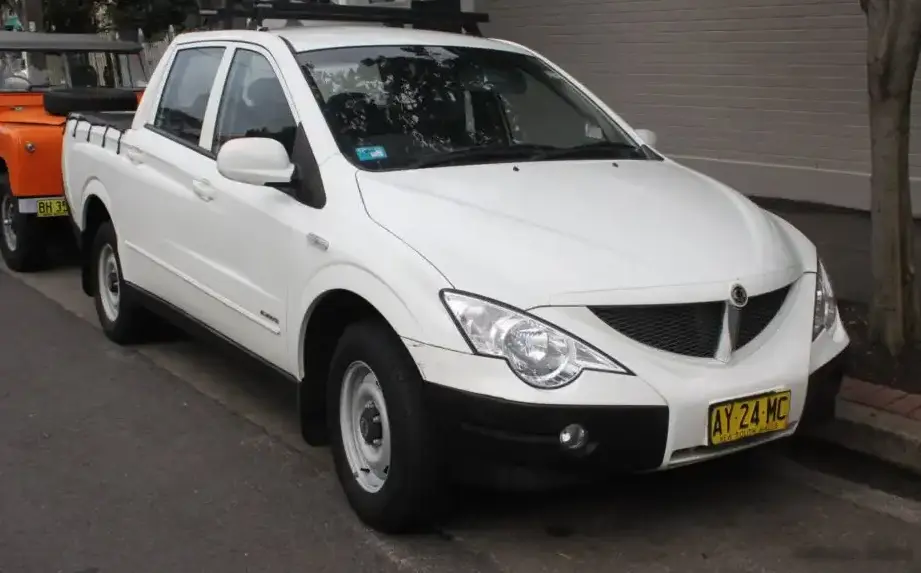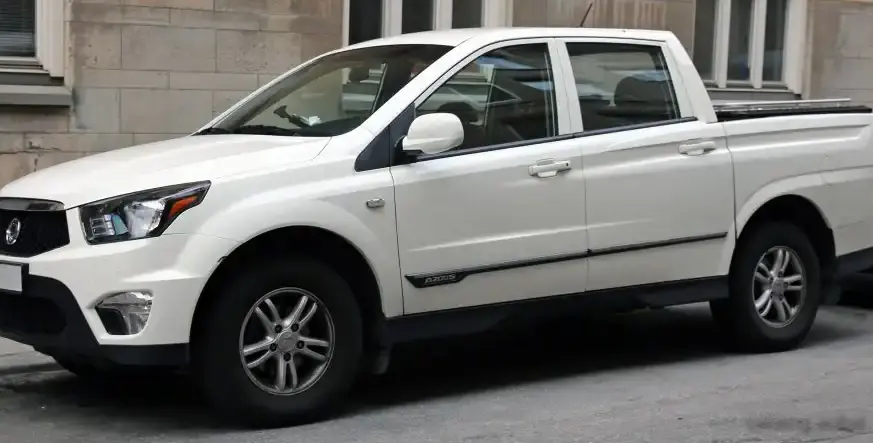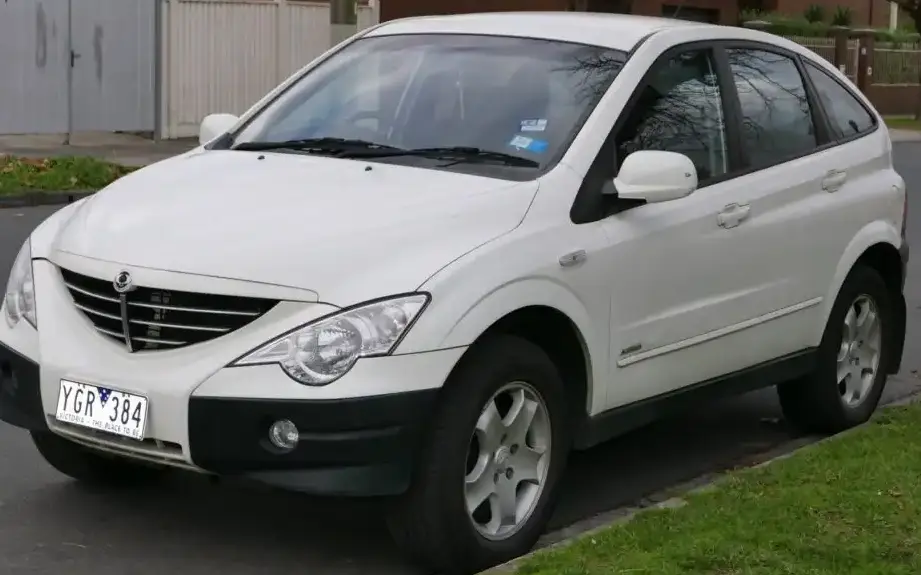
The SsangYong Actyon 2.0 Xdi, produced from 2007 to 2010, represented a significant step for the South Korean automaker into the competitive SUV market. Positioned as a mid-size, five-door SUV, the Actyon aimed to offer a blend of practicality, affordability, and a distinctive, somewhat polarizing, design. The 2.0 Xdi variant, equipped with a 141 horsepower diesel engine and a five-speed manual transmission, served as a core offering within the Actyon lineup, targeting buyers seeking fuel efficiency and all-weather capability. It was SsangYong’s attempt to establish a foothold against established European and Japanese competitors, particularly in markets where diesel SUVs were popular.
Technical Specifications
| Brand | SsangYong |
| Model | Actyon |
| Generation | Actyon |
| Type (Engine) | 2.0 Xdi (141 Hp) |
| Start of production | 2007 |
| End of production | 2010 |
| Powertrain Architecture | Internal Combustion engine |
| Body type | SUV |
| Seats | 5 |
| Doors | 5 |
| Fuel consumption (urban) | 11 l/100 km (21.4 US mpg) |
| Fuel consumption (extra urban) | 7 l/100 km (33.6 US mpg) |
| Fuel consumption (combined) | 8.5 l/100 km (27.7 US mpg) |
| Fuel Type | Diesel |
| Acceleration 0 – 100 km/h | 14.2 sec |
| Acceleration 0 – 62 mph | 14.2 sec |
| Acceleration 0 – 60 mph | 13.5 sec |
| Maximum speed | 162 km/h (100.66 mph) |
| Weight-to-power ratio | 13.3 kg/Hp |
| Weight-to-torque ratio | 6.1 kg/Nm |
| Power | 141 Hp @ 4000 rpm |
| Torque | 310 Nm (228.64 lb.-ft.) |
| Engine layout | Front, Longitudinal |
| Engine Model/Code | D20DT |
| Engine displacement | 1998 cm3 (121.93 cu. in.) |
| Number of cylinders | 4 |
| Engine configuration | Inline |
| Cylinder Bore | 86.2 mm (3.39 in.) |
| Piston Stroke | 85.6 mm (3.37 in.) |
| Compression ratio | 18:1 |
| Number of valves per cylinder | 4 |
| Fuel injection system | Diesel Commonrail |
| Engine oil capacity | 7.5 l (7.93 US qt | 6.6 UK qt) |
| Coolant capacity | 10.5 l (11.1 US qt | 9.24 UK qt) |
| Kerb Weight | 1881 kg (4146.9 lbs.) |
| Max. weight | 2520 kg (5555.65 lbs.) |
| Max load | 639 kg (1408.75 lbs.) |
| Fuel tank capacity | 75 l (19.81 US gal | 16.5 UK gal) |
| Length | 4455 mm (175.39 in.) |
| Width | 1880 mm (74.02 in.) |
| Height | 1740 mm (68.5 in.) |
| Wheelbase | 2740 mm (107.87 in.) |
| Front track | 1570 mm (61.81 in.) |
| Rear track | 1570 mm (61.81 in.) |
| Drive wheel | All wheel drive (4×4) |
| Number of gears | 5 |
| Gearbox type | Manual transmission |
| Front suspension | Double wishbone |
| Rear suspension | Coil spring |
| Front brakes | Ventilated discs |
| Rear brakes | Disc |
| Steering type | Steering rack and pinion |
Powertrain & Engine Architecture
The heart of the Actyon 2.0 Xdi was the D20DT engine, a 2.0-liter inline-four cylinder diesel. This engine utilized a common rail direct injection system, a technology that allowed for precise fuel delivery and improved combustion efficiency. A turbocharger with an intercooler was employed to boost power output, helping to overcome the inherent limitations of a relatively small displacement diesel. The engine produced 141 horsepower at 4000 rpm and 310 Nm (228.64 lb.-ft.) of torque. The five-speed manual transmission was the standard offering for this variant, providing drivers with full control over gear selection. The engine’s longitudinal mounting allowed for a more traditional rear-wheel-drive based all-wheel-drive system.
Driving Characteristics
The 2.0 Xdi Actyon, with its 141 hp and manual transmission, offered a driving experience focused on practicality rather than outright performance. Acceleration was adequate, taking around 14.2 seconds to reach 62 mph, but it wasn’t particularly brisk. The engine’s torque, however, provided reasonable pulling power for everyday driving and towing. The manual transmission allowed for better control and engagement compared to the optional automatic, and the all-wheel-drive system provided enhanced traction in slippery conditions. The gear ratios were tuned for fuel efficiency, meaning the engine could feel strained at higher speeds or when carrying a full load. Compared to potential higher-output versions (had SsangYong offered them), this variant prioritized economy and usability.
Equipment & Trim Levels
The Actyon 2.0 Xdi typically came with a reasonable level of standard equipment, though it wasn’t overly luxurious. Standard features generally included air conditioning, power windows, central locking, and an audio system. Interior upholstery was typically cloth, and the dashboard featured a functional, if somewhat basic, design. Optional extras could include alloy wheels, a sunroof, leather upholstery, and upgraded audio systems. The trim level often dictated the availability of these options, with higher trims offering more standard features and a more refined interior.
Chassis & Braking
The Actyon utilized a body-on-frame construction, a traditional approach that contributed to its robust feel. The front suspension employed a double wishbone setup, while the rear featured a coil spring arrangement. Braking duties were handled by ventilated discs at the front and solid discs at the rear. The steering was rack and pinion, providing reasonably precise control. The suspension was tuned for comfort rather than sporty handling, prioritizing a smooth ride over sharp cornering. Stabilizer bars were included to reduce body roll, but the Actyon’s high center of gravity and body-on-frame construction meant it wasn’t a particularly agile vehicle.
Market Reception & Comparison
The SsangYong Actyon received mixed reviews from automotive critics. Its distinctive styling was often a point of contention, with some finding it appealing and others considering it awkward. The 2.0 Xdi engine was generally praised for its fuel efficiency and adequate power, but it was often criticized for being somewhat noisy and lacking refinement compared to engines from established European manufacturers. Compared to competitors like the Hyundai Tucson or Kia Sportage, the Actyon offered a more rugged, utilitarian experience. Its all-wheel-drive system was a strong selling point, but its interior quality and overall refinement lagged behind some of its rivals. Fuel economy was competitive for its class, and reliability was generally considered average.
Legacy
The SsangYong Actyon, while not a runaway success, played a role in SsangYong’s efforts to expand its presence in the global SUV market. The 2.0 Xdi engine proved to be reasonably durable, and well-maintained examples continue to be found on the used car market today. However, parts availability can be a challenge in some regions, and the Actyon’s relatively low resale value reflects its somewhat niche appeal. The Actyon paved the way for later SsangYong SUVs, and its all-wheel-drive system and diesel engine technology laid the foundation for future developments. While it may not be remembered as a classic, the Actyon 2.0 Xdi represents a unique and interesting chapter in the history of South Korean automotive engineering.