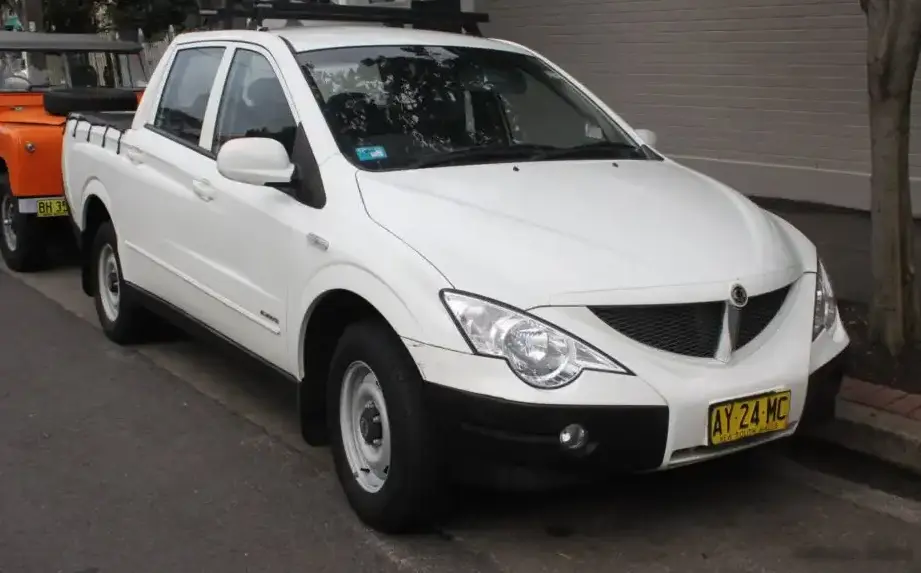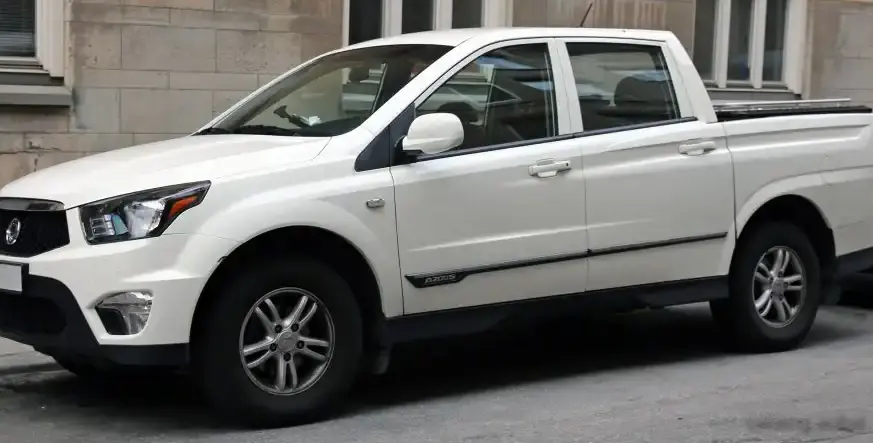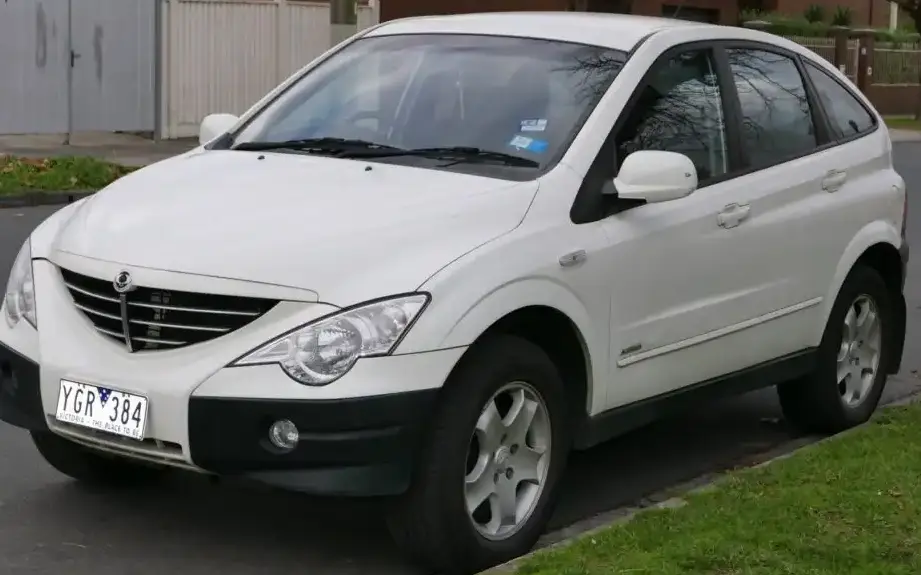
The SsangYong Actyon 2.0 Xdi Automatic, produced between 2007 and 2010, represented SsangYong’s entry into the increasingly popular compact SUV segment. Positioned as a more rugged and utilitarian alternative to established competitors, the Actyon aimed to offer a blend of off-road capability, practicality, and value. This particular variant, equipped with the 2.0-liter Xdi diesel engine and a four-speed automatic transmission, was intended to broaden the Actyon’s appeal to buyers seeking convenience and ease of driving. It was a key model for SsangYong as they attempted to gain a foothold in the European and other international markets, offering a different proposition than many of the more car-like crossovers emerging at the time.
Technical Specifications
| Brand | SsangYong |
| Model | Actyon |
| Generation | Actyon |
| Type (Engine) | 2.0 Xdi (141 Hp) Automatic |
| Start of production | 2007 |
| End of production | 2010 |
| Powertrain Architecture | Internal Combustion engine |
| Body type | SUV |
| Seats | 5 |
| Doors | 5 |
| Fuel consumption (urban) | 11 l/100 km (21.4 US mpg) |
| Fuel consumption (extra urban) | 7 l/100 km (33.6 US mpg) |
| Fuel consumption (combined) | 8.5 l/100 km (27.7 US mpg) |
| Fuel Type | Diesel |
| Acceleration 0 – 100 km/h | 14.2 sec |
| Acceleration 0 – 62 mph | 14.2 sec |
| Acceleration 0 – 60 mph | 13.5 sec |
| Maximum speed | 162 km/h (100.66 mph) |
| Weight-to-power ratio | 13.3 kg/Hp |
| Weight-to-torque ratio | 6.1 kg/Nm |
| Power | 141 Hp @ 4000 rpm |
| Torque | 310 Nm (228.64 lb.-ft.) |
| Engine layout | Front, Longitudinal |
| Engine Model/Code | D20DT |
| Engine displacement | 1998 cm3 (121.93 cu. in.) |
| Number of cylinders | 4 |
| Engine configuration | Inline |
| Cylinder Bore | 86.2 mm (3.39 in.) |
| Piston Stroke | 85.6 mm (3.37 in.) |
| Compression ratio | 18:1 |
| Number of valves per cylinder | 4 |
| Fuel injection system | Diesel Commonrail |
| Engine oil capacity | 7.5 l (7.93 US qt | 6.6 UK qt) |
| Coolant capacity | 10.5 l (11.1 US qt | 9.24 UK qt) |
| Kerb Weight | 1881 kg (4146.9 lbs.) |
| Max. weight | 2520 kg (5555.65 lbs.) |
| Max load | 639 kg (1408.75 lbs.) |
| Fuel tank capacity | 75 l (19.81 US gal | 16.5 UK gal) |
| Length | 4455 mm (175.39 in.) |
| Width | 1880 mm (74.02 in.) |
| Height | 1740 mm (68.5 in.) |
| Wheelbase | 2740 mm (107.87 in.) |
| Front track | 1570 mm (61.81 in.) |
| Rear track | 1570 mm (61.81 in.) |
| Drive wheel | All wheel drive (4×4) |
| Number of gears | 4 |
| Gearbox type | automatic transmission |
| Front suspension | Double wishbone |
| Rear suspension | Coil spring |
| Front brakes | Ventilated discs |
| Rear brakes | Disc |
| Steering type | Steering rack and pinion |
Powertrain & Engine Architecture
The heart of the Actyon 2.0 Xdi Automatic is the D20DT engine, a 2.0-liter inline-four cylinder diesel. This engine utilizes a common rail direct injection system, a technology that allows for precise fuel delivery and improved combustion efficiency. The D20DT featured a turbocharger with an intercooler, boosting power output to 141 horsepower at 4000 rpm and 310 Nm (228.64 lb.-ft.) of torque. The engine’s 18:1 compression ratio is typical for a diesel engine, contributing to its efficiency. The four-speed automatic transmission, while providing convenience, was a somewhat dated design by the late 2000s. It prioritized smooth shifts over outright performance, and its gear ratios were spaced to favor fuel economy and drivability rather than rapid acceleration.
Driving Characteristics
The 2.0 Xdi Automatic Actyon offered a comfortable, if not particularly exciting, driving experience. The automatic transmission smoothed out the diesel’s inherent lumpiness, making it well-suited for everyday driving. However, the combination of the engine’s modest output and the four-speed automatic resulted in leisurely acceleration. The 0-60 mph time of around 13.5 seconds reflects this. Compared to the manual transmission versions of the Actyon, the automatic felt noticeably slower. Higher-output versions, such as those found in later Actyon models, offered a significantly more responsive driving experience. The all-wheel-drive system provided enhanced traction in slippery conditions, making it a capable vehicle for inclement weather or light off-road use.
Equipment & Trim Levels
The Actyon 2.0 Xdi Automatic typically came with a reasonable level of standard equipment. This included air conditioning, power windows and locks, a basic audio system, and alloy wheels. Interior upholstery was generally cloth, with options for leather available on higher trim levels. Safety features included ABS brakes and dual front airbags. Optional extras could include a sunroof, upgraded audio systems, and parking sensors. The trim level dictated the extent of these additional features, with the automatic variant often positioned as a mid-range offering, bridging the gap between the base models and more luxurious trims.
Chassis & Braking
The Actyon utilized a body-on-frame construction, contributing to its robust feel and off-road capability. The front suspension employed a double wishbone setup, while the rear featured a coil spring arrangement. Braking duties were handled by ventilated discs at the front and solid discs at the rear. The braking system was adequate for the vehicle’s weight and performance, but lacked the sophistication of some competitors. Stabilizer bars were fitted to both the front and rear axles to reduce body roll during cornering.
Market Reception & Comparison
The SsangYong Actyon faced an uphill battle in a crowded SUV market. Critics generally praised its ruggedness and value for money, but often criticized its styling, which was considered polarizing. The 2.0 Xdi Automatic was seen as a sensible choice for buyers prioritizing comfort and convenience over performance. Fuel economy was respectable for a vehicle of its size and type, averaging around 27.7 US mpg in combined driving. Compared to other SUVs in its class, such as the Hyundai Tucson or Kia Sportage, the Actyon offered a more utilitarian experience and a lower price point. Reliability was generally considered average, with some reports of issues with the diesel engine’s fuel injection system.
Legacy
The SsangYong Actyon, while not a runaway success, played a role in establishing SsangYong as a player in the global SUV market. The 2.0 Xdi Automatic powertrain, while not known for its blistering performance, proved to be reasonably durable and reliable. On the used car market, Actyons from this era are typically affordable and represent a practical option for buyers seeking a capable and spacious SUV. However, potential buyers should be aware of the age of the vehicle and the potential for maintenance issues associated with older diesel engines and automatic transmissions. Parts availability can sometimes be a challenge, depending on the region.