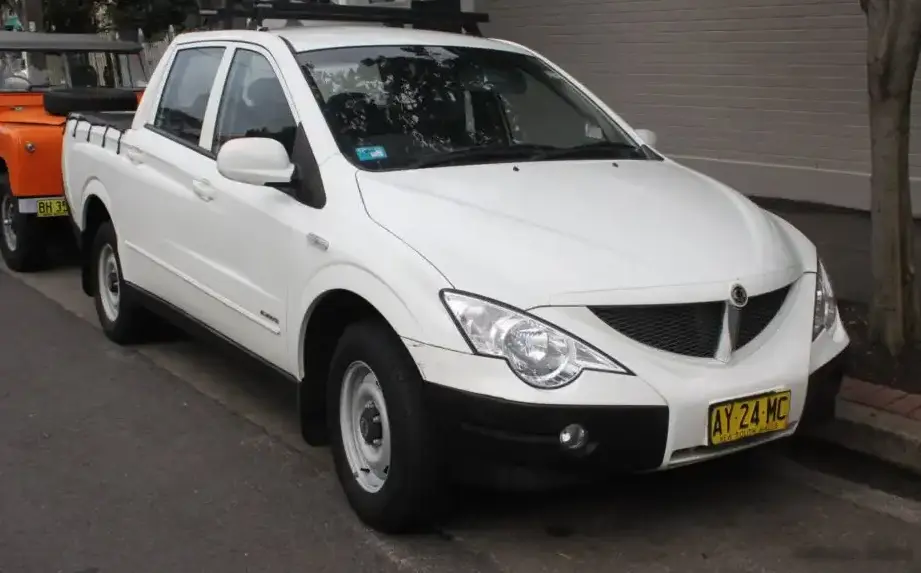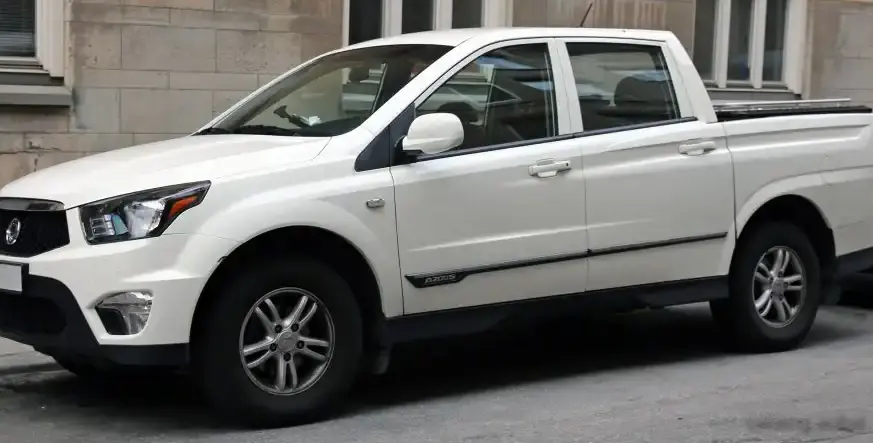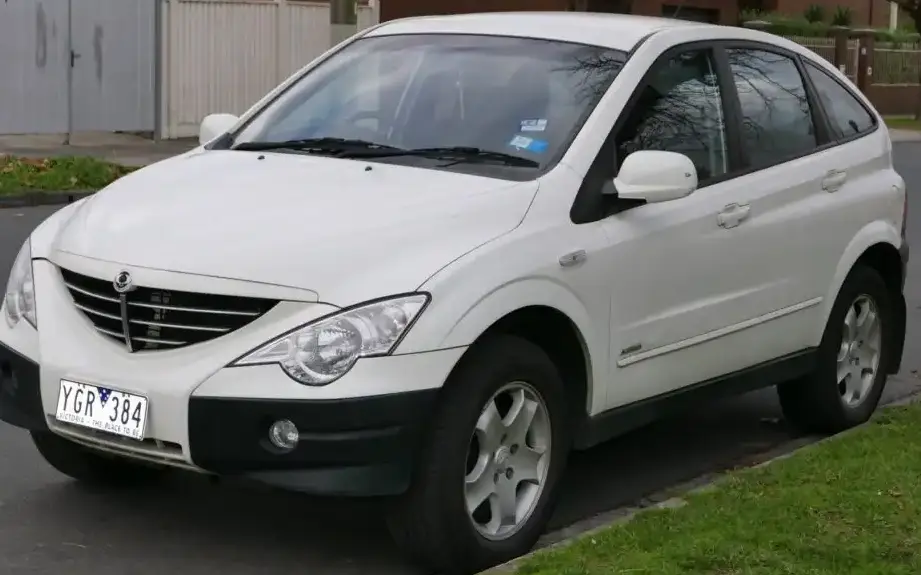
The SsangYong Actyon 2.3, producing 150 horsepower, was a mid-size SUV manufactured by the South Korean automaker SsangYong between 2006 and 2010. Positioned as a more affordable and utilitarian option within the burgeoning SUV market, the Actyon aimed to provide a robust, all-wheel-drive vehicle with a focus on practicality rather than outright luxury. It represented SsangYong’s attempt to gain a stronger foothold in the European and global SUV segments, offering a distinctive, albeit polarizing, exterior design. The Actyon was built on a body-on-frame construction, a design choice that prioritized durability and off-road capability over the more common unibody construction found in many contemporary crossovers.
Technical Specifications
| Brand | SsangYong |
| Model | Actyon |
| Generation | Actyon |
| Type (Engine) | 2.3 (150 Hp) |
| Start of production | 2006 |
| End of production | 2010 |
| Powertrain Architecture | Internal Combustion engine |
| Body type | SUV |
| Seats | 5 |
| Doors | 5 |
| Fuel consumption (urban) | 15.7 l/100 km (15 US mpg, 18 UK mpg, 6.4 km/l) |
| Fuel consumption (extra urban) | 9 l/100 km (26.1 US mpg, 31.4 UK mpg, 11.1 km/l) |
| Fuel consumption (combined) | 11.5 l/100 km (20.5 US mpg, 24.6 UK mpg, 8.7 km/l) |
| Fuel Type | Petrol (Gasoline) |
| Acceleration 0 – 100 km/h | 10.2 sec |
| Acceleration 0 – 62 mph | 10.2 sec |
| Acceleration 0 – 60 mph | 9.7 sec |
| Maximum speed | 164 km/h (101.9 mph) |
| Weight-to-power ratio | 12.6 kg/Hp, 79.3 Hp/tonne |
| Weight-to-torque ratio | 8.8 kg/Nm, 113.1 Nm/tonne |
| Power | 150 Hp |
| Torque | 214 Nm (157.84 lb.-ft.) |
| Engine Model/Code | G23D |
| Number of cylinders | 4 |
| Engine configuration | Inline |
| Number of valves per cylinder | 4 |
| Fuel injection system | Multi-port manifold injection |
| Engine aspiration | Naturally aspirated engine |
| Engine oil capacity | 7.5 l (7.93 US qt, 6.6 UK qt) |
| Coolant capacity | 10.5 l (11.1 US qt, 9.24 UK qt) |
| Kerb Weight | 1892 kg (4171.15 lbs.) |
| Max. weight | 2520 kg (5555.65 lbs.) |
| Max load | 628 kg (1384.5 lbs.) |
| Fuel tank capacity | 75 l (19.81 US gal, 16.5 UK gal) |
| Length | 4455 mm (175.39 in.) |
| Width | 1880 mm (74.02 in.) |
| Height | 1740 mm (68.5 in.) |
| Wheelbase | 2740 mm (107.87 in.) |
| Front track | 1570 mm (61.81 in.) |
| Rear track | 1570 mm (61.81 in.) |
| Minimum turning circle | 11.2 m (36.75 ft.) |
| Drive wheel | All wheel drive (4×4) |
| Number of gears | 5 |
| Gearbox type | Manual transmission |
| Front suspension | Double wishbone |
| Rear suspension | Dependent, multi-link spring with telescopic shock absorbers |
| Front brakes | Ventilated discs |
| Rear brakes | Disc |
| Assisting systems | ABS (Anti-lock braking system) |
| Steering type | Steering rack and pinion |
| Tires size | 225/75 R16 |
| Wheel rims size | 16 |
Powertrain & Engine Architecture
The Actyon 2.3 was powered by SsangYong’s G23D engine, a 2.3-liter inline-four cylinder gasoline engine. This engine utilized a multi-port fuel injection system, a relatively conventional setup for the time, and featured four valves per cylinder. The G23D produced 150 horsepower and 214 Nm (157.84 lb.-ft.) of torque. The engine was known for its relatively simple design, which contributed to its durability, but also limited its overall refinement and fuel efficiency. The 150 hp variant was typically paired with a five-speed manual transmission, although an automatic transmission was also offered as an option. The automatic, while providing convenience, generally resulted in slightly slower acceleration and reduced fuel economy.
Driving Characteristics
The 2.3-liter engine, coupled with the five-speed manual transmission, provided adequate, though not exhilarating, performance. Acceleration from 0-60 mph took approximately 9.7 seconds, making it competitive with other similarly sized SUVs of the era. The all-wheel-drive system provided enhanced traction, particularly in inclement weather or on loose surfaces. However, the body-on-frame construction resulted in a noticeable body roll during cornering, and the ride quality was generally firmer than that of unibody SUVs. The automatic transmission, while smooth, further dulled the driving experience, with noticeable delays in downshifting and a tendency to hunt for gears. The gear ratios were optimized for everyday driving and towing capacity, rather than sporty performance.
Equipment & Trim Levels
The Actyon 2.3 typically came equipped with standard features such as air conditioning, power windows and locks, and an AM/FM radio with a CD player. Higher trim levels offered options like leather upholstery, a sunroof, and upgraded audio systems. Safety features included ABS brakes and dual front airbags. The interior design was functional but lacked the sophistication of some competitors. The dashboard layout was straightforward, with easy-to-use controls. The Actyon’s interior space was competitive for its class, offering ample room for passengers and cargo.
Chassis & Braking
The Actyon’s chassis was based on a traditional body-on-frame construction, providing a robust and durable platform. The front suspension utilized a double wishbone setup, while the rear suspension employed a dependent, multi-link spring system with telescopic shock absorbers. This suspension configuration prioritized load-carrying capacity and off-road capability over handling precision. The braking system consisted of ventilated discs at the front and solid discs at the rear. ABS was standard, providing enhanced braking control in emergency situations. The Actyon’s tires were typically 225/75 R16, offering a balance of on-road comfort and off-road traction.
Market Reception & Comparison
The SsangYong Actyon received mixed reviews from automotive critics. While its robust construction and all-wheel-drive system were praised, its polarizing styling and relatively unrefined driving experience were often criticized. Compared to other SUVs in its class, such as the Honda CR-V or Toyota RAV4, the Actyon offered a more affordable price point but lacked the same level of refinement and fuel efficiency. The 1.8L automatic versions of competitors like the Hyundai Tucson offered better fuel economy, while higher-powered trims of the Kia Sportage provided more spirited performance. The Actyon appealed to buyers seeking a practical and durable SUV with off-road capability, rather than those prioritizing luxury or sporty handling.
Legacy
The SsangYong Actyon, while not a commercial success in many markets, established SsangYong as a manufacturer capable of producing capable and durable SUVs. The G23D engine proved to be relatively reliable, although regular maintenance was essential. On the used car market, the Actyon 2.3 represents an affordable option for buyers seeking a rugged and capable SUV. However, potential buyers should be aware of the vehicle’s relatively high fuel consumption and somewhat dated interior. Parts availability can sometimes be a challenge, depending on the region. Despite its shortcomings, the Actyon remains a distinctive and interesting vehicle, representing a unique chapter in SsangYong’s history.