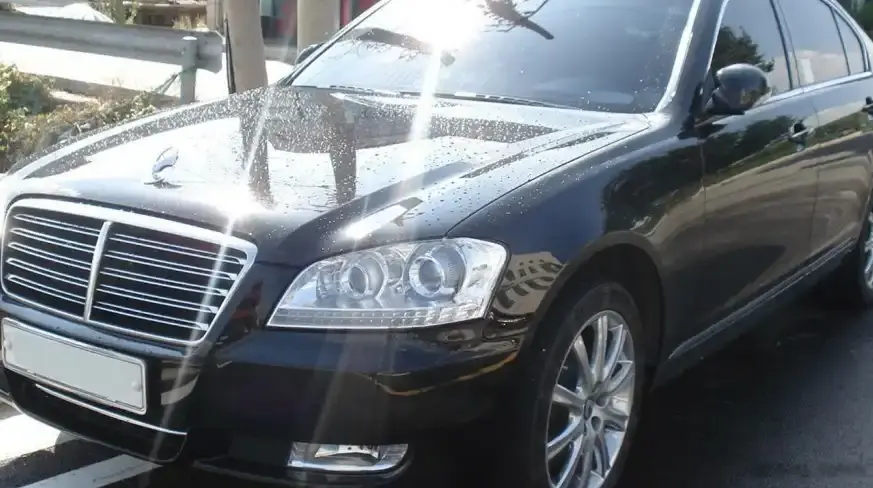
The SsangYong Chairman H CM400 2.3 i 16V, produced from 1997 to 2014, represents a significant effort by the South Korean automaker to establish itself in the luxury sedan segment. Positioned as a flagship model, the Chairman H aimed to offer a blend of comfort, space, and technology, often drawing comparisons to larger, more established European and Japanese competitors. The CM400 2.3i, with its 2.3-liter inline-four engine and automatic transmission, served as a core offering within the Chairman H range, providing a balance between performance and affordability. It was intended to appeal to buyers seeking a spacious and well-equipped sedan without the higher price tag of six-cylinder or larger displacement options.
Technical Specifications
| Brand | SsangYong |
| Model | Chairman |
| Generation | Chairman H |
| Type (Engine) | CM400 2.3 i 16V (150 Hp) |
| Start of production | 1997 |
| End of production | 2014 |
| Powertrain Architecture | Internal Combustion engine |
| Body type | Sedan |
| Seats | 5 |
| Doors | 4 |
| Fuel consumption (urban) | 15.3 l/100 km (15.4 US mpg, 18.5 UK mpg, 6.5 km/l) |
| Fuel consumption (extra urban) | 9.1 l/100 km (25.8 US mpg, 31 UK mpg, 11 km/l) |
| Fuel Type | Petrol (Gasoline) |
| Acceleration 0 – 100 km/h | 11.6 sec |
| Acceleration 0 – 62 mph | 11.6 sec |
| Acceleration 0 – 60 mph | 11 sec |
| Maximum speed | 197 km/h (122.41 mph) |
| Weight-to-power ratio | 11.3 kg/Hp, 88.2 Hp/tonne |
| Weight-to-torque ratio | 7.7 kg/Nm, 129.4 Nm/tonne |
| Power | 150 Hp @ 5500 rpm |
| Power per litre | 65.4 Hp/l |
| Torque | 220 Nm @ 4000 rpm (162.26 lb.-ft. @ 4000 rpm) |
| Engine layout | Front, Longitudinal |
| Engine displacement | 2295 cm3 (140.05 cu. in.) |
| Number of cylinders | 4 |
| Engine configuration | Inline |
| Cylinder Bore | 90.9 mm (3.58 in.) |
| Piston Stroke | 88.4 mm (3.48 in.) |
| Compression ratio | 9.6:1 |
| Number of valves per cylinder | 4 |
| Fuel injection system | Multi-port manifold injection |
| Engine aspiration | Naturally aspirated engine |
| Valvetrain | DOHC |
| Engine oil capacity | 5.8 l (6.13 US qt | 5.1 UK qt) |
| Coolant capacity | 9.8 l (10.36 US qt | 8.62 UK qt) |
| Kerb Weight | 1700 kg (3747.86 lbs.) |
| Max. weight | 2160 kg (4761.98 lbs.) |
| Max load | 460 kg (1014.13 lbs.) |
| Trunk (boot) space – minimum | 470 l (16.6 cu. ft.) |
| Fuel tank capacity | 80 l (21.13 US gal | 17.6 UK gal) |
| Length | 5055 mm (199.02 in.) |
| Width | 1825 mm (71.85 in.) |
| Height | 1465 mm (57.68 in.) |
| Wheelbase | 2900 mm (114.17 in.) |
| Front track | 1550 mm (61.02 in.) |
| Rear (Back) track | 1540 mm (60.63 in.) |
| Drivetrain Architecture | The Internal combustion engine (ICE) drives the rear wheels of the vehicle. |
| Drive wheel | Rear wheel drive |
| Number of gears and type of gearbox | 5 gears, automatic transmission |
| Front suspension | Wishbone |
| Rear suspension | Coil spring |
| Front brakes | Ventilated discs |
| Rear brakes | Disc |
| Assisting systems | ABS (Anti-lock braking system) |
| Power steering | Hydraulic Steering |
| Tires size | 215/60 R16 |
Powertrain & Engine Architecture
The CM400 2.3i variant of the Chairman H is powered by a 2.3-liter inline-four cylinder engine. This engine, often identified by internal codes depending on the specific year of manufacture, utilizes a multi-port fuel injection system and a double overhead camshaft (DOHC) valvetrain. The 9.6:1 compression ratio was a common specification for this generation of SsangYong engines. The engine’s design prioritized smooth operation and reasonable fuel efficiency over outright performance. Paired with this engine is a five-speed automatic transmission, chosen for its convenience and suitability for the Chairman H’s intended role as a comfortable cruiser. This automatic transmission was not known for particularly quick shifts, but rather for its smooth engagement and overall refinement.
Driving Characteristics
The 150 horsepower and 220 Nm (162 lb-ft) of torque produced by the 2.3-liter engine provided adequate, but not exhilarating, performance. Acceleration from 0 to 60 mph took approximately 11 seconds, and the top speed was around 122 mph. Compared to higher-trim Chairman H models equipped with V6 engines, the CM400 2.3i felt noticeably less powerful, particularly when fully loaded or tackling inclines. The automatic transmission’s gear ratios were tuned for comfort and fuel economy, resulting in a relaxed driving experience. While the transmission offered a ‘hold’ function, it lacked the sporty responsiveness of some contemporary automatic gearboxes. The rear-wheel-drive configuration contributed to balanced handling, but the relatively soft suspension setup prioritized ride comfort over sharp cornering.
Equipment & Trim Levels
The CM400 2.3i typically came standard with features expected of a luxury sedan in its price range. These included power windows, power locks, air conditioning, and a basic audio system. Higher trim levels added features such as leather upholstery, woodgrain interior trim, a sunroof, and upgraded audio systems. Optional extras often included automatic climate control, power-adjustable seats, and alloy wheels. The interior design emphasized spaciousness and comfort, with ample legroom for both front and rear passengers. The dashboard layout was relatively conventional, with a focus on ease of use.
Chassis & Braking
The Chairman H CM400 2.3i utilized a traditional body-on-frame construction, which contributed to its substantial weight of around 1700 kg (3748 lbs). The front suspension employed a wishbone design, while the rear suspension featured coil springs. Braking duties were handled by ventilated discs at the front and solid discs at the rear. Anti-lock braking system (ABS) was standard, enhancing safety. The steering was hydraulically assisted, providing a light and easy driving experience. The suspension was tuned for comfort, absorbing bumps and imperfections in the road surface effectively, but at the expense of some handling precision.
Market Reception & Comparison
The Chairman H CM400 2.3i received mixed reviews. Critics generally praised its spacious interior, comfortable ride, and generous equipment levels for the price. However, the engine’s performance was often criticized as being underwhelming, particularly when compared to competitors from established luxury brands. Fuel economy was also a concern, with the 2.3-liter engine consuming a significant amount of fuel in both urban and highway driving. Compared to the V6-powered Chairman H variants, the CM400 2.3i offered a more affordable entry point into the model range, but at the cost of performance and prestige. It appealed to buyers who prioritized value and comfort over outright speed and luxury.
Legacy
The SsangYong Chairman H CM400 2.3i, while not a runaway success, played a role in establishing SsangYong as a contender in the luxury sedan market. The powertrain, while not particularly groundbreaking, proved to be reasonably reliable, with many examples still on the road today. However, maintenance can be challenging due to the limited availability of parts and specialized knowledge. In the used car market, the CM400 2.3i represents an affordable option for those seeking a spacious and comfortable sedan with a unique character. Its relatively simple mechanical design makes it appealing to DIY mechanics, but potential buyers should be aware of the potential for higher maintenance costs due to its age and the brand’s limited presence in some markets.