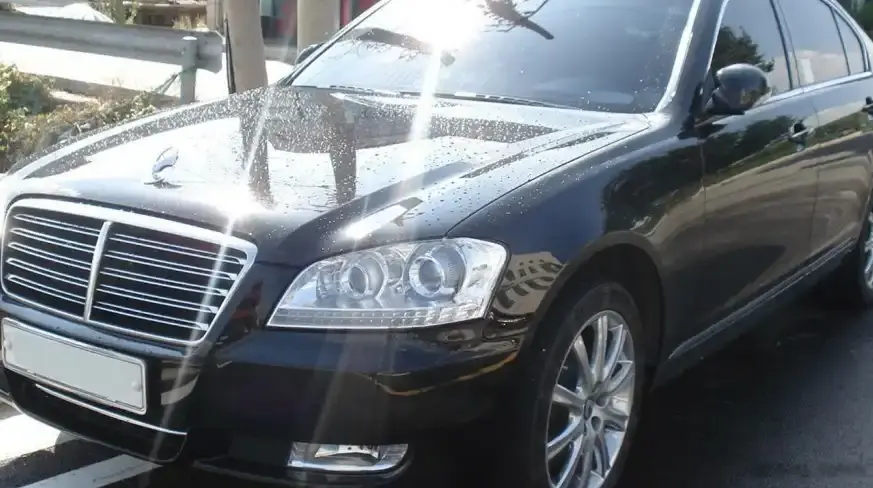
The SsangYong Chairman H CM500 2.8 i 24V, produced from 1997 to 2014, represents a significant effort by the South Korean automaker to enter the luxury sedan market. Positioned as SsangYong’s flagship vehicle, the Chairman H (internally designated as the HQ series) aimed to provide a domestically produced alternative to established European and Japanese luxury cars. This particular variant, the CM500 with its 2.8-liter inline-six engine and five-speed automatic transmission, served as a mid-range offering within the Chairman H lineup, balancing performance with relative affordability compared to the higher-specification models. The Chairman H was primarily marketed within South Korea, with limited exports to select international markets.
Technical Specifications
| Brand | SsangYong |
| Model | Chairman |
| Generation | Chairman H |
| Type (Engine) | CM500 2.8 i 24V (197 Hp) |
| Start of production | 1997 |
| End of production | 2014 |
| Powertrain Architecture | Internal Combustion engine |
| Body type | Sedan |
| Seats | 5 |
| Doors | 4 |
| Fuel consumption (urban) | 17.3 l/100 km (13.6 US mpg) |
| Fuel consumption (extra urban) | 9.8 l/100 km (24 US mpg) |
| Fuel Type | Petrol (Gasoline) |
| Acceleration 0 – 100 km/h | 11 sec |
| Acceleration 0 – 62 mph | 11 sec |
| Acceleration 0 – 60 mph | 10.5 sec |
| Maximum speed | 210 km/h (130.49 mph) |
| Weight-to-power ratio | 8.6 kg/Hp |
| Weight-to-torque ratio | 6.3 kg/Nm |
| Power | 197 Hp @ 5500 rpm |
| Torque | 271 Nm @ 3750 rpm (199.88 lb.-ft. @ 3750 rpm) |
| Engine layout | Front, Longitudinal |
| Engine displacement | 2799 cm3 (170.81 cu. in.) |
| Number of cylinders | 6 |
| Engine configuration | Inline |
| Cylinder Bore | 89.9 mm (3.54 in.) |
| Piston Stroke | 73.5 mm (2.89 in.) |
| Compression ratio | 10:1 |
| Number of valves per cylinder | 4 |
| Fuel injection system | Multi-port manifold injection |
| Engine aspiration | Naturally aspirated engine |
| Valvetrain | DOHC |
| Engine oil capacity | 7 l (7.4 US qt | 6.16 UK qt) |
| Coolant capacity | 11.5 l (12.15 US qt | 10.12 UK qt) |
| Kerb Weight | 1700 kg (3747.86 lbs.) |
| Max. weight | 2215 kg (4883.24 lbs.) |
| Max load | 515 kg (1135.38 lbs.) |
| Trunk (boot) space – minimum | 470 l (16.6 cu. ft.) |
| Fuel tank capacity | 80 l (21.13 US gal | 17.6 UK gal) |
| Length | 5055 mm (199.02 in.) |
| Width | 1825 mm (71.85 in.) |
| Height | 1465 mm (57.68 in.) |
| Wheelbase | 2900 mm (114.17 in.) |
| Front track | 1550 mm (61.02 in.) |
| Rear (Back) track | 1540 mm (60.63 in.) |
| Drivetrain Architecture | Rear wheel drive |
| Number of gears and type of gearbox | 5 gears, automatic transmission |
| Front suspension | Wishbone |
| Rear suspension | Coil spring |
| Front brakes | Ventilated discs |
| Rear brakes | Disc |
| Assisting systems | ABS (Anti-lock braking system) |
| Power steering | Hydraulic Steering |
| Tires size | 215/60 R16 |
Powertrain & Engine Architecture
The CM500 variant is powered by SsangYong’s 2.8-liter (2799 cc) inline-six cylinder engine. This engine, while not a cutting-edge design, was known for its relative smoothness and durability. It utilizes a double overhead camshaft (DOHC) valvetrain with four valves per cylinder, and a multi-port fuel injection system. The engine produces 197 horsepower at 5500 rpm and 271 Nm (199.88 lb-ft) of torque at 3750 rpm. The engine’s architecture is a traditional naturally aspirated setup, relying on displacement rather than forced induction for its power output. Paired with this engine is a five-speed automatic transmission, which was a common choice for luxury-oriented vehicles of the era. The transmission is rear-wheel drive, contributing to the Chairman H’s traditional luxury car feel.
Driving Characteristics
The 197 hp and 271 Nm of torque delivered by the CM500 powertrain provided adequate, but not exhilarating, performance. Acceleration from 0 to 100 km/h (0-62 mph) took approximately 11 seconds. The automatic transmission, while offering convenience, did result in some power loss compared to the available manual transmission options. Gear ratios were tuned for comfortable cruising rather than sporty acceleration. The rear-wheel-drive configuration provided a balanced driving experience, though it lacked the all-weather capability of all-wheel-drive systems found in some competing vehicles. Compared to the more powerful engines offered in the Chairman H range, the CM500 prioritized fuel economy and a smoother, more relaxed driving experience.
Equipment & Trim Levels
The CM500 trim level typically included features expected of a luxury sedan in the late 1990s and early 2000s. Standard equipment often included power windows, power locks, air conditioning, and a basic audio system. Interior upholstery was typically cloth or leatherette, with higher-spec models offering full leather seating. Optional extras could include a sunroof, upgraded audio systems, wood trim, and automatic climate control. The dashboard layout was relatively conventional, prioritizing functionality and ease of use. The CM500 generally represented a good value proposition within the Chairman H lineup, offering a comfortable and well-equipped vehicle at a more accessible price point.
Chassis & Braking
The Chairman H utilized a traditional body-on-frame construction, which contributed to its robust feel but also added weight. The front suspension employed a wishbone design, while the rear suspension utilized a coil spring setup. Braking duties were handled by ventilated discs at the front and solid discs at the rear. Anti-lock braking system (ABS) was standard, enhancing safety. Steering was hydraulically assisted, providing a comfortable driving experience. The CM500’s chassis and braking systems were designed to provide a comfortable and secure ride, prioritizing stability and predictability over outright sportiness.
Market Reception & Comparison
The SsangYong Chairman H, and the CM500 variant specifically, received mixed reviews. Critics generally praised the vehicle’s spacious interior, comfortable ride, and robust build quality. However, it was often criticized for its somewhat dated design, lack of brand recognition, and relatively unrefined engine compared to its European and Japanese rivals. Fuel economy was also a point of concern, with the 2.8-liter engine consuming a significant amount of fuel, particularly in urban driving conditions (17.3 l/100 km). Compared to other trims in the Chairman H lineup, the CM500 offered a more affordable entry point into the model range, appealing to buyers who prioritized value and comfort over outright performance.
Legacy
The SsangYong Chairman H, while not a commercial success on a global scale, remains a significant vehicle in the history of the South Korean automotive industry. It represented a bold attempt to establish a domestic luxury car brand. The CM500 variant, with its reliable 2.8-liter engine and five-speed automatic transmission, has proven to be relatively durable over time. In the used car market, the Chairman H is often sought after by enthusiasts and collectors who appreciate its unique character and robust construction. While parts availability can be a challenge, the CM500 powertrain is generally considered to be relatively easy to maintain, making it a viable option for those seeking a classic Korean luxury sedan.