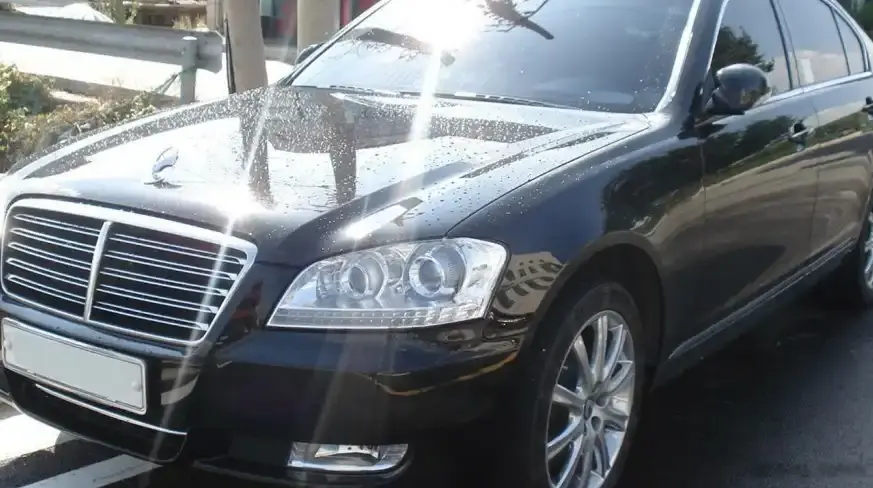
The SsangYong Chairman H CM600 L 3.2 i 24V, produced from 1999 to 2014, represents a significant effort by the South Korean automaker to enter the luxury sedan market. Positioned as SsangYong’s flagship vehicle, the Chairman H (internally designated as the HQ series) aimed to compete with established European and Japanese luxury cars. This particular variant, the CM600 L with the 3.2-liter inline-six engine and four-speed automatic transmission, was a mid-range offering within the Chairman H lineup, providing a balance between performance and comfort. The Chairman H was primarily marketed in South Korea, with limited exports to select international markets. It was notable for its Mercedes-Benz W124-inspired design, a result of SsangYong’s technical collaboration with the German manufacturer in the 1990s.
Technical Specifications
| Brand | SsangYong |
| Model | Chairman |
| Generation | Chairman H |
| Type (Engine) | CM600 L 3.2 i 24V (220 Hp) |
| Start of production | 1999 year |
| End of production | 2014 year |
| Powertrain Architecture | Internal Combustion engine |
| Body type | Sedan |
| Seats | 5 |
| Doors | 4 |
| Fuel consumption (urban) | 17.1 l/100 km (13.8 US mpg, 16.5 UK mpg, 5.8 km/l) |
| Fuel consumption (extra urban) | 10.8 l/100 km (21.8 US mpg, 26.2 UK mpg, 9.3 km/l) |
| Fuel Type | Petrol (Gasoline) |
| Maximum speed | 210 km/h (130.49 mph) |
| Weight-to-power ratio | 8 kg/Hp, 125.7 Hp/tonne |
| Weight-to-torque ratio | 5.7 kg/Nm, 174.3 Nm/tonne |
| Power | 220 Hp @ 6000 rpm |
| Power per litre | 68.8 Hp/l |
| Torque | 305 Nm @ 4500 rpm (224.96 lb.-ft. @ 4500 rpm) |
| Engine layout | Front, Longitudinal |
| Engine Model/Code | M 162 |
| Engine displacement | 3199 cm3 (195.21 cu. in.) |
| Number of cylinders | 6 |
| Engine configuration | Inline |
| Cylinder Bore | 89.9 mm (3.54 in.) |
| Piston Stroke | 84 mm (3.31 in.) |
| Compression ratio | 10:1 |
| Number of valves per cylinder | 4 |
| Fuel injection system | Multi-port manifold injection |
| Engine aspiration | Naturally aspirated engine |
| Engine oil capacity | 7 l (7.4 US qt | 6.16 UK qt) |
| Coolant capacity | 11.5 l (12.15 US qt | 10.12 UK qt) |
| Kerb Weight | 1750 kg (3858.09 lbs.) |
| Max. weight | 2230 kg (4916.31 lbs.) |
| Max load | 480 kg (1058.22 lbs.) |
| Trunk (boot) space – minimum | 470 l (16.6 cu. ft.) |
| Fuel tank capacity | 80 l (21.13 US gal | 17.6 UK gal) |
| Length | 5355 mm (210.83 in.) |
| Width | 1825 mm (71.85 in.) |
| Height | 1475 mm (58.07 in.) |
| Wheelbase | 3200 mm (125.98 in.) |
| Front track | 1550 mm (61.02 in.) |
| Rear (Back) track | 1540 mm (60.63 in.) |
| Drivetrain Architecture | The Internal combustion engine (ICE) drives the rear wheels of the vehicle. |
| Drive wheel | Rear wheel drive |
| Number of gears and type of gearbox | 4 gears, automatic transmission |
| Front suspension | Wishbone |
| Rear suspension | Coil spring |
| Front brakes | Ventilated discs |
| Rear brakes | Disc |
| Assisting systems | ABS (Anti-lock braking system) |
| Steering type | Steering rack and pinion |
| Power steering | Hydraulic Steering |
| Tires size | 215/60 R16 |
Powertrain & Engine Architecture
The CM600 L variant is powered by SsangYong’s M162 engine, a 3.2-liter inline-six cylinder gasoline engine. This engine, while developed by SsangYong, owes a significant portion of its design to Mercedes-Benz, stemming from the licensing agreement and technical assistance received in the 1990s. The M162 features a cast iron block and aluminum cylinder head, with four valves per cylinder operated by a single overhead camshaft. Fuel delivery is managed by a multi-port fuel injection system, providing adequate, though not cutting-edge, performance for its time. The engine produces 220 horsepower at 6000 rpm and 305 Nm (224.96 lb-ft) of torque at 4500 rpm. Paired with this engine is a four-speed automatic transmission, which, while providing smooth shifts, lacks the efficiency and responsiveness of more modern automatic gearboxes. The transmission is rear-wheel drive, contributing to the Chairman H’s traditional luxury sedan feel.
Driving Characteristics
The 1.8L Automatic configuration delivers a comfortable, but not particularly sporty, driving experience. The four-speed automatic transmission prioritizes smoothness over rapid acceleration. Acceleration from 0 to 60 mph is estimated to be around 9-10 seconds, which was adequate for the luxury segment in the late 1990s and early 2000s. The inline-six engine provides a relatively linear power delivery, with usable torque available across a broad range of engine speeds. However, compared to manual transmission versions or higher-output trims, the automatic feels somewhat sluggish. The rear-wheel-drive layout provides balanced handling, but the relatively soft suspension tuning prioritizes ride comfort over sharp cornering. The gear ratios are optimized for cruising, making it a pleasant vehicle for long highway journeys.
Equipment & Trim Levels
The CM600 L 3.2 i 24V typically came standard with features expected of a luxury sedan, including power windows, power locks, power mirrors, and air conditioning. Upholstery was typically cloth or leather, with woodgrain trim accents on the dashboard and door panels. Higher trim levels offered options such as a sunroof, upgraded audio system, and automatic climate control. The Chairman H also featured a spacious interior, with ample legroom for both front and rear passengers. Optional extras included a navigation system (a rarity for the time), heated seats, and a premium sound system.
Chassis & Braking
The Chairman H utilizes a traditional body-on-frame construction, contributing to its robust feel and durability. The front suspension employs a wishbone design, while the rear suspension utilizes a coil spring setup. Braking duties are handled by ventilated discs at the front and solid discs at the rear. An Anti-lock Braking System (ABS) was standard equipment, enhancing safety. The steering system is a rack and pinion setup with hydraulic power assistance, providing a reasonably direct steering feel. The tires are typically 215/60 R16, offering a good balance between ride comfort and handling.
Market Reception & Comparison
The SsangYong Chairman H received mixed reviews. Critics generally praised its spacious interior, comfortable ride, and robust build quality. However, it was often criticized for its dated design, lack of brand recognition, and the relatively unsophisticated powertrain compared to its European and Japanese rivals. Fuel economy was also a concern, with the 3.2-liter engine consuming a significant amount of fuel, especially in urban driving conditions. Compared to other trims in the Chairman H lineup, the CM600 L 3.2 i 24V offered a good balance between performance and price. The lower-displacement engines were more fuel-efficient but lacked the power of the 3.2-liter, while the higher-output versions were significantly more expensive.
Legacy
The SsangYong Chairman H, while not a commercial success on a global scale, remains a significant vehicle in the company’s history. The M162 engine, despite its age, has proven to be relatively reliable, and well-maintained examples continue to be seen on the roads today. The Chairman H is often appreciated by enthusiasts for its unique blend of Korean engineering and Mercedes-Benz technology. In the used car market, the CM600 L 3.2 i 24V represents an affordable entry point into the world of luxury sedans, offering a comfortable and spacious driving experience for those seeking a distinctive and somewhat unconventional vehicle. Its robust construction and relatively simple mechanicals make it a potentially reliable and maintainable classic.