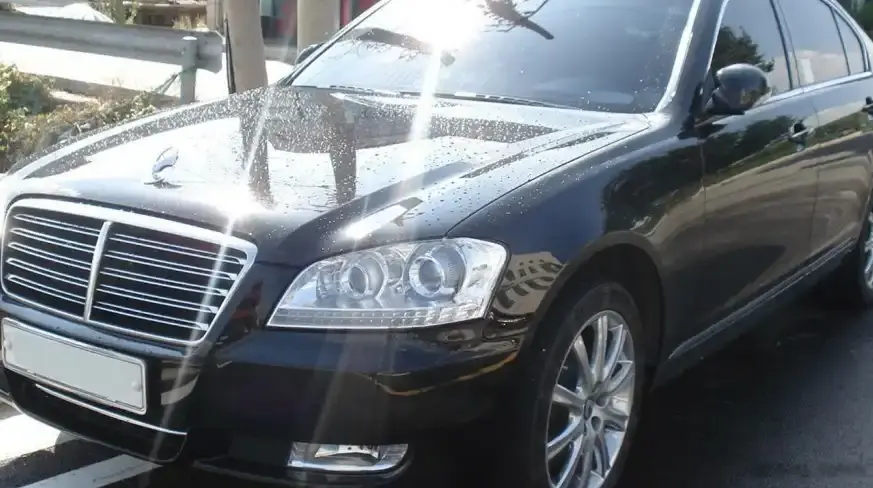
The SsangYong Chairman H CM600S 3.2 i 24V, produced from 1997 to 2014, represents a significant effort by the South Korean automaker to enter the luxury sedan market. Positioned as SsangYong’s flagship model, the Chairman H aimed to provide a domestically-produced alternative to established European and Japanese luxury cars. The CM600S variant, equipped with the 3.2-liter inline-six engine and a five-speed automatic transmission, occupied a mid-range position within the Chairman H lineup, offering a balance of performance and refinement. It was primarily sold within the South Korean domestic market, with limited exports to select countries.
Technical Specifications
| Brand | SsangYong |
| Model | Chairman |
| Generation | Chairman H |
| Type (Engine) | CM600S 3.2 i 24V (220 Hp) |
| Start of production | 1997 |
| End of production | 2014 |
| Powertrain Architecture | Internal Combustion engine |
| Body type | Sedan |
| Seats | 5 |
| Doors | 4 |
| Fuel consumption (urban) | 18.1 l/100 km (13 US mpg, 15.6 UK mpg, 5.5 km/l) |
| Fuel consumption (extra urban) | 10.3 l/100 km (22.8 US mpg, 27.4 UK mpg, 9.7 km/l) |
| Fuel Type | Petrol (Gasoline) |
| Acceleration 0 – 100 km/h | 9 sec |
| Acceleration 0 – 62 mph | 9 sec |
| Acceleration 0 – 60 mph | 8.6 sec |
| Maximum speed | 210 km/h (130.49 mph) |
| Weight-to-power ratio | 7.9 kg/Hp, 126.8 Hp/tonne |
| Weight-to-torque ratio | 5.6 kg/Nm, 178.7 Nm/tonne |
| Power | 220 Hp @ 5500 rpm |
| Power per litre | 68.8 Hp/l |
| Torque | 310 Nm @ 3750 rpm (228.64 lb.-ft. @ 3750 rpm) |
| Engine layout | Front, Longitudinal |
| Engine Model/Code | M 162 |
| Engine displacement | 3199 cm3 (195.21 cu. in.) |
| Number of cylinders | 6 |
| Engine configuration | Inline |
| Cylinder Bore | 89.9 mm (3.54 in.) |
| Piston Stroke | 84 mm (3.31 in.) |
| Compression ratio | 10:1 |
| Number of valves per cylinder | 4 |
| Fuel injection system | Multi-port manifold injection |
| Engine aspiration | Naturally aspirated engine |
| Valvetrain | DOHC |
| Engine oil capacity | 7 l (7.4 US qt | 6.16 UK qt) |
| Coolant capacity | 11.5 l (12.15 US qt | 10.12 UK qt) |
| Kerb Weight | 1735 kg (3825.02 lbs.) |
| Max. weight | 2280 kg (5026.54 lbs.) |
| Max load | 545 kg (1201.52 lbs.) |
| Trunk (boot) space – minimum | 470 l (16.6 cu. ft.) |
| Fuel tank capacity | 80 l (21.13 US gal | 17.6 UK gal) |
| Length | 5055 mm (199.02 in.) |
| Width | 1825 mm (71.85 in.) |
| Height | 1465 mm (57.68 in.) |
| Wheelbase | 2900 mm (114.17 in.) |
| Front track | 1550 mm (61.02 in.) |
| Rear (Back) track | 1540 mm (60.63 in.) |
| Drivetrain Architecture | Rear wheel drive |
| Number of gears and type of gearbox | 5 gears, automatic transmission |
| Front suspension | Wishbone |
| Rear suspension | Coil spring |
| Front brakes | Ventilated discs |
| Rear brakes | Disc |
| Assisting systems | ABS (Anti-lock braking system), Hydraulic Steering |
| Tires size | 215/60 R16 |
Powertrain & Engine Architecture
The CM600S is powered by SsangYong’s M162 engine, a 3.2-liter inline-six cylinder gasoline engine. This engine utilizes a double overhead camshaft (DOHC) valvetrain with four valves per cylinder, and a multi-port fuel injection system. The engine’s design was influenced by Mercedes-Benz technology, a result of a long-standing technical partnership between the two companies. The M162 produced 220 horsepower at 5500 rpm and 310 Nm (228.64 lb-ft) of torque at 3750 rpm. The engine is longitudinally mounted in the front of the vehicle, driving the rear wheels. The five-speed automatic transmission, while providing convenience, was not known for particularly quick shifts or sporty performance. It was a conventional hydraulic automatic, lacking the modern features of electronically controlled transmissions.
Driving Characteristics
The Chairman H CM600S with the 3.2-liter engine and automatic transmission offered a comfortable, but not particularly sporty, driving experience. Acceleration from 0 to 60 mph took approximately 8.6 seconds, and top speed was limited to 210 km/h (130.49 mph). The automatic transmission’s gear ratios were geared towards smooth cruising rather than aggressive acceleration. Compared to the manual transmission versions of the Chairman H, the automatic felt noticeably slower. The CM600S also differed significantly from the diesel-powered variants (like the 2.9 TDI) which prioritized fuel economy and low-end torque. The 3.2L offered a more refined and powerful experience, but at the cost of increased fuel consumption.
Equipment & Trim Levels
The CM600S trim level typically included features such as power windows, power locks, air conditioning, and a basic audio system. Higher trim levels, available as options, added features like leather upholstery, wood trim, a sunroof, and upgraded audio systems. The interior design was generally conservative, aiming for a luxurious feel rather than cutting-edge styling. The CM600S often served as a base for customers who then added optional packages to customize their vehicle. Standard safety equipment included ABS (Anti-lock Braking System).
Chassis & Braking
The Chairman H utilized a traditional body-on-frame construction, contributing to its substantial weight of 1735 kg (3825.02 lbs). The front suspension employed a wishbone design, while the rear suspension utilized coil springs. Braking duties were handled by ventilated discs at the front and solid discs at the rear. The hydraulic power steering provided relatively light steering effort, making it easy to maneuver in urban environments. The chassis was tuned for comfort, prioritizing a smooth ride over sharp handling.
Market Reception & Comparison
The SsangYong Chairman H CM600S received mixed reviews. Critics generally praised its spacious interior and comfortable ride, but noted its dated design and lack of brand recognition compared to established luxury competitors. Fuel economy was also a common criticism, with the 3.2-liter engine consuming a significant amount of gasoline (18.1 l/100 km urban, 10.3 l/100 km extra urban). Compared to other trims, the CM600S offered a good balance between performance and price, appealing to buyers who wanted a more powerful engine than the base models but didn’t want to pay the premium for the top-of-the-line features. The diesel variants were favored by those prioritizing fuel efficiency, while the higher-spec gasoline models targeted buyers seeking a more luxurious experience.
Legacy
The SsangYong Chairman H, while not a commercial success on a global scale, remains a notable vehicle in South Korean automotive history. The CM600S variant, with its 3.2-liter engine and automatic transmission, is generally considered a reliable powertrain, although maintenance can be challenging due to the vehicle’s age and limited parts availability outside of South Korea. In the used car market, the Chairman H CM600S is often sought after by enthusiasts who appreciate its unique styling and relatively affordable price point. Its longevity and relatively simple mechanical design contribute to its continued appeal, despite its age and the emergence of more modern luxury sedans.