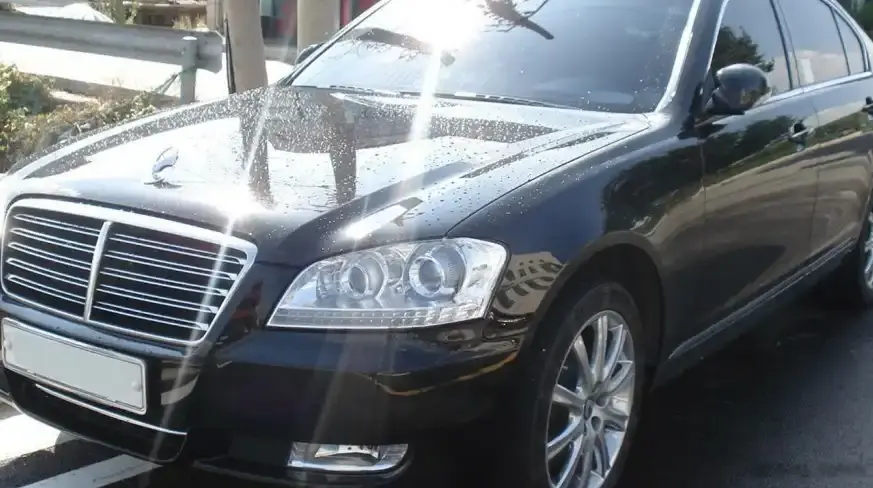
The SsangYong Chairman W (facelifted in 2011) 3.6, equipped with a 250 horsepower engine and a T-tronic automatic transmission coupled with four-wheel drive, represents a significant iteration of SsangYong’s flagship luxury sedan. Produced from 2011 to 2017, this variant aimed to provide a competitive, domestically-produced alternative to established European and Japanese luxury vehicles, particularly within the Korean market. The Chairman W, positioned as SsangYong’s top-of-the-line offering, sought to blend comfort, technology, and a robust drivetrain in a full-size sedan package. This specific 3.6L 4WD T-tronic configuration occupied the premium end of the Chairman W lineup, offering the most powerful engine option and all-weather capability.
Technical Specifications
| Brand | SsangYong |
| Model | Chairman |
| Generation | Chairman W (facelift 2011) |
| Type (Engine) | 3.6 (250 Hp) 4WD T-tronic |
| Start of production | 2011 |
| End of production | 2017 |
| Powertrain Architecture | Internal Combustion engine |
| Body type | Sedan |
| Seats | 5 |
| Doors | 4 |
| Fuel consumption (urban) | 14.5 l/100 km (16.2 US mpg, 19.5 UK mpg, 6.9 km/l) |
| Fuel consumption (extra urban) | 10.1 l/100 km (23.3 US mpg, 28 UK mpg, 9.9 km/l) |
| Fuel consumption (combined) | 12.5 l/100 km (18.8 US mpg, 22.6 UK mpg, 8 km/l) |
| Fuel Type | Petrol (Gasoline) |
| Maximum speed | 210 km/h (130.49 mph) |
| Weight-to-power ratio | 7.9 kg/Hp, 126.7 Hp/tonne |
| Weight-to-torque ratio | 5.8 kg/Nm, 173.8 Nm/tonne |
| Power | 250 Hp @ 6600 rpm |
| Power per litre | 69.5 Hp/l |
| Torque | 343 Nm @ 4000 rpm (252.98 lb.-ft. @ 4000 rpm) |
| Engine layout | Front, Longitudinal |
| Engine Model/Code | G36D |
| Engine displacement | 3598 cm3 (219.56 cu. in.) |
| Number of cylinders | 6 |
| Engine configuration | Inline |
| Cylinder Bore | 90.9 mm (3.58 in.) |
| Piston Stroke | 92.4 mm (3.64 in.) |
| Compression ratio | 10:1 |
| Number of valves per cylinder | 4 |
| Fuel injection system | Multi-port manifold injection |
| Engine aspiration | Naturally aspirated engine |
| Kerb Weight | 1973 kg (4349.72 lbs.) |
| Max. weight | 2490 kg (5489.51 lbs.) |
| Max load | 517 kg (1139.79 lbs.) |
| Fuel tank capacity | 83 l (21.93 US gal, 18.26 UK gal) |
| Length | 5135 mm (202.17 in.) |
| Width | 1895 mm (74.61 in.) |
| Height | 1495 mm (58.86 in.) |
| Wheelbase | 2970 mm (116.93 in.) |
| Front track | 1600 mm (62.99 in.) |
| Rear track | 1590 mm (62.6 in.) |
| Front overhang | 945 mm (37.2 in.) |
| Rear overhang | 1220 mm (48.03 in.) |
| Ride height (ground clearance) | 175 mm (6.89 in.) |
| Minimum turning circle | 11.2 m (36.75 ft.) |
| Drive wheel | All wheel drive (4×4) |
| Number of gears | 7 |
| Gearbox type | Automatic transmission T-tronic |
| Front suspension | Independent multi-link suspension |
| Rear suspension | Independent multi-link suspension |
| Front brakes | Ventilated discs |
| Rear brakes | Ventilated discs |
| Assisting systems | ABS (Anti-lock braking system) |
| Steering type | Steering rack and pinion |
| Power steering | Electric Steering |
| Tires size | 245/45 R19 |
| Wheel rims size | 19 |
Powertrain & Engine Architecture
The heart of the Chairman W 3.6 is the SsangYong G36D engine, a 3.6-liter inline-six cylinder gasoline engine. This engine, while not a cutting-edge design, was known for its relative smoothness and durability. It utilizes a multi-port fuel injection system, a common setup for the era, delivering fuel directly into the intake ports. The engine features a single overhead camshaft (SOHC) valvetrain with four valves per cylinder, contributing to reasonable power output for its displacement. The G36D produces 250 horsepower at 6,600 rpm and 343 Nm (253 lb-ft) of torque at 4,000 rpm.
Paired with the G36D is SsangYong’s T-tronic 7-speed automatic transmission. This transmission, sourced from a collaboration with a European supplier, offered smoother shifts compared to earlier SsangYong automatic transmissions. The T-tronic system also included a manual shift mode, allowing drivers some control over gear selection. The four-wheel-drive system is a full-time setup, providing enhanced traction in various weather conditions. It utilizes a viscous coupling to distribute torque between the front and rear axles as needed.
Driving Characteristics
The 3.6L Chairman W offers a comfortable and refined driving experience, prioritizing smoothness over outright sportiness. The engine delivers adequate power for effortless highway cruising and confident acceleration. However, it doesn’t possess the urgency of turbocharged engines or higher-output naturally aspirated alternatives. The T-tronic transmission generally shifts smoothly, but can sometimes feel hesitant during quick downshifts. The four-wheel-drive system provides a secure feeling on slippery surfaces, but adds to the vehicle’s overall weight. Compared to lower-trim Chairman W models with smaller engines, the 3.6 offers a noticeable performance advantage, particularly when fully loaded or tackling inclines.
Equipment & Trim Levels
The 3.6 4WD T-tronic trim level of the Chairman W was typically well-equipped, reflecting its position as the range-topping model. Standard features included leather upholstery, wood trim, automatic climate control, a premium audio system, power-adjustable front seats, and a sunroof. Optional extras often included navigation, rear-seat entertainment, and advanced safety features like parking sensors and a rearview camera. The interior design aimed for a luxurious feel, though the materials and overall execution weren’t always on par with established European competitors.
Chassis & Braking
The Chairman W utilizes an independent multi-link suspension system at both the front and rear, providing a comfortable ride quality. The suspension is tuned for comfort rather than handling precision. The braking system consists of ventilated disc brakes on all four wheels, providing adequate stopping power for the vehicle’s weight. Anti-lock braking system (ABS) is standard. The steering is a rack-and-pinion system with electric power assistance, offering light and easy steering feel.
Market Reception & Comparison
The SsangYong Chairman W 3.6 received mixed reviews. Critics generally praised its spacious interior, comfortable ride, and generous equipment levels. However, it was often criticized for its somewhat dated design, lack of brand recognition, and fuel economy. Compared to competitors like the Hyundai Grandeur or Kia K9, the Chairman W offered a unique proposition with its standard four-wheel drive, but often fell short in terms of refinement and brand prestige. Fuel economy figures of 12.5 l/100 km (18.8 US mpg) were considered relatively high, even for a full-size luxury sedan.
Legacy
The SsangYong Chairman W 3.6, while not a commercial success on a global scale, remains a notable vehicle in the Korean automotive landscape. The G36D engine, while aging, proved to be relatively reliable with proper maintenance. Today, the Chairman W 3.6 can be found on the used car market at relatively affordable prices. Its spacious interior, comfortable ride, and standard four-wheel drive continue to appeal to buyers seeking a large, comfortable, and capable sedan. However, potential buyers should be aware of the vehicle’s age and potential maintenance requirements, as parts availability may be limited.