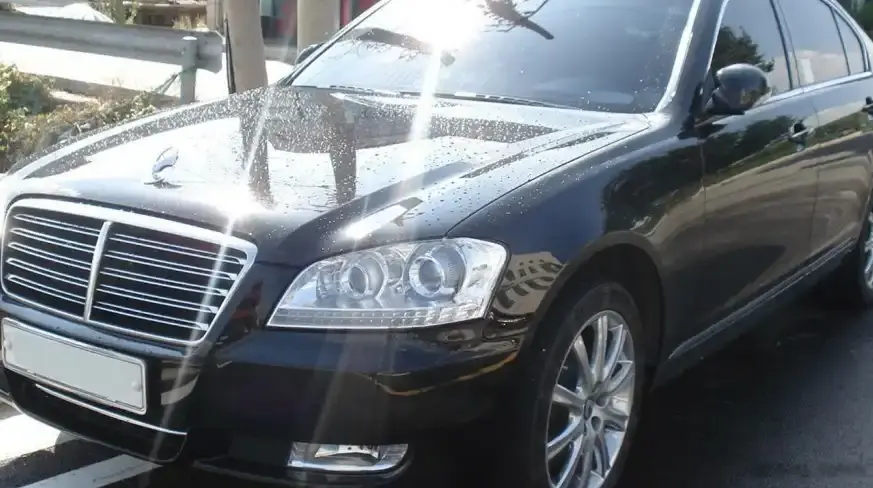
The SsangYong Chairman W (facelift 2011) 3.6, equipped with a 250 horsepower engine and a T-tronic automatic transmission coupled with four-wheel drive, represents a significant iteration of SsangYong’s flagship luxury sedan. Produced from 2011 to 2017, this variant aimed to provide a competitive offering in the premium sedan segment, particularly within the South Korean domestic market. The Chairman W, positioned as SsangYong’s answer to vehicles like the Mercedes-Benz S-Class and BMW 7 Series, sought to blend spaciousness, comfort, and a robust drivetrain into a uniquely Korean package. This specific 3.6L 4WD T-tronic L trim sat at the top of the Chairman W range, offering the most powerful engine and advanced drivetrain available.
Technical Specifications
| Brand | SsangYong |
| Model | Chairman |
| Generation | Chairman W (facelift 2011) |
| Type (Engine) | 3.6 (250 Hp) 4WD T-tronic L |
| Start of production | 2011 |
| End of production | 2017 |
| Powertrain Architecture | Internal Combustion engine |
| Body type | Sedan |
| Seats | 5 |
| Doors | 4 |
| Fuel consumption (urban) | 14.5 l/100 km (16.2 US mpg, 19.5 UK mpg, 6.9 km/l) |
| Fuel consumption (extra urban) | 10.1 l/100 km (23.3 US mpg, 28 UK mpg, 9.9 km/l) |
| Fuel consumption (combined) | 12.5 l/100 km (18.8 US mpg, 22.6 UK mpg, 8 km/l) |
| Fuel Type | Petrol (Gasoline) |
| Maximum speed | 210 km/h (130.49 mph) |
| Weight-to-power ratio | 8.2 kg/Hp, 121.4 Hp/tonne |
| Weight-to-torque ratio | 6 kg/Nm, 166.5 Nm/tonne |
| Power | 250 Hp @ 6600 rpm |
| Power per litre | 69.5 Hp/l |
| Torque | 343 Nm @ 4000 rpm (252.98 lb.-ft. @ 4000 rpm) |
| Engine layout | Front, Longitudinal |
| Engine Model/Code | G36D |
| Engine displacement | 3598 cm3 (219.56 cu. in.) |
| Number of cylinders | 6 |
| Engine configuration | Inline |
| Cylinder Bore | 90.9 mm (3.58 in.) |
| Piston Stroke | 92.4 mm (3.64 in.) |
| Compression ratio | 10:1 |
| Number of valves per cylinder | 4 |
| Fuel injection system | Multi-port manifold injection |
| Engine aspiration | Naturally aspirated engine |
| Kerb Weight | 2060 kg (4541.52 lbs.) |
| Max. weight | 2580 kg (5687.93 lbs.) |
| Max load | 520 kg (1146.4 lbs.) |
| Fuel tank capacity | 83 l (21.93 US gal | 18.26 UK gal) |
| Length | 5435 mm (213.98 in.) |
| Width | 1895 mm (74.61 in.) |
| Height | 1495 mm (58.86 in.) |
| Wheelbase | 3270 mm (128.74 in.) |
| Front track | 1600 mm (62.99 in.) |
| Rear track | 1590 mm (62.6 in.) |
| Front overhang | 945 mm (37.2 in.) |
| Rear overhang | 1220 mm (48.03 in.) |
| Ride height (ground clearance) | 175 mm (6.89 in.) |
| Minimum turning circle | 12.2 m (40.03 ft.) |
| Drive wheel | All wheel drive (4×4) |
| Number of gears | 7 |
| Gearbox type | Automatic transmission T-tronic |
| Front suspension | Independent multi-link suspension |
| Rear suspension | Independent multi-link suspension |
| Front brakes | Ventilated discs |
| Rear brakes | Ventilated discs |
| Assisting systems | ABS (Anti-lock braking system) |
| Steering type | Steering rack and pinion |
| Power steering | Electric Steering |
| Tires size | 245/45 R19 |
| Wheel rims size | 19 |
Powertrain & Engine Architecture
The heart of the Chairman W 3.6 is the SsangYong G36D engine, a 3.6-liter inline-six cylinder gasoline engine. This engine, while not a cutting-edge design, was known for its smoothness and relatively robust construction. It utilizes a multi-port fuel injection system, delivering fuel directly into the intake ports rather than directly into the combustion chamber. The engine produces 250 horsepower at 6600 rpm and 343 Nm (253 lb-ft) of torque at 4000 rpm. The T-tronic automatic transmission is a 7-speed unit, providing smooth shifts and contributing to reasonable fuel economy for a vehicle of this size and weight. The transmission is designed to handle the engine’s torque output effectively, and its seven gears help to keep the engine operating within its optimal power band. The four-wheel-drive system is primarily rear-biased, offering enhanced traction and stability, particularly in adverse weather conditions.
Driving Characteristics
The Chairman W 3.6 4WD T-tronic L delivers a comfortable and refined driving experience. While not a sports sedan, the 250 horsepower engine provides adequate power for confident acceleration and highway cruising. The automatic transmission is well-tuned, offering smooth and predictable shifts. The four-wheel-drive system enhances stability and grip, making it a capable all-weather vehicle. Compared to lower-powered versions of the Chairman W, such as those equipped with the 2.8-liter diesel engine, the 3.6 offers significantly more responsive performance. However, it lacks the fuel efficiency of the diesel variant. The gear ratios are optimized for a balance of acceleration and fuel economy, with the seventh gear providing a comfortable cruising speed on the highway.
Equipment & Trim Levels
The “L” designation in the 3.6 4WD T-tronic L trim indicates a high level of equipment. Standard features typically included leather upholstery, wood trim, a premium audio system, automatic climate control, power-adjustable front seats with memory function, and a sunroof. Optional extras could include a navigation system, rear-seat entertainment system, and advanced safety features such as adaptive cruise control and lane departure warning. The interior was designed to provide a luxurious and comfortable environment for both the driver and passengers.
Chassis & Braking
The Chairman W features an independent multi-link suspension system at both the front and rear, providing a comfortable ride and good handling characteristics. Ventilated disc brakes are used on all four wheels, offering ample stopping power. The vehicle is equipped with ABS (Anti-lock Braking System) as standard, enhancing safety during emergency braking situations. The chassis is designed to provide a stable and controlled driving experience, even at higher speeds. The steering is electrically assisted, providing a light and responsive feel.
Market Reception & Comparison
The SsangYong Chairman W 3.6 4WD T-tronic L received mixed reviews. Critics praised its spacious interior, comfortable ride, and robust drivetrain. However, it was often criticized for its somewhat dated design and lack of brand recognition compared to established luxury brands. Fuel economy was also a concern, given the vehicle’s size and engine displacement. Compared to other trims in the Chairman W lineup, the 3.6 offered superior performance but at a higher price point and with increased fuel consumption. The diesel variants were favored by those prioritizing fuel efficiency, while the 3.6 appealed to buyers seeking a more powerful and refined driving experience.
Legacy
The SsangYong Chairman W, including the 3.6 4WD T-tronic L variant, remains a relatively uncommon sight on the used car market, particularly outside of South Korea. The G36D engine is generally considered to be reliable, although maintenance can be more expensive due to the vehicle’s luxury status and the potential scarcity of parts. The T-tronic transmission has also proven to be reasonably durable with proper maintenance. Today, the Chairman W is appreciated by enthusiasts for its unique styling, spacious interior, and comfortable ride. It represents a bold attempt by SsangYong to compete in the premium sedan segment, and its legacy as a uniquely Korean luxury car continues to endure.