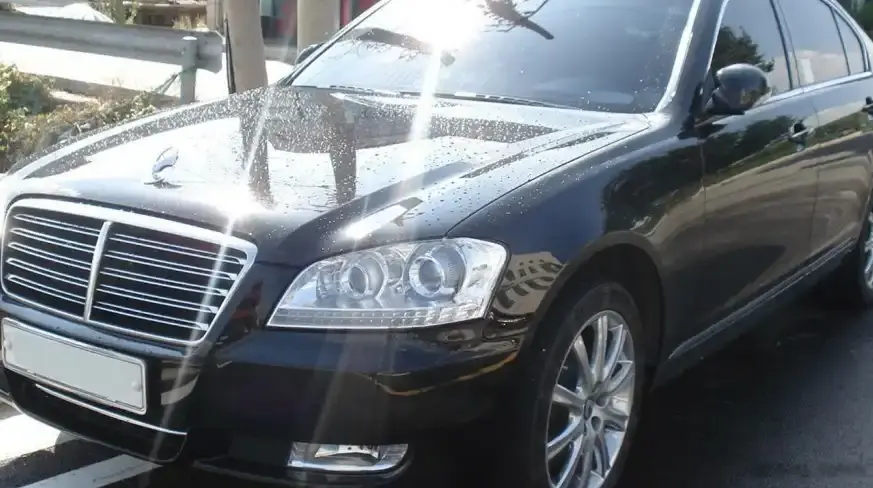
The SsangYong Chairman W (facelift 2011) 5.0 V8 4WD T-tronic represents the pinnacle of SsangYong’s luxury sedan offerings during its production run from 2011 to 2017. Positioned as the flagship model of the Chairman W series, this variant aimed to compete with established luxury brands, offering a spacious interior, robust four-wheel-drive system, and a powerful V8 engine. The Chairman W itself was a significant model for SsangYong, representing a concerted effort to elevate the brand’s image and appeal to a more discerning clientele. The 2011 facelift brought updated styling and refinements to the already substantial Chairman W platform, which was based on the previous generation Mercedes-Benz S-Class (W140) architecture, licensed after SsangYong’s partnership with Daimler-Benz.
Technical Specifications
| Brand | SsangYong |
| Model | Chairman |
| Generation | Chairman W (facelift 2011) |
| Type | 5.0 V8 (306 Hp) 4WD T-tronic |
| Start of production | 2011 |
| End of production | 2017 |
| Powertrain Architecture | Internal Combustion engine |
| Body type | Sedan |
| Seats | 5 |
| Doors | 4 |
| Fuel consumption (urban) | 15.7 l/100 km (15 US mpg, 18 UK mpg, 6.4 km/l) |
| Fuel consumption (extra urban) | 10.4 l/100 km (22.6 US mpg, 27.2 UK mpg, 9.6 km/l) |
| Fuel consumption (combined) | 13.3 l/100 km (17.7 US mpg, 21.2 UK mpg, 7.5 km/l) |
| Fuel Type | Petrol (Gasoline) |
| Maximum speed | 245 km/h (152.24 mph) |
| Weight-to-power ratio | 6.3 kg/Hp, 158.1 Hp/tonne |
| Weight-to-torque ratio | 4.4 kg/Nm, 227.8 Nm/tonne |
| Power | 306 Hp @ 5600 rpm |
| Power per litre | 61.6 Hp/l |
| Torque | 441 Nm @ 4000 rpm (325.26 lb.-ft. @ 4000 rpm) |
| Engine layout | Front, Longitudinal |
| Engine Model/Code | G50D |
| Engine displacement | 4966 cm3 (303.04 cu. in.) |
| Number of cylinders | 8 |
| Engine configuration | V-engine |
| Cylinder Bore | 97 mm (3.82 in.) |
| Piston Stroke | 84 mm (3.31 in.) |
| Compression ratio | 10:1 |
| Number of valves per cylinder | 4 |
| Fuel injection system | Multi-port manifold injection |
| Engine aspiration | Naturally aspirated engine |
| Engine oil capacity | 7.5 l (7.93 US qt | 6.6 UK qt) |
| Kerb Weight | 1936 kg (4268.15 lbs.) |
| Max. weight | 2490 kg (5489.51 lbs.) |
| Max load | 554 kg (1221.36 lbs.) |
| Fuel tank capacity | 83 l (21.93 US gal | 18.26 UK gal) |
| Length | 5135 mm (202.17 in.) |
| Width | 1895 mm (74.61 in.) |
| Height | 1495 mm (58.86 in.) |
| Wheelbase | 2970 mm (116.93 in.) |
| Front track | 1600 mm (62.99 in.) |
| Rear track | 1590 mm (62.6 in.) |
| Front overhang | 945 mm (37.2 in.) |
| Rear overhang | 1220 mm (48.03 in.) |
| Ride height (ground clearance) | 175 mm (6.89 in.) |
| Minimum turning circle | 11.2 m (36.75 ft.) |
| Drive wheel | All wheel drive (4×4) |
| Number of gears | 7 |
| Gearbox type | Automatic transmission T-tronic |
| Front suspension | Independent multi-link suspension |
| Rear suspension | Independent multi-link suspension |
| Front brakes | Ventilated discs |
| Rear brakes | Ventilated discs |
| Assisting systems | ABS (Anti-lock braking system) |
| Steering type | Steering rack and pinion |
| Power steering | Electric Steering |
| Tires size | 245/45 R19 |
| Wheel rims size | 19 |
Powertrain & Engine Architecture
The heart of the Chairman W 5.0 V8 is the G50D engine, a 4.966-liter naturally aspirated V8 producing 306 horsepower at 5,600 rpm and 441 Nm (325.26 lb.-ft.) of torque at 4,000 rpm. This engine, while based on designs originally licensed from Mercedes-Benz, underwent significant modifications by SsangYong engineers. It features a multi-port fuel injection system and a 10:1 compression ratio. The engine’s longitudinal mounting and the robust four-wheel-drive system contribute to its stable handling characteristics. The “T-tronic” automatic transmission is a 7-speed unit, providing smooth shifts and optimized gear ratios for both cruising and acceleration. While not the most technologically advanced transmission available at the time, it was known for its reliability and suitability for the engine’s torque curve.
Driving Characteristics
The 5.0 V8 engine delivers substantial power, providing brisk acceleration and effortless highway cruising. The all-wheel-drive system ensures excellent traction in various weather conditions. However, the Chairman W’s considerable weight (1936 kg / 4268.15 lbs) does limit its agility compared to lighter, more sports-oriented sedans. The T-tronic transmission, while smooth, isn’t particularly quick-shifting, and lacks the responsiveness of some contemporary dual-clutch transmissions. Compared to lower-trim Chairman W models with smaller engines, the V8 offers a significantly more refined and powerful driving experience, but at the cost of increased fuel consumption. The gear ratios are tuned for comfortable cruising rather than outright performance.
Equipment & Trim Levels
The Chairman W 5.0 V8 4WD T-tronic was typically equipped with a high level of standard features, befitting its flagship status. These included leather upholstery, wood trim, power-adjustable front seats with heating and ventilation, a premium audio system, automatic climate control, and a sunroof. Optional extras could include a rear entertainment system, upgraded leather, and various driver-assistance features. The interior design emphasized luxury and spaciousness, with ample legroom for both front and rear passengers. The overall aesthetic aimed for a classic, understated elegance rather than a modern, minimalist look.
Chassis & Braking
The Chairman W utilizes an independent multi-link suspension system at both the front and rear, providing a comfortable ride quality. Ventilated disc brakes are fitted on all four wheels, offering adequate stopping power for the vehicle’s weight. An Anti-lock Braking System (ABS) is standard. The chassis, derived from the W140 Mercedes-Benz S-Class, is robust and provides a stable platform. However, the suspension tuning prioritizes comfort over sporty handling, resulting in some body roll during cornering. The steering is power-assisted, providing a light and easy driving experience.
Market Reception & Comparison
The SsangYong Chairman W 5.0 V8 4WD T-tronic received mixed reviews. Critics acknowledged its spacious interior, luxurious features, and powerful engine, but often pointed to its dated platform and relatively high price as drawbacks. Compared to established luxury brands, the Chairman W struggled to gain significant market share. Fuel economy was also a concern, with combined consumption figures of 13.3 l/100 km (17.7 US mpg). Lower-trim Chairman W models, with smaller engines, offered better fuel efficiency and a lower purchase price, appealing to a more budget-conscious buyer. The V8 model was aimed at buyers who prioritized power and luxury above all else.
Legacy
The SsangYong Chairman W 5.0 V8 4WD T-tronic remains a relatively rare vehicle, particularly outside of South Korea. The G50D V8 engine, while not known for being particularly high-tech, has proven to be reasonably reliable with proper maintenance. On the used car market, these models are often sought after by enthusiasts who appreciate their unique blend of luxury, power, and all-wheel-drive capability. Parts availability can be a challenge, as SsangYong’s global presence is limited. However, the Chairman W represents a bold attempt by SsangYong to establish itself as a serious player in the luxury car segment, and the 5.0 V8 variant remains the most potent and well-equipped expression of that ambition.