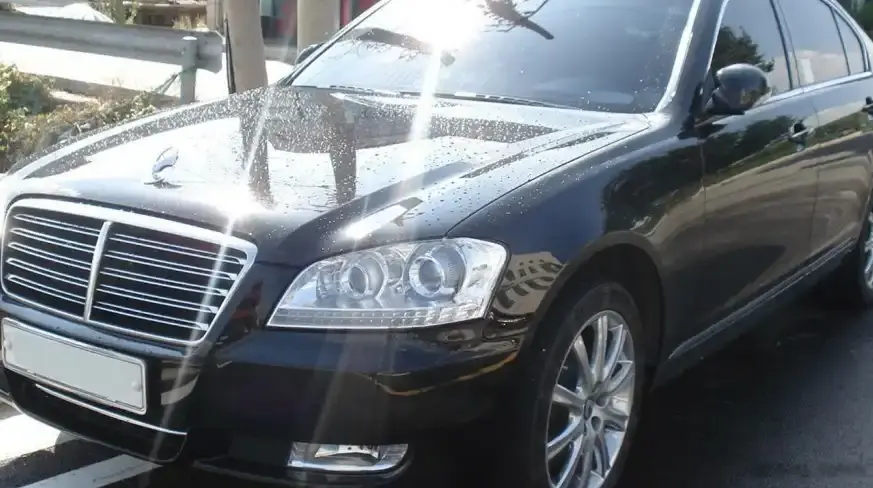
The SsangYong Chairman W (facelift 2011) 5.0 V8 4WD T-tronic L represents the pinnacle of SsangYong’s luxury sedan offerings during its production run from 2011 to 2017. Positioned as the flagship model within the Chairman W range, this variant combined a substantial 5.0-liter V8 engine with a sophisticated all-wheel-drive system and a 7-speed automatic transmission. The Chairman W, itself a successor to the original Chairman (initially based on the Mercedes-Benz W124), aimed to provide a domestically-produced alternative to imported luxury vehicles, primarily targeting the South Korean market. The 2011 facelift brought updated styling and refinements to the already well-appointed Chairman W, solidifying its position as SsangYong’s most luxurious offering.
Technical Specifications
| Brand | SsangYong |
| Model | Chairman |
| Generation | Chairman W (facelift 2011) |
| Type | 5.0 V8 (306 Hp) 4WD T-tronic L |
| Start of production | 2011 |
| End of production | 2017 |
| Powertrain Architecture | Internal Combustion engine |
| Body type | Sedan |
| Seats | 5 |
| Doors | 4 |
| Fuel consumption (urban) | 15.7 l/100 km (15 US mpg, 18 UK mpg, 6.4 km/l) |
| Fuel consumption (extra urban) | 10.4 l/100 km (22.6 US mpg, 27.2 UK mpg, 9.6 km/l) |
| Fuel consumption (combined) | 13.3 l/100 km (17.7 US mpg, 21.2 UK mpg, 7.5 km/l) |
| Fuel Type | Petrol (Gasoline) |
| Maximum speed | 245 km/h (152.24 mph) |
| Weight-to-power ratio | 6.6 kg/Hp, 151.3 Hp/tonne |
| Weight-to-torque ratio | 4.6 kg/Nm, 218.1 Nm/tonne |
| Power | 306 Hp @ 5600 rpm |
| Power per litre | 61.6 Hp/l |
| Torque | 441 Nm @ 4000 rpm (325.26 lb.-ft. @ 4000 rpm) |
| Engine layout | Front, Longitudinal |
| Engine Model/Code | G50D |
| Engine displacement | 4966 cm3 (303.04 cu. in.) |
| Number of cylinders | 8 |
| Engine configuration | V-engine |
| Cylinder Bore | 97 mm (3.82 in.) |
| Piston Stroke | 84 mm (3.31 in.) |
| Compression ratio | 10:1 |
| Number of valves per cylinder | 4 |
| Fuel injection system | Multi-port manifold injection |
| Engine aspiration | Naturally aspirated engine |
| Engine oil capacity | 7.5 l (7.93 US qt, 6.6 UK qt) |
| Kerb Weight | 2022 kg (4457.75 lbs.) |
| Max. weight | 2580 kg (5687.93 lbs.) |
| Max load | 558 kg (1230.18 lbs.) |
| Fuel tank capacity | 83 l (21.93 US gal, 18.26 UK gal) |
| Length | 5435 mm (213.98 in.) |
| Width | 1895 mm (74.61 in.) |
| Height | 1495 mm (58.86 in.) |
| Wheelbase | 3270 mm (128.74 in.) |
| Front track | 1600 mm (62.99 in.) |
| Rear track | 1590 mm (62.6 in.) |
| Front overhang | 945 mm (37.2 in.) |
| Rear overhang | 1220 mm (48.03 in.) |
| Ride height (ground clearance) | 175 mm (6.89 in.) |
| Minimum turning circle | 12.2 m (40.03 ft.) |
| Drive wheel | All wheel drive (4×4) |
| Number of gears | 7 |
| Gearbox type | Automatic transmission T-tronic |
| Front suspension | Independent multi-link suspension |
| Rear suspension | Independent multi-link suspension |
| Front brakes | Ventilated discs |
| Rear brakes | Ventilated discs |
| Assisting systems | ABS (Anti-lock braking system) |
| Steering type | Steering rack and pinion |
| Power steering | Electric Steering |
| Tires size | 245/45 R19 |
| Wheel rims size | 19 |
Powertrain & Engine Architecture
The heart of the Chairman W 5.0 V8 is the G50D engine, a naturally aspirated 4.966-liter V8. This engine utilizes a cast iron block and aluminum cylinder heads, a common configuration for durability and weight reduction. The engine employs multi-port fuel injection, delivering fuel directly into the intake ports rather than directly into the combustion chamber. This system, while not as advanced as direct injection, was reliable and provided smooth power delivery. The valvetrain features four valves per cylinder (DOHC), contributing to improved breathing and higher engine speeds. The 7-speed T-tronic automatic transmission, sourced from a supplier (likely a collaboration with a European manufacturer), was designed to handle the substantial torque output of the V8 engine. It offered smooth shifts and a relatively wide gear ratio spread, optimizing both acceleration and fuel efficiency. The all-wheel-drive system was primarily rear-biased, providing a more engaging driving experience while still offering enhanced traction in adverse conditions.
Driving Characteristics
The 306 horsepower and 325 lb-ft of torque delivered by the 5.0 V8, combined with the all-wheel-drive system, resulted in brisk acceleration. While not a sports sedan, the Chairman W 5.0 V8 offered confident passing power and a relaxed highway cruising experience. The T-tronic transmission, while smooth, wasn’t particularly quick to downshift, meaning the engine sometimes felt slightly strained when demanding immediate acceleration. Compared to the lower-powered 2.8-liter inline-six or the diesel variants, the V8 offered a significantly more refined and powerful driving experience. The all-wheel-drive system provided superior grip compared to rear-wheel-drive models, particularly in wet or snowy conditions. However, the added weight of the V8 and AWD system did impact handling agility compared to lighter, rear-wheel-drive Chairman W models.
Equipment & Trim Levels
The “L” designation in the 5.0 V8 T-tronic L trim indicated the highest level of equipment available for the Chairman W. Standard features included leather upholstery, wood trim, power-adjustable front seats with heating and ventilation, a premium audio system, automatic climate control, and a sunroof. Optional extras often included a rear entertainment system, upgraded leather options, and advanced driver-assistance systems (for the time), such as parking sensors and a navigation system. The interior design emphasized luxury and spaciousness, with ample legroom for both front and rear passengers. The overall aesthetic aimed to emulate the interiors of established European luxury brands.
Chassis & Braking
The Chairman W utilized an independent multi-link suspension system at both the front and rear, providing a comfortable and controlled ride. The suspension was tuned for comfort rather than outright sportiness, prioritizing a smooth and isolated driving experience. Braking duties were handled by ventilated disc brakes on all four wheels, providing adequate stopping power for the vehicle’s weight and performance. An Anti-lock Braking System (ABS) was standard, enhancing safety during emergency braking maneuvers. The steering system employed a rack-and-pinion setup with electric power assistance, offering a reasonably precise and responsive feel.
Market Reception & Comparison
The SsangYong Chairman W 5.0 V8 was generally well-received in the South Korean market, praised for its spacious interior, luxurious features, and powerful engine. However, it faced stiff competition from established European luxury brands like Mercedes-Benz, BMW, and Audi. Critics noted that while the Chairman W offered a compelling value proposition, it lacked the brand prestige and refinement of its European rivals. Fuel economy was also a concern, with the 5.0 V8 engine consuming a significant amount of fuel, especially in urban driving conditions. Compared to the 2.8-liter and diesel variants, the V8 offered superior performance but at the cost of increased fuel consumption and a higher purchase price.
Legacy
The SsangYong Chairman W 5.0 V8, while not a commercial success on a global scale, remains a significant vehicle in SsangYong’s history. It represented the company’s ambition to compete in the luxury sedan segment and showcased its engineering capabilities. The G50D V8 engine proved to be a relatively reliable powerplant, and well-maintained examples continue to be sought after by enthusiasts. In the used car market, the Chairman W 5.0 V8 offers a unique and affordable alternative to more established luxury brands, appealing to buyers who appreciate its spaciousness, comfort, and distinctive styling. However, potential buyers should be aware of the higher maintenance costs associated with a large-displacement V8 engine and the potential for age-related issues in a vehicle of this era.