
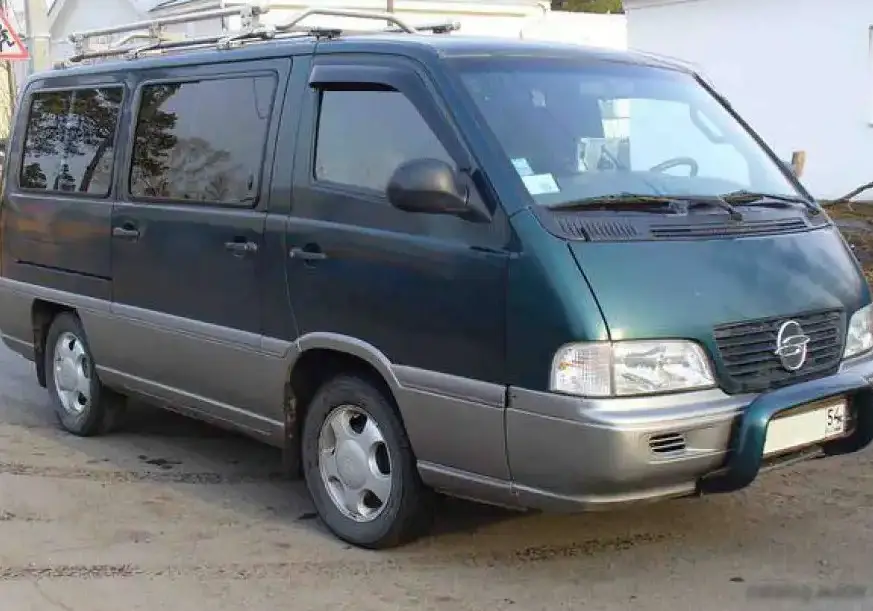
The SsangYong Istana 2.9 D, produced from 1995 to 2003, represents a significant, though often overlooked, entry in the mid-size minivan segment. Derived from the Mercedes-Benz MB100 platform – a result of SsangYong’s long-standing technical partnership with Daimler-Benz – the Istana was primarily aimed at the Korean domestic market and select export regions. It offered a practical, body-on-frame construction, a characteristic more common in trucks and SUVs than minivans, providing a robust and durable vehicle suited for varied road conditions. The 2.9 D variant, equipped with a 95 horsepower diesel engine, served as a workhorse trim, prioritizing utility and affordability over outright performance. It occupied the lower to mid-range of the Istana lineup, offering a more economical alternative to the gasoline-powered versions and later, more powerful diesel options.
Technical Specifications
| Brand | SsangYong |
| Model | Istana |
| Generation | Istana |
| Type (Engine) | 2.9 D (95 Hp) |
| Start of production | 1995 |
| End of production | 2003 |
| Powertrain Architecture | Internal Combustion engine |
| Body type | Minivan |
| Fuel Type | Diesel |
| Power | 95 Hp |
| Engine Model/Code | OM 662 |
| Fuel injection system | Diesel Commonrail |
| Engine aspiration | Naturally aspirated engine |
| Engine oil capacity | 8 l (8.45 US qt | 7.04 UK qt) |
| Coolant capacity | 10.5 l (11.1 US qt | 9.24 UK qt) |
Powertrain & Engine Architecture
The heart of the Istana 2.9 D is the OM662 diesel engine, a 2.9-liter inline-five cylinder unit originally developed by Mercedes-Benz. This engine, known for its durability and relatively simple mechanical design, was licensed to SsangYong as part of their collaboration. The 95 horsepower output was achieved through a naturally aspirated configuration and a Bosch diesel injection system. While later iterations of the Istana received common rail direct injection, the 2.9 D utilized a more traditional pre-chamber injection system. This system, while less efficient than common rail, contributed to the engine’s robustness and tolerance for lower-quality fuel – a significant advantage in many of its target markets. The engine features a single overhead camshaft (SOHC) valvetrain operating two valves per cylinder. The transmission paired with the 2.9 D was typically a four-speed automatic, though a five-speed manual was also available. The automatic transmission, while providing ease of use, was not known for its responsiveness or fuel efficiency, prioritizing durability over performance.
Driving Characteristics
The Istana 2.9 D Automatic offered a utilitarian driving experience. With 95 horsepower and a relatively heavy body-on-frame construction, acceleration was modest. The four-speed automatic transmission further limited performance, with noticeable delays in downshifting and a tendency to hunt for gears on inclines. The gear ratios were geared towards fuel economy and towing capacity rather than spirited driving. In real-world conditions, the Istana 2.9 D was best suited for relaxed cruising and hauling loads. Compared to the gasoline-powered Istana variants, the diesel offered significantly more torque, making it better equipped for carrying passengers and cargo. However, the diesel’s lower horsepower meant it was noticeably slower to accelerate and maintain speed on highways. Compared to later Istana models with more powerful diesel engines, the 2.9 D felt underpowered, particularly when fully loaded.
Equipment & Trim Levels
The Istana 2.9 D typically represented the entry-level trim within the diesel range. Standard equipment generally included basic cloth upholstery, a simple dashboard layout with analog gauges, and manual windows and door locks. Air conditioning was often an optional extra, as were power windows and central locking. The interior was functional and durable, prioritizing practicality over luxury. Higher trim levels of the Istana offered features such as upgraded upholstery, woodgrain interior trim, and more advanced audio systems. The 2.9 D trim often served as a base for fleet sales and commercial applications, where basic functionality and low operating costs were paramount. Safety features were relatively basic for the era, typically including seatbelts and a collapsible steering column, but lacking airbags or advanced driver-assistance systems.
Chassis & Braking
The Istana’s chassis was a traditional body-on-frame design, providing a robust and durable platform. The suspension consisted of independent front suspension with coil springs and a rigid rear axle with leaf springs. This setup prioritized load-carrying capacity and durability over ride comfort. The rear leaf springs contributed to a somewhat bumpy ride, particularly when the vehicle was unladen. Braking was typically accomplished with disc brakes on the front wheels and drum brakes on the rear. The braking system was adequate for normal driving conditions, but lacked the stopping power of more modern vehicles. Stabilizer bars were often omitted on the base 2.9 D trim, further contributing to the vehicle’s body roll in corners.
Market Reception & Comparison
The SsangYong Istana 2.9 D received mixed reviews. Critics generally praised its durability, spacious interior, and affordable price point. However, the engine’s modest power output, the transmission’s lack of refinement, and the vehicle’s somewhat crude ride quality were frequently cited as drawbacks. Compared to other minivans on the market, such as the Toyota Previa or Honda Odyssey, the Istana offered a more utilitarian and less refined experience. However, it often undercut those competitors in price. Within the Istana lineup, the 2.9 D offered the best fuel economy of the diesel variants, but at the expense of performance. The gasoline-powered Istana models provided more responsive acceleration, but were less fuel-efficient and lacked the diesel’s torque. Reliability was generally good, owing to the robust design of the OM662 engine and the Istana’s simple mechanicals.
Legacy
The SsangYong Istana 2.9 D, while not a mainstream success in many markets, established SsangYong as a viable minivan manufacturer. The OM662 engine proved to be exceptionally durable, and many examples remain on the road today, often with high mileage. In the used car market, the Istana 2.9 D is valued for its affordability, practicality, and ruggedness. Maintenance costs are relatively low, thanks to the engine’s simple design and the availability of spare parts. However, potential buyers should be aware of the vehicle’s age and the potential for rust, particularly in regions with harsh winters. The Istana’s body-on-frame construction, while providing durability, also contributes to a less refined driving experience compared to more modern unibody minivans. Despite its limitations, the Istana 2.9 D remains a testament to SsangYong’s engineering capabilities and its commitment to building durable, practical vehicles.
