
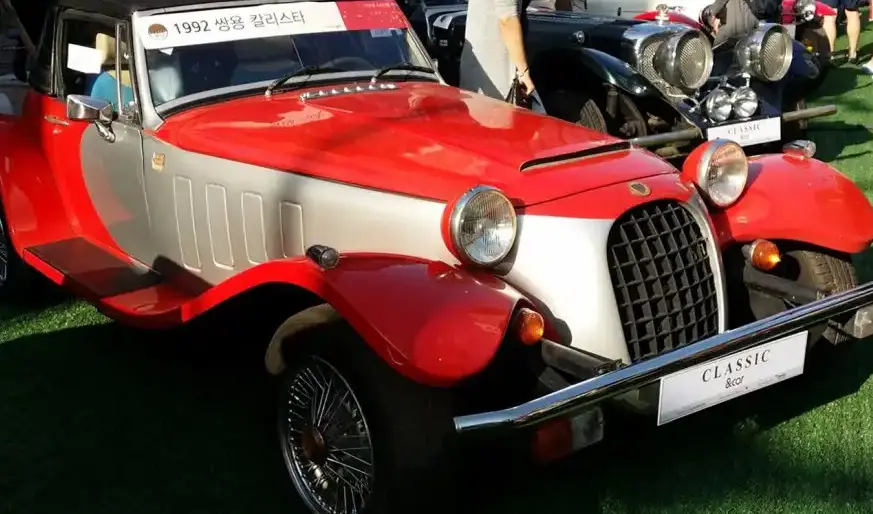
The SsangYong Kallista 1.6, produced between 1992 and 1994, represents a relatively obscure but interesting chapter in the South Korean automaker’s history. This rear-wheel-drive, two-seat convertible was SsangYong’s attempt to enter the leisure car market, primarily aimed at European tastes. The Kallista was based on the Mercedes-Benz W201 platform, a result of SsangYong’s licensing agreement with Daimler-Benz, and featured styling heavily influenced by the classic British roadsters of the era. The 1.6-liter variant, producing 82 horsepower, served as the entry point to the Kallista range, offering a more affordable option compared to the later, more powerful engines.
Technical Specifications
| Brand | SsangYong |
| Model | Kallista |
| Generation | Kallista |
| Type (Engine) | 1.6 (82 Hp) |
| Start of production | 1992 |
| End of production | 1994 |
| Powertrain Architecture | Internal Combustion engine |
| Body type | Cabriolet |
| Seats | 2 |
| Doors | 2 |
| Fuel consumption (combined) | 11.3 l/100 km (20.8 US mpg, 25 UK mpg, 8.8 km/l) |
| Fuel Type | Petrol (Gasoline) |
| Maximum speed | 152 km/h (94.45 mph) |
| Weight-to-power ratio | 11.4 kg/Hp, 87.7 Hp/tonne |
| Weight-to-torque ratio | 7.5 kg/Nm, 133.7 Nm/tonne |
| Power | 82 Hp @ 6000 rpm |
| Power per litre | 51.3 Hp/l |
| Torque | 125 Nm @ 4000 rpm (92.2 lb.-ft. @ 4000 rpm) |
| Engine layout | Front, Longitudinal |
| Engine displacement | 1597 cm3 (97.45 cu. in.) |
| Number of cylinders | 4 |
| Engine configuration | Inline |
| Cylinder Bore | 80 mm (3.15 in.) |
| Piston Stroke | 79.5 mm (3.13 in.) |
| Compression ratio | 9.5:1 |
| Number of valves per cylinder | 2 |
| Fuel injection system | Carburettor |
| Engine aspiration | Naturally aspirated engine |
| Valvetrain | OHC |
| Kerb Weight | 935 kg (2061.32 lbs.) |
| Max. weight | 1100 kg (2425.08 lbs.) |
| Max load | 165 kg (363.76 lbs.) |
| Fuel tank capacity | 50 l (13.21 US gal | 11 UK gal) |
| Length | 3854 mm (151.73 in.) |
| Width | 1720 mm (67.72 in.) |
| Height | 1300 mm (51.18 in.) |
| Wheelbase | 2552 mm (100.47 in.) |
| Front track | 1486 mm (58.5 in.) |
| Rear track | 1384 mm (54.49 in.) |
| Drivetrain Architecture | Rear wheel drive |
| Drive wheel | Rear wheel drive |
| Number of gears and type of gearbox | 5 gears, manual transmission |
| Front suspension | Double wishbone |
| Rear suspension | Coil spring |
| Front brakes | Ventilated discs |
| Rear brakes | Drum |
| Assisting systems | ABS (Anti-lock braking system) |
| Tires size | 185/70 R13 H |
Powertrain & Engine Architecture
The Kallista 1.6 was powered by a 1.6-liter inline-four cylinder engine. This engine, internally designated with various codes depending on the specific year and market, was a relatively simple design utilizing a single overhead camshaft (OHC) and a carburetor fuel delivery system. While not particularly advanced, this configuration was chosen for its reliability and affordability. The engine produced 82 horsepower at 6000 rpm and 125 Nm (92.2 lb-ft) of torque at 4000 rpm. The engine was mounted longitudinally in the front of the vehicle, driving the rear wheels. The transmission was a five-speed manual, the only option available for this variant. The carburetor setup, while common for the time, contributed to less precise fuel metering and lower overall efficiency compared to fuel injection systems.
Driving Characteristics
The Kallista 1.6 offered a driving experience best described as leisurely. With only 82 horsepower propelling a car weighing around 935 kg (2061 lbs), acceleration was modest. The five-speed manual transmission helped to keep the engine in its optimal power band, but overtaking required careful planning. Compared to later Kallista models equipped with larger engines (such as the 2.0-liter), the 1.6 felt noticeably underpowered. However, the rear-wheel-drive layout provided a balanced feel, and the relatively light weight contributed to nimble handling. The gear ratios were tuned for economy rather than outright performance, making it a comfortable cruiser but not a particularly sporty vehicle.
Equipment & Trim Levels
The Kallista 1.6 was generally considered the base model, and as such, came with a fairly basic level of equipment. Standard features included cloth upholstery, a simple dashboard layout, and manual windows and door locks. Power steering was not standard, adding to the classic, raw driving feel. Optional extras included a more premium interior trim, upgraded audio systems, and alloy wheels. The interior was relatively spartan, reflecting the car’s positioning as an affordable convertible. The focus was on providing a simple, open-air driving experience rather than luxury.
Chassis & Braking
The Kallista’s chassis was based on the Mercedes-Benz W201 platform, providing a solid foundation for the convertible body. The front suspension utilized a double wishbone setup, while the rear employed a coil spring arrangement. This configuration offered a reasonable compromise between ride comfort and handling. Braking was accomplished via ventilated discs at the front and drum brakes at the rear. Anti-lock braking system (ABS) was included as a standard safety feature. The relatively narrow tires (185/70 R13) provided adequate grip for the car’s power output, but were not designed for aggressive driving.
Market Reception & Comparison
The SsangYong Kallista, in general, didn’t achieve significant sales success, particularly outside of South Korea. The 1.6-liter variant was often criticized for its lack of power, especially when compared to other convertibles available in the European market. Critics noted that the engine felt strained at higher speeds and struggled to provide a truly engaging driving experience. However, the Kallista’s affordability and unique styling appealed to some buyers. Fuel economy was reasonable for the time, averaging around 20.8 US mpg. Compared to the later 2.0-liter Kallista, the 1.6 offered a lower purchase price but sacrificed performance. The 1.6 was aimed at buyers who prioritized affordability and a classic roadster experience over outright speed.
Legacy
The SsangYong Kallista 1.6 remains a relatively rare and unusual vehicle today. While not known for exceptional reliability, the engine is generally considered durable if properly maintained. Parts availability can be a challenge, given the car’s limited production run and the age of the components. In the used car market, the Kallista 1.6 is often sought after by enthusiasts looking for a unique and affordable classic convertible. Its rear-wheel-drive layout and simple mechanicals make it an appealing project car for those willing to invest the time and effort required to keep it running. The Kallista, despite its modest sales figures, represents a fascinating attempt by SsangYong to establish itself in the competitive European automotive market.
