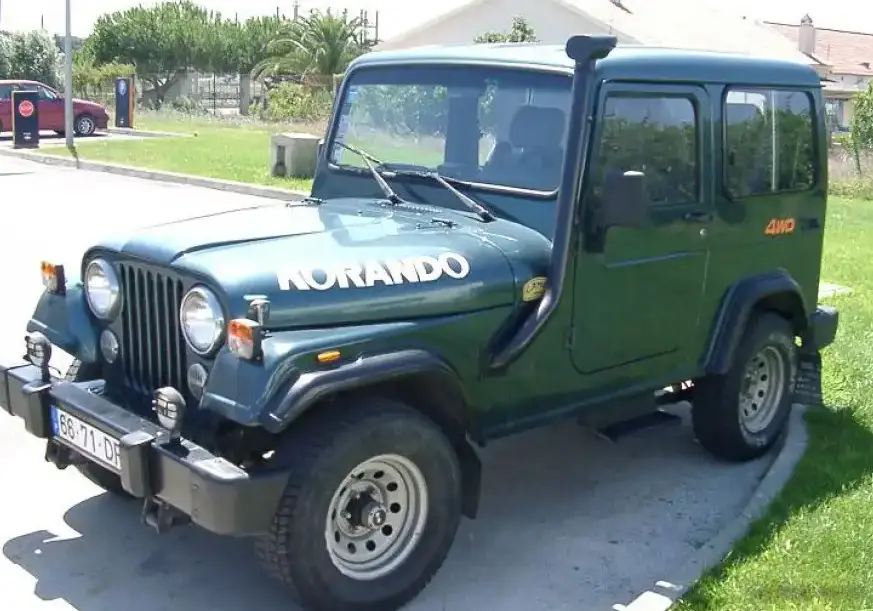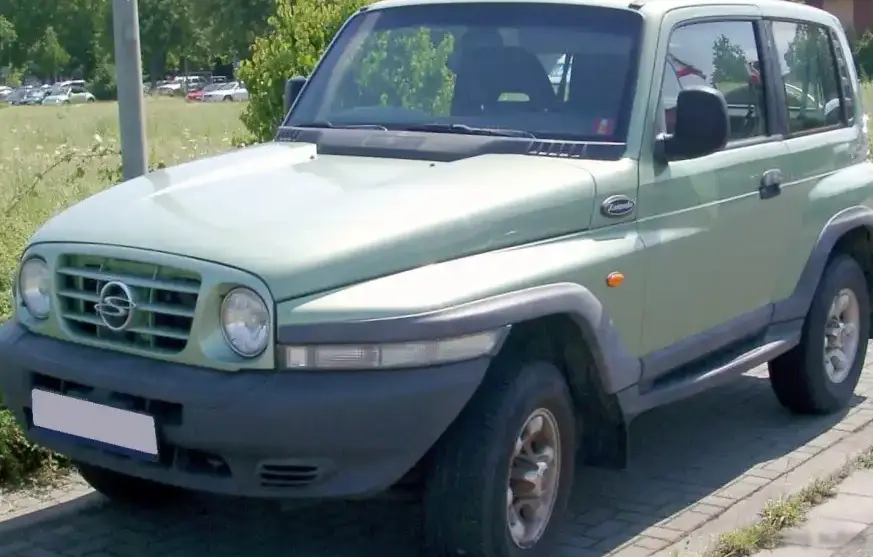
The SsangYong Korando II (KJ) 2.3 i 16V, produced from 1997 to 2006, represented a significant step forward for the South Korean automaker in the competitive SUV market. Positioned as a mid-range offering within the Korando II lineup, this variant aimed to balance affordability with respectable performance and practicality. The Korando II, designated the KJ series, was a body-on-frame SUV designed to appeal to buyers seeking a rugged, capable vehicle for both on and off-road use. It was SsangYong’s attempt to establish a stronger foothold in the European and Asian markets, offering a more affordable alternative to established Japanese and European SUVs.
Technical Specifications
| Brand | SsangYong |
| Model | Korando |
| Generation | Korando II (KJ) |
| Type (Engine) | 2.3 i 16V (140 Hp) |
| Start of production | 1997 year |
| End of production | 2006 year |
| Powertrain Architecture | Internal Combustion engine |
| Body type | SUV |
| Seats | 5 |
| Doors | 3 |
| Fuel consumption (economy) – urban | 17.1 l/100 km (13.8 US mpg, 16.5 UK mpg, 5.8 km/l) |
| Fuel consumption (economy) – extra urban | 10 l/100 km (23.5 US mpg, 28.2 UK mpg, 10 km/l) |
| Fuel Type | Petrol (Gasoline) |
| Acceleration 0 – 100 km/h | 12.5 sec |
| Acceleration 0 – 62 mph | 12.5 sec |
| Acceleration 0 – 60 mph | 11.9 sec |
| Maximum speed | 165 km/h (102.53 mph) |
| Weight-to-power ratio | 12.8 kg/Hp, 78.4 Hp/tonne |
| Weight-to-torque ratio | 8.8 kg/Nm, 114.3 Nm/tonne |
| Power | 140 Hp @ 5300 rpm |
| Power per litre | 61 Hp/l |
| Torque | 204 Nm @ 4500 rpm (150.46 lb.-ft. @ 4500 rpm) |
| Engine layout | Front, Longitudinal |
| Engine displacement | 2295 cm3 (140.05 cu. in.) |
| Number of cylinders | 4 |
| Engine configuration | Inline |
| Cylinder Bore | 90.9 mm (3.58 in.) |
| Piston Stroke | 88.4 mm (3.48 in.) |
| Compression ratio | 10.4:1 |
| Number of valves per cylinder | 4 |
| Fuel injection system | Multi-port manifold injection |
| Engine aspiration | Naturally aspirated engine |
| Valvetrain | DOHC |
| Engine oil capacity | 6 l (6.34 US qt | 5.28 UK qt) |
| Kerb Weight | 1785 kg (3935.25 lbs.) |
| Max. weight | 2515 kg (5544.63 lbs.) |
| Max load | 730 kg (1609.37 lbs.) |
| Trunk (boot) space – minimum | 300 l (10.59 cu. ft.) |
| Trunk (boot) space – maximum | 1200 l (42.38 cu. ft.) |
| Fuel tank capacity | 70 l (18.49 US gal | 15.4 UK gal) |
| Length | 4330 mm (170.47 in.) |
| Width | 1841 mm (72.48 in.) |
| Height | 1940 mm (76.38 in.) |
| Wheelbase | 2480 mm (97.64 in.) |
| Front track | 1510 mm (59.45 in.) |
| Rear (Back) track | 1520 mm (59.84 in.) |
| Drive wheel | All wheel drive (4×4) |
| Number of gears and type of gearbox | 5 gears, manual transmission |
| Front suspension | Torsion |
| Rear suspension | Rigid axle suspension |
| Front brakes | Ventilated discs |
| Rear brakes | Disc |
| Assisting systems | ABS (Anti-lock braking system) |
| Steering type | Steering rack and pinion |
| Power steering | Hydraulic Steering |
| Tires size | 235/75 R15 |
Powertrain & Engine Architecture
The heart of the Korando II 2.3 i 16V is a 2.3-liter inline-four cylinder gasoline engine. This engine, internally designated with various codes depending on the specific year and market, is a naturally aspirated powerplant featuring a double overhead camshaft (DOHC) valvetrain and multi-point fuel injection. The 16-valve configuration (four valves per cylinder) contributes to improved breathing and overall engine efficiency. The engine produces 140 horsepower at 5,300 rpm and 204 Nm (150.46 lb-ft) of torque at 4,500 rpm. The engine is longitudinally mounted in the chassis, and power is delivered to all four wheels via a five-speed manual transmission. While an automatic transmission was offered in some markets, the 2.3L engine was more commonly paired with the manual gearbox. The engine’s design prioritized durability and low-end torque, making it suitable for both on-road driving and moderate off-road conditions.
Driving Characteristics
The 2.3-liter engine, coupled with the five-speed manual transmission, provided adequate, though not exhilarating, performance. Acceleration from 0 to 60 mph took approximately 11.9 seconds, and the vehicle had a top speed of around 102.53 mph. Compared to the more powerful engines available in the Korando II range, such as the 2.9-liter diesel, the 2.3 i 16V felt less responsive, particularly when fully loaded or tackling steep inclines. However, the manual transmission allowed drivers to maintain control and utilize the engine’s torque effectively. The gear ratios were reasonably well-spaced, providing a balance between fuel economy and usable power. The all-wheel-drive system provided enhanced traction in slippery conditions, making it a capable vehicle for inclement weather and light off-roading.
Equipment & Trim Levels
The 2.3 i 16V trim typically included features such as power steering, ABS brakes, and a basic audio system. Interior appointments were functional rather than luxurious, with cloth upholstery and a straightforward dashboard layout. Optional extras included air conditioning, power windows, and a sunroof. The trim level was generally considered a mid-range offering, providing a good balance of features and affordability. The focus was on practicality and durability, rather than high-end comfort or advanced technology.
Chassis & Braking
The Korando II utilized a traditional body-on-frame construction, providing a robust and durable chassis. The front suspension employed a torsion bar setup, while the rear suspension featured a rigid axle. This configuration prioritized off-road capability and load-carrying capacity. Braking duties were handled by ventilated discs at the front and solid discs at the rear. The ABS system helped to maintain control during hard braking. The steering system was a rack-and-pinion setup with hydraulic power assistance, providing reasonably precise steering feel.
Market Reception & Comparison
The Korando II 2.3 i 16V received mixed reviews. Critics generally praised its ruggedness, practicality, and affordability, but noted that its performance was somewhat underwhelming compared to competitors. Fuel economy was also a concern, with the 2.3-liter engine consuming a relatively high amount of fuel, especially in urban driving conditions. Compared to the diesel variants, the 2.3 i 16V offered a smoother and quieter driving experience, but at the expense of fuel efficiency and low-end torque. The manual transmission was favored by enthusiasts for its greater control, while the automatic transmission was preferred by those seeking greater convenience.
Legacy
The SsangYong Korando II 2.3 i 16V, while not a groundbreaking vehicle, played an important role in establishing SsangYong as a viable SUV manufacturer. The 2.3-liter engine proved to be relatively reliable, although regular maintenance was essential to prevent issues such as oil leaks and timing chain wear. Today, the Korando II 2.3 i 16V can be found in the used car market at affordable prices. It remains a popular choice for those seeking a rugged, capable, and affordable SUV for light off-road use or as a practical family vehicle. Its simplicity and durability continue to appeal to enthusiasts and those seeking a vehicle that is easy to maintain and repair.