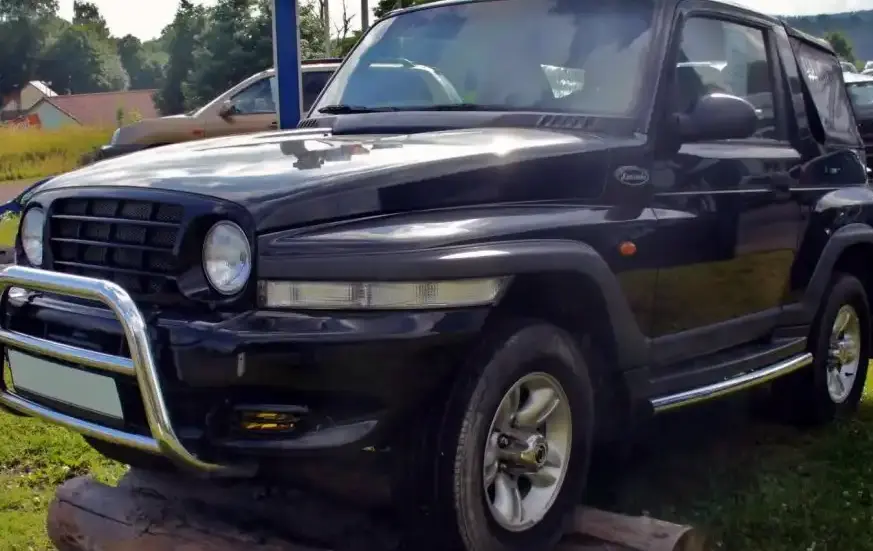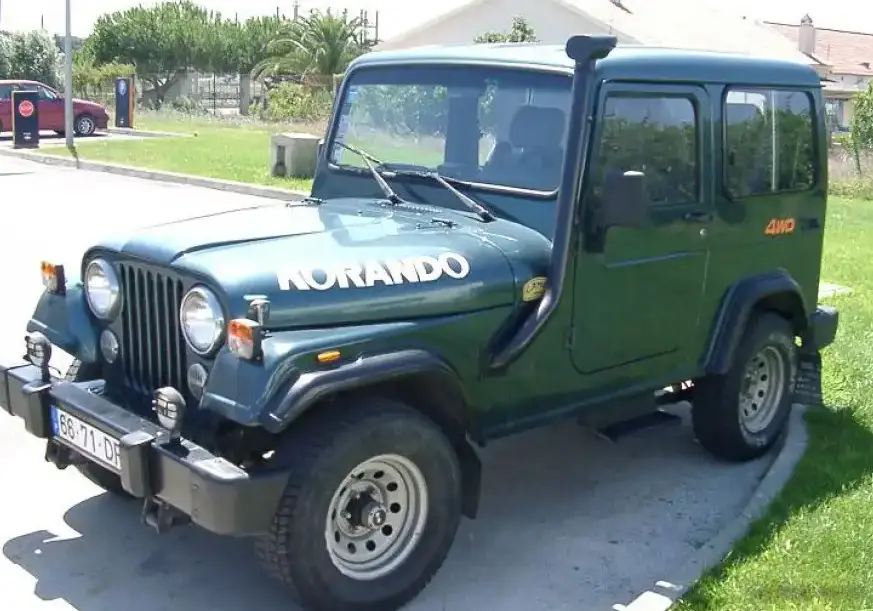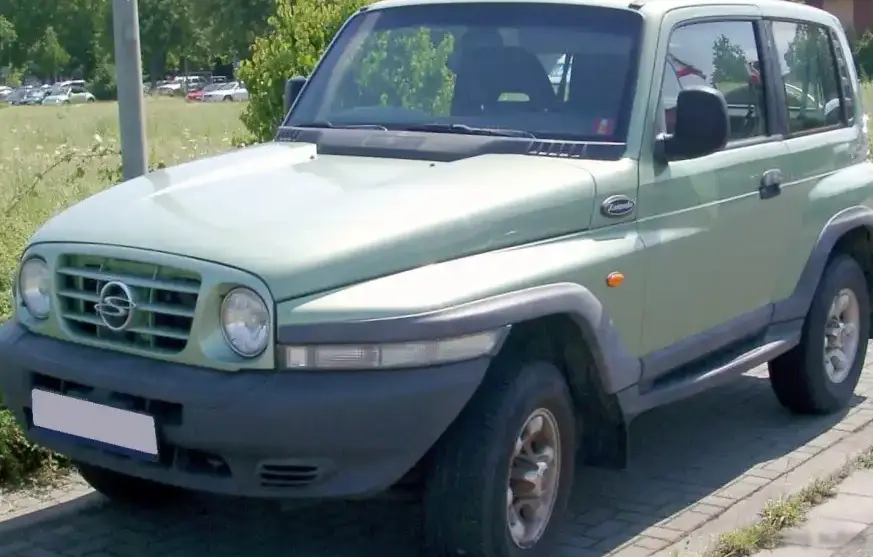
The SsangYong Korando II (KJ) 2.9 D, produced from 1996 to 2006, represents a significant step in the evolution of SsangYong’s popular Korando line. This iteration, falling within the KJ generation, was primarily aimed at the European and Asian markets, offering a rugged, body-on-frame SUV option. The 2.9 D variant, equipped with a 95 horsepower diesel engine, served as a workhorse trim, prioritizing durability and affordability over outright performance. It occupied a position as the base diesel offering, slotting below more powerful and often better-equipped versions of the Korando II. This model was designed to appeal to buyers needing a practical, all-wheel-drive vehicle for both on and off-road use.
Technical Specifications
| Brand | SsangYong |
| Model | Korando |
| Generation | Korando II (KJ) |
| Type (Engine) | 2.9 D (95 Hp) |
| Start of production | 1996 |
| End of production | 2006 |
| Powertrain Architecture | Internal Combustion engine |
| Body type | SUV |
| Seats | 5 |
| Doors | 3 |
| Fuel consumption (urban) | 12.9 l/100 km (18.2 US mpg, 21.9 UK mpg, 7.8 km/l) |
| Fuel consumption (extra urban) | 8.1 l/100 km (29 US mpg, 34.9 UK mpg, 12.3 km/l) |
| Fuel Type | Diesel |
| Acceleration 0 – 100 km/h | 23.4 sec |
| Acceleration 0 – 62 mph | 23.4 sec |
| Acceleration 0 – 60 mph | 22.2 sec |
| Maximum speed | 137 km/h (85.13 mph) |
| Weight-to-power ratio | 18.8 kg/Hp, 53.2 Hp/tonne |
| Weight-to-torque ratio | 9.4 kg/Nm, 106.4 Nm/tonne |
| Power | 95 Hp @ 4100 rpm |
| Power per litre | 33.1 Hp/l |
| Torque | 190 Nm @ 2500 rpm (140.14 lb.-ft. @ 2500 rpm) |
| Engine layout | Front, Longitudinal |
| Engine Model/Code | OM 662 |
| Engine displacement | 2874 cm3 (175.38 cu. in.) |
| Number of cylinders | 5 |
| Engine configuration | Inline |
| Cylinder Bore | 89 mm (3.5 in.) |
| Piston Stroke | 92.4 mm (3.64 in.) |
| Compression ratio | 22:1 |
| Number of valves per cylinder | 2 |
| Fuel injection system | Precombustion chamber injection |
| Engine aspiration | Naturally aspirated engine |
| Valvetrain | OHC |
| Engine oil capacity | 8 l (8.45 US qt | 7.04 UK qt) |
| Coolant capacity | 10.5 l (11.1 US qt | 9.24 UK qt) |
| Kerb Weight | 1785 kg (3935.25 lbs.) |
| Max. weight | 2515 kg (5544.63 lbs.) |
| Max load | 730 kg (1609.37 lbs.) |
| Trunk (boot) space – minimum | 300 l (10.59 cu. ft.) |
| Trunk (boot) space – maximum | 1200 l (42.38 cu. ft.) |
| Fuel tank capacity | 70 l (18.49 US gal | 15.4 UK gal) |
| Length | 4330 mm (170.47 in.) |
| Width | 1841 mm (72.48 in.) |
| Height | 1940 mm (76.38 in.) |
| Wheelbase | 2480 mm (97.64 in.) |
| Front track | 1510 mm (59.45 in.) |
| Rear (Back) track | 1520 mm (59.84 in.) |
| Drive wheel | All wheel drive (4×4) |
| Number of gears and type of gearbox | 5 gears, manual transmission |
| Front suspension | Torsion |
| Rear suspension | Rigid axle suspension |
| Front brakes | Ventilated discs |
| Rear brakes | Disc |
| Assisting systems | ABS (Anti-lock braking system) |
| Steering type | Steering rack and pinion |
| Power steering | Hydraulic Steering |
| Tires size | 235/75 R15 |
Powertrain & Engine Architecture
The heart of the Korando II 2.9 D is the Mercedes-Benz OM662 diesel engine. This 2.9-liter inline-five cylinder engine, a common sight in various SsangYong and Mercedes-Benz vehicles of the era, is known for its robustness and relatively simple design. It utilizes a precombustion chamber injection system, a technology prevalent in diesel engines of the 1990s and early 2000s. This system involves injecting fuel into a precombustion chamber, where it partially ignites, then flows into the main combustion chamber for complete combustion. The engine features an overhead camshaft (OHC) valvetrain with two valves per cylinder. The 95 horsepower output, while modest by modern standards, was considered adequate for the vehicle’s intended purpose. The engine’s longitudinal mounting and the availability of a five-speed manual transmission (as specified in this variant) contributed to its all-wheel-drive capability and suitability for challenging terrains.
Driving Characteristics
The 2.9 D with the manual transmission offers a utilitarian driving experience. Acceleration is slow, with a 0-60 mph time of around 22.2 seconds. The engine’s torque peak of 190 Nm (140 lb-ft) at 2500 rpm provides reasonable pulling power, making it suitable for towing and navigating steep inclines. However, the engine feels strained at higher speeds, and the overall driving experience is geared towards practicality rather than performance. Compared to the more powerful gasoline engines available in the Korando II, the 2.9 D prioritizes fuel efficiency and durability. The manual gearbox, while not particularly refined, offers precise control and allows the driver to make the most of the engine’s limited power band. The all-wheel-drive system provides enhanced traction on slippery surfaces, making it a capable off-road vehicle.
Equipment & Trim Levels
The 2.9 D trim level typically featured basic but functional equipment. Standard features generally included power steering, ABS brakes, and a relatively simple interior with cloth upholstery. Air conditioning and power windows were often optional extras. The dashboard layout is straightforward and utilitarian, prioritizing functionality over aesthetics. Higher trim levels of the Korando II offered features such as leather upholstery, upgraded audio systems, and additional comfort features, but the 2.9 D was positioned as the entry-level diesel option, focusing on providing essential features at an affordable price point.
Chassis & Braking
The Korando II utilizes a traditional body-on-frame construction, providing a robust and durable chassis. The front suspension consists of torsion bars, while the rear suspension employs a rigid axle setup. This configuration is well-suited for off-road driving and carrying heavy loads. The braking system features ventilated discs on the front wheels and discs on the rear, providing adequate stopping power for the vehicle’s weight and performance. The all-wheel-drive system, typically part-time selectable, allows the driver to engage four-wheel drive when needed for improved traction.
Market Reception & Comparison
The Korando II 2.9 D was generally well-received as a practical and affordable SUV, particularly in markets where diesel engines were popular. Critics praised its durability and off-road capability, but noted its slow acceleration and relatively basic interior. Compared to other trims in the Korando II lineup, such as the gasoline-powered versions, the 2.9 D offered better fuel economy and lower running costs, but at the expense of performance. It competed with other compact SUVs of the era, such as the Suzuki Vitara and the Hyundai Galloper, offering a similar blend of practicality and affordability.
Legacy
The SsangYong Korando II 2.9 D has proven to be a relatively reliable vehicle, with the OM662 engine being known for its longevity. However, like any older vehicle, it requires regular maintenance to prevent issues. Today, the Korando II 2.9 D is a popular choice among enthusiasts looking for a rugged and affordable off-road vehicle. Parts availability can be a challenge in some regions, but the engine’s simplicity and durability make it relatively easy to maintain. The vehicle’s enduring appeal lies in its robust construction, all-wheel-drive capability, and affordable price point, making it a viable option for those seeking a classic SUV experience.