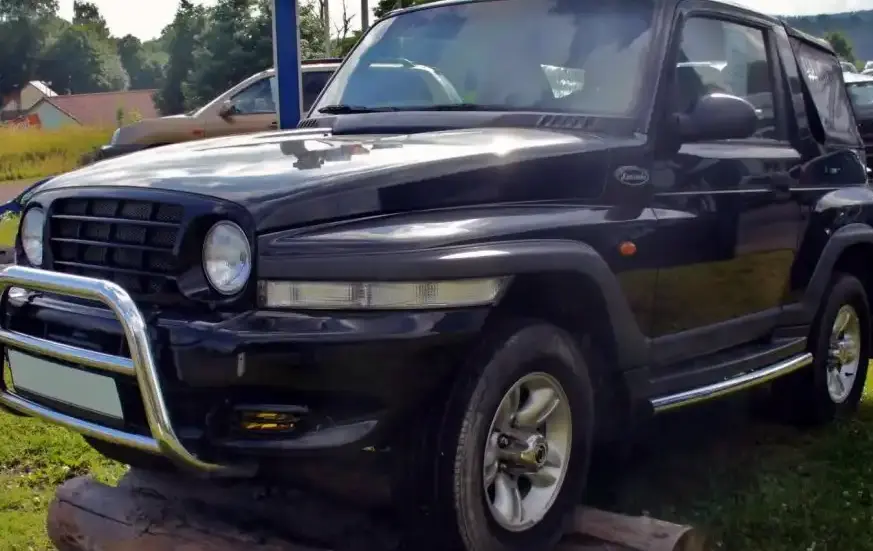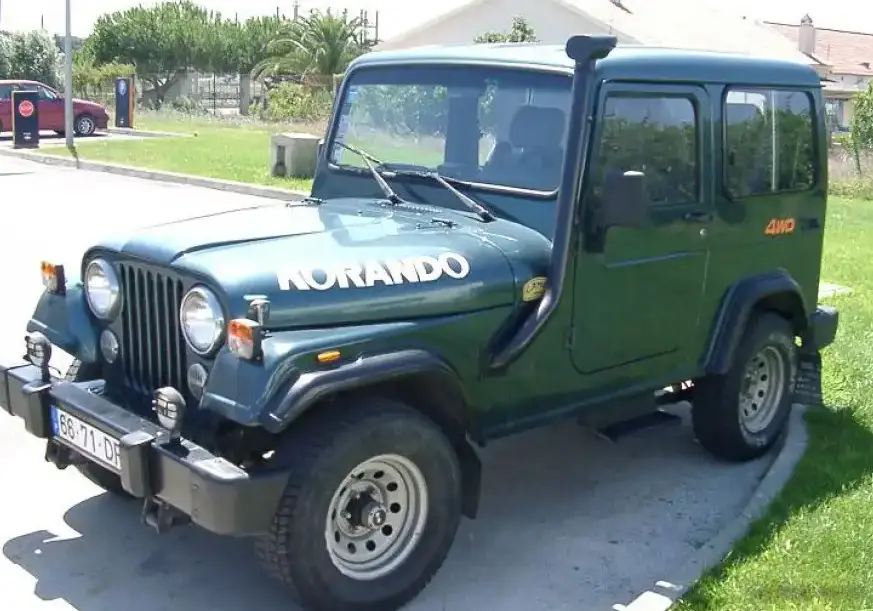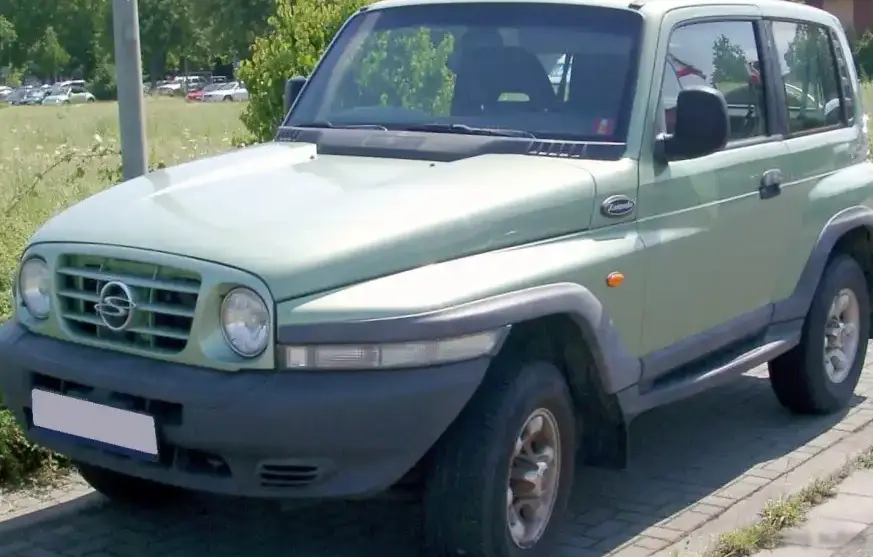
The SsangYong Korando II (KJ) 2.9 TD, produced from 1996 to 2006, represents a significant step in the South Korean automaker’s ambition to establish itself in the global SUV market. Positioned as a rugged, body-on-frame vehicle, the Korando II aimed to offer a blend of off-road capability and practicality. This particular 2.9-liter turbocharged diesel variant, producing 120 horsepower, served as a mid-range offering within the Korando II lineup, slotting below more powerful gasoline engines and above base-level diesel options. The KJ generation Korando was a key model for SsangYong, building upon the success of the original Korando and laying the groundwork for future SUV development. It was primarily marketed in Europe, Asia, and select emerging markets, offering a more affordable alternative to established Japanese and European competitors.
Technical Specifications
| Brand | SsangYong |
| Model | Korando |
| Generation | Korando II (KJ) |
| Type (Engine) | 2.9 TD (120 Hp) |
| Start of production | 1996 |
| End of production | 2006 |
| Powertrain Architecture | Internal Combustion engine |
| Body type | SUV |
| Seats | 5 |
| Doors | 3 |
| Fuel consumption (urban) | 12.9 l/100 km (18.2 US mpg, 21.9 UK mpg, 7.8 km/l) |
| Fuel consumption (extra urban) | 8 l/100 km (29.4 US mpg, 35.3 UK mpg, 12.5 km/l) |
| Fuel Type | Diesel |
| Acceleration 0 – 100 km/h | 19.8 sec |
| Acceleration 0 – 62 mph | 19.8 sec |
| Acceleration 0 – 60 mph | 18.8 sec |
| Maximum speed | 140 km/h (86.99 mph) |
| Weight-to-power ratio | 14.9 kg/Hp, 67.2 Hp/tonne |
| Weight-to-torque ratio | 7.1 kg/Nm, 140.1 Nm/tonne |
| Power | 120 Hp @ 4500 rpm |
| Power per litre | 41.8 Hp/l |
| Torque | 250 Nm @ 2400 rpm (184.39 lb.-ft. @ 2400 rpm) |
| Engine layout | Front, Longitudinal |
| Engine Model/Code | OM 662 |
| Engine displacement | 2874 cm3 (175.38 cu. in.) |
| Number of cylinders | 5 |
| Engine configuration | Inline |
| Cylinder Bore | 89 mm (3.5 in.) |
| Piston Stroke | 92.4 mm (3.64 in.) |
| Compression ratio | 22:1 |
| Number of valves per cylinder | 2 |
| Fuel injection system | Precombustion chamber injection |
| Engine aspiration | Turbocharger |
| Valvetrain | OHC |
| Engine oil capacity | 8 l (8.45 US qt | 7.04 UK qt) |
| Coolant capacity | 10.5 l (11.1 US qt | 9.24 UK qt) |
| Kerb Weight | 1785 kg (3935.25 lbs.) |
| Max. weight | 2515 kg (5544.63 lbs.) |
| Max load | 730 kg (1609.37 lbs.) |
| Trunk (boot) space – minimum | 300 l (10.59 cu. ft.) |
| Trunk (boot) space – maximum | 1200 l (42.38 cu. ft.) |
| Fuel tank capacity | 70 l (18.49 US gal | 15.4 UK gal) |
| Length | 4330 mm (170.47 in.) |
| Width | 1841 mm (72.48 in.) |
| Height | 1940 mm (76.38 in.) |
| Wheelbase | 2480 mm (97.64 in.) |
| Front track | 1510 mm (59.45 in.) |
| Rear (Back) track | 1520 mm (59.84 in.) |
| Drive wheel | All wheel drive (4×4) |
| Number of gears | 5 |
| Gearbox type | Manual transmission |
| Front suspension | Torsion |
| Rear suspension | Rigid axle suspension |
| Front brakes | Ventilated discs |
| Rear brakes | Disc |
| Assisting systems | ABS (Anti-lock braking system) |
| Steering type | Steering rack and pinion |
| Power steering | Hydraulic Steering |
| Tires size | 235/75 R15 |
Powertrain & Engine Architecture
The heart of the Korando II 2.9 TD is the Mercedes-Benz OM662 engine, a 2.9-liter inline five-cylinder diesel. SsangYong had a long-standing technical partnership with Mercedes-Benz, and this engine was licensed from the German manufacturer. The OM662 utilizes precombustion chamber injection, a system common in diesel engines of the era, offering a balance between efficiency and reduced emissions. A turbocharger is employed to boost power output to 120 horsepower and 250 Nm (184 lb-ft) of torque. The engine features an overhead camshaft (OHC) valvetrain with two valves per cylinder. The five-speed manual transmission was the standard offering for this variant, providing a relatively direct connection to the engine. The longitudinal engine layout, coupled with a robust four-wheel-drive system, contributed to the Korando II’s off-road prowess.
Driving Characteristics
The 2.9 TD with a manual transmission offered a practical, if not particularly exhilarating, driving experience. Acceleration was modest, with a 0-60 mph time around 18.8 seconds. However, the engine’s torque output provided adequate pulling power for everyday driving and towing. The gear ratios were tuned for usability rather than outright performance, prioritizing fuel economy and low-speed off-road crawling ability. Compared to the gasoline-powered Korando II variants, the 2.9 TD offered significantly better fuel economy, but at the expense of outright speed. The manual transmission allowed for greater driver control, especially in challenging terrain, compared to the optional automatic transmission available on some trims.
Equipment & Trim Levels
The Korando II 2.9 TD typically came equipped with basic amenities, reflecting its positioning as a workhorse SUV. Standard features generally included power steering, a basic audio system, and cloth upholstery. Air conditioning was often an optional extra. Trim levels varied depending on the market, but generally offered upgrades such as alloy wheels, upgraded interior trim, and additional convenience features like power windows and central locking. The interior design was functional and durable, prioritizing practicality over luxury. The 3-door body style limited rear passenger space compared to the 5-door version.
Chassis & Braking
The Korando II utilized a traditional body-on-frame construction, providing a robust and durable chassis. Front suspension consisted of torsion bars, while the rear employed a rigid axle setup. This configuration prioritized off-road capability and load-carrying capacity. Braking duties were handled by ventilated discs at the front and solid discs at the rear. An anti-lock braking system (ABS) was included as standard, enhancing safety. The tires, typically 235/75 R15, were chosen for their durability and all-terrain capabilities.
Market Reception & Comparison
The Korando II 2.9 TD was generally well-received as a capable and affordable SUV, particularly in markets where off-road capability was highly valued. Critics praised its rugged construction and reliable diesel engine. However, it was often criticized for its relatively basic interior and unrefined driving experience compared to more modern SUVs from Japanese and European manufacturers. Compared to the gasoline-powered Korando II models, the 2.9 TD offered superior fuel economy and torque, making it a popular choice for those who prioritized practicality and off-road performance. The 2.9 TD also offered a more economical alternative to the more powerful, but also more expensive, Mercedes-Benz G-Class.
Legacy
The SsangYong Korando II 2.9 TD has proven to be a relatively reliable vehicle, with the OM662 engine known for its durability. While parts availability can be a challenge in some markets, the engine’s Mercedes-Benz origins mean that many components are still readily accessible. Today, the Korando II 2.9 TD is gaining recognition as a classic off-road vehicle, appealing to enthusiasts who appreciate its rugged simplicity and capable four-wheel-drive system. The model represents a pivotal moment in SsangYong’s history, demonstrating the company’s ability to produce a competitive SUV for the global market.