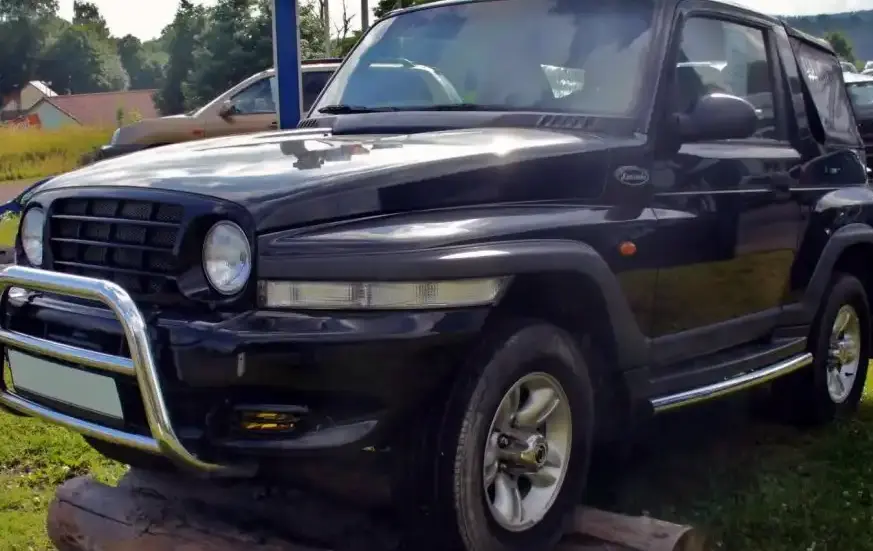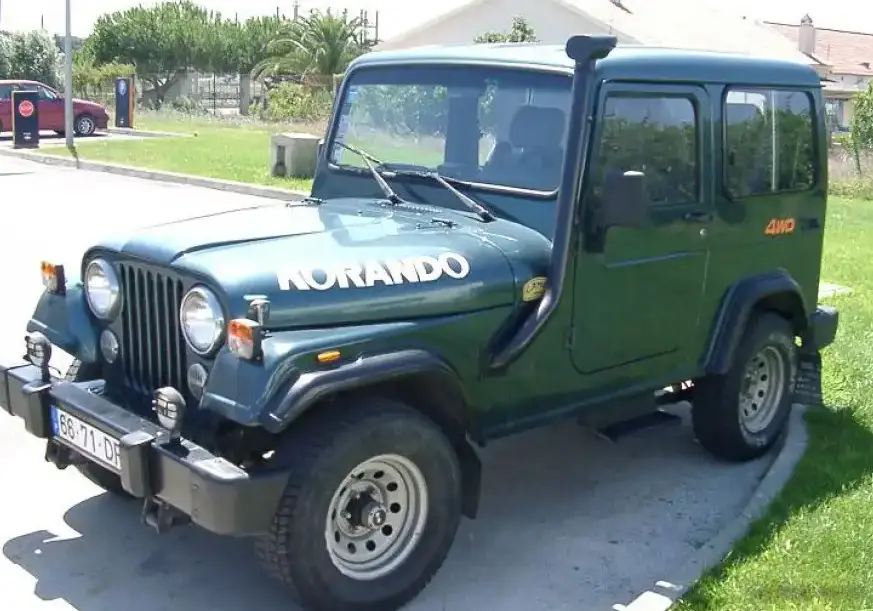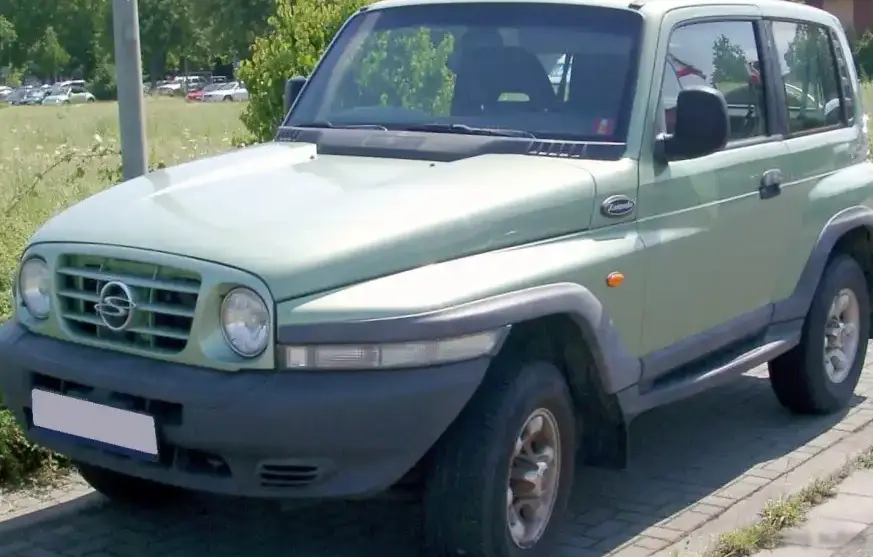
The SsangYong Korando II (KJ) 3.2i 24V, produced between 2001 and 2006, represented a significant step forward for the South Korean automaker. Positioned as a rugged, body-on-frame SUV, the Korando II aimed to compete in a market segment increasingly dominated by Japanese and European rivals. This particular variant, equipped with the 3.2-liter inline-six engine and a five-speed manual transmission, was the top-of-the-line offering for the Korando II range, emphasizing performance and capability. It was primarily marketed towards buyers seeking a capable off-road vehicle with a degree of refinement not typically found in utilitarian 4x4s. The Korando II was a key model for SsangYong, attempting to establish the brand as a serious contender in the global SUV market.
Technical Specifications
| Brand | SsangYong |
| Model | Korando |
| Generation | Korando II (KJ) |
| Type (Engine) | 3.2 i 24V (220 Hp) |
| Start of production | 2001 |
| End of production | 2006 |
| Powertrain Architecture | Internal Combustion engine |
| Body type | SUV |
| Seats | 5 |
| Doors | 3 |
| Fuel consumption (urban) | 16.8 l/100 km (14 US mpg, 16.8 UK mpg) |
| Fuel consumption (extra urban) | 10.1 l/100 km (23.3 US mpg, 28 UK mpg) |
| Fuel Type | Petrol (Gasoline) |
| Acceleration 0 – 100 km/h | 10.2 sec |
| Acceleration 0 – 62 mph | 10.2 sec |
| Acceleration 0 – 60 mph | 9.7 sec |
| Maximum speed | 176 km/h (109.36 mph) |
| Weight-to-power ratio | 8.5 kg/Hp |
| Weight-to-torque ratio | 6.3 kg/Nm |
| Power | 220 Hp @ 5750 rpm |
| Torque | 295 Nm @ 4000 rpm (217.58 lb.-ft. @ 4000 rpm) |
| Engine layout | Front, Longitudinal |
| Engine displacement | 3199 cm3 (195.21 cu. in.) |
| Number of cylinders | 6 |
| Engine configuration | Inline |
| Cylinder Bore | 89.9 mm (3.54 in.) |
| Piston Stroke | 84 mm (3.31 in.) |
| Compression ratio | 10:1 |
| Number of valves per cylinder | 4 |
| Fuel injection system | Multi-port manifold injection |
| Engine aspiration | Naturally aspirated |
| Valvetrain | DOHC |
| Engine oil capacity | 6.7 l (7.08 US qt | 5.9 UK qt) |
| Kerb Weight | 1860 kg (4100.6 lbs.) |
| Max. weight | 2515 kg (5544.63 lbs.) |
| Max load | 655 kg (1444.03 lbs.) |
| Trunk (boot) space – minimum | 350 l (12.36 cu. ft.) |
| Trunk (boot) space – maximum | 1200 l (42.38 cu. ft.) |
| Fuel tank capacity | 70 l (18.49 US gal | 15.4 UK gal) |
| Length | 4330 mm (170.47 in.) |
| Width | 1841 mm (72.48 in.) |
| Height | 1940 mm (76.38 in.) |
| Wheelbase | 2480 mm (97.64 in.) |
| Front track | 1510 mm (59.45 in.) |
| Rear track | 1520 mm (59.84 in.) |
| Drive wheel | All wheel drive (4×4) |
| Number of gears | 5 |
| Gearbox type | Manual transmission |
| Front suspension | Torsion |
| Rear suspension | Rigid axle |
| Front brakes | Ventilated discs |
| Rear brakes | Disc |
| Assisting systems | ABS |
| Steering type | Steering rack and pinion |
| Power steering | Hydraulic |
| Tires size | 255/70 R15 |
Powertrain & Engine Architecture
The heart of the Korando II 3.2i is the Mercedes-Benz derived 3.2-liter inline-six cylinder engine. SsangYong had a long-standing technical partnership with Mercedes-Benz, and this engine was originally designed by the German automaker. The engine, designated as the 602RE, features a cast-iron block and aluminum cylinder head, employing a dual overhead camshaft (DOHC) valvetrain with four valves per cylinder. Fuel delivery is managed by a multi-port fuel injection system. This configuration produced a respectable 220 horsepower at 5750 rpm and 295 Nm (217.58 lb-ft) of torque at 4000 rpm. The five-speed manual transmission provided a relatively direct connection to the drivetrain, offering drivers good control over the engine’s power. The engine’s longitudinal mounting and rear-wheel-drive bias, coupled with a selectable four-wheel-drive system, contributed to the Korando II’s off-road prowess.
Driving Characteristics
The 3.2-liter engine provided the Korando II with a noticeable performance advantage over the smaller engine options available in the lineup. Acceleration to 60 mph was achieved in approximately 9.7 seconds, and the vehicle could reach a top speed of 176 km/h (109.36 mph). While not a sports car, the Korando II 3.2i offered sufficient power for comfortable highway cruising and confident overtaking. The manual transmission allowed for precise gear selection, maximizing engine efficiency and control. Compared to a hypothetical automatic version, the manual offered a more engaging driving experience and potentially better fuel economy. The relatively high weight of the vehicle (1860 kg / 4100.6 lbs) did somewhat dampen the feeling of performance, but the engine’s torque output helped to overcome this limitation.
Equipment & Trim Levels
The 3.2i variant typically came with a higher level of standard equipment than the lower-spec models. Features included air conditioning, power windows, central locking, and a basic audio system. Interior upholstery was typically cloth, although leather options were available. The dashboard layout was functional and straightforward, prioritizing usability over aesthetic flair. Optional extras included a sunroof, upgraded audio system, and alloy wheels. The focus was on providing a comfortable and well-equipped vehicle without excessive luxury, aligning with the Korando II’s rugged image.
Chassis & Braking
The Korando II utilized a traditional body-on-frame construction, providing a robust and durable chassis. Front suspension consisted of torsion bars, while the rear employed a rigid axle setup. This configuration was well-suited for off-road driving, offering good articulation and durability. Braking duties were handled by ventilated discs at the front and solid discs at the rear. Anti-lock Braking System (ABS) was standard, enhancing safety. The steering system was a rack and pinion setup with hydraulic power assistance, providing a reasonable level of steering feel and responsiveness.
Market Reception & Comparison
The Korando II 3.2i received mixed reviews from automotive critics. While the engine was praised for its power and refinement, the vehicle’s overall design and interior quality were often criticized as being somewhat dated compared to its competitors. Fuel economy was also a concern, with the 3.2-liter engine consuming a significant amount of fuel, particularly in urban driving conditions (16.8 l/100 km). Compared to the smaller 2.0-liter engine options, the 3.2i offered a substantial performance boost but at the cost of increased fuel consumption and a higher purchase price. The Korando II generally offered a more affordable alternative to established SUVs like the Toyota Land Cruiser and Mitsubishi Pajero.
Legacy
The SsangYong Korando II 3.2i, while not a massive sales success, remains a fondly remembered vehicle among enthusiasts. The Mercedes-Benz derived engine is known for its durability and reliability, although maintenance can be relatively expensive due to the engine’s complexity and the potential need for specialized parts. In the used car market, well-maintained examples of the 3.2i variant command a premium due to their performance and relative rarity. The Korando II paved the way for SsangYong’s continued development of SUVs, and its robust construction and capable drivetrain have earned it a reputation as a dependable and versatile off-road vehicle.