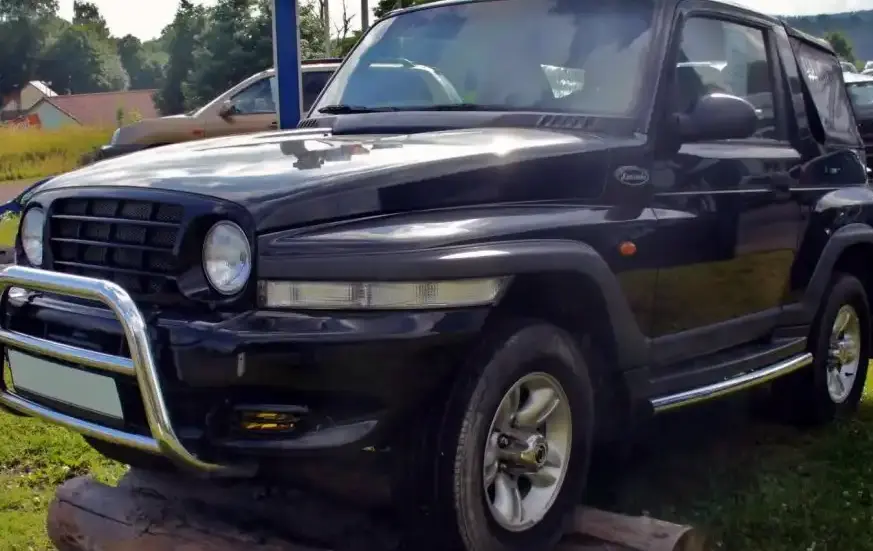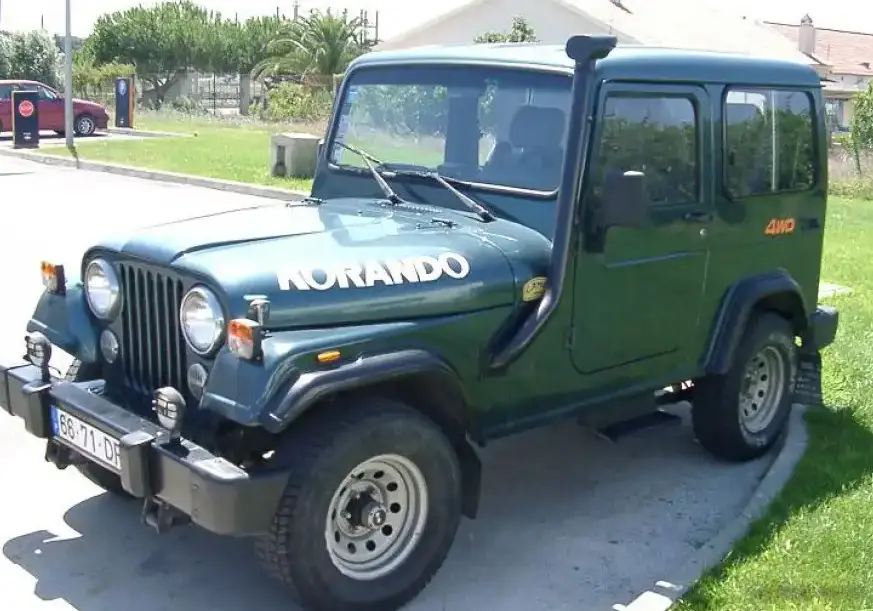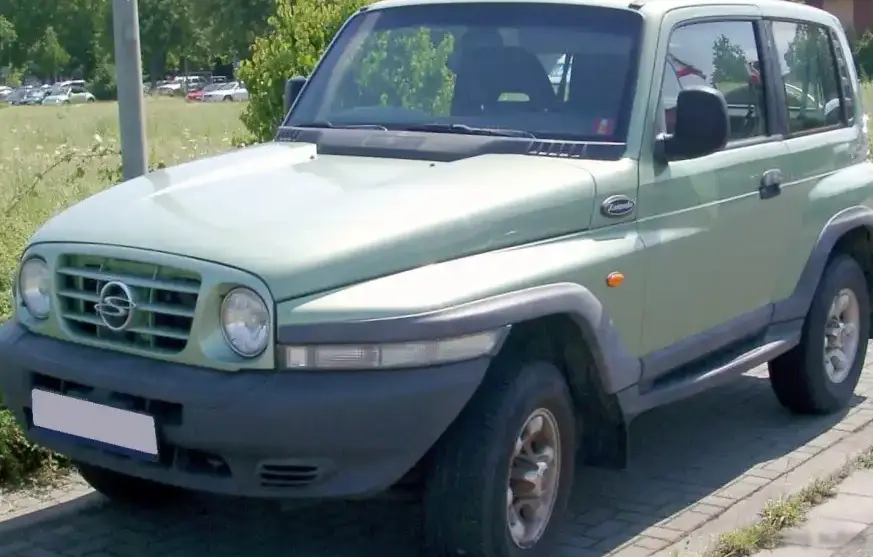
The SsangYong Korando II (KJ) 3.2i 24V Automatic, produced between 2001 and 2006, represented a significant step forward for the South Korean automaker. Positioned as a more refined and powerful offering within the Korando II range, this variant aimed to appeal to buyers seeking a capable SUV with a comfortable driving experience. It was built on the Korando II (KJ) platform, a body-on-frame design intended to provide durability and off-road capability. The 3.2-liter engine and automatic transmission combination was a mid-to-upper trim level, offering a step up from the smaller displacement engines available, but falling short of any potential high-performance or specialized off-road focused trims that were not offered in the Korando II lineup.
Technical Specifications
| Brand | SsangYong |
| Model | Korando |
| Generation | Korando II (KJ) |
| Type | 3.2 i 24V (220 Hp) Automatic |
| Start of production | 2001 |
| End of production | 2006 |
| Powertrain Architecture | Internal Combustion engine |
| Body type | SUV |
| Seats | 5 |
| Doors | 3 |
| Fuel consumption (urban) | 17.1 l/100 km (13.8 US mpg) |
| Fuel consumption (extra urban) | 11.7 l/100 km (20.1 US mpg) |
| Fuel Type | Petrol (Gasoline) |
| Acceleration 0 – 100 km/h | 10.2 sec |
| Acceleration 0 – 62 mph | 10.2 sec |
| Acceleration 0 – 60 mph | 9.7 sec |
| Maximum speed | 170 km/h (105.63 mph) |
| Weight-to-power ratio | 8.5 kg/Hp |
| Weight-to-torque ratio | 6.3 kg/Nm |
| Power | 220 Hp @ 5750 rpm |
| Torque | 295 Nm @ 4000 rpm (217.58 lb.-ft. @ 4000 rpm) |
| Engine layout | Front, Longitudinal |
| Engine displacement | 3199 cm3 (195.21 cu. in.) |
| Number of cylinders | 6 |
| Engine configuration | Inline |
| Cylinder Bore | 89.9 mm (3.54 in.) |
| Piston Stroke | 84 mm (3.31 in.) |
| Compression ratio | 10:1 |
| Number of valves per cylinder | 4 |
| Fuel injection system | Multi-port manifold injection |
| Engine aspiration | Naturally aspirated engine |
| Valvetrain | DOHC |
| Engine oil capacity | 6.7 l (7.08 US qt | 5.9 UK qt) |
| Kerb Weight | 1860 kg (4100.6 lbs.) |
| Max. weight | 2515 kg (5544.63 lbs.) |
| Max load | 655 kg (1444.03 lbs.) |
| Trunk (boot) space – minimum | 350 l (12.36 cu. ft.) |
| Trunk (boot) space – maximum | 1200 l (42.38 cu. ft.) |
| Fuel tank capacity | 70 l (18.49 US gal | 15.4 UK gal) |
| Length | 4330 mm (170.47 in.) |
| Width | 1841 mm (72.48 in.) |
| Height | 1940 mm (76.38 in.) |
| Wheelbase | 2480 mm (97.64 in.) |
| Front track | 1510 mm (59.45 in.) |
| Rear (Back) track | 1520 mm (59.84 in.) |
| Drive wheel | All wheel drive (4×4) |
| Number of gears | 4 |
| Gearbox type | Automatic transmission |
| Front suspension | Torsion |
| Rear suspension | Rigid axle suspension |
| Front brakes | Ventilated discs |
| Rear brakes | Disc |
| Assisting systems | ABS (Anti-lock braking system) |
| Steering type | Steering rack and pinion |
| Power steering | Hydraulic Steering |
| Tires size | 255/70 R15 |
| Wheel rims size | 15 |
Powertrain & Engine Architecture
The heart of the Korando II 3.2i Automatic is the 6-cylinder, 3.2-liter (3199 cc) inline gasoline engine. This engine, internally designated with various codes depending on the specific market, featured a double overhead camshaft (DOHC) valvetrain with four valves per cylinder. The engine utilized a multi-port fuel injection system, a common setup for the time, delivering fuel directly into the intake ports. The 10:1 compression ratio was a typical value for naturally aspirated engines of this era, balancing performance and fuel efficiency. The engine produced 220 horsepower at 5750 rpm and 295 Nm (217.58 lb-ft) of torque at 4000 rpm. The automatic transmission was a four-speed unit, chosen for its ease of use and suitability for both on-road and moderate off-road driving. While not a particularly advanced transmission by modern standards, it provided smooth shifts and adequate performance for the vehicle’s intended purpose.
Driving Characteristics
The 3.2-liter engine paired with the four-speed automatic transmission delivered a respectable, if not exhilarating, driving experience. Acceleration from 0-60 mph took approximately 9.7 seconds, and the vehicle had a top speed of 170 km/h (105.63 mph). Compared to the smaller engine options available in the Korando II range, the 3.2i offered significantly more power and torque, making it more capable of handling fully loaded vehicles or tackling challenging terrain. However, it wasn’t as sporty or responsive as a manual transmission equipped model would have been. The automatic transmission, while convenient, did result in some power loss and a less direct connection to the engine. The gear ratios were tuned for a balance of acceleration and fuel economy, prioritizing usability over outright performance.
Equipment & Trim Levels
The 3.2i Automatic trim generally included features such as air conditioning, power windows, power steering, and an AM/FM radio. Higher-spec versions could be equipped with optional extras like leather upholstery, a sunroof, and upgraded audio systems. Interior appointments were generally functional and durable, reflecting the Korando II’s focus on practicality. The dashboard layout was straightforward, with clearly labeled controls. The 3-door body style meant rear seat access was somewhat limited, but the interior offered adequate space for five passengers.
Chassis & Braking
The Korando II utilized a traditional body-on-frame construction, providing a robust and durable chassis. The front suspension consisted of torsion bars, while the rear suspension employed a rigid axle setup. This configuration was well-suited for off-road driving, offering good articulation and ground clearance. Braking duties were handled by ventilated discs at the front and solid discs at the rear. An anti-lock braking system (ABS) was standard, enhancing safety and control during emergency braking situations. The steering system was a rack and pinion setup with hydraulic power assistance, providing precise and responsive steering feel.
Market Reception & Comparison
The SsangYong Korando II 3.2i Automatic was generally well-received by automotive critics as a capable and comfortable SUV. It was praised for its robust construction, spacious interior, and powerful engine. However, some reviewers noted that the automatic transmission could feel sluggish at times, and the fuel economy was relatively poor compared to more modern SUVs. Compared to other trims in the Korando II lineup, the 3.2i Automatic offered a significant performance advantage but came at a higher price point. It appealed to buyers who prioritized power and comfort over fuel efficiency and sporty handling.
Legacy
The SsangYong Korando II 3.2i Automatic, while not a high-volume seller, has developed a loyal following among enthusiasts. The 3.2-liter engine is known for its durability and relatively simple maintenance requirements. However, finding parts can sometimes be challenging due to the vehicle’s age and limited production numbers. In the used car market, these vehicles are often sought after by those looking for a rugged and reliable SUV with a unique character. The Korando II represents a pivotal moment in SsangYong’s history, showcasing the company’s ability to produce capable and well-equipped vehicles.