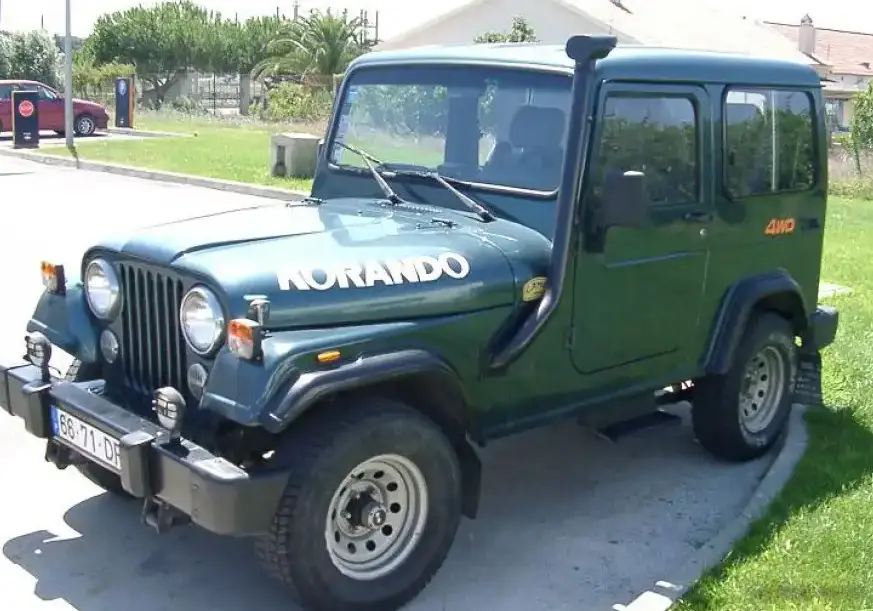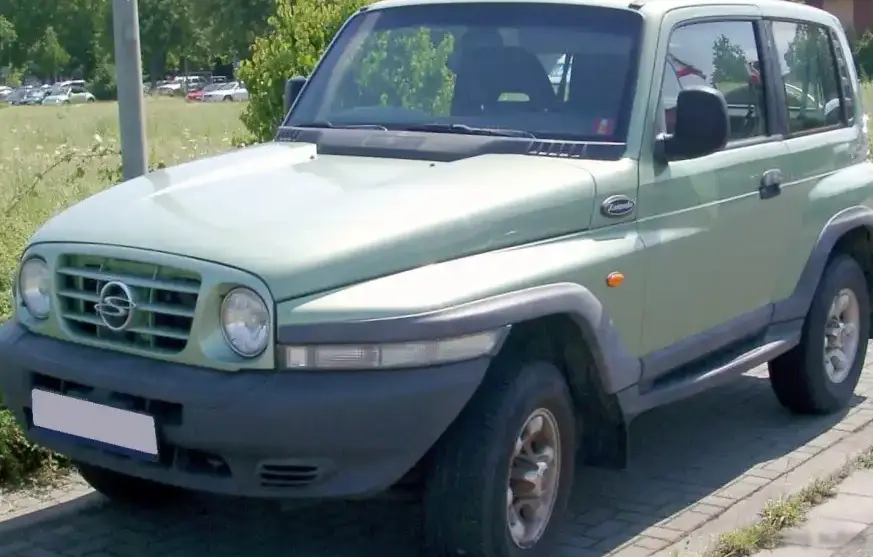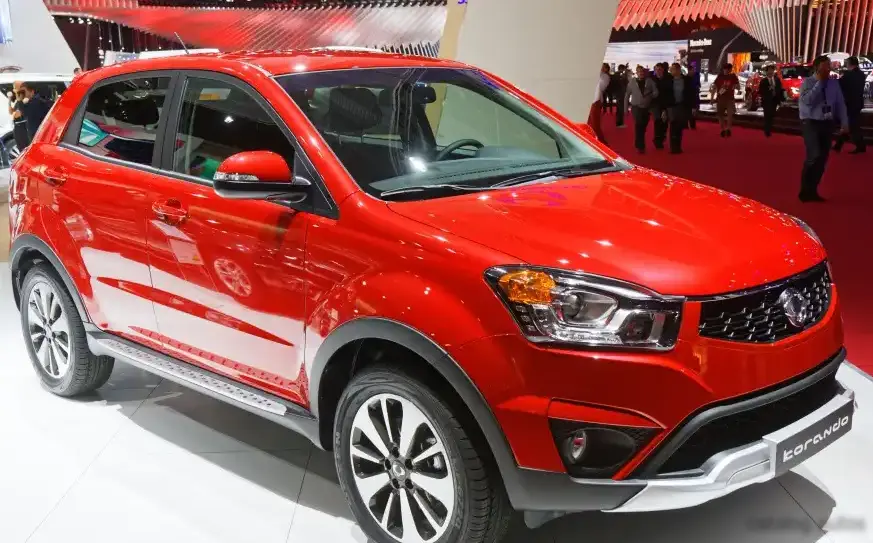
The SsangYong Korando III (C), particularly the facelifted version introduced in 2013, represented a significant step forward for the South Korean automaker in terms of design, refinement, and market appeal. Produced from 2013 to 2017, the Korando aimed to compete in the increasingly popular compact SUV segment, primarily targeting the European market. The 2.0 e-XGi variant, producing 150 horsepower, was positioned as a mid-range offering, balancing performance with fuel efficiency and affordability. It served as a bridge between the base models and the more powerful, often diesel-powered, trims.
Technical Specifications
| Brand | SsangYong |
| Model | Korando |
| Generation | Korando III (C, facelift 2013) |
| Type (Engine) | 2.0 e-XGi (150 Hp) |
| Start of production | 2013 |
| End of production | 2017 |
| Powertrain Architecture | Internal Combustion engine |
| Body type | SUV |
| Seats | 5 |
| Doors | 5 |
| Fuel consumption (urban) | 9.7 l/100 km (24.2 US mpg) |
| Fuel consumption (extra urban) | 6.2 l/100 km (37.9 US mpg) |
| Fuel consumption (combined) | 7.5 l/100 km (31.4 US mpg) |
| CO2 emissions | 175 g/km |
| Fuel Type | Petrol (Gasoline) |
| Maximum speed | 163 km/h (101.28 mph) |
| Emission standard | Euro 6 |
| Weight-to-power ratio | 10.7 kg/Hp |
| Weight-to-torque ratio | 8.2 kg/Nm |
| Power | 150 Hp @ 6000 rpm |
| Torque | 197 Nm @ 4000 rpm (145.3 lb.-ft. @ 4000 rpm) |
| Engine layout | Front, Longitudinal |
| Engine Model/Code | G20DF |
| Engine displacement | 1998 cm3 (121.93 cu. in.) |
| Number of cylinders | 4 |
| Engine configuration | Inline |
| Cylinder Bore | 86 mm (3.39 in.) |
| Piston Stroke | 86 mm (3.39 in.) |
| Compression ratio | 10.5:1 |
| Number of valves per cylinder | 4 |
| Fuel injection system | Multi-port manifold injection |
| Engine aspiration | Naturally aspirated engine |
| Engine oil capacity | 4.5 l (4.76 US qt | 3.96 UK qt) |
| Coolant capacity | 8.5 l (8.98 US qt | 7.48 UK qt) |
| Kerb Weight | 1612 kg (3553.85 lbs.) |
| Max. weight | 2100 kg (4629.71 lbs.) |
| Max load | 488 kg (1075.86 lbs.) |
| Trunk (boot) space – minimum | 486 l (17.16 cu. ft.) |
| Trunk (boot) space – maximum | 1312 l (46.33 cu. ft.) |
| Fuel tank capacity | 57 l (15.06 US gal | 12.54 UK gal) |
| Permitted trailer load with brakes (12%) | 1500 kg (3306.93 lbs.) |
| Permitted trailer load without brakes | 750 kg (1653.47 lbs.) |
| Length | 4410 mm (173.62 in.) |
| Width | 1830 mm (72.05 in.) |
| Height | 1675 mm (65.94 in.) |
| Wheelbase | 2650 mm (104.33 in.) |
| Front track | 1573 mm (61.93 in.) |
| Rear track | 1558 mm (61.34 in.) |
| Front overhang | 920 mm (36.22 in.) |
| Rear overhang | 840 mm (33.07 in.) |
| Ride height (ground clearance) | 180 mm (7.09 in.) |
| Minimum turning circle | 10.6 m (34.78 ft.) |
| Drivetrain Architecture | Front wheel drive |
| Number of gears and type of gearbox | 6 gears, manual transmission |
| Front brakes | Ventilated discs |
| Rear brakes | Disc |
| Assisting systems | ABS (Anti-lock braking system) |
| Steering type | Steering rack and pinion |
| Power steering | Electric Steering |
Powertrain & Engine Architecture
The 2.0 e-XGi engine, designated G20DF, is a naturally aspirated, four-cylinder inline engine displacing 1998cc. It utilizes multi-point fuel injection and a dual overhead camshaft (DOHC) valvetrain with four valves per cylinder. This configuration was chosen for its balance of cost-effectiveness and reasonable performance. The engine’s 150 horsepower output at 6000 rpm and 197 Nm (145.3 lb-ft) of torque at 4000 rpm were considered adequate for everyday driving, though not particularly sporty. The engine was mounted longitudinally in the front of the vehicle, driving the front wheels. The standard transmission for this variant was a six-speed manual gearbox, offering a relatively direct driving experience. While an automatic transmission was available, it was often paired with different engine outputs or as an optional upgrade.
Driving Characteristics
The 2.0 e-XGi with the six-speed manual transmission provided a reasonably engaging driving experience. Acceleration was adequate for merging onto highways and overtaking, but it wasn’t a particularly quick vehicle. The gear ratios were tuned for fuel efficiency rather than outright performance. Compared to the more powerful engine options, such as the 2.2 diesel, the 2.0 e-XGi felt noticeably less responsive. However, the lighter engine weight contributed to better handling balance. The steering was light and precise, making it easy to maneuver in urban environments. The suspension, tuned for comfort, absorbed bumps and imperfections in the road well, but could feel a bit soft during more spirited driving.
Equipment & Trim Levels
The 2.0 e-XGi typically came equipped with a respectable level of standard features. These included air conditioning, power windows and mirrors, a basic audio system with USB connectivity, and ABS brakes. Higher trim levels offered upgrades such as alloy wheels, a more advanced audio system with navigation, leather upholstery, and a sunroof. Safety features like electronic stability control (ESC) and multiple airbags were also standard. The interior design was functional and modern, though the materials used were generally of average quality. The Korando offered a spacious cabin with ample headroom and legroom for passengers.
Chassis & Braking
The Korando III utilized a front-wheel-drive platform with independent MacPherson strut suspension in the front and a multi-link suspension in the rear. This setup provided a good balance of ride comfort and handling. The braking system consisted of ventilated discs on the front wheels and solid discs on the rear. ABS (Anti-lock Braking System) was standard, enhancing safety during emergency braking situations. The steering system employed an electric power steering (EPS) unit, providing light and responsive steering feel.
Market Reception & Comparison
The SsangYong Korando III 2.0 e-XGi received mixed reviews from automotive critics. While praised for its spacious interior, comfortable ride, and competitive price, it was often criticized for its relatively unrefined engine and lack of dynamic flair. Compared to rivals like the Nissan Qashqai and Kia Sportage, the Korando offered a more affordable alternative, but lacked the brand recognition and overall polish of its competitors. Fuel economy was respectable, but not class-leading. Reliability was generally considered average, with some reports of minor electrical issues.
Legacy
The SsangYong Korando III, including the 2.0 e-XGi variant, played a crucial role in revitalizing the SsangYong brand in Europe. While not a runaway success, it established the Korando as a viable contender in the compact SUV segment. On the used car market, the 2.0 e-XGi is often sought after for its affordability and relatively simple mechanicals. The G20DF engine is known to be reasonably durable, provided it receives regular maintenance. However, potential buyers should be aware of potential issues with the timing chain and fuel injectors. Overall, the Korando III 2.0 e-XGi represents a practical and value-oriented SUV that offers a comfortable and reliable driving experience.