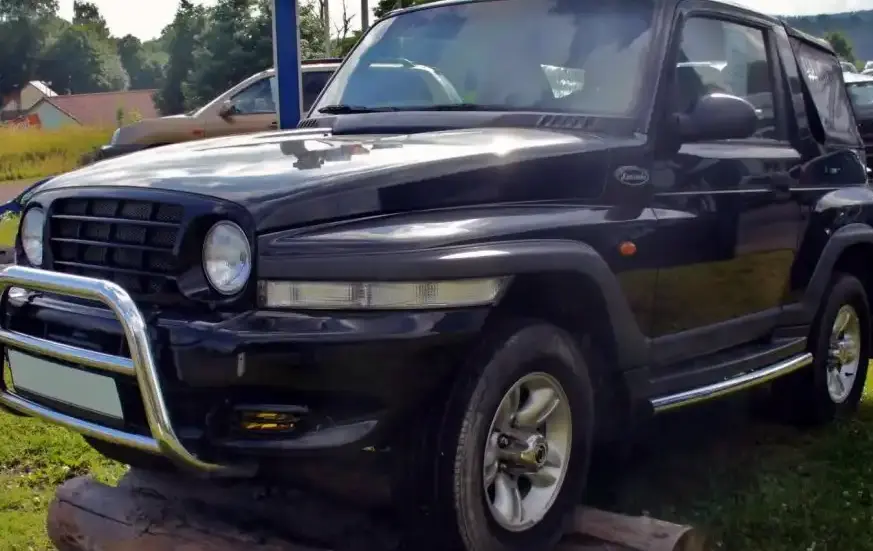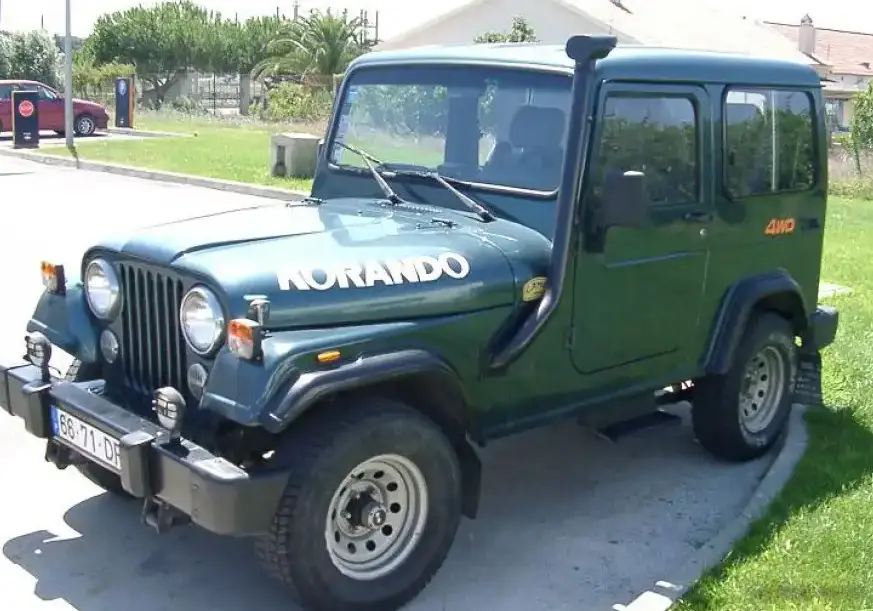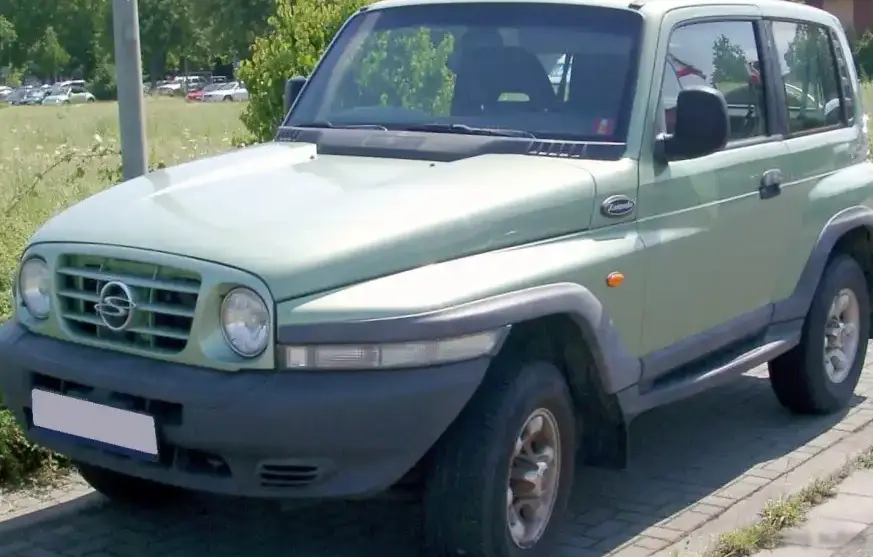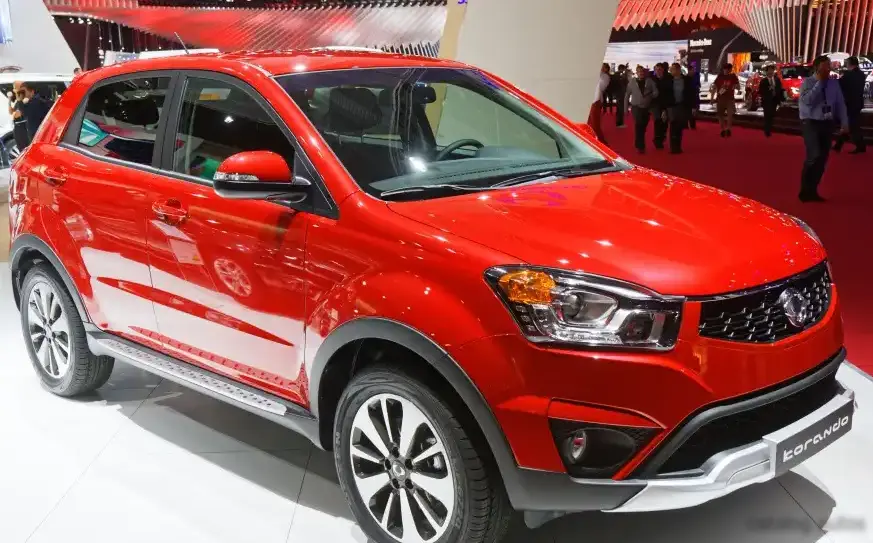
The SsangYong Korando III (C), particularly the facelifted version introduced in 2013, marked a significant advancement for the South Korean automaker in terms of design, refinement, and market appeal. Produced from 2013 to 2017, this generation Korando aimed to compete directly with established European and Japanese SUVs in the compact crossover segment. The 2.0 e-XGi variant, equipped with a 150 horsepower gasoline engine and a six-speed automatic transmission, was positioned as a mid-range offering, balancing affordability with a reasonable level of equipment and performance. It was primarily marketed in Europe and select international markets, offering an alternative to more common choices like the Nissan Qashqai or Kia Sportage.
Technical Specifications
| Brand | SsangYong |
| Model | Korando |
| Generation | Korando III (C, facelift 2013) |
| Type (Engine) | 2.0 e-XGi (150 Hp) Automatic |
| Start of production | 2013 |
| End of production | 2017 |
| Powertrain Architecture | Internal Combustion engine |
| Body type | SUV |
| Seats | 5 |
| Doors | 5 |
| Fuel consumption (urban) | 10.3 l/100 km (22.8 US mpg, 27.4 UK mpg, 9.7 km/l) |
| Fuel consumption (extra urban) | 6.6 l/100 km (35.6 US mpg, 42.8 UK mpg, 15.2 km/l) |
| Fuel consumption (combined) | 8 l/100 km (29.4 US mpg, 35.3 UK mpg, 12.5 km/l) |
| CO2 emissions | 185 g/km |
| Fuel Type | Petrol (Gasoline) |
| Maximum speed | 165 km/h (102.53 mph) |
| Emission standard | Euro 6 |
| Weight-to-power ratio | 10.8 kg/Hp, 92.6 Hp/tonne |
| Weight-to-torque ratio | 8.2 kg/Nm, 121.6 Nm/tonne |
| Power | 150 Hp @ 6000 rpm |
| Power per litre | 75.1 Hp/l |
| Torque | 197 Nm @ 4000 rpm (145.3 lb.-ft. @ 4000 rpm) |
| Engine layout | Front, Longitudinal |
| Engine Model/Code | G20DF |
| Engine displacement | 1998 cm3 (121.93 cu. in.) |
| Number of cylinders | 4 |
| Engine configuration | Inline |
| Cylinder Bore | 86 mm (3.39 in.) |
| Piston Stroke | 86 mm (3.39 in.) |
| Compression ratio | 10.5:1 |
| Number of valves per cylinder | 4 |
| Fuel injection system | Multi-port manifold injection |
| Engine aspiration | Naturally aspirated engine |
| Engine oil capacity | 4.5 l (4.76 US qt | 3.96 UK qt) |
| Coolant | 8.5 l (8.98 US qt | 7.48 UK qt) |
| Kerb Weight | 1620 kg (3571.49 lbs.) |
| Max. weight | 2100 kg (4629.71 lbs.) |
| Max load | 480 kg (1058.22 lbs.) |
| Trunk (boot) space – minimum | 486 l (17.16 cu. ft.) |
| Trunk (boot) space – maximum | 1312 l (46.33 cu. ft.) |
| Fuel tank capacity | 57 l (15.06 US gal | 12.54 UK gal) |
| Permitted trailer load with brakes (12%) | 1500 kg (3306.93 lbs.) |
| Permitted trailer load without brakes | 750 kg (1653.47 lbs.) |
| Length | 4410 mm (173.62 in.) |
| Width | 1830 mm (72.05 in.) |
| Height | 1675 mm (65.94 in.) |
| Wheelbase | 2650 mm (104.33 in.) |
| Front track | 1573 mm (61.93 in.) |
| Rear (Back) track | 1558 mm (61.34 in.) |
| Front overhang | 920 mm (36.22 in.) |
| Rear overhang | 840 mm (33.07 in.) |
| Ride height (ground clearance) | 180 mm (7.09 in.) |
| Minimum turning circle (turning diameter) | 10.6 m (34.78 ft.) |
| Drivetrain Architecture | The Internal combustion engine (ICE) drives the front wheels of the vehicle. |
| Drive wheel | Front wheel drive |
| Number of gears and type of gearbox | 6 gears, automatic transmission |
| Front brakes | Ventilated discs |
| Rear brakes | Disc |
| Assisting systems | ABS (Anti-lock braking system) |
| Steering type | Steering rack and pinion |
| Power steering | Electric Steering |
Powertrain & Engine Architecture
The heart of the Korando 2.0 e-XGi is the G20DF engine, a 1.998-liter (2.0L) inline-four cylinder gasoline engine. This engine utilizes multi-point fuel injection and a naturally aspirated configuration, meaning it doesn’t employ turbocharging or supercharging. The engine produces 150 horsepower at 6000 rpm and 197 Nm (145.3 lb-ft) of torque at 4000 rpm. The engine features a double overhead camshaft (DOHC) valvetrain with four valves per cylinder, contributing to its relatively efficient operation. Paired with the engine is a six-speed automatic transmission, designed to provide smooth shifts and acceptable acceleration. This transmission was a common unit used in various Hyundai-Kia group vehicles at the time, known for its reliability, but not necessarily for sporty performance.
Driving Characteristics
The 150 hp 2.0L engine and automatic transmission combination in the Korando offered a comfortable, but not particularly exhilarating, driving experience. Acceleration was adequate for everyday driving, but overtaking maneuvers required planning. The automatic transmission, while smooth, sometimes felt hesitant to downshift, especially when needing a quick burst of power. Compared to the more powerful diesel variants, the gasoline engine lacked low-end torque, requiring higher engine speeds to maintain momentum, especially when loaded or on inclines. The gear ratios were tuned for fuel efficiency rather than performance, resulting in a relaxed cruising experience but a less responsive feel. The front-wheel-drive configuration contributed to predictable handling, but lacked the all-weather capability of all-wheel-drive versions.
Equipment & Trim Levels
The 2.0 e-XGi trim typically included standard features such as air conditioning, power windows and mirrors, a basic audio system with USB connectivity, and alloy wheels. Safety features included ABS, airbags, and stability control. Higher trim levels offered options like leather upholstery, a sunroof, a more advanced infotainment system with navigation, and parking sensors. The interior design was functional and reasonably well-built, though materials were generally of a lower quality compared to some European competitors. The facelifted model introduced some minor interior updates, including revised dashboard trim and improved seat fabrics.
Chassis & Braking
The Korando III utilized a front-wheel-drive platform with independent suspension at the front (typically MacPherson struts) and a multi-link rear suspension. This setup provided a reasonably comfortable ride, absorbing bumps and imperfections in the road surface effectively. Braking duties were handled by ventilated discs at the front and solid discs at the rear. ABS (Anti-lock Braking System) was standard, enhancing braking performance and stability. The steering was electrically assisted, providing light and easy steering feel, though lacking in feedback.
Market Reception & Comparison
The Korando 2.0 e-XGi received mixed reviews. Critics generally praised its value for money, spacious interior, and comfortable ride. However, the engine was often criticized for being underpowered, especially when compared to the more popular diesel options. Fuel economy was respectable, but not class-leading. Compared to the diesel variants, the gasoline engine offered lower maintenance costs due to the absence of a diesel particulate filter (DPF) and more complex fuel injection systems. However, the diesel models provided significantly better fuel economy and torque, making them more suitable for long-distance driving and towing.
Legacy
The SsangYong Korando III, including the 2.0 e-XGi variant, has established a reputation for reasonable reliability, particularly the engine and transmission. While not known for exceptional performance, the powertrain is generally durable and relatively inexpensive to maintain. On the used car market, these Korandos represent an affordable entry point into the compact SUV segment. However, potential buyers should be aware of potential issues with the electrical system and suspension components. The Korando III paved the way for the more modern and refined Korando models that followed, demonstrating SsangYong’s commitment to improving its product offerings and competing in the global automotive market.