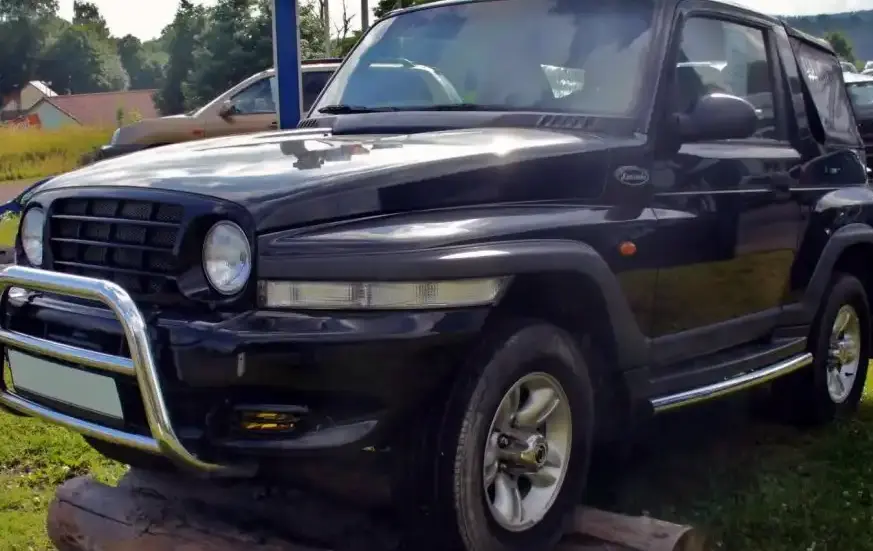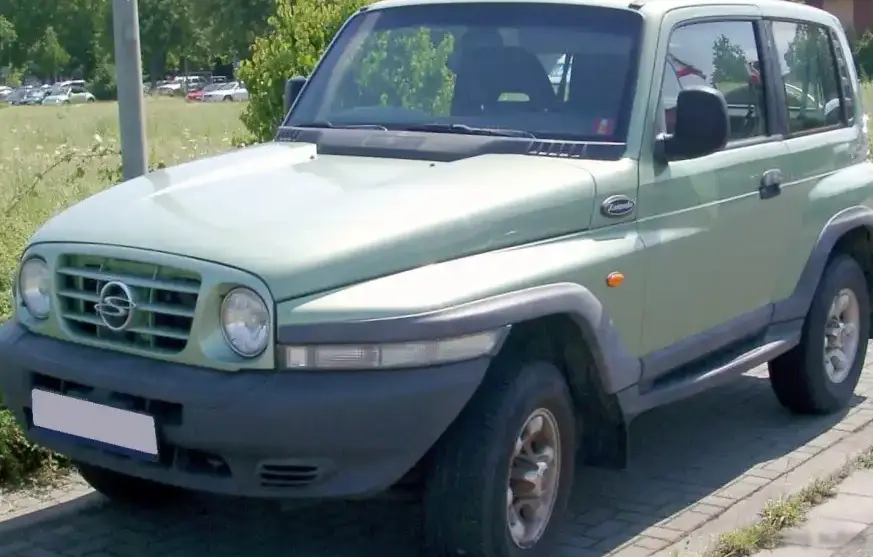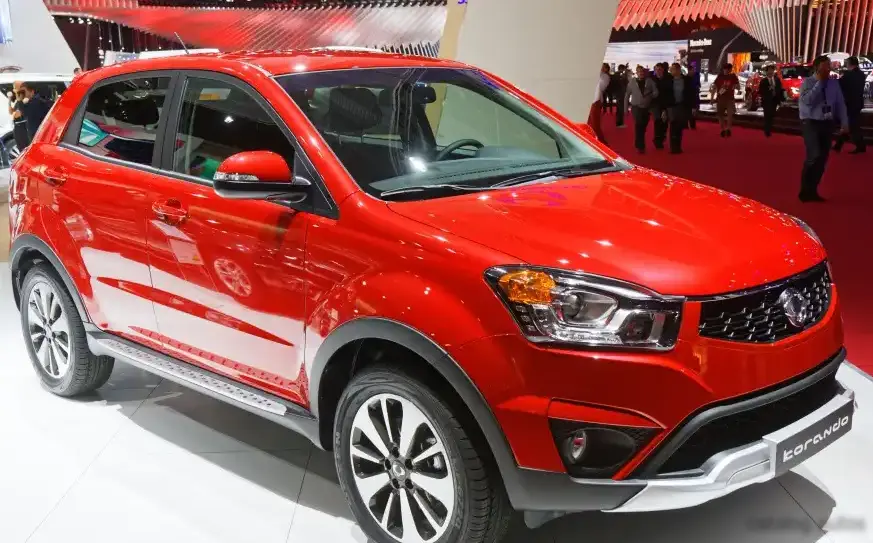
The SsangYong Korando III (C), particularly the facelifted version introduced in 2013, represented a significant step forward for the South Korean automaker in terms of design, refinement, and market appeal. Produced from 2013 to 2017, this generation Korando aimed to compete with established European and Japanese SUVs, offering a blend of practicality, affordability, and available all-wheel drive. The 2.0 e-XGi variant, producing 150 horsepower, occupied a middle ground in the Korando lineup, positioned as a balance between the base engine and more powerful options. It was primarily marketed towards families and individuals seeking a versatile SUV with reasonable performance and fuel economy.
Technical Specifications
| Brand | SsangYong |
| Model | Korando |
| Generation | Korando III (C, facelift 2013) |
| Type (Engine) | 2.0 e-XGi (150 Hp) AWD |
| Start of production | 2013 |
| End of production | 2017 |
| Powertrain Architecture | Internal Combustion engine |
| Body type | SUV |
| Seats | 5 |
| Doors | 5 |
| Fuel consumption (urban) | 10.6 l/100 km (22.2 US mpg, 26.6 UK mpg, 9.4 km/l) |
| Fuel consumption (extra urban) | 6.9 l/100 km (34.1 US mpg, 40.9 UK mpg, 14.5 km/l) |
| Fuel consumption (combined) | 8.2 l/100 km (28.7 US mpg, 34.4 UK mpg, 12.2 km/l) |
| CO2 emissions | 192 g/km |
| Fuel Type | Petrol (Gasoline) |
| Maximum speed | 163 km/h (101.28 mph) |
| Emission standard | Euro 6 |
| Weight-to-power ratio | 11.3 kg/Hp, 88.6 Hp/tonne |
| Weight-to-torque ratio | 8.6 kg/Nm, 116.4 Nm/tonne |
| Power | 150 Hp @ 6000 rpm |
| Power per litre | 75.1 Hp/l |
| Torque | 197 Nm @ 4000 rpm (145.3 lb.-ft. @ 4000 rpm) |
| Engine layout | Front, Longitudinal |
| Engine Model/Code | G20DF |
| Engine displacement | 1998 cm3 (121.93 cu. in.) |
| Number of cylinders | 4 |
| Engine configuration | Inline |
| Cylinder Bore | 86 mm (3.39 in.) |
| Piston Stroke | 86 mm (3.39 in.) |
| Compression ratio | 10.5:1 |
| Number of valves per cylinder | 4 |
| Fuel injection system | Multi-port manifold injection |
| Engine aspiration | Naturally aspirated engine |
| Engine oil capacity | 4.5 l (4.76 US qt | 3.96 UK qt) |
| Coolant | 8.5 l (8.98 US qt | 7.48 UK qt) |
| Kerb Weight | 1693 kg (3732.43 lbs.) |
| Max. weight | 2170 kg (4784.03 lbs.) |
| Max load | 477 kg (1051.6 lbs.) |
| Trunk (boot) space – minimum | 486 l (17.16 cu. ft.) |
| Trunk (boot) space – maximum | 1312 l (46.33 cu. ft.) |
| Fuel tank capacity | 57 l (15.06 US gal | 12.54 UK gal) |
| Permitted trailer load with brakes (12%) | 1500 kg (3306.93 lbs.) |
| Permitted trailer load without brakes | 750 kg (1653.47 lbs.) |
| Length | 4410 mm (173.62 in.) |
| Width | 1830 mm (72.05 in.) |
| Height | 1675 mm (65.94 in.) |
| Wheelbase | 2650 mm (104.33 in.) |
| Front track | 1573 mm (61.93 in.) |
| Rear (Back) track | 1558 mm (61.34 in.) |
| Front overhang | 920 mm (36.22 in.) |
| Rear overhang | 840 mm (33.07 in.) |
| Ride height (ground clearance) | 180 mm (7.09 in.) |
| Minimum turning circle (turning diameter) | 10.6 m (34.78 ft.) |
| Drive wheel | All wheel drive (4×4) |
| Number of gears and type of gearbox | 6 gears, manual transmission |
| Front brakes | Ventilated discs |
| Rear brakes | Disc |
| Assisting systems | ABS (Anti-lock braking system) |
| Steering type | Steering rack and pinion |
| Power steering | Electric Steering |
Powertrain & Engine Architecture
The 2.0 e-XGi engine, designated as the G20DF, is a naturally aspirated, four-cylinder inline engine displacing 1998cc. It features multi-point fuel injection and a dual overhead camshaft (DOHC) valvetrain with four valves per cylinder. This configuration was chosen for its balance of power, fuel efficiency, and relatively simple maintenance. The engine’s 150 horsepower output at 6000 rpm and 197 Nm (145.3 lb-ft) of torque at 4000 rpm were considered adequate for the Korando’s weight and intended use. The engine’s longitudinal mounting allowed for a more traditional all-wheel-drive setup. The six-speed manual transmission was the standard offering for this variant, providing drivers with full control over gear selection. While an automatic transmission was available on other Korando trims, it wasn’t offered with the 2.0 e-XGi engine.
Driving Characteristics
The 2.0 e-XGi with the manual transmission offered a reasonably engaging driving experience. Acceleration was adequate for everyday driving, but not particularly brisk. The engine felt somewhat strained when pushed hard, especially when fully loaded or climbing hills. The six-speed gearbox helped to keep the engine in its optimal power band, but required frequent shifting to maintain momentum. Compared to the more powerful 2.2-liter diesel variants, the 2.0 e-XGi felt noticeably less responsive. However, it offered a smoother and quieter driving experience than the diesel, and its lighter weight contributed to slightly better handling. The all-wheel-drive system provided enhanced traction in slippery conditions, making it a capable vehicle for inclement weather or light off-road use.
Equipment & Trim Levels
The 2.0 e-XGi typically came with a respectable level of standard equipment. This included air conditioning, power windows and mirrors, a basic audio system with USB connectivity, and ABS brakes. Higher trim levels added features such as alloy wheels, a sunroof, leather upholstery, and a more advanced infotainment system. Safety features were generally limited to the basics, with dual front airbags and ABS being the most prominent. The interior design was functional and relatively modern for its time, but lacked the premium feel of some European competitors. The focus was on providing a practical and durable interior that could withstand the demands of family use.
Chassis & Braking
The Korando III utilized a body-on-frame construction, which contributed to its robust and durable nature. The suspension consisted of independent double wishbones at the front and a multi-link setup at the rear. This configuration provided a comfortable ride quality, although it wasn’t particularly sporty. The braking system featured ventilated discs at the front and solid discs at the rear, providing adequate stopping power for most driving situations. The all-wheel-drive system employed a part-time system, allowing drivers to switch between two-wheel drive and four-wheel drive as needed. This helped to improve fuel economy when four-wheel drive wasn’t required.
Market Reception & Comparison
The SsangYong Korando III 2.0 e-XGi received mixed reviews from automotive critics. While praised for its practicality, affordability, and available all-wheel drive, it was often criticized for its unrefined engine, basic interior, and somewhat dated design. Compared to its rivals, such as the Kia Sportage and Hyundai ix35, the Korando offered a more rugged and utilitarian experience. The 2.0 e-XGi’s fuel economy was reasonable, but not class-leading. Its reliability was generally considered to be good, but parts availability could be an issue in some markets. The diesel variants were generally preferred by buyers seeking better performance and fuel economy.
Legacy
The SsangYong Korando III 2.0 e-XGi, while not a standout performer, played an important role in SsangYong’s efforts to establish itself as a credible SUV manufacturer. The G20DF engine proved to be a relatively reliable unit, and examples are still found on the road today. In the used car market, these Korandos represent an affordable and practical option for buyers seeking a spacious and capable SUV. However, potential buyers should be aware of the vehicle’s age and potential maintenance requirements. The Korando III laid the groundwork for the more refined and successful Korando models that followed, helping SsangYong to gain a stronger foothold in the global automotive market.