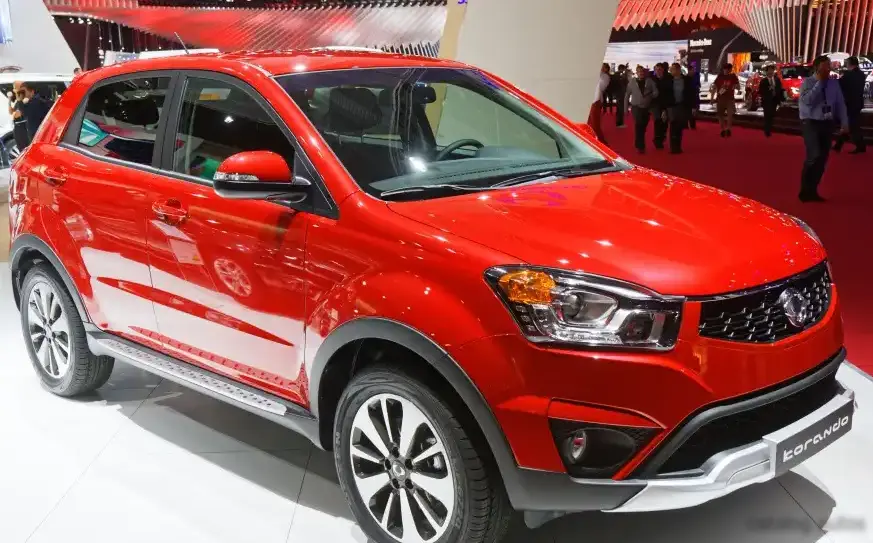
The SsangYong Korando III (C), particularly the facelifted version introduced in 2013, represented a significant step forward for the South Korean automaker in terms of design, refinement, and market appeal. This generation Korando, built from 2010-2019, aimed to compete directly with established European and Japanese SUVs. The 2.0 e-XGi variant, producing 150 horsepower and paired with an automatic transmission and all-wheel drive (AWD), was a key offering in the lineup, positioned as a comfortable and capable all-rounder for families and drivers seeking a practical SUV. Production of this specific configuration ran from 2013 to 2017. It was primarily marketed in South Korea and Europe, with limited presence in other global markets.
Technical Specifications
| Brand | SsangYong |
| Model | Korando |
| Generation | Korando III (C, facelift 2013) |
| Type | 2.0 e-XGi (150 Hp) AWD Automatic |
| Start of production | 2013 |
| End of production | 2017 |
| Powertrain Architecture | Internal Combustion engine |
| Body type | SUV |
| Seats | 5 |
| Doors | 5 |
| Fuel consumption (urban) | 10.9 l/100 km (21.6 US mpg) |
| Fuel consumption (extra urban) | 7.2 l/100 km (32.7 US mpg) |
| Fuel consumption (combined) | 8.5 l/100 km (27.7 US mpg) |
| CO2 emissions | 198 g/km |
| Fuel Type | Petrol (Gasoline) |
| Maximum speed | 165 km/h (102.53 mph) |
| Emission standard | Euro 6 |
| Weight-to-power ratio | 11.3 kg/Hp |
| Weight-to-torque ratio | 8.6 kg/Nm |
| Power | 150 Hp @ 6000 rpm |
| Torque | 197 Nm @ 4000 rpm (145.3 lb.-ft. @ 4000 rpm) |
| Engine layout | Front, Longitudinal |
| Engine Model/Code | G20DF |
| Engine displacement | 1998 cm3 (121.93 cu. in.) |
| Number of cylinders | 4 |
| Engine configuration | Inline |
| Cylinder Bore | 86 mm (3.39 in.) |
| Piston Stroke | 86 mm (3.39 in.) |
| Compression ratio | 10.5:1 |
| Number of valves per cylinder | 4 |
| Fuel injection system | Multi-port manifold injection |
| Engine aspiration | Naturally aspirated engine |
| Engine oil capacity | 4.5 l (4.76 US qt | 3.96 UK qt) |
| Coolant capacity | 8.5 l (8.98 US qt | 7.48 UK qt) |
| Kerb Weight | 1700 kg (3747.86 lbs.) |
| Max. weight | 2170 kg (4784.03 lbs.) |
| Max load | 470 kg (1036.17 lbs.) |
| Trunk (boot) space – minimum | 486 l (17.16 cu. ft.) |
| Trunk (boot) space – maximum | 1312 l (46.33 cu. ft.) |
| Fuel tank capacity | 57 l (15.06 US gal | 12.54 UK gal) |
| Permitted trailer load with brakes (12%) | 1500 kg (3306.93 lbs.) |
| Permitted trailer load without brakes | 750 kg (1653.47 lbs.) |
| Length | 4410 mm (173.62 in.) |
| Width | 1830 mm (72.05 in.) |
| Height | 1675 mm (65.94 in.) |
| Wheelbase | 2650 mm (104.33 in.) |
| Front track | 1573 mm (61.93 in.) |
| Rear track | 1558 mm (61.34 in.) |
| Front overhang | 920 mm (36.22 in.) |
| Rear overhang | 840 mm (33.07 in.) |
| Ride height (ground clearance) | 180 mm (7.09 in.) |
| Minimum turning circle | 10.6 m (34.78 ft.) |
| Drive wheel | All wheel drive (4×4) |
| Number of gears | 6 |
| Gearbox type | automatic transmission |
| Front brakes | Ventilated discs |
| Rear brakes | Disc |
| Assisting systems | ABS (Anti-lock braking system) |
| Steering type | Steering rack and pinion |
| Power steering | Electric Steering |
Powertrain & Engine Architecture
The heart of the 2.0 e-XGi Korando is the G20DF engine, a 1.998-liter inline-four cylinder gasoline engine. This engine utilizes multi-point fuel injection and a naturally aspirated configuration. The G20DF engine, while not a particularly high-performance unit, was designed for reliability and fuel efficiency. It features a double overhead camshaft (DOHC) valvetrain with four valves per cylinder, contributing to reasonable power output for its displacement. The engine’s 150 horsepower peak is achieved at 6000 rpm, while its 197 Nm (145.3 lb-ft) of torque is delivered at 4000 rpm. The engine is longitudinally mounted in the front of the vehicle. The six-speed automatic transmission, sourced from AISIN, was chosen for its smooth operation and suitability for everyday driving. This transmission features a torque converter and is designed to provide comfortable shifts, prioritizing ease of use over sporty responsiveness.
Driving Characteristics
The 2.0 e-XGi automatic Korando delivers a comfortable, if not particularly exhilarating, driving experience. The automatic transmission, while smooth, does result in a slightly less responsive feel compared to the available manual transmission. Acceleration is adequate for merging onto highways and overtaking, but it’s not a vehicle designed for quick sprints. The AWD system provides enhanced traction in slippery conditions, making it a capable vehicle for inclement weather or light off-road use. The gear ratios are tuned for fuel economy and relaxed cruising, meaning the engine can feel strained when pushed hard. Compared to the more powerful 2.2-liter diesel variants, the 2.0 gasoline model offers less torque and a higher-revving engine character.
Equipment & Trim Levels
The 2.0 e-XGi automatic trim typically included features such as air conditioning, power windows and mirrors, a basic audio system with USB connectivity, and alloy wheels. Higher trim levels added features like leather upholstery, a sunroof, a more advanced audio system with navigation, and parking sensors. Safety features included ABS, airbags, and electronic stability control. The interior design was functional and relatively modern for its time, though material quality was generally considered average compared to some European competitors.
Chassis & Braking
The Korando III utilizes a MacPherson strut front suspension and a multi-link rear suspension, providing a comfortable ride quality. The suspension tuning is geared towards absorbing bumps and providing stability rather than sporty handling. Braking duties are handled by ventilated discs at the front and solid discs at the rear. ABS (Anti-lock Braking System) is standard, enhancing braking performance and safety. The steering is rack and pinion with electric power assistance, offering reasonable precision and ease of use.
Market Reception & Comparison
The 2.0 e-XGi automatic Korando was generally well-received as a practical and affordable SUV. Critics praised its comfortable ride, spacious interior, and standard AWD system. However, some reviewers noted the engine’s lack of outright power and the somewhat dated interior design. Compared to the diesel variants, the gasoline model offered lower fuel economy but a quieter and smoother engine. Against competitors like the Hyundai ix35 (Tucson) and Kia Sportage, the Korando offered a competitive price point and a longer warranty, but lacked the brand recognition of its rivals.
Legacy
The SsangYong Korando III, including the 2.0 e-XGi automatic variant, has proven to be a relatively reliable vehicle in the used car market. The G20DF engine is generally considered durable, and the AISIN automatic transmission is known for its longevity. Common issues include wear and tear on suspension components and occasional electrical glitches. Today, these Korandos represent an affordable entry point into the SUV segment, offering a practical and capable vehicle for those seeking a dependable all-weather vehicle. While not a performance standout, the 2.0 e-XGi automatic Korando remains a viable option for budget-conscious buyers.