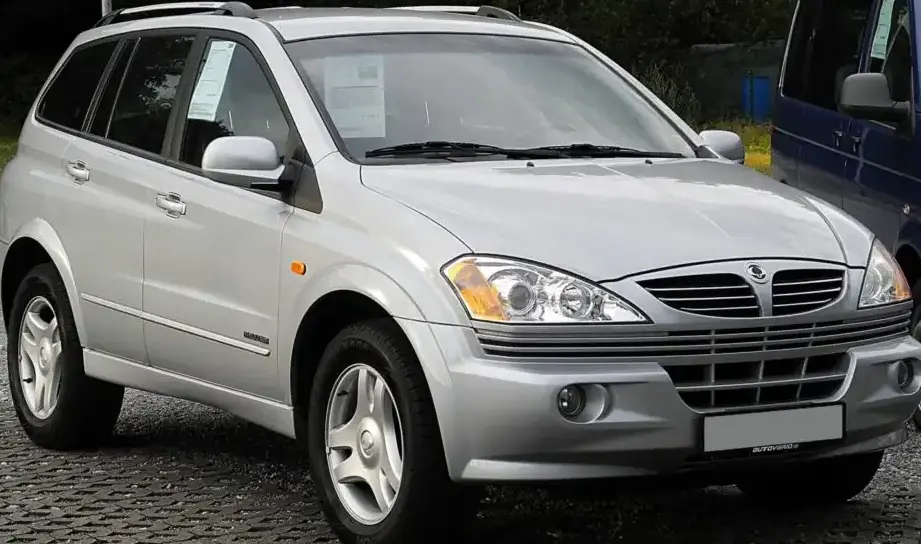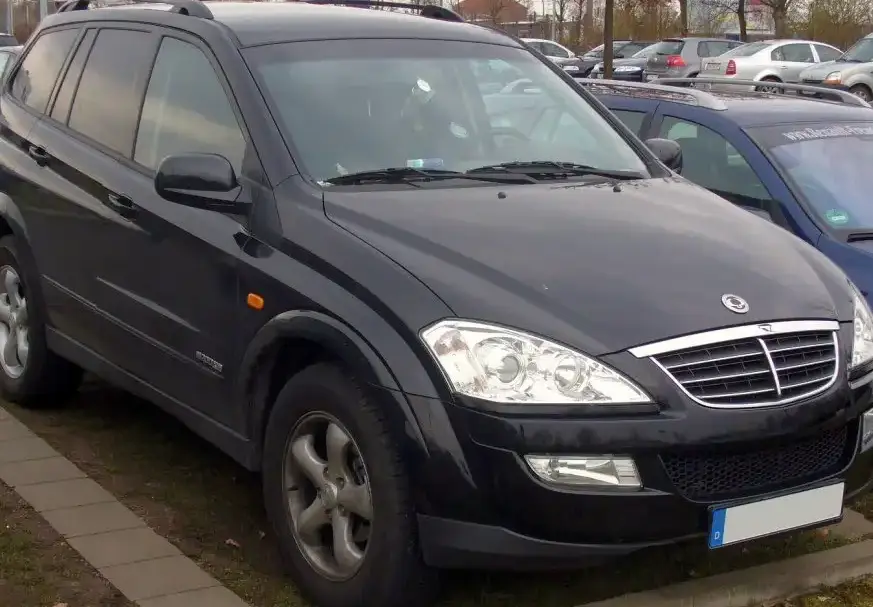
The SsangYong Kyron, particularly the facelifted model introduced in 2007, represented the South Korean automaker’s entry into the mid-size SUV segment. Produced from 2007 through 2014, the Kyron aimed to offer a rugged, body-on-frame SUV with a focus on practicality and value. The 200 Xdi variant, powered by a 2.0-liter diesel engine producing 141 horsepower, was a significant offering within the Kyron lineup, positioned as a balance between fuel efficiency and capability. It primarily targeted European and Asian markets where diesel SUVs were popular, offering a more affordable alternative to established Japanese and European competitors.
Technical Specifications
| Brand | SsangYong |
| Model | Kyron |
| Generation | Kyron (facelift 2007) |
| Type (Engine) | 200 Xdi (141 Hp) |
| Start of production | 2007 |
| End of production | 2014 |
| Powertrain Architecture | Internal Combustion engine |
| Body type | SUV |
| Seats | 5 |
| Doors | 5 |
| Fuel consumption (urban) | 10.3 l/100 km (22.8 US mpg) |
| Fuel consumption (extra urban) | 6.9 l/100 km (34.1 US mpg) |
| Fuel consumption (combined) | 8.1 l/100 km (29 US mpg) |
| CO2 emissions | 206 g/km |
| Fuel Type | Diesel |
| Acceleration 0 – 100 km/h | 15.4 sec |
| Acceleration 0 – 62 mph | 15.4 sec |
| Acceleration 0 – 60 mph | 14.6 sec |
| Maximum speed | 167 km/h (103.77 mph) |
| Emission standard | Euro 4 |
| Weight-to-power ratio | 13.6 kg/Hp |
| Weight-to-torque ratio | 6.2 kg/Nm |
| Power | 141 Hp @ 4000 rpm |
| Torque | 310 Nm @ 1800-2700 rpm (228.64 lb.-ft.) |
| Engine layout | Front, Longitudinal |
| Engine Model/Code | D20DT 664.950 |
| Engine displacement | 1998 cm3 (121.93 cu. in.) |
| Number of cylinders | 4 |
| Engine configuration | Inline |
| Cylinder Bore | 86.2 mm (3.39 in.) |
| Piston Stroke | 85.6 mm (3.37 in.) |
| Compression ratio | 17.5:1 |
| Number of valves per cylinder | 4 |
| Fuel injection system | Diesel Commonrail |
| Engine aspiration | Turbocharger, Intercooler |
| Valvetrain | DOHC |
| Engine oil capacity | 7.5 l (7.93 US qt | 6.6 UK qt) |
| Coolant capacity | 10.5 l (11.1 US qt | 9.24 UK qt) |
| Kerb Weight | 1916-1968 kg (4224.06 – 4338.7 lbs.) |
| Max. weight | 2530 kg (5577.7 lbs.) |
| Max load | 562-614 kg (1239 – 1353.64 lbs.) |
| Trunk (boot) space – minimum | 625 l (22.07 cu. ft.) |
| Trunk (boot) space – maximum | 2322 l (82 cu. ft.) |
| Fuel tank capacity | 75 l (19.81 US gal | 16.5 UK gal) |
| Max. roof load | 45 kg (99.21 lbs.) |
| Permitted trailer load (braked) | 2100 kg (4629.71 lbs.) |
| Permitted trailer load (unbraked) | 750 kg (1653.47 lbs.) |
| Permitted towbar download | 92 kg (202.83 lbs.) |
| Length | 4660 mm (183.46 in.) |
| Width | 1880 mm (74.02 in.) |
| Height | 1755 mm (69.09 in.) |
| Wheelbase | 2740 mm (107.87 in.) |
| Front track | 1570 mm (61.81 in.) |
| Rear track | 1570 mm (61.81 in.) |
| Ride height (ground clearance) | 199-210 mm (7.83 – 8.27 in.) |
| Minimum turning circle | 11.2 m (36.75 ft.) |
| Approach angle | 26° |
| Departure angle | 23° |
| Ramp-over angle | 21° |
| Drivetrain | Rear wheel drive |
| Number of gears | 5 |
| Gearbox type | Manual transmission |
| Front suspension | Double wishbone, Transverse stabilizer |
| Rear suspension | Semi-dependent beam with stabilizer, Coil spring |
| Front brakes | Ventilated discs |
| Rear brakes | Disc |
| Assisting systems | ABS (Anti-lock braking system) |
| Steering type | Steering rack and pinion |
| Power steering | Hydraulic |
| Tires size | 225/75 R16; 255/60 R18 |
| Wheel rims size | 6.5J x 16; 7.5J x 18 |
Powertrain & Engine Architecture
The heart of the Kyron 200 Xdi is the D20DT engine, a 2.0-liter inline-four diesel. This engine utilizes a common-rail direct injection system, delivering fuel at extremely high pressure for improved combustion efficiency and reduced emissions. The D20DT features a turbocharger with an intercooler, boosting power output to 141 horsepower and 310 Nm (228.64 lb.-ft.) of torque. The engine’s double overhead camshaft (DOHC) valvetrain, with four valves per cylinder, further enhances its breathing and performance. The 5-speed manual transmission was the standard offering for this variant, providing a direct connection to the rear wheels. The longitudinal engine layout was a characteristic of SsangYong’s approach to SUV design, contributing to a more balanced weight distribution.
Driving Characteristics
The Kyron 200 Xdi, with its 141 hp and manual transmission, offered a practical but not particularly sporty driving experience. Acceleration was modest, taking around 15.4 seconds to reach 62 mph. The engine’s torque peak, available from 1800-2700 rpm, provided adequate pulling power for everyday driving and moderate towing. Compared to higher-output Kyron variants, such as those with larger engines, the 200 Xdi felt less responsive. However, its fuel economy was noticeably better, making it a more economical choice for drivers prioritizing efficiency. The rear-wheel-drive configuration provided a traditional SUV feel, but lacked the all-weather capability of four-wheel-drive models.
Equipment & Trim Levels
The 200 Xdi trim typically included standard features such as air conditioning, power windows, central locking, and an audio system. Interior upholstery was generally cloth, with options for leather upgrades. Depending on the market and optional packages, features like alloy wheels, a sunroof, and upgraded audio systems were available. The dashboard layout was functional and straightforward, prioritizing usability over luxury. Safety features included ABS brakes and, in some markets, airbags.
Chassis & Braking
The Kyron’s body-on-frame construction provided a robust and durable chassis. The front suspension utilized a double wishbone setup with a transverse stabilizer bar, while the rear employed a semi-dependent beam with a stabilizer. This suspension configuration aimed to balance ride comfort with handling stability. Braking duties were handled by ventilated discs at the front and solid discs at the rear. The rear-wheel-drive layout and relatively simple suspension setup were geared towards practicality and cost-effectiveness rather than high-performance handling.
Market Reception & Comparison
The Kyron 200 Xdi was generally well-received as a value-oriented SUV. Critics praised its spacious interior, rugged construction, and competitive price point. However, it was often criticized for its unrefined engine, basic interior, and somewhat dated design. Compared to other diesel SUVs in its class, such as the Hyundai Santa Fe or Kia Sorento, the Kyron offered a more utilitarian experience. Its fuel economy was competitive, but its performance lagged behind some rivals. The 200 Xdi appealed to buyers seeking a practical and affordable SUV for everyday use and light towing.
Legacy
The SsangYong Kyron, while not a mainstream success, established SsangYong as a player in the mid-size SUV market. The 200 Xdi variant, with its reliable diesel engine and manual transmission, has proven to be relatively durable in the used car market. While maintenance costs can be higher than for some Japanese or European brands, the Kyron offers a robust and practical alternative for buyers seeking a capable and affordable SUV. Today, the Kyron 200 Xdi represents a unique and often overlooked option for those seeking a rugged and dependable vehicle.