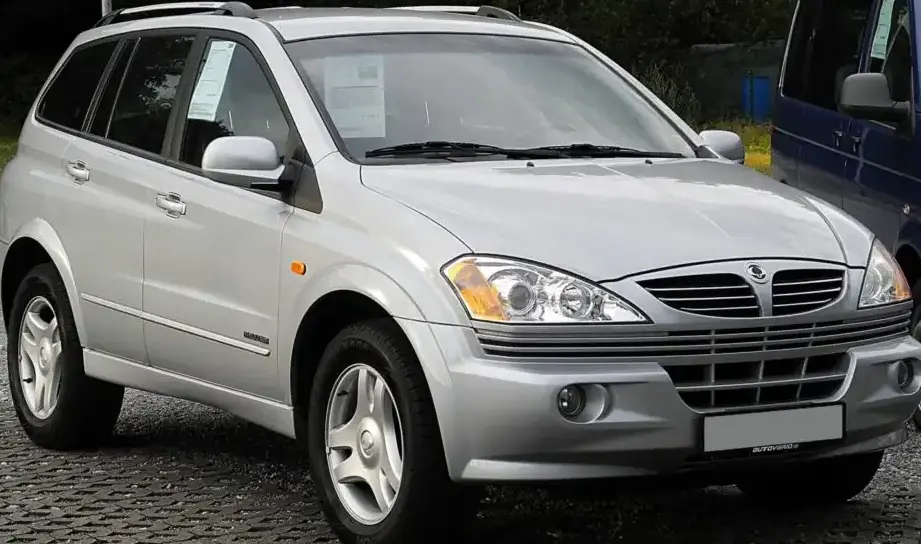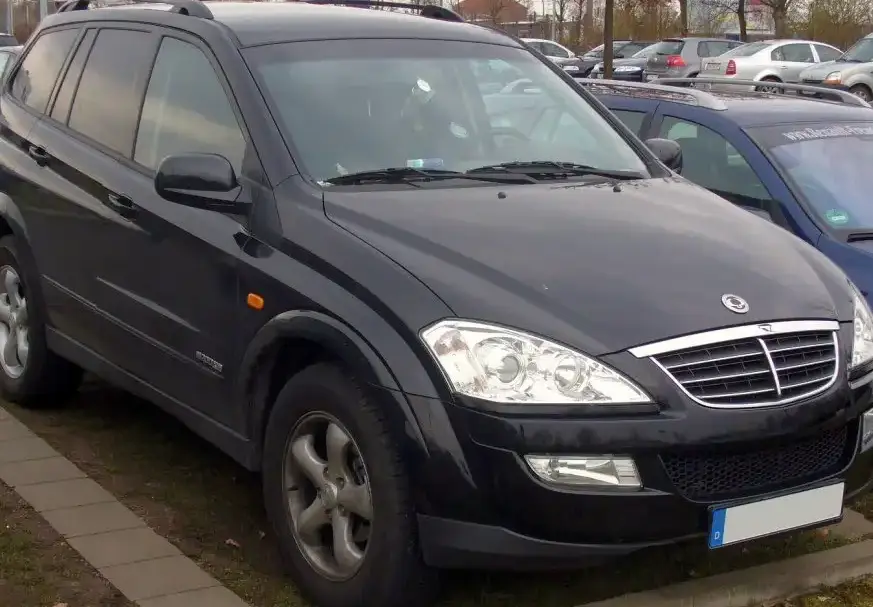
The SsangYong Kyron 200 Xdi, produced from 2007 to 2014, represents a significant mid-cycle refresh of the original Kyron SUV, launched in 2005. Positioned as a competitor in the growing compact SUV segment, the facelifted Kyron aimed to enhance its appeal with updated styling and improved features. The 200 Xdi variant, equipped with a 2.0-liter diesel engine producing 141 horsepower, was a key offering in the Kyron lineup, particularly in European and Asian markets where diesel engines were favored. This model typically sat in the mid-range of the Kyron trims, offering a balance between affordability and capability, appealing to buyers seeking a practical and reasonably equipped SUV.
Technical Specifications
| Brand | SsangYong |
| Model | Kyron |
| Generation | Kyron (facelift 2007) |
| Type (Engine) | 200 Xdi (141 Hp) AWD |
| Start of production | 2007 |
| End of production | 2014 |
| Powertrain Architecture | Internal Combustion engine |
| Body type | SUV |
| Seats | 5 |
| Doors | 5 |
| Fuel consumption (economy) – urban (NEDC) | 10.3 l/100 km (22.8 US mpg, 27.4 UK mpg, 9.7 km/l) |
| Fuel consumption (economy) – extra urban (NEDC) | 6.9 l/100 km (34.1 US mpg, 40.9 UK mpg, 14.5 km/l) |
| Fuel consumption (economy) – combined (NEDC) | 8.1 l/100 km (29 US mpg, 34.9 UK mpg, 12.3 km/l) |
| CO2 emissions (NEDC) | 206 g/km |
| Fuel Type | Diesel |
| Acceleration 0 – 100 km/h | 15.4 sec |
| Acceleration 0 – 62 mph | 15.4 sec |
| Acceleration 0 – 60 mph | 14.6 sec |
| Maximum speed | 167 km/h (103.77 mph) |
| Emission standard | Euro 4 |
| Weight-to-power ratio | 14.4 kg/Hp, 69.7 Hp/tonne |
| Weight-to-torque ratio | 6.5 kg/Nm, 153.2 Nm/tonne |
| Power | 141 Hp @ 4000 rpm |
| Power per litre | 70.6 Hp/l |
| Torque | 310 Nm @ 1800-2700 rpm (228.64 lb.-ft. @ 1800-2700 rpm) |
| Engine layout | Front, Longitudinal |
| Engine Model/Code | D20DT 664.950 |
| Engine displacement | 1998 cm3 (121.93 cu. in.) |
| Number of cylinders | 4 |
| Engine configuration | Inline |
| Cylinder Bore | 86.2 mm (3.39 in.) |
| Piston Stroke | 85.6 mm (3.37 in.) |
| Compression ratio | 17.5:1 |
| Number of valves per cylinder | 4 |
| Fuel injection system | Diesel Commonrail |
| Engine aspiration | Turbocharger, Intercooler |
| Valvetrain | DOHC |
| Engine oil capacity | 7.5 l (7.93 US qt | 6.6 UK qt) |
| Coolant | 10.5 l (11.1 US qt | 9.24 UK qt) |
| Kerb Weight | 2024-2076 kg (4462.16 – 4576.8 lbs.) |
| Max. weight | 2530 kg (5577.7 lbs.) |
| Max load | 454-506 kg (1000.9 – 1115.54 lbs.) |
| Trunk (boot) space – minimum | 625 l (22.07 cu. ft.) |
| Trunk (boot) space – maximum | 2322 l (82 cu. ft.) |
| Fuel tank capacity | 75 l (19.81 US gal | 16.5 UK gal) |
| Max. roof load | 45 kg (99.21 lbs.) |
| Permitted trailer load with brakes (12%) | 2300 kg (5070.63 lbs.) |
| Permitted trailer load without brakes | 750 kg (1653.47 lbs.) |
| Permitted towbar download | 92 kg (202.83 lbs.) |
| Length | 4660 mm (183.46 in.) |
| Width | 1880 mm (74.02 in.) |
| Height | 1755 mm (69.09 in.) |
| Wheelbase | 2740 mm (107.87 in.) |
| Front track | 1570 mm (61.81 in.) |
| Rear (Back) track | 1570 mm (61.81 in.) |
| Ride height (ground clearance) | 199-210 mm (7.83 – 8.27 in.) |
| Minimum turning circle (turning diameter) | 11.2 m (36.75 ft.) |
| Approach angle | 26° |
| Departure angle | 23° |
| Ramp-over (brakeover) angle | 21° |
| Drivetrain Architecture | The Internal combustion engine (ICE) drives the rear wheels permanently, and the front wheels are driven through an electrically or mechanically operated clutch if necessary. |
| Drive wheel | All wheel drive (4×4) |
| Number of gears and type of gearbox | 5 gears, manual transmission |
| Front suspension | Double wishbone, Transverse stabilizer |
| Rear suspension | Semi-dependent beam with stabilizer lateral stability, Coil spring |
| Front brakes | Ventilated discs |
| Rear brakes | Disc |
| Assisting systems | ABS (Anti-lock braking system) |
| Steering type | Steering rack and pinion |
| Power steering | Hydraulic Steering |
| Tires size | 225/75 R16; 255/60 R18 |
| Wheel rims size | 6.5J x 16; 7.5J x 18 |
Powertrain & Engine Architecture
The heart of the Kyron 200 Xdi is the D20DT engine, a 2.0-liter inline-four cylinder diesel. This engine utilizes a common rail direct injection system, delivering fuel directly into the combustion chamber at extremely high pressure for improved efficiency and reduced emissions. The D20DT is equipped with a turbocharger and intercooler, boosting power output to 141 horsepower and 310 Nm (228.64 lb-ft) of torque. The engine features a double overhead camshaft (DOHC) valvetrain with four valves per cylinder, optimizing airflow for enhanced performance. The engine is longitudinally mounted in the chassis, and power is delivered to all four wheels via a part-time all-wheel-drive system. The 5-speed manual transmission was standard on this variant.
Driving Characteristics
The Kyron 200 Xdi, with its 141 horsepower and 310 Nm of torque, offered adequate, though not exhilarating, performance. Acceleration from 0 to 100 km/h (0-62 mph) took around 15.4 seconds. The engine’s torque peak, available from 1800-2700 rpm, provided reasonable pulling power for everyday driving and moderate towing capabilities. Compared to higher-output Kyron variants, such as those with the 2.7-liter Mercedes-Benz sourced engine, the 200 Xdi felt less responsive. However, it offered better fuel economy and a more manageable driving experience, particularly in urban environments. The manual transmission provided precise control, but the gear ratios were spaced to prioritize fuel efficiency over outright acceleration.
Equipment & Trim Levels
The 200 Xdi typically came with a standard equipment list that included air conditioning, power windows, central locking, and an audio system. Safety features such as ABS and dual front airbags were also standard. Higher trim levels offered options like leather upholstery, alloy wheels, a sunroof, and upgraded audio systems. The interior design was functional and relatively basic, focusing on durability and practicality rather than luxury. The facelifted model featured minor interior refinements compared to the original Kyron, with improved materials and a slightly more modern dashboard layout.
Chassis & Braking
The Kyron utilized a body-on-frame construction, providing robust durability and off-road capability. The front suspension consisted of a double wishbone setup with a transverse stabilizer bar, while the rear suspension employed a semi-dependent beam with coil springs and a stabilizer bar. This configuration offered a reasonable balance between ride comfort and handling. The braking system featured ventilated discs at the front and solid discs at the rear, providing adequate stopping power for the vehicle’s weight. The hydraulic power steering offered light and precise control.
Market Reception & Comparison
The Kyron 200 Xdi received mixed reviews from automotive critics. While its rugged construction and all-wheel-drive capability were praised, its relatively slow acceleration and basic interior were points of criticism. Compared to competitors like the Hyundai Tucson and Kia Sportage, the Kyron offered a more utilitarian experience. However, its lower price point and robust build quality appealed to buyers seeking a practical and affordable SUV. Fuel economy was a strong point, with combined fuel consumption averaging around 8.1 l/100 km (29 US mpg).
Legacy
The SsangYong Kyron, while not a mainstream success, established SsangYong as a player in the compact SUV segment. The 200 Xdi variant, with its reliable diesel engine and durable construction, has proven to be a relatively dependable vehicle in the used car market. While maintenance costs for SsangYong vehicles can be higher than those of more mainstream brands, the Kyron’s robust design and readily available parts ensure that it remains a viable option for buyers seeking a capable and affordable SUV. The Kyron paved the way for SsangYong’s later SUV models, such as the Korando, which have achieved greater commercial success.