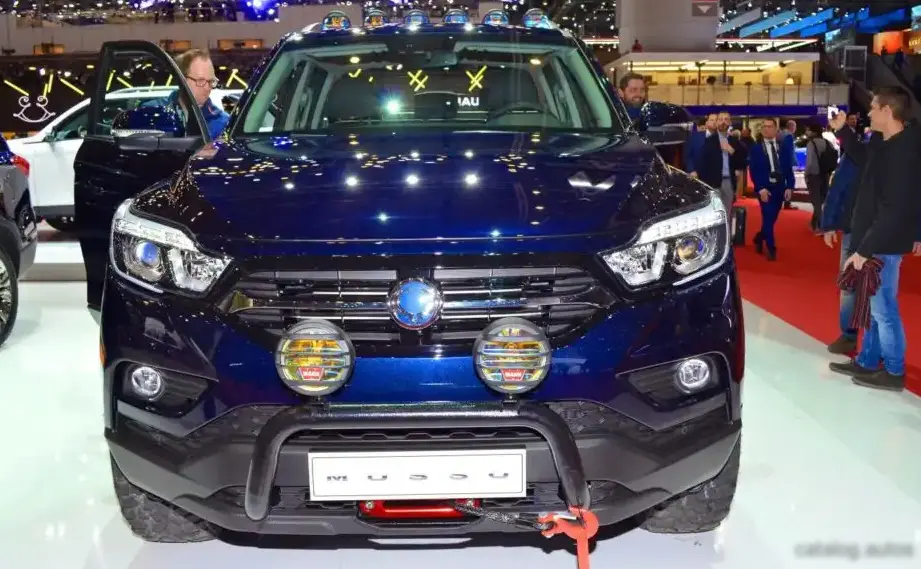
The SsangYong Musso I 2.3 D, producing 80 horsepower, was a key variant in the initial Musso lineup, produced from 1996 to 2005. Positioned as the entry-level engine option, it aimed to provide affordable four-wheel-drive capability to a broader customer base. The Musso, SsangYong’s first foray into the mid-size SUV market, was largely aimed at buyers seeking a robust, utilitarian vehicle – a direct competitor to vehicles like the Toyota Hilux Surf and Mitsubishi Pajero, but with a distinctly Korean approach to value and practicality. This 2.3-liter diesel variant offered a balance between fuel efficiency and the ability to handle both on and off-road conditions, though performance was modest by contemporary standards. It was a significant model for SsangYong, establishing the brand’s presence in the growing SUV segment, particularly in Europe and export markets.
Technical Specifications
| Brand | SsangYong |
| Model | Musso |
| Generation | Musso I |
| Type (Engine) | 2.3 D (80 Hp) |
| Start of production | 1996 |
| End of production | 2005 |
| Powertrain Architecture | Internal Combustion engine |
| Body type | SUV |
| Seats | 5 |
| Doors | 5 |
| Fuel consumption (urban) | 11.9 l/100 km (19.8 US mpg) |
| Fuel consumption (extra urban) | 7.9 l/100 km (29.8 US mpg) |
| Fuel Type | Diesel |
| Acceleration 0 – 100 km/h | 23.5 sec |
| Acceleration 0 – 62 mph | 23.5 sec |
| Acceleration 0 – 60 mph | 22.3 sec |
| Maximum speed | 135 km/h (83.89 mph) |
| Weight-to-power ratio | 22.5 kg/Hp |
| Weight-to-torque ratio | 12 kg/Nm |
| Power | 80 Hp @ 4000 rpm |
| Torque | 150 Nm @ 2300 rpm (110.63 lb.-ft. @ 2300 rpm) |
| Engine layout | Front, Longitudinal |
| Engine Model/Code | OM 661 |
| Engine displacement | 2299 cm3 (140.29 cu. in.) |
| Number of cylinders | 4 |
| Engine configuration | Inline |
| Cylinder Bore | 89 mm (3.5 in.) |
| Piston Stroke | 92.4 mm (3.64 in.) |
| Compression ratio | 22:1 |
| Number of valves per cylinder | 2 |
| Fuel injection system | Precombustion chamber injection |
| Engine aspiration | Naturally aspirated engine |
| Valvetrain | OHC |
| Engine oil capacity | 6 l (6.34 US qt | 5.28 UK qt) |
| Kerb Weight | 1796 kg (3959.5 lbs.) |
| Max. weight | 2520 kg (5555.65 lbs.) |
| Max load | 724 kg (1596.15 lbs.) |
| Trunk (boot) space – minimum | 780 l (27.55 cu. ft.) |
| Trunk (boot) space – maximum | 1910 l (67.45 cu. ft.) |
| Fuel tank capacity | 80 l (21.13 US gal | 17.6 UK gal) |
| Length | 4630 mm (182.28 in.) |
| Width | 1905 mm (75 in.) |
| Height | 1735 mm (68.31 in.) |
| Wheelbase | 2630 mm (103.54 in.) |
| Front track | 1510 mm (59.45 in.) |
| Rear (Back) track | 1520 mm (59.84 in.) |
| Drive wheel | All wheel drive (4×4) |
| Number of gears and type of gearbox | 5 gears, manual transmission |
| Front suspension | Torsion |
| Rear suspension | Coil spring |
| Front brakes | Ventilated discs |
| Rear brakes | Disc |
| Assisting systems | ABS (Anti-lock braking system) |
| Steering type | Steering rack and pinion |
| Power steering | Hydraulic Steering |
| Tires size | 235/75 R15 |
Powertrain & Engine Architecture
The heart of the Musso I 2.3 D was the OM 661 diesel engine, a 2.3-liter inline-four cylinder unit. This engine was sourced from Mercedes-Benz, a long-standing technical partner of SsangYong. The OM 661 utilized a precombustion chamber injection system, a common diesel technology of the era, which involved injecting fuel into a small chamber within the cylinder head before the main combustion chamber. This design aided in smoother combustion and reduced engine noise compared to direct injection systems of the time. The engine featured a single overhead camshaft (OHC) valvetrain operating two valves per cylinder. The 80 horsepower output was achieved at 4000 rpm, with a torque figure of 150 Nm (110.63 lb.-ft.) available at 2300 rpm. The engine was mounted longitudinally in the chassis. The standard transmission for this variant was a five-speed manual gearbox, chosen for its durability and cost-effectiveness. An automatic transmission was available as an option, but was less common and typically paired with slightly different gearing to accommodate the lower power output.
Driving Characteristics
The Musso I 2.3 D with the manual transmission offered a utilitarian driving experience. Acceleration was slow, with a 0-60 mph time of around 22.3 seconds. The engine lacked the refinement of more modern diesel engines, exhibiting noticeable noise and vibration. However, the engine’s torque delivery was relatively strong at lower RPMs, making it suitable for off-road driving and towing. The five-speed manual gearbox was well-matched to the engine’s characteristics, allowing drivers to keep the engine in its optimal power band. Compared to the more powerful 2.9-liter diesel or gasoline engines offered in the Musso range, the 2.3 D felt significantly underpowered, particularly when fully loaded or tackling steep inclines. The automatic transmission further diminished performance, with slower gear changes and a less responsive feel. However, the automatic provided a more comfortable driving experience for those prioritizing ease of use over outright performance.
Equipment & Trim Levels
The 2.3 D variant of the Musso I typically represented the base trim level. Standard equipment included power steering, central locking, and basic instrumentation. Interior upholstery was typically cloth, and the dashboard featured a functional, if somewhat spartan, design. Optional extras included air conditioning, power windows, and upgraded audio systems. Higher trim levels, available with the more powerful engines, offered features like leather upholstery, alloy wheels, and more sophisticated audio systems. The 2.3 D was often chosen by buyers who prioritized affordability and practicality over luxury features.
Chassis & Braking
The Musso I utilized a body-on-frame construction, providing a robust and durable chassis. Front suspension consisted of torsion bars, while the rear suspension employed coil springs. This setup provided a comfortable ride on paved roads, while also offering sufficient articulation for off-road use. Braking duties were handled by ventilated discs at the front and solid discs at the rear. An anti-lock braking system (ABS) was standard, enhancing safety. The Musso’s weight-to-power ratio of 22.5 kg/Hp reflected the engine’s modest output. The vehicle’s robust chassis and four-wheel-drive system allowed for a respectable towing capacity.
Market Reception & Comparison
The Musso I 2.3 D received mixed reviews. Critics acknowledged its affordability and off-road capability, but often criticized its lack of refinement and slow performance. Compared to the more powerful Musso variants, the 2.3 D offered significantly lower running costs due to its improved fuel economy (7.9 l/100 km extra urban). However, the slower acceleration and limited towing capacity made it less appealing to buyers who required more performance. The 2.9-liter diesel offered a substantial performance upgrade, while the gasoline engines provided a smoother, quieter driving experience, albeit with higher fuel consumption. The 2.3 D found its niche among buyers seeking a basic, reliable, and affordable four-wheel-drive vehicle.
Legacy
The SsangYong Musso I 2.3 D, while not the most powerful or refined vehicle in its class, proved to be a durable and reliable workhorse. The OM 661 engine, sourced from Mercedes-Benz, is known for its longevity, and well-maintained examples continue to be found on the road today. In the used car market, the 2.3 D variant remains relatively affordable, making it an attractive option for buyers seeking a budget-friendly four-wheel-drive vehicle. Its simplicity and robust construction contribute to its continued appeal, particularly among those who value practicality and reliability over modern conveniences. The Musso I, and specifically the 2.3 D variant, laid the foundation for SsangYong’s continued presence in the SUV market.