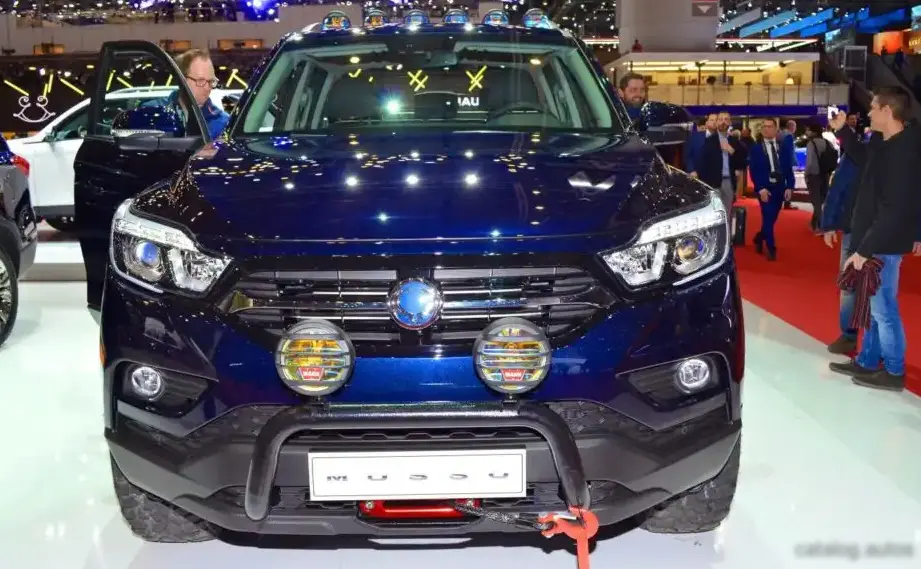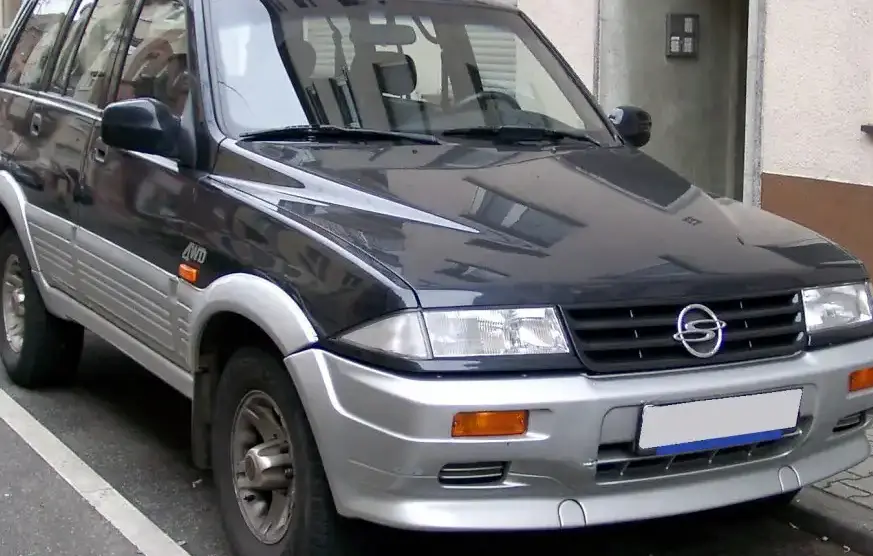
The SsangYong Musso I 2.9 TD, produced from 1999 to 2005, represented a significant step for the South Korean automaker into the mid-size SUV market. Positioned as a rugged, body-on-frame vehicle, the Musso aimed to provide a practical and affordable alternative to established Japanese and European competitors. This particular variant, equipped with the 2.9-liter turbodiesel engine producing 129 horsepower and paired with a four-speed automatic transmission, was a key offering in the Musso lineup, targeting buyers seeking a blend of capability and ease of use. It was built upon the Musso platform, sharing components with the Mercedes-Benz G-Class due to SsangYong’s technical partnership with Daimler-Benz at the time.
Technical Specifications
| Brand | SsangYong |
| Model | Musso |
| Generation | Musso I |
| Type (Engine) | 2.9 TD (129 Hp) |
| Start of production | 1999 |
| End of production | 2005 |
| Powertrain Architecture | Internal Combustion engine |
| Body type | SUV |
| Seats | 5 |
| Doors | 5 |
| Fuel consumption (urban) | 14 l/100 km (16.8 US mpg, 20.2 UK mpg, 7.1 km/l) |
| Fuel consumption (extra urban) | 7.6 l/100 km (30.9 US mpg, 37.2 UK mpg, 13.2 km/l) |
| Fuel consumption (combined) | 10 l/100 km (23.5 US mpg, 28.2 UK mpg, 10 km/l) |
| Fuel Type | Diesel |
| Acceleration 0 – 100 km/h | 16 sec |
| Acceleration 0 – 62 mph | 16 sec |
| Acceleration 0 – 60 mph | 15.2 sec |
| Maximum speed | 160 km/h (99.42 mph) |
| Weight-to-power ratio | 14.3 kg/Hp, 69.7 Hp/tonne |
| Weight-to-torque ratio | 7.4 kg/Nm, 135.1 Nm/tonne |
| Power | 129 Hp @ 4500 rpm |
| Power per litre | 44.9 Hp/l |
| Torque | 250 Nm @ 2400 rpm (184.39 lb.-ft. @ 2400 rpm) |
| Engine layout | Front, Longitudinal |
| Engine Model/Code | OM 662 |
| Engine displacement | 2874 cm3 (175.38 cu. in.) |
| Number of cylinders | 5 |
| Engine configuration | Inline |
| Cylinder Bore | 89 mm (3.5 in.) |
| Piston Stroke | 92.4 mm (3.64 in.) |
| Compression ratio | 22:1 |
| Number of valves per cylinder | 2 |
| Fuel injection system | Precombustion chamber injection |
| Engine aspiration | Turbocharger |
| Valvetrain | OHC |
| Engine oil capacity | 7.5 l (7.93 US qt | 6.6 UK qt) |
| Coolant capacity | 10.5 l (11.1 US qt | 9.24 UK qt) |
| Kerb Weight | 1850 kg (4078.55 lbs.) |
| Max. weight | 2520 kg (5555.65 lbs.) |
| Max load | 670 kg (1477.1 lbs.) |
| Trunk (boot) space – minimum | 780 l (27.55 cu. ft.) |
| Trunk (boot) space – maximum | 1920 l (67.8 cu. ft.) |
| Fuel tank capacity | 80 l (21.13 US gal | 17.6 UK gal) |
| Length | 4640 mm (182.68 in.) |
| Width | 1864 mm (73.39 in.) |
| Height | 1735 mm (68.31 in.) |
| Wheelbase | 2630 mm (103.54 in.) |
| Front track | 1510 mm (59.45 in.) |
| Rear (Back) track | 1520 mm (59.84 in.) |
| Drive wheel | All wheel drive (4×4) |
| Number of gears and type of gearbox | 4 gears, automatic transmission |
| Front suspension | Torsion |
| Rear suspension | Coil spring |
| Front brakes | Ventilated discs |
| Rear brakes | Disc |
| Assisting systems | ABS (Anti-lock braking system) |
| Steering type | Steering rack and pinion |
| Power steering | Hydraulic Steering |
| Tires size | 235/75 R15 |
Powertrain & Engine Architecture
The heart of this Musso variant is the OM662 2.9-liter inline five-cylinder diesel engine. This engine, developed in collaboration with Mercedes-Benz, utilizes a precombustion chamber injection system. This system, common in older diesel engines, involves injecting fuel into a small pre-chamber where it partially combusts, then ignites the main combustion chamber. While less efficient than modern direct injection systems, it offered good reliability and acceptable performance for its time. The engine is turbocharged, providing a boost in power and torque. The four-speed automatic transmission, while providing convenience, was a relatively dated design. It featured a traditional torque converter and lacked the efficiency and responsiveness of more modern automatic gearboxes. The transmission was selected to provide smooth operation and ease of use for drivers not accustomed to manual transmissions.
Driving Characteristics
The 129 hp and 250 Nm (184 lb-ft) of torque delivered by the 2.9 TD engine, when coupled with the four-speed automatic, resulted in a driving experience focused on usability rather than outright performance. Acceleration was leisurely, taking around 16 seconds to reach 62 mph. The automatic transmission’s gear ratios were geared towards maximizing fuel economy and providing adequate pulling power for towing, rather than quick acceleration. Compared to the manual transmission versions of the Musso, the automatic felt noticeably slower. Higher-output versions of the Musso, such as those equipped with the Mercedes-Benz OM602 engine, offered significantly more power and a more engaging driving experience. However, the automatic transmission provided a smoother and more comfortable ride, particularly in urban environments.
Equipment & Trim Levels
The 2.9 TD automatic Musso typically came with a reasonable level of standard equipment. This included power windows, central locking, and air conditioning. Interior upholstery was generally cloth, with options for leather available at an extra cost. Dashboard design was functional and straightforward, reflecting the vehicle’s utilitarian nature. Optional extras included a sunroof, upgraded audio system, and alloy wheels. The trim level sat in the mid-range of the Musso lineup, offering a balance between affordability and features.
Chassis & Braking
The Musso I utilized a traditional body-on-frame construction, providing robust durability and off-road capability. The front suspension employed a torsion bar setup, while the rear featured coil springs. This configuration offered a comfortable ride on paved roads while maintaining good articulation for off-road use. Braking consisted of ventilated discs at the front and solid discs at the rear. An Anti-lock Braking System (ABS) was standard, enhancing safety. The steering was rack and pinion with hydraulic power assistance, providing relatively light and precise steering feel.
Market Reception & Comparison
The SsangYong Musso I 2.9 TD automatic received mixed reviews. Critics praised its rugged construction, spacious interior, and reasonable price. However, the engine was often criticized for being noisy and lacking refinement compared to some of its competitors. The four-speed automatic transmission was also seen as outdated and contributing to sluggish performance. Fuel economy was acceptable, but not class-leading. Compared to other trims in the Musso lineup, the 2.9 TD automatic offered a more accessible price point but sacrificed performance. The manual transmission versions were favored by drivers seeking a more engaging driving experience, while the higher-output engines provided more power for towing and off-road adventures.
Legacy
The SsangYong Musso I 2.9 TD, while not a groundbreaking vehicle, played an important role in establishing SsangYong as a player in the SUV market. The OM662 engine, despite its age, proved to be relatively reliable, and many examples are still on the road today. The automatic transmission, however, is a potential weak point, and maintenance records should be carefully reviewed when considering a used example. In the used car market, the Musso I 2.9 TD automatic represents an affordable and capable option for those seeking a rugged and practical SUV, particularly for light towing or off-road use. Its simplicity and robust construction make it a relatively easy vehicle to maintain, appealing to DIY mechanics and those seeking a dependable workhorse.