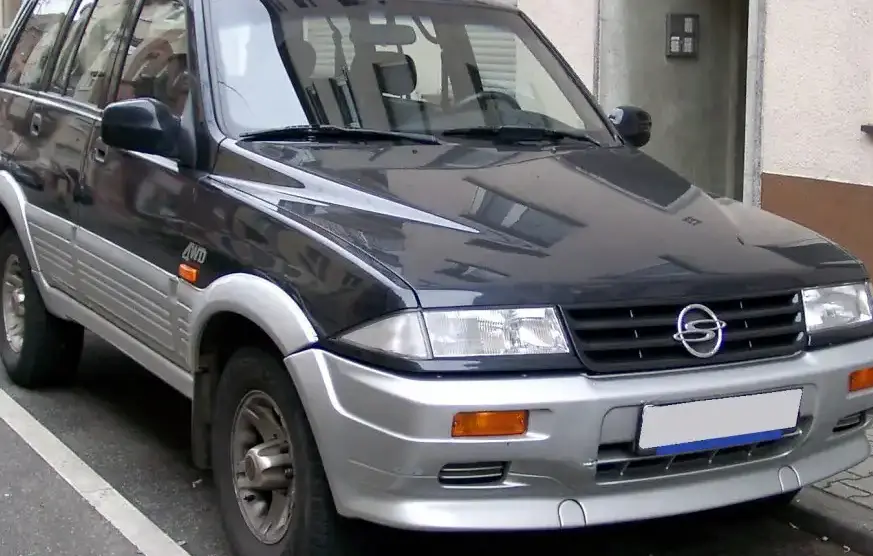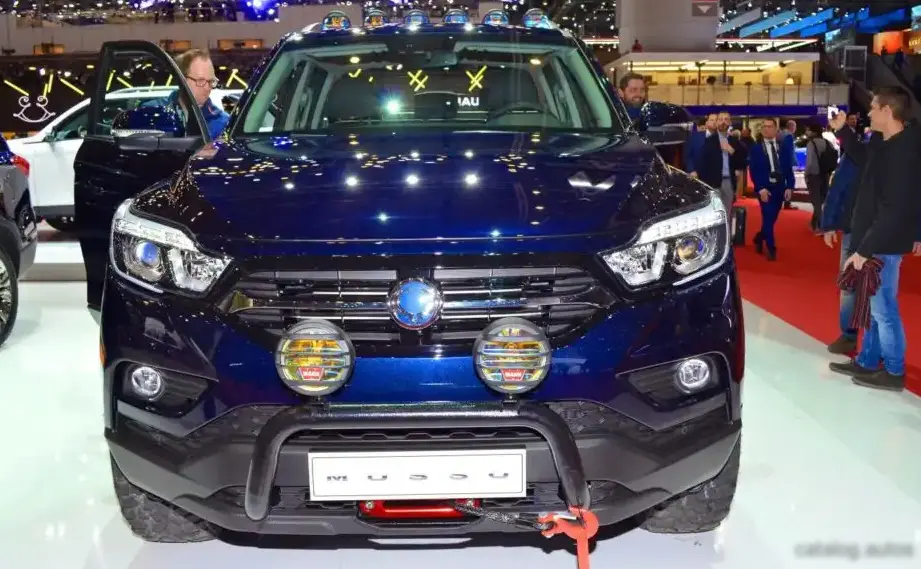
The SsangYong Musso II 2.0 e-XGDi Automatic, produced from 2018 to 2021, represents a significant step forward for the South Korean automaker in the mid-size pickup truck segment. Positioned as a more refined and technologically advanced offering compared to its predecessor, the Musso II aimed to compete with established players like the Toyota Tacoma and Ford Ranger, particularly in markets outside of North America. This specific variant, equipped with the 2.0-liter turbocharged gasoline engine and a six-speed automatic transmission, served as a mid-range option within the Musso II lineup, balancing performance with fuel efficiency and a more accessible price point. The Musso II is built on a body-on-frame chassis, emphasizing durability and towing capacity, and was designed to appeal to buyers seeking a practical and capable vehicle for both work and leisure.
Technical Specifications
| Brand | SsangYong |
| Model | Musso |
| Generation | Musso II |
| Type (Engine) | 2.0 e-XGDi (224 Hp) Automatic |
| Start of production | 2018 |
| End of production | 2021 |
| Powertrain Architecture | Internal Combustion engine |
| Body type | Pick-up |
| Seats | 5 |
| Doors | 4 |
| Fuel consumption (urban) | 14.8 l/100 km (15.9 US mpg, 19.1 UK mpg, 6.8 km/l) |
| Fuel consumption (extra urban) | 8.4 l/100 km (28 US mpg, 33.6 UK mpg, 11.9 km/l) |
| Fuel consumption (combined) | 10.7 l/100 km (22 US mpg, 26.4 UK mpg, 9.3 km/l) |
| CO2 emissions | 245 g/km |
| Fuel Type | Petrol (Gasoline) |
| Maximum speed | 185 km/h (114.95 mph) |
| Emission standard | Euro 6 |
| Weight-to-power ratio | 8.8 kg/Hp, 113.7 Hp/tonne |
| Weight-to-torque ratio | 5.6 kg/Nm, 177.7 Nm/tonne |
| Power | 224 Hp @ 5500 rpm |
| Power per litre | 112.1 Hp/l |
| Torque | 350 Nm @ 1500-4500 rpm (258.15 lb.-ft. @ 1500-4500 rpm) |
| Engine Model/Code | G20GDi |
| Engine displacement | 1998 cm3 (121.93 cu. in.) |
| Number of cylinders | 4 |
| Engine configuration | Inline |
| Cylinder Bore | 86 mm (3.39 in.) |
| Piston Stroke | 86 mm (3.39 in.) |
| Compression ratio | 9.6:1 |
| Number of valves per cylinder | 4 |
| Fuel injection system | Direct injection |
| Engine aspiration | Turbocharger, Intercooler |
| Engine oil capacity | 5 l (5.28 US qt | 4.4 UK qt) |
| Coolant | 11 l (11.62 US qt | 9.68 UK qt) |
| Kerb Weight | 1970-2073 kg (4343.11 – 4570.18 lbs.) |
| Max. weight | 2810 kg (6194.99 lbs.) |
| Max load | 737-840 kg (1624.81 – 1851.88 lbs.) |
| Fuel tank capacity | 70 l (18.49 US gal | 15.4 UK gal) |
| Permitted trailer load with brakes (12%) | 2800 kg (6172.94 lbs.) |
| Permitted trailer load without brakes | 750 kg (1653.47 lbs.) |
| Length | 5095 mm (200.59 in.) |
| Width | 1950 mm (76.77 in.) |
| Height | 1840-1870 mm (72.44 – 73.62 in.) |
| Wheelbase | 3100 mm (122.05 in.) |
| Front track | 1640 mm (64.57 in.) |
| Rear (Back) track | 1640 mm (64.57 in.) |
| Front overhang | 890 mm (35.04 in.) |
| Rear overhang | 1105 mm (43.5 in.) |
| Ride height (ground clearance) | 215 mm (8.46 in.) |
| Minimum turning circle (turning diameter) | 11.8 m (38.71 ft.) |
| Drivetrain Architecture | Rear wheel drive |
| Number of gears and type of gearbox | 6 gears, automatic transmission |
| Front suspension | Independent, type McPherson with coil spring and anti-roll bar |
| Rear suspension | Independent multi-link spring suspension with stabilizer |
| Front brakes | Ventilated discs |
| Rear brakes | Disc |
| Assisting systems | ABS (Anti-lock braking system) |
| Steering type | Steering rack and pinion |
| Tires size | 235/70 R17 |
| Wheel rims size | 17 |
Powertrain & Engine Architecture
The heart of the Musso II 2.0 e-XGDi is the G20GDi engine, a 1.998-liter inline-four cylinder gasoline engine. This engine utilizes direct fuel injection and is coupled with a twin-scroll turbocharger and intercooler to enhance power and efficiency. The direct injection system allows for precise fuel delivery, optimizing combustion and reducing emissions. The engine produces 224 horsepower at 5500 rpm and 350 Nm (258 lb-ft) of torque between 1500 and 4500 rpm, providing a broad torque band suitable for both on-road driving and hauling loads. The six-speed automatic transmission, sourced from AISIN, is designed to provide smooth and responsive gear changes. While not a particularly advanced transmission in terms of gear count compared to some competitors, it is known for its reliability and durability. The transmission is calibrated to prioritize fuel economy and comfortable cruising, rather than aggressive acceleration.
Driving Characteristics
The Musso II 2.0 e-XGDi Automatic offers a comfortable and composed driving experience. The automatic transmission contributes to ease of use, particularly in urban environments. Acceleration is adequate for everyday driving, but the 2.0-liter engine doesn’t deliver the same level of performance as larger displacement engines found in some competing pickups. The broad torque band helps with towing and hauling, but drivers should be mindful of the vehicle’s weight when fully loaded. Compared to the diesel-powered Musso models, the gasoline variant offers a quieter and smoother engine experience, but at the expense of fuel economy and low-end torque. The rear-wheel-drive configuration provides a more traditional pickup truck feel, while four-wheel-drive versions (available in other trims) offer enhanced traction in challenging conditions.
Equipment & Trim Levels
The 2.0 e-XGDi Automatic trim typically included standard features such as air conditioning, power windows and locks, a touchscreen infotainment system with Bluetooth connectivity, and basic safety equipment like ABS and airbags. Higher trim levels added features like leather upholstery, heated seats, a sunroof, and advanced driver-assistance systems (ADAS) such as lane departure warning and forward collision avoidance. Interior materials were generally of good quality for the price point, but not as luxurious as some premium pickup trucks. The dashboard layout was functional and straightforward, prioritizing usability over stylistic flair.
Chassis & Braking
The Musso II utilizes a traditional body-on-frame construction, providing a robust and durable platform for hauling and towing. The front suspension features a McPherson strut design with coil springs and an anti-roll bar, while the rear suspension employs a multi-link setup with a stabilizer bar. This suspension configuration aims to balance ride comfort with handling stability. Braking duties are handled by ventilated discs at the front and solid discs at the rear. ABS (Anti-lock Braking System) is standard, enhancing braking performance and control in emergency situations. The steering system utilizes a rack and pinion setup, providing precise and responsive steering feel.
Market Reception & Comparison
The SsangYong Musso II 2.0 e-XGDi Automatic received mixed reviews from automotive critics. While praised for its value for money, spacious interior, and capable towing capacity, it was often criticized for its relatively modest performance and fuel economy compared to some competitors. The gasoline engine, while refined, didn’t offer the same level of low-end torque as the diesel options, making it less ideal for heavy-duty work. Compared to the diesel-powered Musso variants, the 2.0 e-XGDi appealed to buyers who prioritized a smoother, quieter driving experience and were less concerned with maximizing fuel efficiency or towing capacity.
Legacy
The SsangYong Musso II, including the 2.0 e-XGDi Automatic variant, represents a turning point for the brand, showcasing its ability to produce a competitive mid-size pickup truck. While not a massive sales success in all markets, it established the Musso nameplate as a viable alternative to established players. On the used car market, the 2.0 e-XGDi models are generally considered reliable, with the AISIN automatic transmission being a particularly strong point. However, potential buyers should be aware of the potential for higher fuel consumption compared to diesel alternatives and ensure regular maintenance is performed to keep the turbocharger and fuel injection system in optimal condition. The Musso II laid the groundwork for future SsangYong pickup truck offerings, demonstrating the brand’s commitment to the segment.