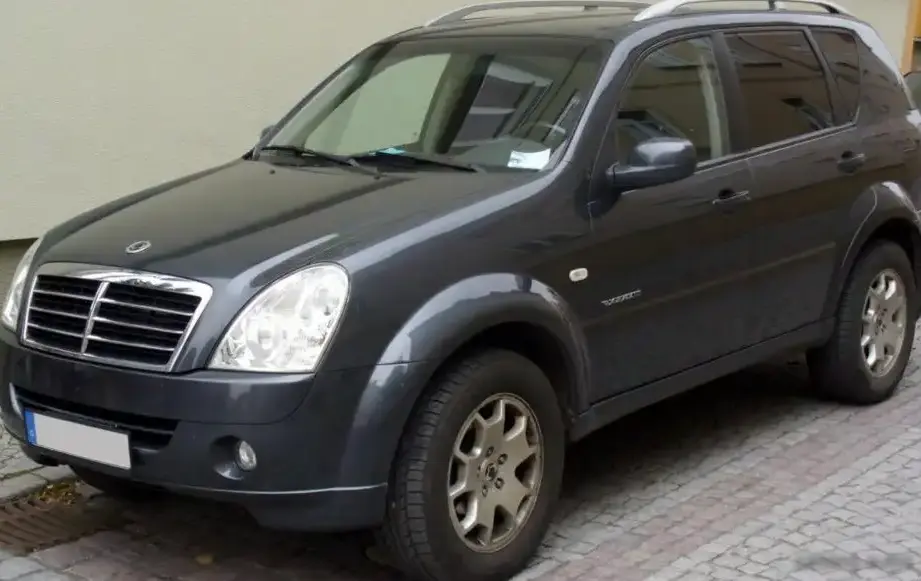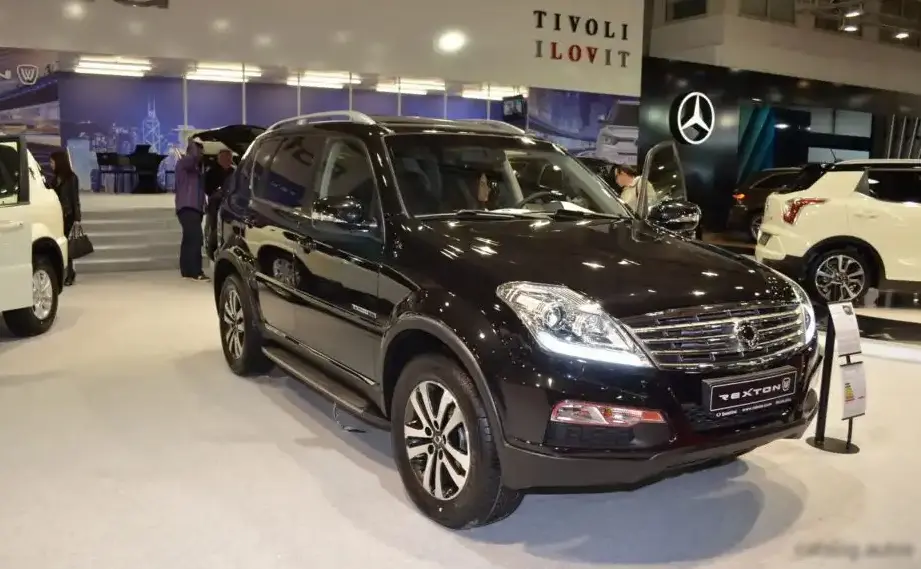
The SsangYong Rexton I, specifically the RX 200 e-XDi 4WD variant produced from 2012 to 2017, represents a significant refresh of the first-generation Rexton SUV. Introduced as part of a facelift, this model aimed to enhance the Rexton’s appeal in the mid-size SUV segment, particularly in European and Asian markets where SsangYong sought to establish a stronger foothold. The RX 200 e-XDi positioned itself as a more accessible entry point into the Rexton lineup, offering a balance of practicality, four-wheel-drive capability, and a diesel-powered engine focused on fuel efficiency rather than outright performance. It competed with vehicles like the Kia Sorento, Hyundai Santa Fe, and Mitsubishi Outlander.
Technical Specifications
| Brand | SsangYong |
| Model | Rexton |
| Generation | Rexton I (facelift 2012) |
| Type | RX 200 e-XDi (155 Hp) 4WD |
| Start of production | 2012 |
| End of production | 2017 |
| Powertrain Architecture | Internal Combustion engine |
| Body type | SUV |
| Seats | 5-7 |
| Doors | 5 |
| Fuel consumption (urban) | 9.4 l/100 km (25 US mpg, 30.1 UK mpg, 10.6 km/l) |
| Fuel consumption (extra urban) | 6.3 l/100 km (37.3 US mpg, 44.8 UK mpg, 15.9 km/l) |
| Fuel consumption (combined) | 7.4 l/100 km (31.8 US mpg, 38.2 UK mpg, 13.5 km/l) |
| CO2 emissions | 196 g/km |
| Fuel Type | Diesel |
| Maximum speed | 173 km/h (107.5 mph) |
| Emission standard | Euro 5 |
| Weight-to-power ratio | 12.6 kg/Hp, 79.1 Hp/tonne |
| Weight-to-torque ratio | 5.4 kg/Nm, 183.7 Nm/tonne |
| Power | 155 Hp @ 4000 rpm |
| Power per litre | 77.6 Hp/l |
| Torque | 360 Nm @ 1500-2800 rpm (265.52 lb.-ft. @ 1500-2800 rpm) |
| Engine layout | Front, Longitudinal |
| Engine Model/Code | D20DTR |
| Engine displacement | 1998 cm3 (121.93 cu. in.) |
| Number of cylinders | 4 |
| Engine configuration | Inline |
| Cylinder Bore | 86.2 mm (3.39 in.) |
| Piston Stroke | 85.6 mm (3.37 in.) |
| Compression ratio | 16.5:1 |
| Fuel injection system | Diesel Commonrail |
| Engine aspiration | Turbocharger, Intercooler |
| Engine oil capacity | 6 l (6.34 US qt | 5.28 UK qt) |
| Coolant | 8.5 l (8.98 US qt | 7.48 UK qt) |
| Kerb Weight | 1960-2024 kg (4321.06 – 4462.16 lbs.) |
| Max. weight | 2710 kg (5974.53 lbs.) |
| Max load | 686-750 kg (1512.37 – 1653.47 lbs.) |
| Fuel tank capacity | 78 l (20.61 US gal | 17.16 UK gal) |
| Permitted trailer load with brakes (12%) | 2600 kg (5732.02 lbs.) |
| Permitted trailer load without brakes | 750 kg (1653.47 lbs.) |
| Length | 4755 mm (187.2 in.) |
| Width | 1900 mm (74.8 in.) |
| Height | 1785-1840 mm (70.28 – 72.44 in.) |
| Wheelbase | 2835 mm (111.61 in.) |
| Front track | 1570 mm (61.81 in.) |
| Rear track | 1570 mm (61.81 in.) |
| Front overhang | 885 mm (34.84 in.) |
| Rear overhang | 1035 mm (40.75 in.) |
| Ride height (ground clearance) | 216 mm (8.5 in.) |
| Minimum turning circle | 11.4 m (37.4 ft.) |
| Approach angle | 28.0° |
| Departure angle | 25.5° |
| Drivetrain Architecture | The Internal combustion engine (ICE) drives the rear wheels permanently, and the front wheels are driven through an electrically or mechanically operated clutch if necessary. |
| Drive wheel | All wheel drive (4×4) |
| Number of gears | 6 |
| Type of gearbox | manual transmission |
| Front suspension | Double wishbone |
| Rear suspension | Independent multi-link suspension |
| Front brakes | Ventilated discs |
| Rear brakes | Disc |
| Assisting systems | ABS (Anti-lock braking system) |
| Steering type | Steering rack and pinion |
| Power steering | Electric Steering |
| Tires size | 235/75 R16; 255/60 R18 |
| Wheel rims size | 7.0J x 16; 7.5J x 18 |
INTRODUCTION
The SsangYong Rexton I facelift, launched in 2012, represented a mid-cycle update to the original Rexton, which debuted in 2001. Built on the 1HX0/A3 platform, the facelift aimed to modernize the vehicle’s styling and improve its overall appeal. The RX 200 e-XDi 4WD variant was a key component of this strategy, offering a diesel engine paired with a six-speed manual transmission and a four-wheel-drive system. This configuration was designed to provide a practical and capable SUV for families and individuals seeking a robust vehicle for various driving conditions. The Rexton, throughout its first generation, was SsangYong’s flagship SUV, intended to compete with established players in the segment.
Powertrain & Engine Architecture
The RX 200 e-XDi is powered by the D20DTR, a 2.0-liter inline-four cylinder diesel engine. This engine utilizes a common-rail direct injection system, delivering fuel directly into the combustion chamber at extremely high pressure for improved efficiency and reduced emissions. A turbocharger with an intercooler further enhances performance by forcing more air into the engine. The engine produces 155 horsepower at 4,000 rpm and 360 Nm (265.52 lb.-ft.) of torque between 1,500 and 2,800 rpm. The engine features a compression ratio of 16.5:1. The six-speed manual transmission was the standard offering for this variant, providing drivers with precise control over gear selection. The drivetrain is configured with permanent rear-wheel drive, with the front wheels engaging automatically when traction is lost, providing all-wheel-drive capability.
Driving Characteristics
The RX 200 e-XDi 4WD, with its 155 hp and manual transmission, offered a driving experience focused on practicality and fuel economy rather than sporty performance. Acceleration was adequate for everyday driving, but not particularly brisk. The engine’s torque peak, available from 1,500 rpm, provided sufficient pulling power for highway cruising and tackling moderate inclines. The six-speed manual transmission allowed drivers to optimize engine speed for fuel efficiency or performance. Compared to higher-output Rexton variants, such as those equipped with the more powerful diesel engines, the RX 200 felt less responsive. However, it offered a more engaging driving experience than the automatic transmission options available on other Rexton models. The four-wheel-drive system provided enhanced traction in slippery conditions, making it suitable for off-road driving on mild terrain.
Equipment & Trim Levels
The RX 200 e-XDi 4WD typically came equipped with a reasonable level of standard features. These included air conditioning, power windows, central locking, and an audio system with CD player. Higher trim levels offered additional features such as leather upholstery, heated front seats, a sunroof, and a more advanced audio system with navigation. Safety features included ABS (Anti-lock Braking System) and airbags. The interior design was functional and durable, with a focus on practicality rather than luxury. The Rexton offered seating for five or seven passengers, depending on the configuration.
Chassis & Braking
The Rexton I facelift utilized a body-on-frame construction, providing a robust and durable chassis. The front suspension featured a double wishbone design, while the rear suspension employed an independent multi-link setup. This suspension configuration aimed to provide a comfortable ride and good handling characteristics. The braking system consisted of ventilated discs on the front wheels and discs on the rear wheels, providing adequate stopping power for the vehicle’s weight. The steering system was a rack and pinion type with electric power steering, offering precise and responsive steering feel.
Market Reception & Comparison
The RX 200 e-XDi 4WD was generally well-received as a practical and affordable SUV. Critics praised its fuel efficiency, spacious interior, and capable four-wheel-drive system. However, some reviewers noted that the engine lacked the power and refinement of some of its competitors. Compared to other Rexton variants, the RX 200 offered a more accessible price point, making it attractive to budget-conscious buyers. Its fuel economy was generally better than the more powerful diesel models, but its performance was correspondingly lower. The manual transmission was appreciated by drivers who preferred a more engaging driving experience.
Legacy
The SsangYong Rexton I facelift, including the RX 200 e-XDi 4WD variant, has established a reputation for reliability and durability. The D20DTR engine, while not known for being exceptionally powerful, is generally considered to be a robust and long-lasting unit. In the used car market, these Rextons are often sought after by buyers looking for a capable and affordable SUV. Maintenance costs are generally reasonable, and parts availability is typically good. While the Rexton I has been superseded by newer generations, it remains a popular choice for those seeking a practical and reliable vehicle.