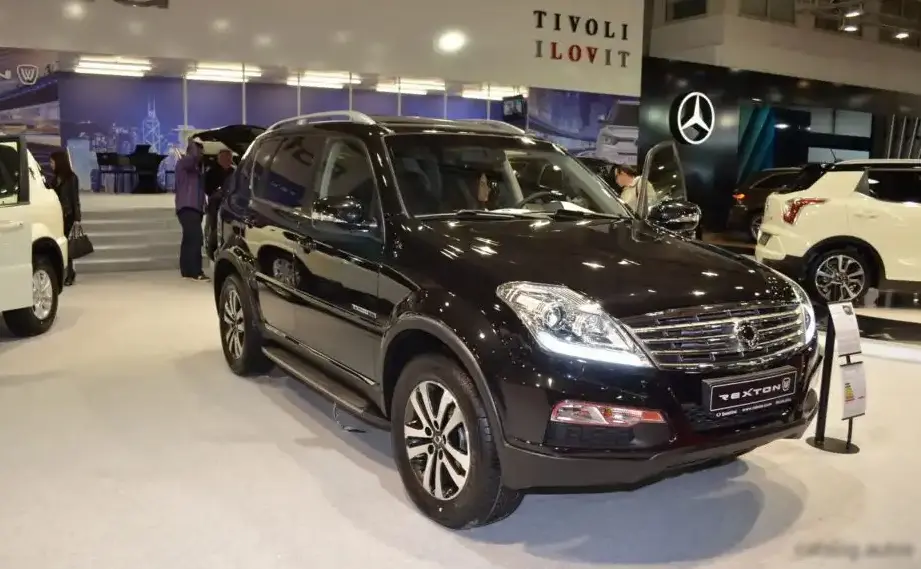
The SsangYong Rexton I (facelift 2012) RX 200 e-XDi 4WD Automatic represents a mid-cycle refresh of the first-generation Rexton, produced from 2012 to 2017. Positioned as a more accessible entry point into the Rexton range, this variant offered a blend of space, four-wheel drive capability, and a diesel engine paired with an automatic transmission. The Rexton, initially launched in 2001, was SsangYong’s attempt to compete in the mid-size SUV segment, primarily targeting European and Asian markets where demand for robust, body-on-frame SUVs remained strong. The 2012 facelift brought updated styling and refinements to the powertrain, aiming to improve both appeal and efficiency.
Technical Specifications
| Brand | SsangYong |
| Model | Rexton |
| Generation | Rexton I (facelift 2012) |
| Type | RX 200 e-XDi (155 Hp) 4WD Automatic |
| Start of production | 2012 |
| End of production | 2017 |
| Powertrain Architecture | Internal Combustion engine |
| Body type | SUV |
| Seats | 5-7 |
| Doors | 5 |
| Fuel consumption (urban) | 9.9 l/100 km (23.8 US mpg) |
| Fuel consumption (extra urban) | 6.7 l/100 km (35.1 US mpg) |
| Fuel consumption (combined) | 7.8 l/100 km (30.2 US mpg) |
| CO2 emissions | 206 g/km |
| Fuel Type | Diesel |
| Maximum speed | 175 km/h (108.74 mph) |
| Emission standard | Euro 5 |
| Weight-to-power ratio | 12.8 kg/Hp |
| Weight-to-torque ratio | 5.5 kg/Nm |
| Power | 155 Hp @ 4000 rpm |
| Torque | 360 Nm @ 1500-2800 rpm (265.52 lb.-ft.) |
| Engine layout | Front, Longitudinal |
| Engine Model/Code | D20DTR |
| Engine displacement | 1998 cm3 (121.93 cu. in.) |
| Number of cylinders | 4 |
| Engine configuration | Inline |
| Cylinder Bore | 86.2 mm (3.39 in.) |
| Piston Stroke | 85.6 mm (3.37 in.) |
| Compression ratio | 16.5:1 |
| Fuel injection system | Diesel Commonrail |
| Engine aspiration | Turbocharger, Intercooler |
| Engine oil capacity | 6 l (6.34 US qt | 5.28 UK qt) |
| Coolant capacity | 8.5 l (8.98 US qt | 7.48 UK qt) |
| Kerb Weight | 1985-2049 kg (4376.18 – 4517.27 lbs.) |
| Max. weight | 2710 kg (5974.53 lbs.) |
| Max load | 661-725 kg (1457.26 – 1598.35 lbs.) |
| Fuel tank capacity | 78 l (20.61 US gal | 17.16 UK gal) |
| Permitted trailer load (braked) | 2600 kg (5732.02 lbs.) |
| Permitted trailer load (unbraked) | 750 kg (1653.47 lbs.) |
| Length | 4755 mm (187.2 in.) |
| Width | 1900 mm (74.8 in.) |
| Height | 1785-1840 mm (70.28 – 72.44 in.) |
| Wheelbase | 2835 mm (111.61 in.) |
| Front track | 1570 mm (61.81 in.) |
| Rear track | 1570 mm (61.81 in.) |
| Front overhang | 885 mm (34.84 in.) |
| Rear overhang | 1035 mm (40.75 in.) |
| Ride height | 216 mm (8.5 in.) |
| Turning circle | 11.4 m (37.4 ft.) |
| Drivetrain | All wheel drive (4×4) |
| Number of gears | 5 |
| Gearbox type | Automatic transmission |
| Front suspension | Double wishbone |
| Rear suspension | Independent multi-link suspension |
| Front brakes | Ventilated discs |
| Rear brakes | Disc |
| Steering type | Steering rack and pinion |
| Power steering | Hydraulic |
| Tire size | 235/75 R16; 255/60 R18 |
| Wheel rim size | 7.0J x 16; 7.5J x 18 |
Powertrain & Engine Architecture
The RX 200 e-XDi utilizes SsangYong’s D20DTR 2.0-liter inline-four diesel engine. This engine is a common-rail direct injection (CRDI) unit, benefiting from a turbocharger and intercooler to boost power output. The D20DTR produces 155 horsepower at 4,000 rpm and 360 Nm (265.52 lb.-ft.) of torque between 1500 and 2800 rpm. The engine features a relatively high compression ratio of 16.5:1, typical for diesel engines, contributing to its efficiency. The engine is longitudinally mounted in the chassis. The automatic transmission is a conventional 5-speed unit, chosen for its ease of use and suitability for drivers prioritizing comfort over outright performance. While not the most modern transmission available at the time, it provided smooth shifts and adequate responsiveness for everyday driving.
Driving Characteristics
The Rexton RX 200 e-XDi Automatic delivers a comfortable, if not particularly sporty, driving experience. The 155 hp engine, coupled with the automatic transmission, provides adequate power for highway cruising and moderate acceleration. However, it’s noticeably slower than the higher-output versions of the Rexton, such as those equipped with the more powerful diesel engines. The automatic transmission’s gear ratios are tuned for fuel efficiency and smooth operation, rather than aggressive acceleration. The four-wheel drive system provides enhanced traction in slippery conditions, making it a capable vehicle for tackling varied terrain. The body-on-frame construction contributes to a more truck-like ride quality, which some drivers may find less refined than the more modern, unibody SUVs.
Equipment & Trim Levels
The RX 200 e-XDi typically came equipped with a reasonable level of standard features. These generally included air conditioning, power windows and locks, a basic audio system, and alloy wheels. Higher trim levels offered upgrades such as leather upholstery, a sunroof, and more advanced audio systems. Safety features typically included ABS brakes and airbags, although the level of safety equipment varied depending on the specific market and year of production. The interior design was functional and durable, prioritizing practicality over luxury.
Chassis & Braking
The Rexton I utilizes a traditional body-on-frame construction, providing a robust and durable chassis. The front suspension consists of a double wishbone setup, while the rear features an independent multi-link suspension. This configuration aims to balance ride comfort with handling stability. Braking duties are handled by ventilated discs at the front and solid discs at the rear. Hydraulic power steering provides a reasonably direct steering feel. The suspension tuning is geared towards comfort, absorbing bumps and irregularities in the road surface effectively.
Market Reception & Comparison
The Rexton RX 200 e-XDi Automatic was generally viewed as a practical and affordable SUV option. Critics praised its spacious interior, four-wheel drive capability, and relatively low price point. However, it was often criticized for its dated design, less refined ride quality compared to unibody SUVs, and the relatively modest performance of the 2.0-liter diesel engine. Compared to the more powerful Rexton variants, the RX 200 offered lower running costs and a more accessible price, making it appealing to budget-conscious buyers. Fuel economy was respectable for a vehicle of its size and type, averaging around 30.2 US mpg in combined driving.
Legacy
The SsangYong Rexton I, including the RX 200 e-XDi variant, has developed a reputation for being a reasonably reliable and durable vehicle, particularly the powertrain. While not without its quirks, the D20DTR engine is generally considered to be robust and capable of high mileage with proper maintenance. In the used car market, these Rextons represent a relatively affordable option for those seeking a spacious, four-wheel drive SUV. However, potential buyers should be aware of the vehicle’s age and the potential for wear and tear on components such as the suspension and brakes. Parts availability can sometimes be a challenge, depending on the region.