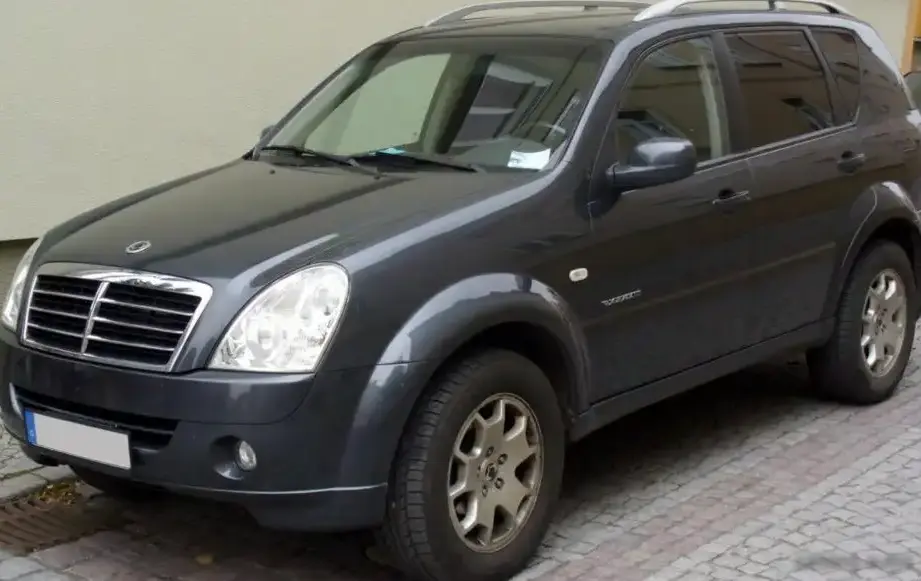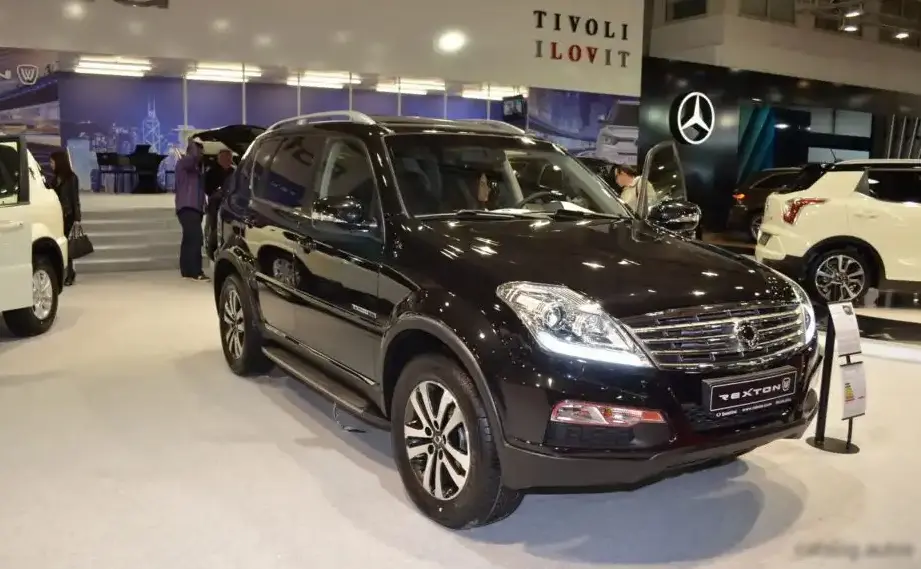
The SsangYong Rexton I (facelift 2012) RX 200 e-XDi Automatic, produced from 2012 to 2017, represents a mid-cycle refresh of the first-generation Rexton SUV. Positioned as a more accessible entry point into the Rexton range, this variant featured a 2.0-liter diesel engine paired with a five-speed automatic transmission. It aimed to provide a balance of practicality, space, and affordability within the increasingly competitive mid-size SUV segment, primarily targeting the European and Asian markets where SsangYong sought to establish a stronger foothold. The facelift brought updated styling and minor mechanical revisions to the original Rexton, which was initially based on the Mercedes-Benz W163 M-Class platform, a legacy of SsangYong’s former partnership with Daimler-Benz.
Technical Specifications
| Brand | SsangYong |
| Model | Rexton |
| Generation | Rexton I (facelift 2012) |
| Type (Engine) | RX 200 e-XDi (155 Hp) Automatic |
| Start of production | 2012 |
| End of production | 2017 |
| Powertrain Architecture | Internal Combustion engine |
| Body type | SUV |
| Seats | 5-7 |
| Doors | 5 |
| Fuel consumption (urban) | 9.5 l/100 km (24.8 US mpg) |
| Fuel consumption (extra urban) | 6.4 l/100 km (36.8 US mpg) |
| Fuel consumption (combined) | 7.5 l/100 km (31.4 US mpg) |
| CO2 emissions | 199 g/km |
| Fuel Type | Diesel |
| Maximum speed | 175 km/h (108.74 mph) |
| Emission standard | Euro 5 |
| Weight-to-power ratio | 12.4 kg/Hp |
| Weight-to-torque ratio | 5.3 kg/Nm |
| Power | 155 Hp @ 4000 rpm |
| Torque | 360 Nm @ 1500-2800 rpm (265.52 lb.-ft.) |
| Engine layout | Front, Longitudinal |
| Engine Model/Code | D20DTR |
| Engine displacement | 1998 cm3 (121.93 cu. in.) |
| Number of cylinders | 4 |
| Engine configuration | Inline |
| Cylinder Bore | 86.2 mm (3.39 in.) |
| Piston Stroke | 85.6 mm (3.37 in.) |
| Compression ratio | 16.5:1 |
| Fuel injection system | Diesel Commonrail |
| Engine aspiration | Turbocharger, Intercooler |
| Engine oil capacity | 6 l (6.34 US qt | 5.28 UK qt) |
| Coolant capacity | 8.5 l (8.98 US qt | 7.48 UK qt) |
| Kerb Weight | 1925-1989 kg (4243.9 – 4384.99 lbs.) |
| Max. weight | 2650 kg (5842.25 lbs.) |
| Max load | 661-725 kg (1457.26 – 1598.35 lbs.) |
| Fuel tank capacity | 78 l (20.61 US gal | 17.16 UK gal) |
| Permitted trailer load (braked) | 2600 kg (5732.02 lbs.) |
| Permitted trailer load (unbraked) | 750 kg (1653.47 lbs.) |
| Length | 4755 mm (187.2 in.) |
| Width | 1900 mm (74.8 in.) |
| Height | 1785-1840 mm (70.28 – 72.44 in.) |
| Wheelbase | 2835 mm (111.61 in.) |
| Front track | 1570 mm (61.81 in.) |
| Rear track | 1570 mm (61.81 in.) |
| Front overhang | 885 mm (34.84 in.) |
| Rear overhang | 1035 mm (40.75 in.) |
| Ride height (ground clearance) | 216 mm (8.5 in.) |
| Minimum turning circle | 11.4 m (37.4 ft.) |
| Front suspension | Double wishbone |
| Rear suspension | Independent multi-link suspension |
| Front brakes | Ventilated discs |
| Rear brakes | Disc |
| Steering type | Steering rack and pinion |
| Power steering | Electric |
| Tires size | 235/75 R16; 255/60 R18 |
| Wheel rims size | 7.0J x 16; 7.5J x 18 |
| Number of gears | 5 |
| Gearbox type | Automatic transmission |
Powertrain & Engine Architecture
The RX 200 e-XDi utilized SsangYong’s D20DTR engine, a 2.0-liter inline-four cylinder diesel. This engine was a key component of SsangYong’s efforts to modernize its powertrain offerings. It featured a common-rail direct injection system, delivering fuel at extremely high pressure for improved combustion efficiency and reduced emissions. A turbocharger with an intercooler further enhanced performance, boosting power output to 155 horsepower and 360 Nm (265 lb-ft) of torque. The engine’s architecture was relatively conventional, prioritizing durability and ease of maintenance. The five-speed automatic transmission, while not the most advanced on the market, provided smooth shifts and contributed to the vehicle’s overall usability. It was chosen for its cost-effectiveness and reliability, aligning with the RX 200’s positioning as a value-oriented SUV.
Driving Characteristics
The 155 hp and 360 Nm of torque provided adequate, but not exhilarating, performance. Acceleration was reasonable for everyday driving, but overtaking maneuvers required planning. The automatic transmission, while smooth, could sometimes feel hesitant, particularly when downshifting. Compared to the more powerful Rexton variants, such as those equipped with the 2.7-liter petrol engine or the later 2.2-liter diesel, the RX 200 e-XDi offered a more relaxed driving experience. The gear ratios were tuned for fuel efficiency rather than outright speed. The rear-wheel-drive configuration provided a stable feel on paved roads, but limited traction in slippery conditions. The focus was on comfortable cruising and practicality rather than sporty handling.
Equipment & Trim Levels
The RX 200 e-XDi typically came with a reasonable level of standard equipment. This included air conditioning, power windows, central locking, and an audio system with CD player. Higher trim levels offered features such as leather upholstery, heated front seats, a sunroof, and alloy wheels. Safety features included ABS brakes and airbags. The interior design was functional and durable, with a focus on practicality rather than luxury. The RX 200 e-XDi was often seen as a good base model, with owners frequently opting for additional features through optional packages.
Chassis & Braking
The Rexton I utilized a body-on-frame construction, providing a robust and durable chassis. The front suspension employed a double wishbone setup, while the rear featured an independent multi-link suspension. This configuration aimed to balance ride comfort with handling stability. Braking duties were handled by ventilated discs at the front and solid discs at the rear. ABS (Anti-lock Braking System) was standard, enhancing safety during emergency braking situations. The suspension was tuned for comfort, absorbing bumps and irregularities in the road surface effectively. However, the body-on-frame construction resulted in a higher center of gravity, contributing to noticeable body roll during cornering.
Market Reception & Comparison
The RX 200 e-XDi was generally well-received as a practical and affordable SUV. Critics praised its spacious interior, comfortable ride, and reasonable fuel economy. However, some reviewers noted its lack of refinement compared to more established competitors. Compared to other Rexton variants, the RX 200 e-XDi offered the best fuel economy, making it an attractive option for drivers prioritizing cost-effectiveness. However, it lacked the performance of the higher-powered engines. Reliability was generally good, although some owners reported issues with the automatic transmission over the long term. The Rexton, in general, struggled to gain significant market share in Europe and North America, often overshadowed by more popular brands.
Legacy
The SsangYong Rexton I (facelift 2012) RX 200 e-XDi Automatic, while not a groundbreaking vehicle, served as a solid and dependable SUV for many owners. The D20DTR engine proved to be relatively durable, and parts availability remains reasonable. On the used car market, these vehicles are often available at attractive prices, making them a viable option for budget-conscious buyers seeking a spacious and practical SUV. While not known for its performance or cutting-edge technology, the RX 200 e-XDi represents a significant step in SsangYong’s evolution as an automotive manufacturer, demonstrating their commitment to providing value and practicality to their customers.