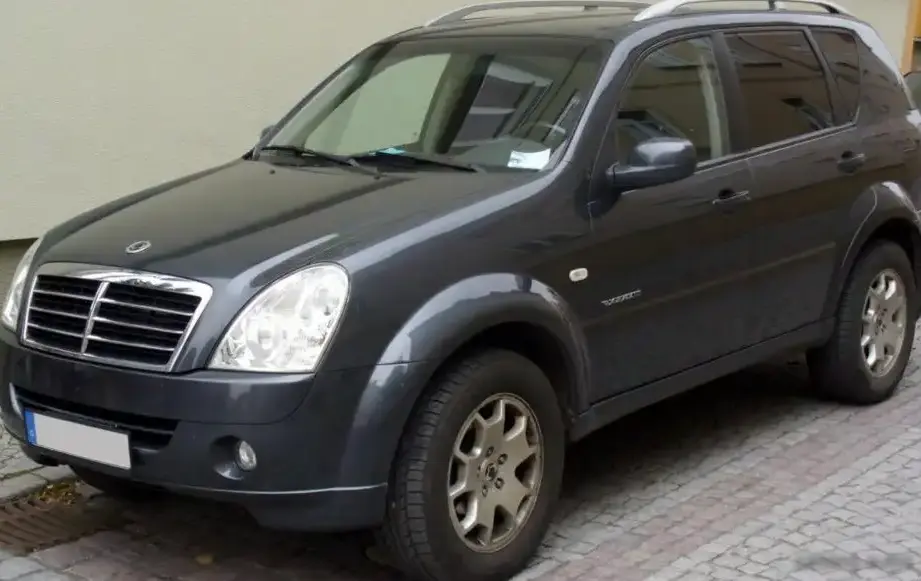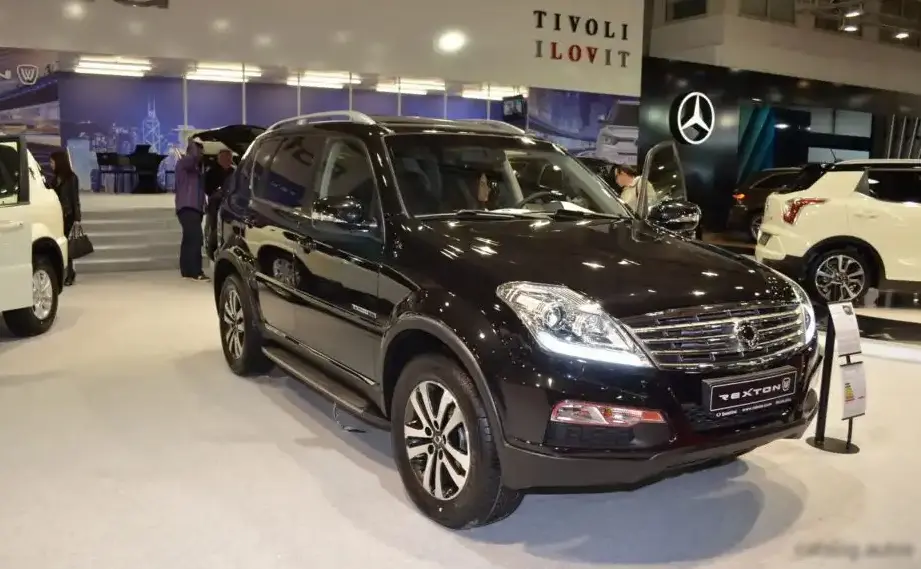
The SsangYong Rexton I (facelift 2012) RX 220 e-XDi, produced from 2015 to 2017, represents a mid-cycle refresh of the first-generation Rexton SUV. Positioned as a body-on-frame SUV, the Rexton aimed to provide a more affordable and rugged alternative to established Japanese and European competitors in the mid-size SUV segment, particularly in European and Asian markets. The RX 220 e-XDi trim, equipped with the 2.2-liter diesel engine producing 178 horsepower, served as a mainstream offering within the Rexton lineup, balancing performance with fuel efficiency. It was offered with both five and seven-seat configurations, catering to families and those needing additional passenger space.
Technical Specifications
| Brand | SsangYong |
| Model | Rexton |
| Generation | Rexton I (facelift 2012) |
| Type (Engine) | RX 220 e-XDi (178 Hp) |
| Start of production | 2015 year |
| End of production | 2017 year |
| Powertrain Architecture | Internal Combustion engine |
| Body type | SUV |
| Seats | 5-7 |
| Doors | 5 |
| Fuel consumption (urban) | 8.5 l/100 km (27.7 US mpg, 33.2 UK mpg, 11.8 km/l) |
| Fuel consumption (extra urban) | 5.9 l/100 km (39.9 US mpg, 47.9 UK mpg, 16.9 km/l) |
| Fuel consumption (combined) | 6.8 l/100 km (34.6 US mpg, 41.5 UK mpg, 14.7 km/l) |
| CO2 emissions | 179 g/km |
| Fuel Type | Diesel |
| Maximum speed | 192 km/h (119.3 mph) |
| Emission standard | Euro 6 |
| Weight-to-power ratio | 10.8 kg/Hp, 92.9 Hp/tonne |
| Weight-to-torque ratio | 4.8 kg/Nm, 208.7 Nm/tonne |
| Power | 178 Hp @ 4000 rpm |
| Power per litre | 82.5 Hp/l |
| Torque | 400 Nm @ 1400-2800 rpm (295.02 lb.-ft. @ 1400-2800 rpm) |
| Engine layout | Front, Longitudinal |
| Engine Model/Code | D22DTR |
| Engine displacement | 2157 cm3 (131.63 cu. in.) |
| Number of cylinders | 4 |
| Engine configuration | Inline |
| Cylinder Bore | 86.2 mm (3.39 in.) |
| Piston Stroke | 92.4 mm (3.64 in.) |
| Compression ratio | 15.5:1 |
| Fuel injection system | Diesel Commonrail |
| Engine aspiration | Turbocharger, Intercooler |
| Engine oil capacity | 6 l (6.34 US qt | 5.28 UK qt) |
| Coolant | 11.5 l (12.15 US qt | 10.12 UK qt) |
| Kerb Weight | 1917-2003 kg (4226.26 – 4415.86 lbs.) |
| Max. weight | 2650 kg (5842.25 lbs.) |
| Max load | 647-733 kg (1426.39 – 1615.99 lbs.) |
| Fuel tank capacity | 78 l (20.61 US gal | 17.16 UK gal) |
| Permitted trailer load with brakes (12%) | 2600 kg (5732.02 lbs.) |
| Permitted trailer load without brakes | 750 kg (1653.47 lbs.) |
| Length | 4755 mm (187.2 in.) |
| Width | 1900 mm (74.8 in.) |
| Height | 1785-1840 mm (70.28 – 72.44 in.) |
| Wheelbase | 2835 mm (111.61 in.) |
| Front track | 1570 mm (61.81 in.) |
| Rear track | 1570 mm (61.81 in.) |
| Front overhang | 885 mm (34.84 in.) |
| Rear overhang | 1035 mm (40.75 in.) |
| Ride height (ground clearance) | 216 mm (8.5 in.) |
| Minimum turning circle | 11.4 m (37.4 ft.) |
| Approach angle | 28.0° |
| Departure angle | 25.5° |
| Drivetrain Architecture | Rear wheel drive |
| Number of gears and type of gearbox | 6 gears, manual transmission |
| Front suspension | Double wishbone |
| Rear suspension | Independent multi-link suspension |
| Front brakes | Ventilated discs |
| Rear brakes | Disc |
| Assisting systems | ABS (Anti-lock braking system) |
| Steering type | Steering rack and pinion |
| Power steering | Hydraulic Steering |
| Tires size | 235/75 R16; 255/60 R18 |
| Wheel rims size | 7.0J x 16; 7.5J x 18 |
Powertrain & Engine Architecture
The RX 220 e-XDi is powered by the SsangYong D22DTR, a 2.2-liter inline-four cylinder diesel engine. This engine is a member of SsangYong’s ‘e-XDi’ family, denoting its use of electronic high-pressure common rail fuel injection. The D22DTR utilizes a turbocharger with an intercooler to boost power output to 178 horsepower at 4,000 rpm and 400 Nm (295 lb-ft) of torque between 1,400 and 2,800 rpm. The engine features a relatively high compression ratio of 15.5:1, contributing to its efficiency. The engine is longitudinally mounted in the chassis, driving the rear wheels. The six-speed manual transmission was the standard offering for this variant, providing a balance between fuel economy and driver control. While an automatic transmission was available on other Rexton trims, it wasn’t offered with the RX 220 e-XDi.
Driving Characteristics
The RX 220 e-XDi, with its 178 hp and 400 Nm of torque, offered adequate performance for everyday driving and highway cruising. Acceleration was not particularly brisk, but the engine’s strong low-end torque made it capable of handling moderate loads and inclines. The six-speed manual transmission allowed drivers to keep the engine in its optimal power band. Compared to the more powerful Rexton models (like those with the 2.7-liter petrol engine), the RX 220 e-XDi prioritized fuel economy and usability over outright performance. The manual gearbox provided a more engaging driving experience than the available automatic on other trims, but required more driver involvement.
Equipment & Trim Levels
The RX 220 e-XDi typically came equipped with a reasonable level of standard features. These included air conditioning, power windows, central locking, and an audio system with USB connectivity. Interior upholstery was generally cloth, with options for leather upgrades. Safety features included ABS brakes, dual front airbags, and, depending on the market, electronic stability control. Optional extras could include a sunroof, parking sensors, and upgraded audio systems. The trim level was generally considered entry to mid-range within the Rexton lineup, offering a good balance of features and affordability.
Chassis & Braking
The Rexton I utilized a traditional body-on-frame construction, providing a robust and durable chassis. The front suspension consisted of a double wishbone setup, while the rear employed an independent multi-link suspension. This configuration aimed to provide a comfortable ride and reasonable handling characteristics. Braking duties were handled by ventilated discs at the front and solid discs at the rear. ABS (Anti-lock Braking System) was standard, enhancing braking performance and safety. The steering system was a hydraulic rack and pinion setup, offering a direct and responsive feel.
Market Reception & Comparison
The SsangYong Rexton I, including the RX 220 e-XDi variant, received mixed reviews. Critics generally praised its spacious interior, robust build quality, and competitive pricing. However, it was often criticized for its somewhat dated design, less refined engine compared to some competitors, and a perceived lack of brand prestige. Compared to other trims in the Rexton lineup, the RX 220 e-XDi offered the best fuel economy and a more engaging driving experience thanks to the manual transmission. It appealed to buyers seeking a practical and affordable SUV with decent off-road capability.
Legacy
The SsangYong Rexton I, while not a mainstream success, established SsangYong as a player in the mid-size SUV market. The D22DTR engine proved to be relatively reliable, although, like all diesel engines, it required regular maintenance and careful servicing. In the used car market, the RX 220 e-XDi represents a relatively affordable and capable SUV. Its robust construction and readily available parts make it a viable option for those seeking a practical and durable vehicle. However, potential buyers should be aware of the age-related wear and tear common to older vehicles and ensure a thorough inspection before purchase.